Why Milk Froths - Latte Art Steaming Methods and Coffee Integration Techniques

For professional coffee knowledge exchange and more coffee bean information, please follow Coffee Workshop (WeChat public account: cafe_style).
The Ultimate Guide to Perfect Milk Frothing: Why Does Milk Foam?
FrontStreet Coffee considers steaming milk a fundamental, core skill for every barista; the ability to steam perfect milk is one measure of whether a barista meets professional standards. Latte foam, for instance, should be relatively thin for a smooth, delicate drinking experience, so when you steam milk for a latte it should not be too thick. The finished milk should have a glossy surface with no obvious large or small bubbles, looking delicate and even.
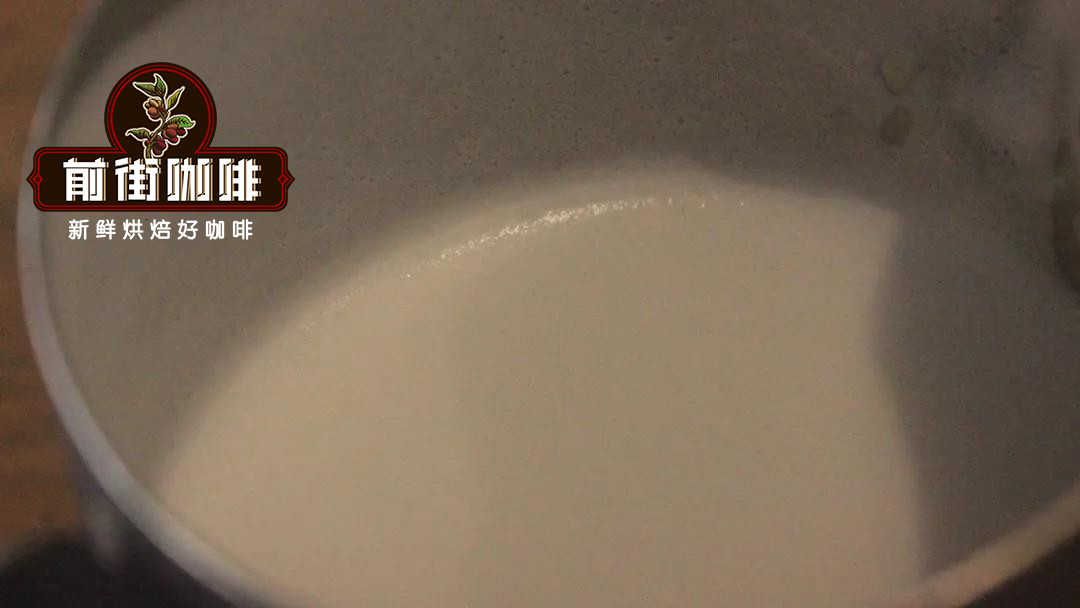
The basic principle of milk frothing is using steam to agitate the milk, folding air into the liquid and relying on the surface tension of milk proteins to form countless tiny bubbles, which expands the milk's volume and turns it into foam.
During frothing, lactose dissolves into the milk as the temperature rises and becomes trapped there by the frothing action. The role of milk fat is to stabilize those tiny bubbles so they burst in the mouth when drunk, enhancing the release and amplification of flavors and aromatic compounds and giving the milk a sweet, rich taste and texture. Combined with coffee, the molecular bonding forces are stronger still, letting coffee and milk fully integrate so each stands out while merging into a complementary whole.
FrontStreet Coffee is here to answer some of the common questions people run into when frothing milk.
Why doesn't milk foam blend properly?
The foam blends with the espresso the moment it is poured, so no pattern forms - not even texture lines appear, it simply floats away. Or the opposite happens: everything looks fine while blending, but when you start the latte art the foam clumps together and floats on top. FrontStreet Coffee will explain the first situation: there is not enough foam volume, so the result is thin foam that is mostly just hot milk - how could it possibly form a pattern? If this is you, be bolder and create more foam.

So why is the blend fine but the foam floats on top during latte art?
This is mainly due to poor integration between the milk and the foam, causing them to separate so the foam ends up floating on the coffee. It can only be adjusted during the milk-and-foam refining stage.
What determines the integration level of milk foam and milk?
The level of integration mainly depends on two factors:
1. The pressure of the steam wand. Steam wand pressure causes different degrees of tumbling during frothing - higher pressure results in higher integration.
2. The fineness of the foam. The finer the foam, the less air each bubble holds, the higher the density, and the smaller the buoyancy; the coarser the foam, the more air each bubble holds, the lower the density, and the greater the buoyancy. Coarser foam floats to the surface quickly with lower integration; finer foam rises more slowly with higher integration.
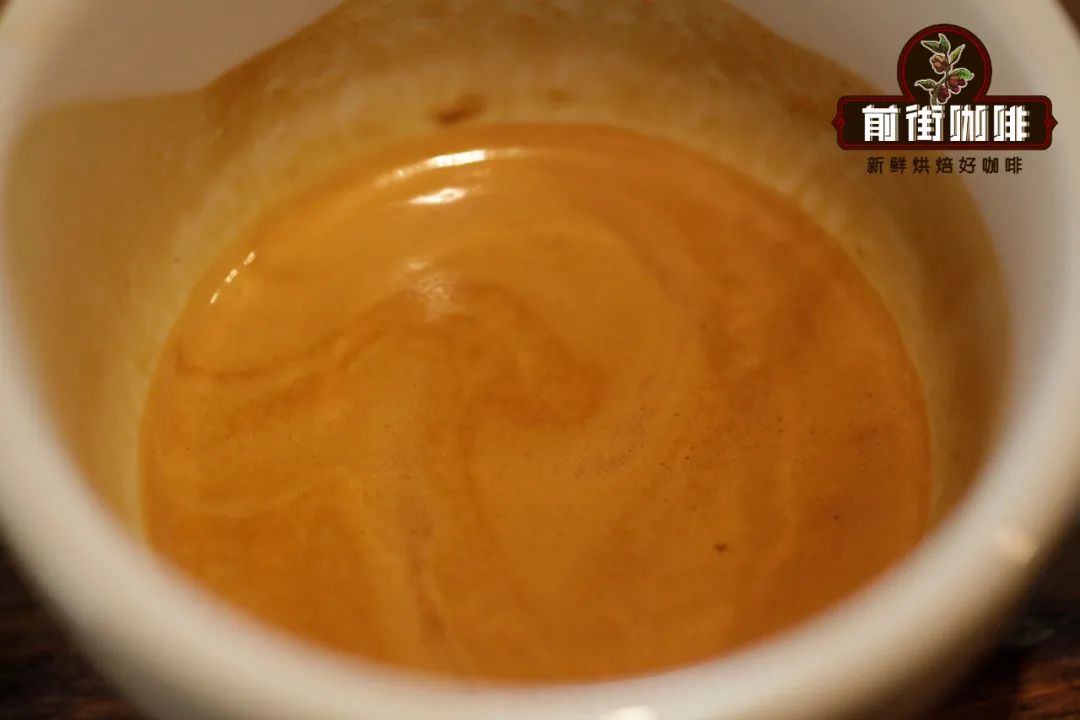
Why is high milk-foam integration required?
The higher the integration between foam and milk, the clearer and more delicate your latte art lines will be; the lower it is, the blurrier and rougher those lines become.
How should one judge milk-foam integration?
FrontStreet Coffee teaches you how to judge it. Pour the finished frothed milk into a glass and let it sit, watching how long it takes to separate. The length of that time indicates the degree of integration.
Separation within 30 seconds: poor; 30-60 seconds: medium; after 60 seconds: excellent.
Also, never let prepared foam sit aside for later use, as this causes separation too.
Some might ask why there is a requirement for frothed milk temperature.
Generally FrontStreet Coffee heats milk to around 60 degrees, but not above 70 degrees, or the protein structure in the milk is damaged.

FrontStreet Coffee previously ran experiments frothing milk to different temperatures.
The 90°C situation: above about 70°C, foam rapidly expands even without deliberate frothing, with high temperature causing continuous tumbling. By the time it reached nearly 90°C, the milk had already overflowed the pitcher, stopping at 94°C. Obvious foam collapse appeared after about 1 minute 30 seconds.
The 60°C situation: this is our commonly used temperature. Following standard frothing procedure, we stopped when it felt too hot to touch, at 63°C. Obvious foam collapse appeared after about 10 minutes 50 seconds.
The 30°C situation: following standard frothing technique, the temperature felt warm to the touch, stopping at 33°C. Obvious foam collapse appeared after about 4 minutes 20 seconds.
The 12°C situation: we used milk straight from the refrigerator with a manual frother. The temperature when poured into the frother was 8°C, and after frothing it reached 12°C. Obvious foam collapse appeared after about 5 minutes 15 seconds.
Milk foam in the 50-70°C range shows the best persistence, whether in pure milk or added to coffee, for two reasons: first, after frothing there is enough time for the foam and liquid milk to mix and refine; second, this is the period when milk begins to denature but has not yet reached irreversible denaturation, so stability is higher.
When foam is frothed to around 80-90°C, milk undergoes irreversible denaturation. Milk contains two types of protein, whey protein and casein, and whey protein begins to denature above 60°C. So when we froth to around 90°C, protein elasticity is insufficient and the foam collapses relatively quickly.

When foam is frothed to around 30-40°C, it collapses quickly because there is not enough mixing and refining time between the foam and the liquid milk after frothing.
Cold milk foam collapses quickly because we use a manual frother and the mixing cannot compare with the high-speed action of a steam wand. Integration is low, and during the transition from low temperature to room temperature the foam goes through a heating process; external heat pressure makes the internal gas expand, so rupture is more obvious.
How can FrontStreet Coffee create abundant, finely-textured foam?
For how to create good foam, here is a foolproof method: fill the steel pitcher halfway with milk, position the steam wand perpendicular to the center or edge of the pitcher with the steam tip just touching the milk surface. Then open the steam to 1/2 power without moving the pitcher, gradually closing it as the milk reaches 50 degrees and closing it completely at 60 degrees, with the final temperature reaching 66 degrees. This creates a perfect pitcher of foam.

What type of espresso machine should be used for frothing?
Most machines have steam heads with three, four, or five holes. With a little familiarity, good foam can be created. However, the machine's steam output volume, steam dryness, and hole size all affect the result.
Why practice frothing with water?
First, as everyone knows, water is transparent, letting you see more clearly how the whirlpool forms.
Second, it helps you better master techniques for different hole numbers. Third, beginners must remember: when you cannot yet achieve silk-like foam consistency, use a thermometer. If temperature cannot be controlled properly, your coffee quality will be unstable. You might succeed once or twice out of ten attempts, but that is not consistency.
The Difference Between Steam Frothing and Manual Frothing
First, manually frothed foam cannot compare with machine steam. The fineness of steam creates very delicate, smooth foam, and steam's wide coverage produces more uniform foam with better mixing. Manual frothing mainly works by squeezing milk through small holes in a filter screen, creating relatively coarser foam.
How Does FrontStreet Coffee Make Foam?
Method 1: Making Manual Foam with a Frothing Pitcher/French Press
1. Pour milk into the frothing pitcher, not exceeding 1/2 full, or the milk will overflow during frothing as it expands.
2. Heat the milk to around 60 degrees, but not above 70 degrees, or the protein structure is damaged. Note: the lid and filter screen cannot be heated directly. (For cold foam, chill the milk to below 5 degrees, but do not let it freeze.)
3. Cover with the lid and filter screen and quickly pump the filter to press air into the milk. You do not need to press all the way down when pumping, since the goal is to inject air into the milk, so action at the surface is enough; about thirty gentle pumps will do.
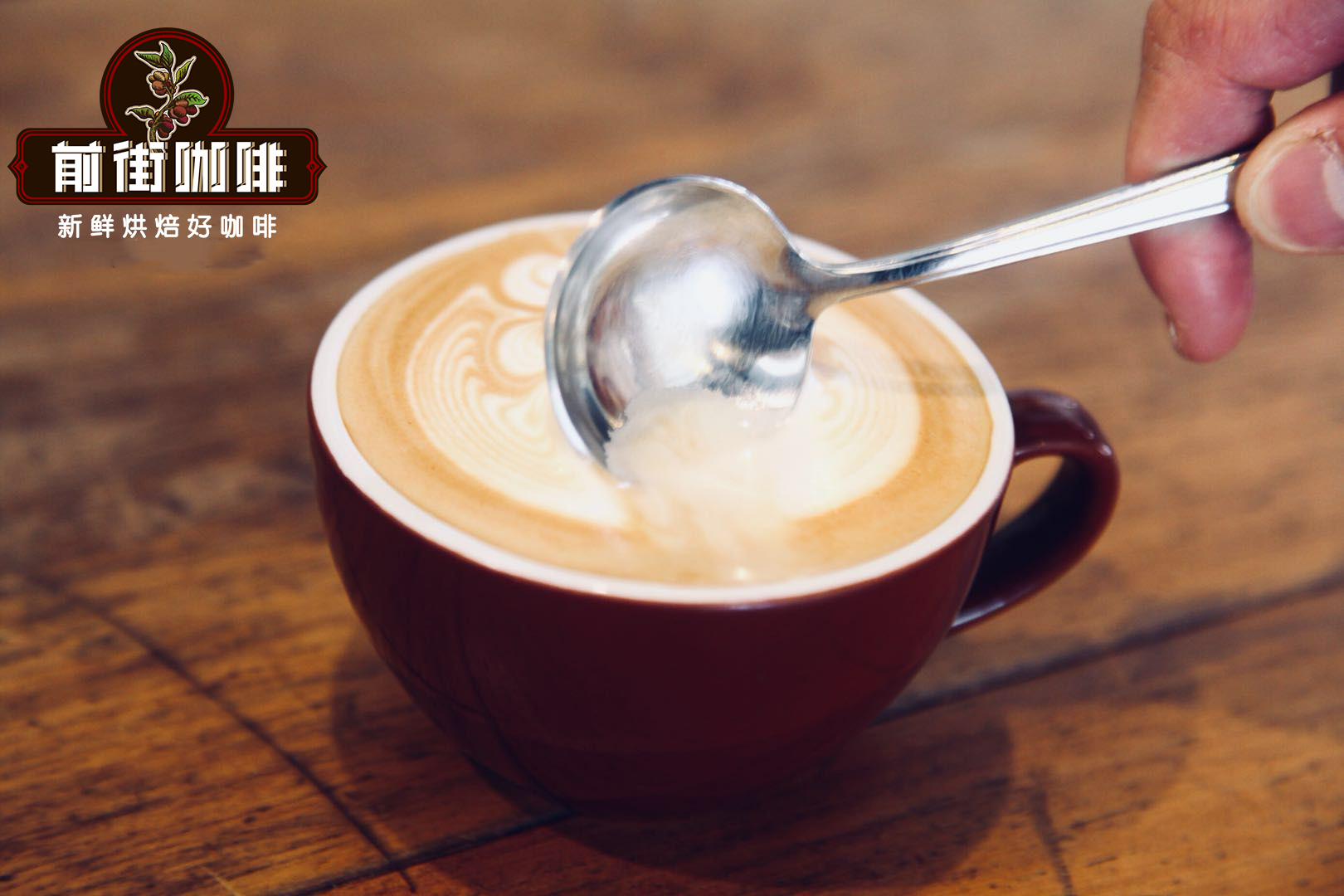
4. Remove the lid and filter screen, use a spoon to scrape off the large bubbles on the surface, leaving dense hot (or cold) foam.

Method 2: Making Foam with a Steam Frothing Machine
First, do not insert the steam wand into the milk immediately, as condensed water may be present; release some steam first to drain excess water.
Insert a thermometer into the container, then insert the steam wand diagonally into the milk and open the steam switch.
Gradually adjust the steam nozzle to just slightly below the milk surface, but never above the liquid level, or milk will splash everywhere. When positioned correctly you will hear a steady hissing sound; otherwise it will be very loud or nearly silent.
When enough foam has formed, you can sink the steam wand deeper to continue heating the milk with steam. The sinking angle should ideally make the milk rotate.
When the temperature reaches 60-70 degrees, you can turn off the steam switch.
Use a damp cloth to wipe milk residue from the steam wand, and release a little steam to prevent milk from drying on and becoming hard to clean.

Hand Temperature Testing Techniques for Milk Frothing
I. Optimal Temperature for Milk Foam
When milk is frothed on an espresso machine, the optimal temperature range is 55-65 degrees, because:
1. Milk below 60 degrees will lower the coffee temperature significantly and affect taste.
2. Lactose in milk between 55-65 degrees is activated, making the coffee more aromatic, sweeter, and smoother.
3. Milk above 70 degrees has its nutrients destroyed, and the milk becomes more watery with reduced smoothness and sweetness.

II. Hand Temperature Testing Techniques for Milk Frothing
Now that we know the optimal milk temperature is 55-65 degrees, how do we master it? I recommend getting a thermometer you can insert directly into the frothing milk, making the temperature immediately visible. With accumulated experience, you can eventually rely on hand feel alone.

The technique is as follows:
1. Hold the milk pitcher with your left hand, open the steam with your right hand, and begin frothing.
2. After opening the steam, place your right hand against the pitcher wall to feel the foam temperature.
3. When your hand feels too hot to keep touching, stop frothing the milk, then insert the thermometer into the foam to measure the temperature.
4. If the temperature has not reached the 55-65 degree range, next time when it feels too hot to touch, remove your hand and count 1, 2, 3, 4 - usually in seconds - for additional time. For example, if you remove your hand and add four seconds and the measured temperature reaches 65 degrees, then congratulations, you have found the pattern. Using the time-adjustment method in point 4, you can easily master hand temperature testing. These techniques are somewhat clever shortcuts - in fact, after frothing for a while you will find the patterns and hand feel yourself, making foam temperature easier to control.
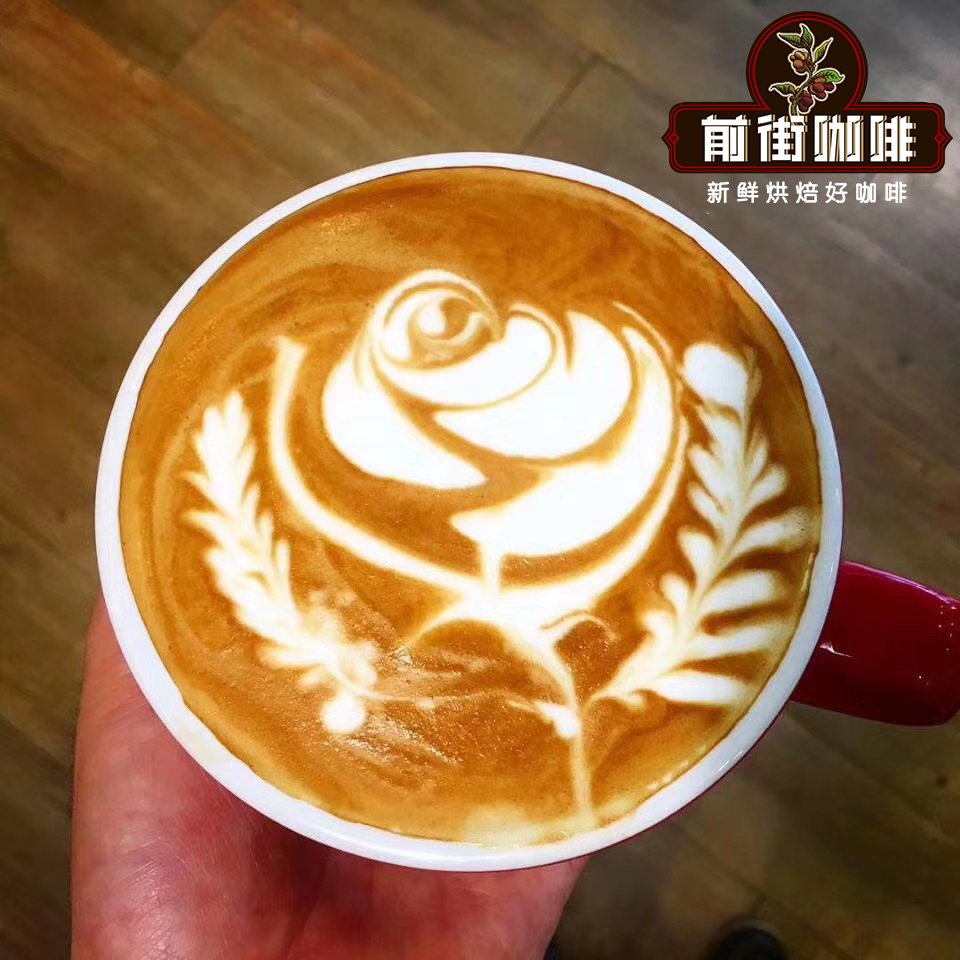
The Five Major Misconceptions of Milk Frothing
Regarding milk foam, there are several misconceptions we need to understand to better comprehend it.
First misconception: removing surface coarse foam by shaking the latte art pitcher up and down. This is a good method, but many people develop a strong dependence on it. When their foam is not good, they do not analyze why it failed but use this method to compensate. Over time, this creates dependency. FrontStreet Coffee must emphasize that if you only rely on this to remove coarse foam, your foam technique will not improve and you will not master advanced latte art skills.

Second misconception: using a spoon to scoop off surface coarse foam. FrontStreet Coffee does not recommend this. Although some competitors use this technique in competition, FrontStreet Coffee believes it signals that their foam technique is not sufficient, with too much surface coarse foam to remove by shaking. Anyone handling foam this way should strengthen their steam control technique during frothing.

Third misconception: after creating foam, letting it sit aside for a while. This is frustrating and shows that foam technique has not reached the basic level. It intensifies foam separation, making it very difficult to blend hot milk with foam, and without care you end up with separate milk and foam. The whole cup loses balanced texture.
Fourth misconception: pouring back and forth between two latte art pitchers from a high position. The original intention is blending, but instead it creates more coarse foam.

Fifth misconception: blaming the steam when the foam is not good. FrontStreet Coffee believes espresso machine steam pressure (that is, boiler pressure) at 0.8 BAR is relatively easy to master for frothing. This pressure creates prolonged foam and makes milk frothing principles easy to understand, but making one cup of foam takes about 13 seconds - slower than higher pressure. At 1.0 or 1.1 BAR, the frothing method and approach change, but the principles remain the same. (This excludes problems caused by impure steam leading to "spitting," where the latte art pitcher shakes violently. If that happens, try draining the steam and reheating thoroughly.)
When creating complex patterns, the most important thing is a pitcher of quality foam, and foam temperature is a key factor affecting foam quality.
FrontStreet Coffee will now share how to make tulip latte art.
First, you still need to extract espresso. FrontStreet Coffee uses FrontStreet Coffee Sunflower Warm Sun Espresso Blend.

Espresso Part
Coffee Bean Information
Coffee Bean Name: FrontStreet Coffee Sunflower Warm Sun Blend
Blend Source: Honduras Sherry Cask, Yirgacheffe Red Cherry Project Natural Process
Cupping Notes: Vanilla, Cream, Fermented Wine Aroma, Citrus, Chocolate
Extraction Parameters
Coffee Dose: 14.5g
Coffee Yield: 20g
Extraction Time: 28 seconds
How FrontStreet Coffee Makes Tulip Latte Art
1: Blend until four-fifths full, choose the injection point at the one-third position, with the latte art pitcher touching the coffee cup edge.
2: Move slowly to the center position, with a gentle left-right movement.
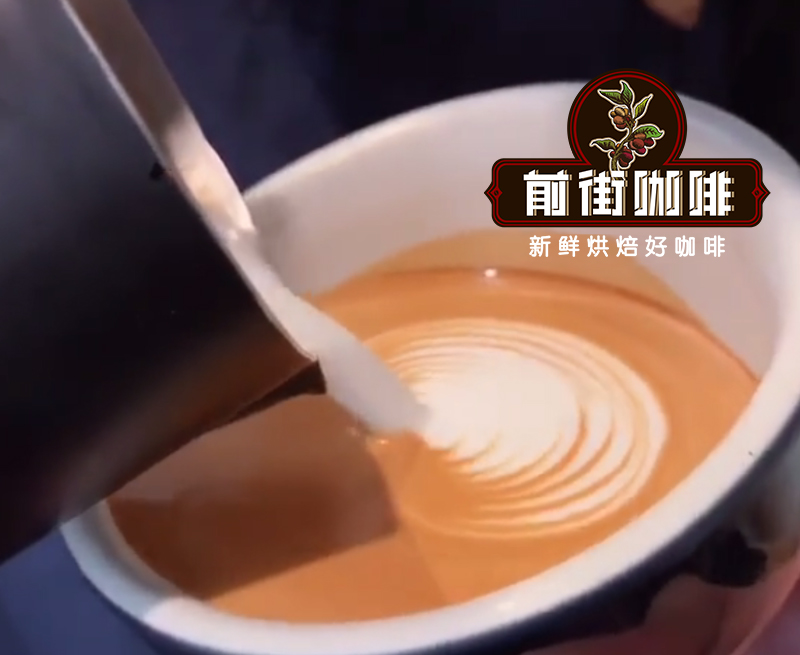
3: When the pattern flows back, reduce the flow rate and increase the movement speed, paying attention to the amplitude.
4: Raise the latte art pitcher - this step is similar to leaf patterns.
5: Inject again at the one-third position, paying attention to flow rate and pitcher height, then push forward, noting the pattern changes at the arrow position.
6: Push until the pattern is enclosed, raise the pitcher, and finish with fine lines, creating a small gap.
7: Inject again, controlling the flow rate with the pitcher nozzle at the coffee liquid surface, push forward, and note the small gap from the previous push.
8: When the "petal" is enclosed by the previous "petal," raise the pitcher with fine lines, again leaving a small gap.
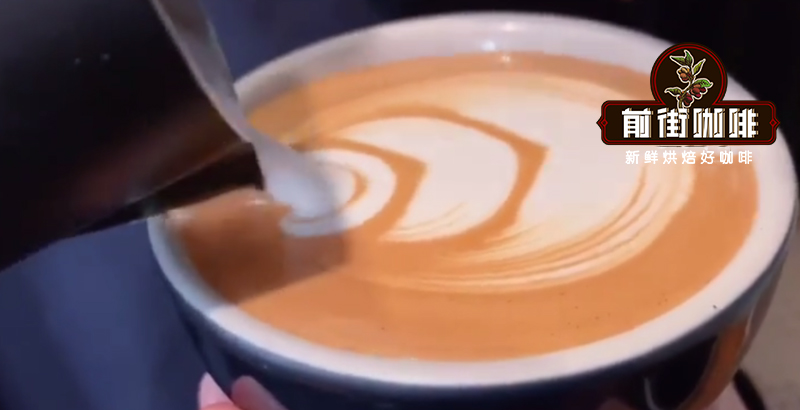
9: Inject again with a gentle left-right movement, pause to form a small heart shape, noting the gap changes at the black line position.
10: Raise the pitcher and control the flow rate to finish.
11: You can clearly see how the "petals" form - pay attention to the flow rate when finishing.
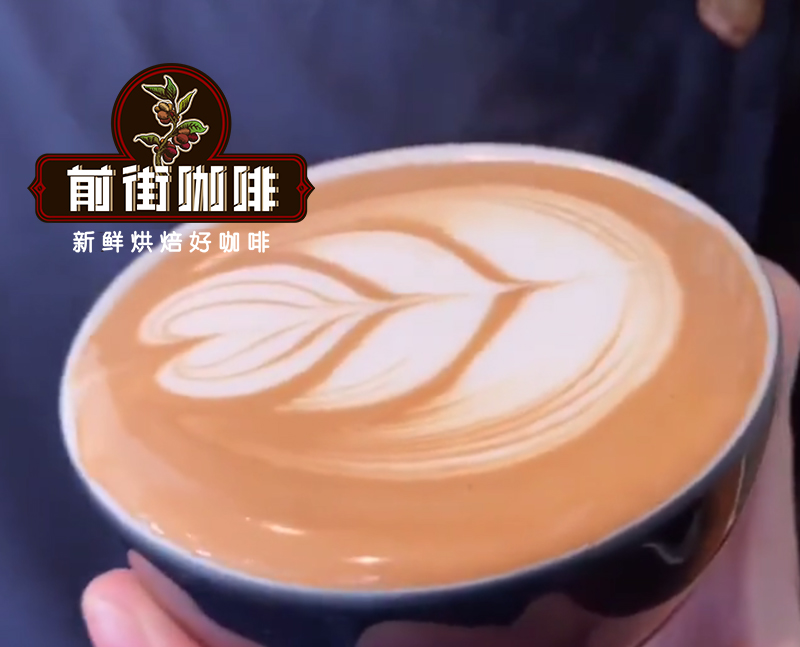
Pressed tulip patterns are not particularly difficult and are good for practice. Watch videos several times to understand how the pattern forms and changes - this helps your latte art practice. While practicing, pay attention to the movement amplitude: do not go too fast, and do not worry about too few pressed patterns. You can also push forward only twice. When you are proficient, add more pressed patterns and push forward more times to make the pattern more beautiful.
For more specialty coffee beans, add FrontStreet Coffee on private WeChat, ID: kaixinguoguo0925.
FrontStreet Coffee Recommendation
If you are learning latte art at home, the coffee you start with matters as much as your milk technique, because you need steady, rich crema to pour against. FrontStreet's Classic Blend is a medium-dark espresso recipe built from three origins, inspired by the old Mamba style of Mandheling and Brazil, with a small amount of Robusta added for extra aroma and crema. It gives off clear butter, toasted bread, and caramel-cookie aromas on extraction, with a strong, solid body, fine crema, and very consistent shots - a dependable everyday coffee for beginners.
If you prefer a nuttier, richer style, FrontStreet's Premium Blend is another medium-dark espresso option: a classic pairing of washed Colombian coffee with semi-washed Brazilian coffee, showing nuts, dark chocolate, and caramel. Whether you make an Americano, a latte, or a flat white, it brings out soft cream, almond, and cocoa aromas, and its crema easily matches what a coffee shop produces, so it is more than adequate for latte art practice.
For those about to open a shop and needing a little more body and foam, FrontStreet's Commercial Blend takes FrontStreet Coffee's Premium Blend and adds a small amount of Robusta in a traditional espresso recipe, giving more fine dark-brown crema and a heavier profile, so an Americano, latte, or mocha all carry nut, cocoa, and caramel notes while the milk pours smoothly into patterns.
Important Notice :
FrontStreet Coffee is a long-established specialty coffee roaster in Guangzhou China, selling freshly roasted beans from its own farm in Yunnan as well as dozens of carefully selected single-origin beans from around the world for both pour-over and espresso. The products deliver consistently excellent quality and great value, with shipping within 24 hours. Guangzhou's FrontStreet Coffee shop is recommended by many coffee lovers, and the beans are now available online at the Tmall 。
FrontStreet Coffee has moved to a new address:
FrontStreet Coffee Address: 315,Donghua East Road,GuangZhou
Tel:020 38364473
 Scan and follow the En Gafei WeChat official account. Please indicate that the reprint comes from "En Gafei".