What Coffee Beans to Use for Espresso? Yunnan Blend Extraction Characteristics and Water Ratio? How to Make Latte?
Single-origin coffee draws more and more attention these days, yet by FrontStreet Coffee's own sales figures, espresso drinks still dominate. That's simply a matter of prevailing tastes—it doesn't mean espresso is superior to single origin, or that espresso drinkers don't understand single origin. FrontStreet Coffee has always believed coffee is a wonderfully inclusive culinary culture: it can spotlight one origin alone, or weave several together into a fuller, more rounded profile. And on the subject of blending, we arrive naturally at the espresso blend. Today FrontStreet Coffee examines espresso blends through three lenses: origin selection, roasting, and blend ratios.

What are espresso beans? Which coffees suit espresso?
Espresso beans mostly mean blends. What is blending? Mixing several single-origin coffees together—two or three components being the most common format. FrontStreet Coffee's own espresso lineup includes both two-bean and three-bean blends.
The purpose of blending is straightforward: combine the strengths of different beans into a completely new flavor profile with better balance. If one bean is silky but shy on aroma, add another that's aromatic, and each covers the other's weaknesses. In FrontStreet Coffee's view, it is exactly this complementarity that makes espresso blends so broadly appealing.

Roasting an Espresso Blend
Espresso blend roasting follows two schools: blend the green beans first and roast them together, or roast each origin separately and blend afterward. Each approach yields a different flavor character.
FrontStreet Coffee has found that blend-first roasting produces more uniform bean color and more consistent flavor in the cup, and it's more convenient to execute. Roast-first-then-blend demands that you already understand each origin's traits—hardness, moisture content—and tailor a roast profile to each. It's a one-on-one approach that showcases each component's individual flavors with richer layering than the first method, but it tests the roaster's grasp of every bean.

Espresso Blend Recipes? What beans work for espresso?
What coffee suits espresso? FrontStreet Coffee currently offers four espresso blends with distinct flavor profiles.
1. FrontStreet Premium Espresso Blend
Colombian and Brazilian beans blended 3:7, built to meet the daily needs of cafés.
Flavor characteristics: A comfortable bittersweetness, an extremely smooth entry, a faint grassy aroma—fresh and only slightly bitter, sweet and silky, with a pleasant aftertaste.

2. FrontStreet Sunflower Warm Sun Espresso Blend
FrontStreet Honduras Sherry and FrontStreet Yirgacheffe Red Cherry blended 7:3.
Flavor characteristics: Obvious fruit acidity with a lingering berry whisper, rich wine and chocolate flavors, and a comfortable sweet finish.

3. FrontStreet Commercial Espresso Blend
Colombian, Brazilian, and Robusta beans in a 3:6:1 ratio, suited to everyday café production.
Flavor characteristics: Extra-rich crema and a classic taste—caramel sweetness with nutty, cocoa, and dark chocolate notes, balanced sweet and sour, slightly bittersweet, and a lasting aftertaste.

4. FrontStreet Basic Espresso Blend
Yunnan and Brazilian beans blended 3:7, aimed at cafés and home users who prioritize cost and have moderate flavor expectations.
Flavor characteristics: Gentle fruit acidity, caramel sweetness, nutty and dark chocolate flavors, smooth and thick—though the overall taste is relatively light.

What Is Latte Coffee?
The "latte" in latte coffee is a transliteration of the Italian word for "milk," so the drink can be read literally as "milk coffee." Every café fine-tunes its milk-to-coffee ratio, bean selection, and extraction parameters, but broadly speaking a latte is espresso mixed with a large amount of milk.

Many readers message FrontStreet Coffee asking what it takes to become a barista, and whether knowing latte art is enough. In truth, a barista needs to know how to make coffee and to absorb a great deal of coffee knowledge besides. The most basic skills are espresso extraction and milk steaming. Many cafés use the latte as the interview test to see whether a candidate has the fundamentals.
How Does FrontStreet Coffee Make Its Latte?
FrontStreet Coffee demonstrates with its own Sunflower Blend. The bean information is as follows:
Coffee name: FrontStreet Sunflower Warm Sun Espresso Blend
Blend components: FrontStreet Honduras Sherry Barrel & FrontStreet Natural Yirgacheffe Red Cherry
Composition ratio: 7:3
Flavor description: Vanilla, cream, fermented notes, wine notes, chocolate

Espresso Extraction Parameters:
Coffee dose: 18 grams
Coffee liquid output: 36 grams
Extraction time: 28 seconds
Milk Parameters:
Milk type: Whole milk
Steaming temperature: 50 degrees Celsius
Foam thickness: 1cm
Milk to coffee ratio: 1:9

Cup Details:
Cup capacity: 200ml
Material: Ceramic
How to Get a Great Espresso Extraction?
1. Choose Your Beans
FrontStreet Coffee generally recommends resting espresso beans for about ten days. But dark-roasted beans degas faster than light-roasted ones—so why such a long rest? Because espresso, unlike pour-over, gives the coffee no room to vent. If the beans are too fresh, degassing runs vigorous, channeling easily occurs, and the extraction becomes unstable.

2. Adjust the Grind Size
With suitable beans in hand, the espresso grind is the next variable—and it's essentially a daily task. The grind for espresso is never fixed at one setting. When should you adjust?
Situations that may require a grinder adjustment:
1. Sudden changes in temperature, air pressure, or humidity: especially noticeable in open, unconditioned spaces.
2. Switching from old beans to new: when one bag runs out and freshly opened beans go in. New beans may differ in roast date, batch, or resting period, and therefore extract differently.
3. Continuous brewing: after 5-6 consecutive shots, the grind may suddenly run much finer. Sustained grinder use transfers motor heat into the burrs, and friction between burrs and beans adds more, so the upper and lower burrs expand and the gap narrows.

A bean's moisture and storage time shift constantly, and burr wear progresses over time, so baristas should recalibrate their grinders regularly to keep the grounds in perfect condition.
When beans enter the grinder, the burrs crush them into particles. The tighter the gap, the finer the particles. Finer grounds pack more densely, resisting the flow of water and stretching extraction time. Widen the gap and the particles grow coarser, water flows through more easily, and the shot runs faster.

As a rule, pull a shot using your previous parameters and keep the time within 25-30 seconds, with a single dose of 13-14 grams and a double dose around 20 grams.
Once puck perforation is ruled out: if the extraction runs long, you may be over-extracting the surface while under-extracting the interior—sharp acidity, burnt bitterness, astringency. The grind is probably too fine; nudge it coarser. If the flow runs fast and thick with a shallow, pale extraction, the grind is probably too coarse; nudge it finer.

3. Dosing
Dosing is the first step of distribution. An uneven dose misleads everything that follows—even the most advanced distribution tools can't fully undo its impact on the extraction.
What does uneven dosing do?
1. Flavor inconsistency: an uneven dose leaves the lower bed unfixable during distribution. Uneven density means uneven puck thickness, so water flows at different speeds through different zones. One slip and you get perforation or channeling (water's inertia makes it take the easy paths and ignore the rest), leaving parts of the puck under-extracted and others over-extracted—so the taste varies shot to shot.

2. Wildly divergent extraction parameters: you can spend ages adjusting the grinder while the flow rate, the time, and even the grind stay wrong—wasting plenty of beans and still never achieving stable output.
How do you practice dosing?
1. Keep a digital scale ready
Weighing each dose before extraction is essential for a perfect shot. Even with a dosing grinder, check its accuracy regularly—even the finest machines make errors.

2. Rotational dosing
Whether dosing by hand or straight from the grinder, if the grounds don't fall perfectly vertically, lateral acceleration biases the bed. When dosing by hand, for instance, a hard flick lands differently from a gentle one—the harder the flick, the more the pile leans left.
The answer is to dose at a steady rate while rotating the portafilter evenly, spreading grounds across the whole basket. Absolute uniformity is impossible, but it beats a fixed-position dose by a wide margin.
4. Distribution
Common distribution methods include:
First: Scraping Distribution
Three great scraping tools: the bean hopper lid, bamboo strips, and your finger. Scraping is the most common method and the first one beginners meet, usually paired with back-and-forth motions: four-way scraping (front, back, left, right) and 360-degree rotational scraping.
Second: Light Tapping and Gentle Knocking
Tapping and knocking are two actions, usually performed in sequence. Tap the portafilter's base briskly with your palm to level the mound, then add light vertical knocks to eliminate large voids, densifying the grounds and increasing how much coffee the basket can hold.
Third: Tool-Assisted Distribution
Distribution gadgets each have their champions. The tools on the market fall into several families: ① stirring or shaking; ② surface leveling; ③ sieve dispersion; ④ rotational distribution.

Checking Your Distribution
If the coffee stream turns unstable mid-shot with big fluctuations and pales quickly, you can diagnose: cracks inside the puck, or uneven tamping over-extracting the low-coffee zones (often itself caused by uneven distribution), or such poor distribution that the edges were left bare and water ran straight through.
After the shot, knock out the portafilter and inspect the puck. Bare edges, floating grounds, or obvious gaps in the puck all point to extraction failure caused by uneven distribution.
Fourth: Tamping
Tamping applies force to compact the loose grounds so pressurized hot water can penetrate evenly.

Keep it vertical. Tamp at an angle and the group head's hot, pressurized water will hunt for the path of least resistance, extraction goes uneven, and channeling follows.
How hard you tamp, and which tamper you use, matter little—what matters is a compacted bed. Consistency of force from shot to shot is the real key.
How to Froth Milk?
How do you create the fine, dense microfoam a latte demands? FrontStreet Coffee recommends whole milk with 3.2-3.8% fat content.
For this experiment we used Kowloon Dairy fresh milk.
Milk Steaming Process
1. Place the steam wand at the center point of the pitcher, tilted 45 degrees up and to the right against the rim, submerged about 1 cm. (This depth is a common starting point, but machines differ in steam power, so treat it as a suggestion.)
2. Open the steam, slowly lower the pitcher, and let the wand's vent break the milk surface to introduce air, producing an up-and-down rolling motion that gradually expands the milk with foam.
3. When aeration and expansion reach the desired thickness, move the wand to the pitcher's center point near the wall so the foam spins in a vortex.
4. Adjust the pitcher's angle and depth to fold the coarser foam into microfoam, and stop at the target temperature.

Milk Steaming Principles
Stage one: Stretching/aeration—the wand's vent touches the milk surface and steam enters the milk, stretching it into foam.
Stage two: Texturing—the vortex folds air through the stretched milk, breaking larger bubbles into fine foam and bonding the milk molecules so the texture grows denser.
Points to Note
Stretching and Aeration
Open the steam to begin aerating and watch the surface. If the milk spins but you hear no "chi-chi-chi," air isn't being drawn in. Lower the pitcher slightly to expose the tip a touch. When you hear the hiss of air intake, stop lowering and hold the pitcher steady.
Now watch the milk's movement. Normally it should aerate while the liquid rotates, forming a vortex.
The motion of lowering the pitcher must be subtle and gradual—never forceful. Once the sound confirms air intake, stabilize and stop.

Steam Wand Angle While Foaming
Many people park the wand at the 2-3 o'clock or 9-10 o'clock position of the pitcher (taking the spout as 12 o'clock).
Beyond position, the angle between the wand and the liquid surface matters enormously.
Too vertical, and most steam jets downward, making it hard for the milk to form a tight vortex. Too horizontal, and the steam fires parallel to the surface—the vortex balloons into turbulence that's hard to control, or the milk overflows.
Beginner Latte Art Practice
With espresso extracted and milk frothed, first swirl the cup so the crema clings to the walls, then tilt the cup to about 40 degrees.
As you pour, keep the stream modest so the milk plunges straight through the coffee to the bottom, then begin circling to blend milk and coffee.
Key points: pour with a fine stream, and keep it fixed at the center of the coffee's surface. As shown below:
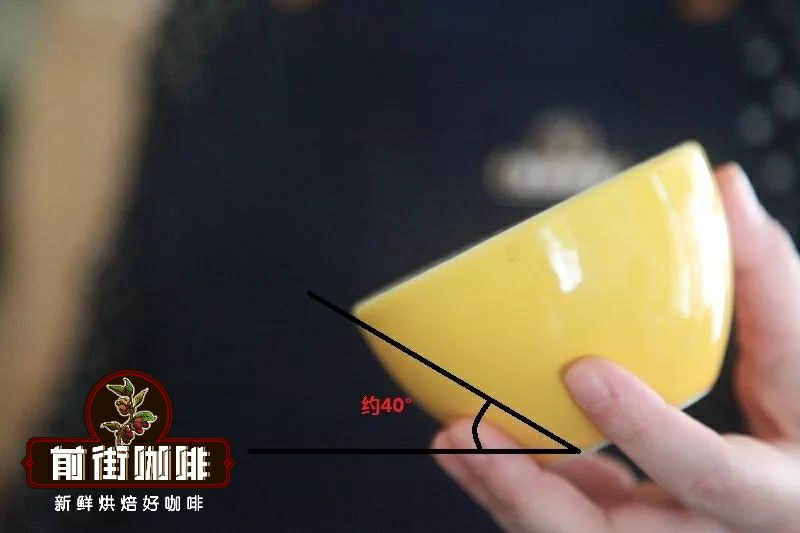
Keep circling until the cup is about six-tenths full, then begin your latte art.
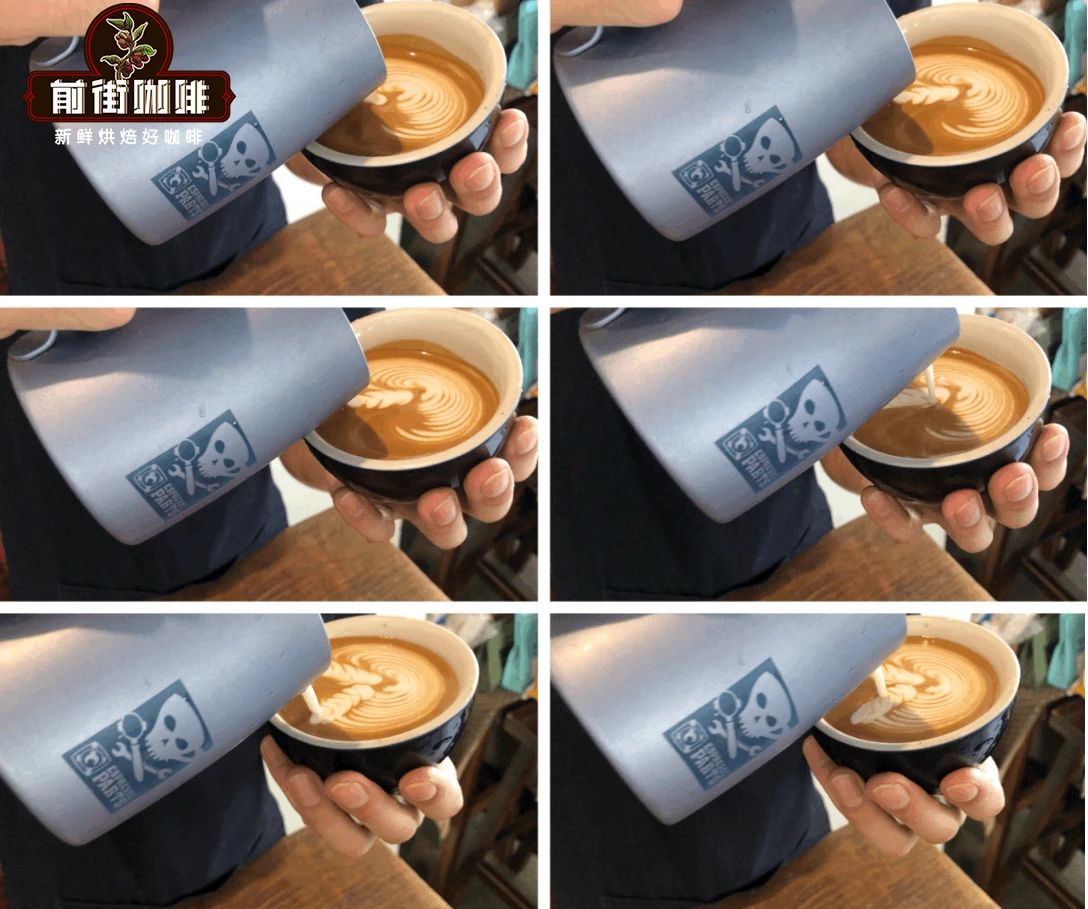
Pushed Heart Latte Art
For the pushed heart, pour at the one-third point of the cup, push out a semicircle, then immediately push forward another. As the final heart takes shape, raise the pitcher and pour briefly so the initial semicircle wraps around the whole heart, then finish with a thin stream.
FrontStreet Latte Flavor Description
FrontStreet Coffee's current house espresso blend is the Sunflower Warm Sun Blend, built from FrontStreet Honduras Sherry Barrel fermented beans and FrontStreet Ethiopia Yirgacheffe Red Cherry Project naturals. Paired with milk, the espresso shows pronounced liquor-laced chocolate with clear sweetness and a long, clean aftertaste—perfect for anyone who enjoys wine-flavored profiles.
FrontStreet Coffee Recommendation
If a Yunnan-forward espresso appeals to you, try the FrontStreet Black Cocoa Blend—a barista favorite that combines Yunnan Arabica ("Yunnan small-bean" coffee) with Brazil Cerrado beans. The Brazil component supplies mixed-nut aromatics and a balanced body, while the Yunnan coffee contributes chocolate and citrus. As an Americano it balances sweet, sour, and bitter with nutty, brown-sugar fragrance; as a latte it pours with the silky smoothness of almond and cream—an excellent choice for beginners.
Curious about Yunnan coffee on its own? Start with the FrontStreet Yunnan Baoshan small-bean coffee, washed and medium roasted, with soft nut and chocolate sweetness, a touch of plum acidity, and a friendly price—a gentle first taste of Chinese specialty coffee. For a deeper dive, the FrontStreet 2013 Yunnan Natural Typica, grown on FrontStreet's own estate from one of the oldest and purest Arabica varieties, is sun-dried in the most traditional way and roasted medium: fuller body, more pronounced sweet-sour structure, dark berry and caramel sweetness with chocolate and a whisper of dried apricot, finishing on black tea.
Important Notice :
FrontStreet Coffee is a long-established specialty coffee roaster in Guangzhou China, selling freshly roasted beans from its own farm in Yunnan as well as dozens of carefully selected single-origin beans from around the world for both pour-over and espresso. The products deliver consistently excellent quality and great value, with shipping within 24 hours. Guangzhou's FrontStreet Coffee shop is recommended by many coffee lovers, and the beans are now available online at the Tmall 。
FrontStreet Coffee has moved to a new address:
FrontStreet Coffee Address: 315,Donghua East Road,GuangZhou
Tel:020 38364473
 Scan and follow the En Gafei WeChat official account. Please indicate that the reprint comes from "En Gafei".