Pour-Over Coffee Single-Stream Technique: Step-by-Step Guide & Ratio Method - Detailed Explanation of Single vs. Triple Stream Differences
Professional Coffee Knowledge Exchange
Welcome to today's coffee knowledge exchange, where we take a close look at pour-over technique and how a single stream differs from a staged pour.
The Art of Pour-Over Coffee: Single-Pour vs. Three-Pour Techniques
One of the great joys of pour-over coffee is using different methods to interpret the same bean. Everyone pays close attention to pouring technique, and the two most widely shared approaches today are the single-pour and three-pour methods. Let's look at what makes each one tick.
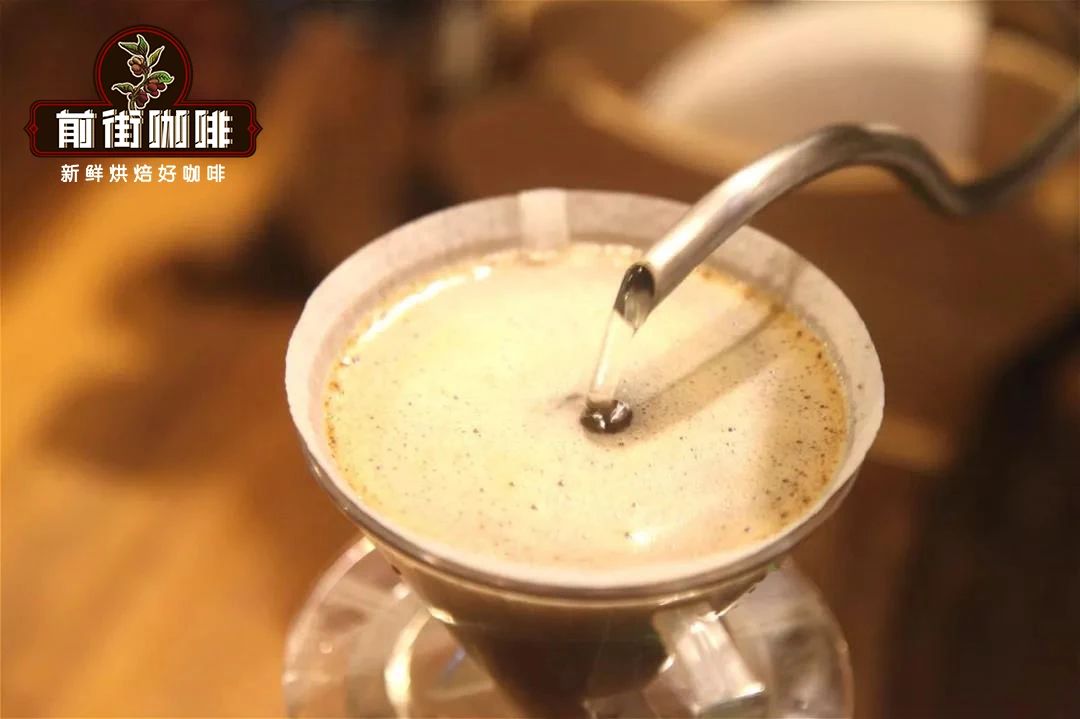
What Is the Single-Pour Brewing Method?
The single-pour method is often the first technique people meet when they start brewing by hand. Its theory is simple and easy to grasp: after the bloom pour, a second pour delivers the entire target water quantity at once. Note that "single-pour" does not mean one continuous stream. The whole brew still involves two pours, the bloom and then the main pour. A truly continuous pour is usually called a "one-shot pour."
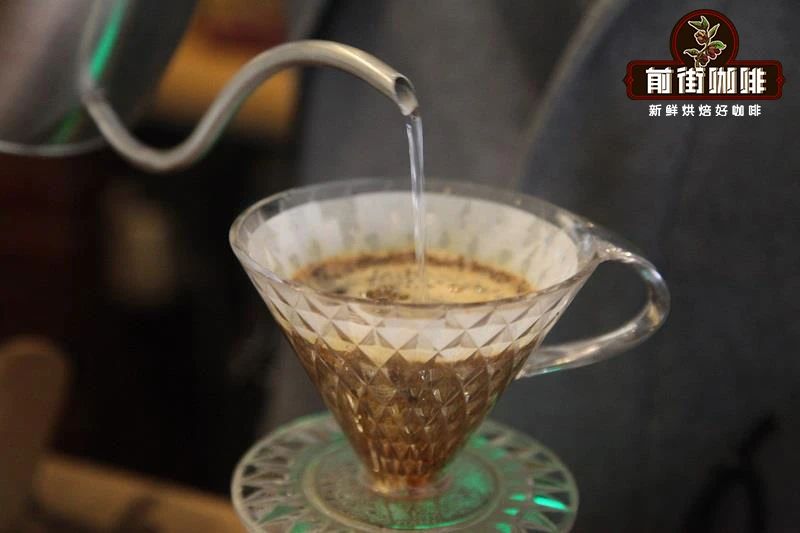
Brewing Process
First, prepare everything: warm the dripper and server, grind the coffee, and heat the water to the right temperature. Then add the grounds. If we use 15 grams of coffee at a 1:15 coffee-to-water ratio, the target water quantity is 225 grams.
Begin the first pour while starting the timer. Pour 30 grams of hot water, moving from the center outward in circles. The grounds will absorb water and slowly expand into a puffed-up "coffee burger." Stop at 30 grams and wait for a 30-second bloom. Starting at the 31st second, begin the second pour, moving from the center outward in a "mosquito coil" pattern. Keep the stream steady and vertical at a small flow rate of about 4 g/s. The liquid level rises steadily, and as the foam on the surface releases it spreads across the entire coffee bed. The stream should circle from the outermost edge back toward the center. Stop at 225 grams. Once all the coffee has dripped into the server, remove the dripper to finish extraction.
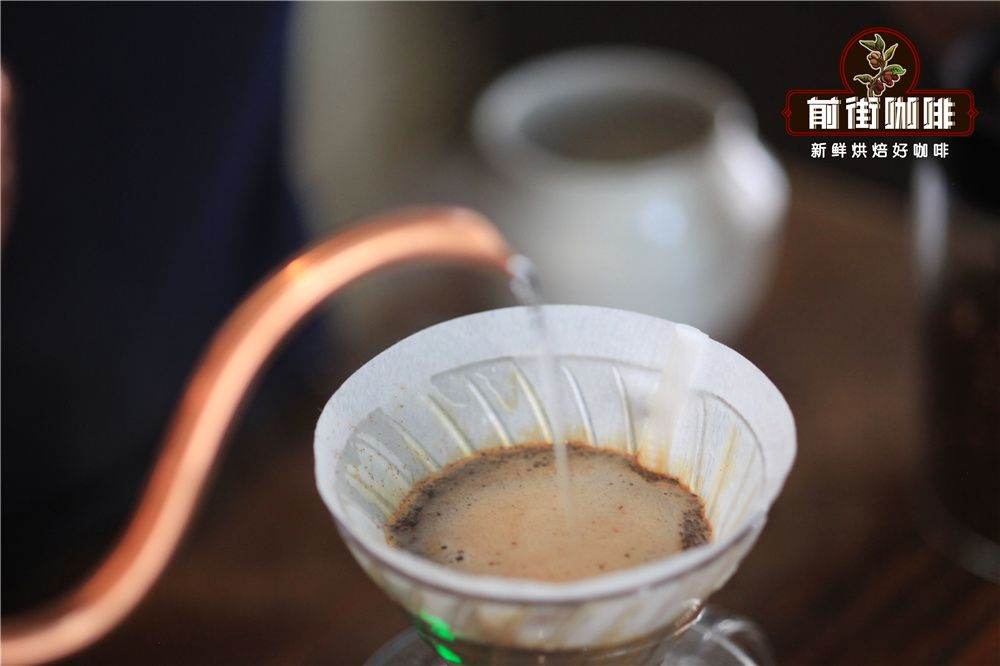
Characteristics of the Single-Pour Brewing Method
Highlighting Clean, Clear, and Stable Flavors
Coffee brewed with a single pour typically comes out lighter, cleaner, and clearer than with multi-pour methods. Because it involves minimal technique intervention, it can express a coffee's flavor more intuitively and more consistently than a multi-pour approach.
Easy to Understand but Demanding of Pouring Fundamentals
This method is the easiest for beginners to grasp in theory, but pouring stability is crucial. It does not involve many steps, yet the key factor in the cup is the stability and flow rate of the stream. That is why single-pour is so good for beginners to practice. If your water-flow control is poor, off-flavors will show up more clearly than with other methods.
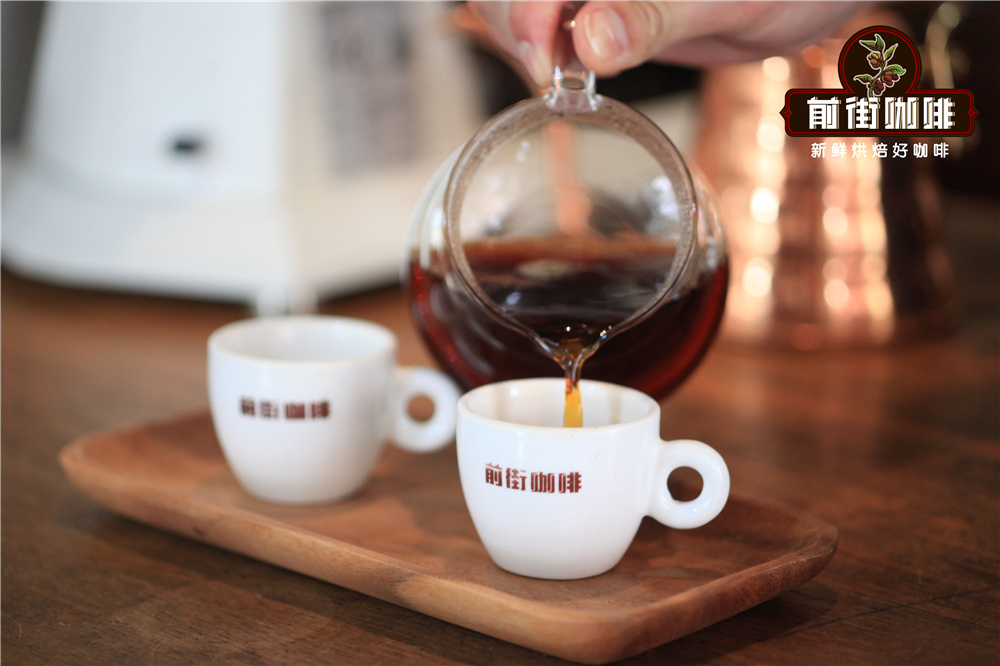
More Stringent Parameter Requirements
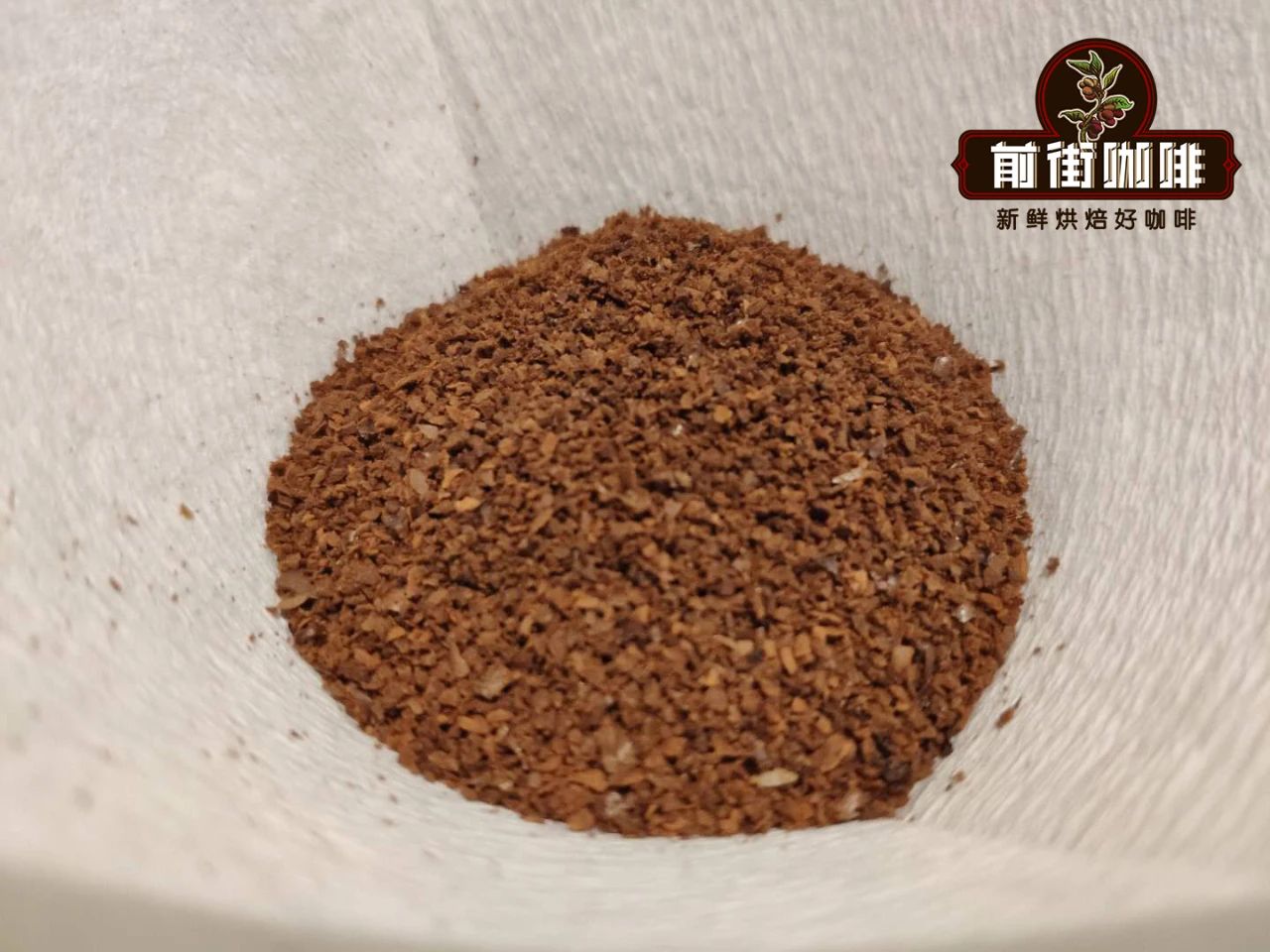
This shows up most clearly in grind size. Too coarse and the coffee under-extracts; too fine and the longer immersion leads to over-extraction. Without technique to lean on, the precision required of grind size is stricter than with other methods.
What Is the Three-Pour Brewing Method?
This is a very common technique. Simply put, it divides the pour into three parts, including the bloom. Take FrontStreet Coffee's parameters for Colombian Huila washed Caturra as an example: 15 grams of grounds as standard, a 1:15 coffee-to-water ratio, 88 degrees Celsius water, a medium-coarse grind, with a 65% pass-through rate on a standard #20 sieve.
Brewing Process
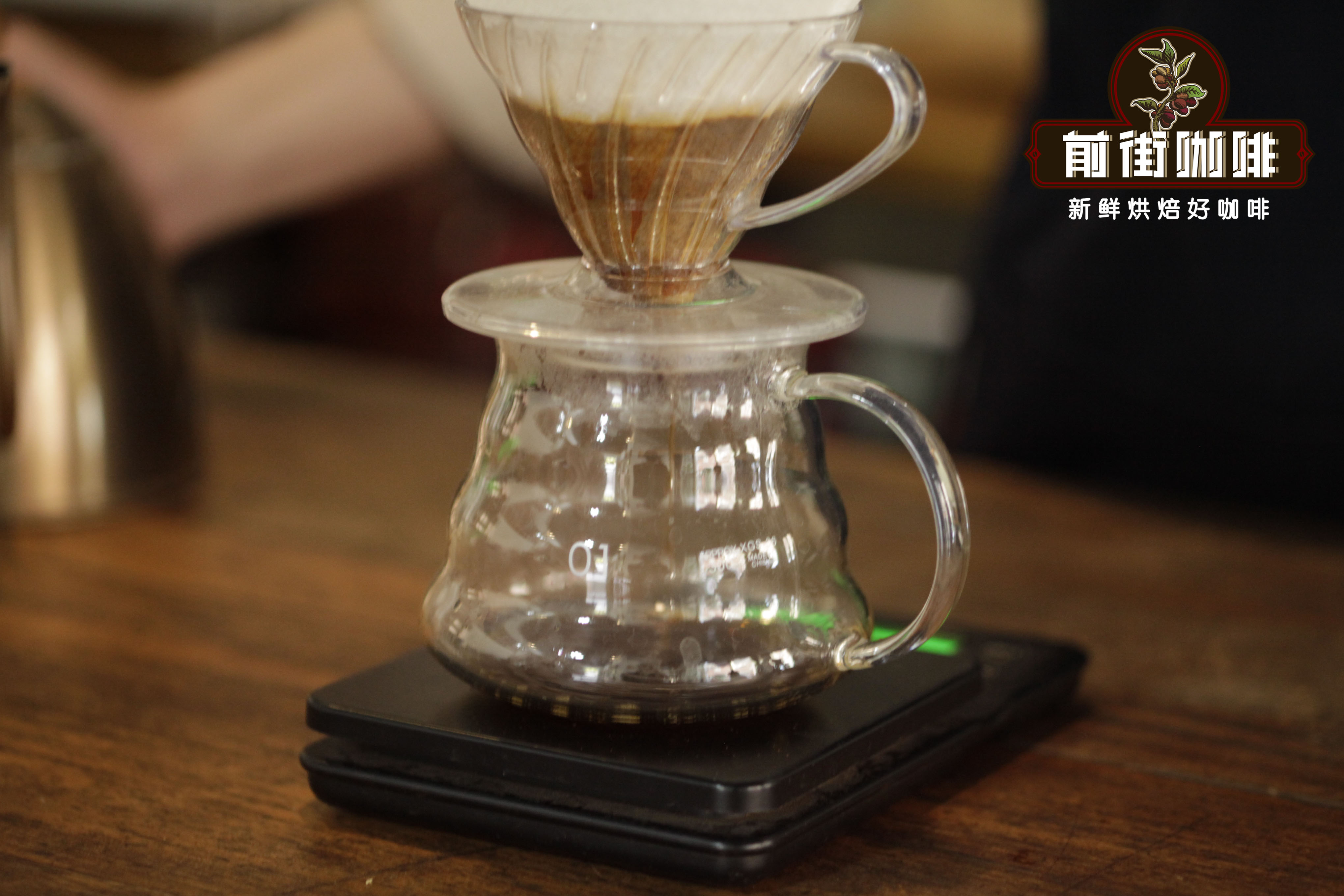
First, prepare everything: warm the dripper and server, grind the coffee, and heat the water. Then add the grounds. Begin the first pour while starting the timer. Pour 30 grams of hot water from the center outward in circles. The grounds absorb water and slowly expand into a puffed-up "coffee burger."
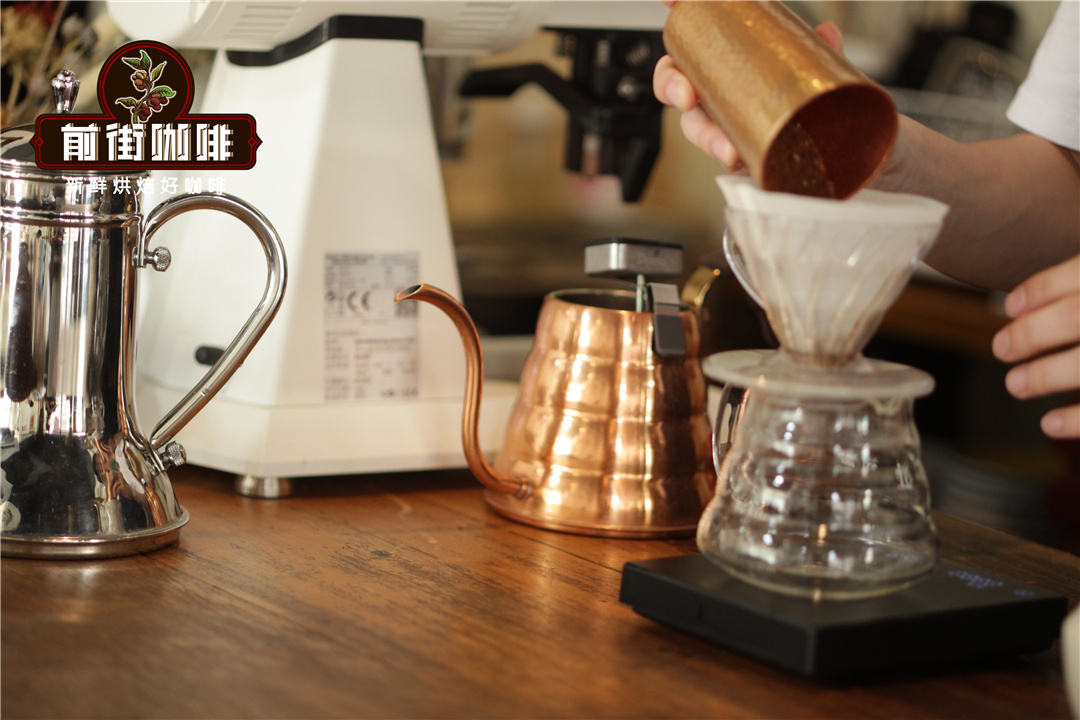
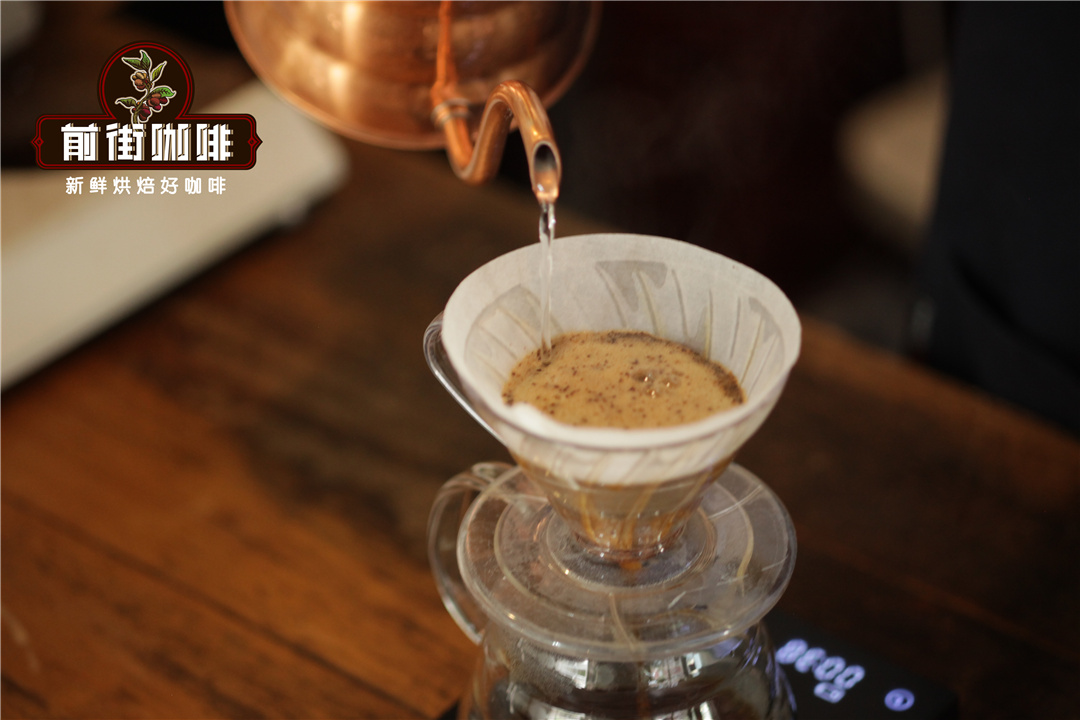
Stop at 30 grams and wait for a 30-second bloom. Starting at the 31st second, begin the second pour, moving from the center outward in circles. Keep the stream steady and vertical. When the stream hits the coffee bed, foam appears. This stage lets the coffee foam release and spread across the whole bed, raising the liquid level to the root of the ribs on the filter paper. This stage uses 100 grams of water.
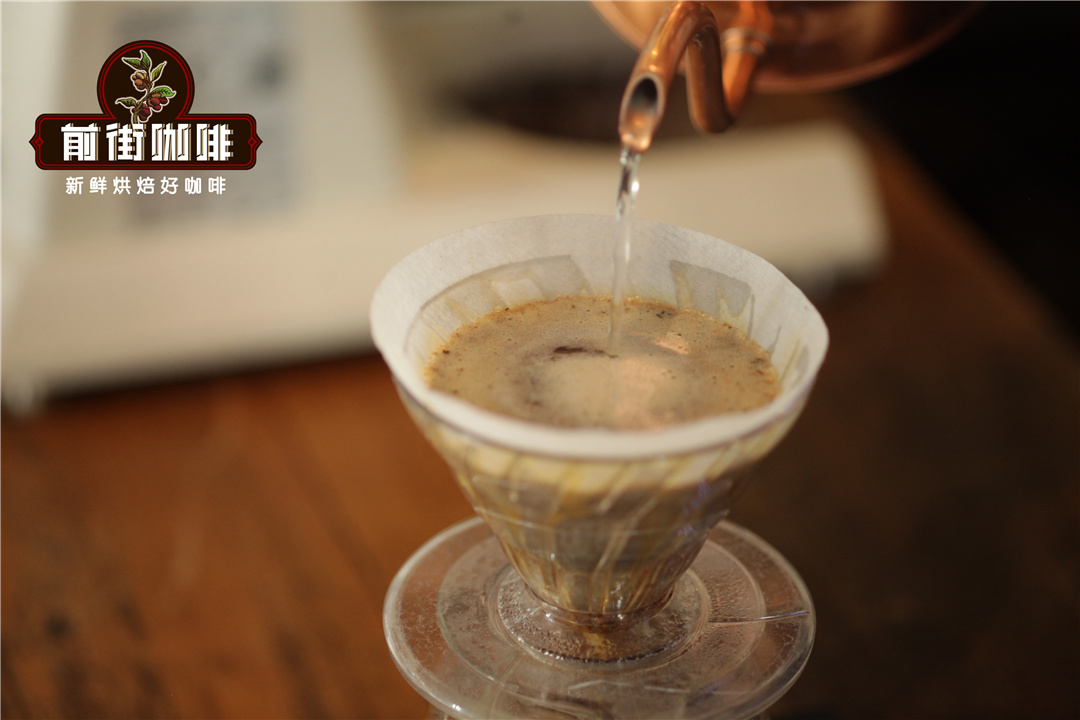
When the liquid level drops to the halfway mark, begin the final pour. This stage also adds 95 grams, from the center outward in a "mosquito coil" pattern. The original dark-brown foam turns to light-yellow coffee foam, and the liquid level returns to the same height as during the second pour. Once all the coffee has dripped into the server, remove the dripper to finish extraction.
How to Determine When to Pour Again?
The three-pour method has two re-pour points, the second and third pours. The timing of the second is easy: usually 30 seconds after the bloom. The third is trickier because there is no fixed time. Generally you pour again when the water level drops to 1/2 or 2/3.
At 1/2 or 2/3, there is not too much water sitting in the dripper, and the bed is not exposed by an excessive drop, which would extract the upper and lower grounds unevenly.
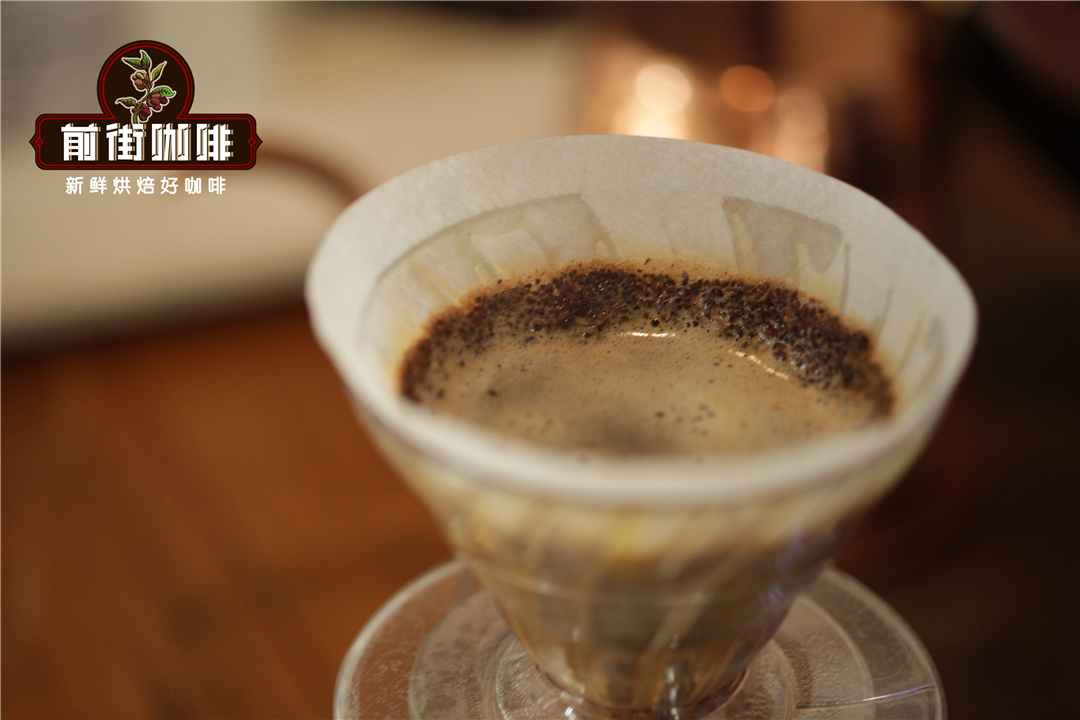
Once the level has dropped, the stream can penetrate the standing water to agitate the lower bed. If the level is too high, the stream's impact is insufficient, so the upper bed over-extracts while the lower grounds stay under-extracted.
What Are the Advantages of Three-Pour Extraction?
Enhanced Coffee Flavor
During extraction it draws flavor compounds from the coffee more fully, enhancing the cup's layered complexity.
Strong Versatility
It effectively expresses coffees from different origins and at different roast levels.
For the brewer, if you notice the water level rising too quickly during the initial pour, you can switch to a segmented approach, extending the brew time to let the level drop before continuing. This avoids under-extraction caused by too fast a flow.
FrontStreet Coffee Recommendation
Single-pour rewards a bean with clean, expressive flavor, and FrontStreet Coffee's pour-over lineup is built for exactly that. For a first step into a floral, citrus-driven cup, the Yirgacheffe Gudingding Cooperative coffee is washed and medium-light roasted, showing jasmine and bright citrus with green tea and honey notes; it works beautifully as pour-over, cold brew, or espresso. The Yirgacheffe Kochere and other washed Ethiopian lots follow the same clean, tea-like logic.
If you like your single-pour to lean toward vivid fruit, the Ethiopia Huakui is the standout, with tropical aromas of strawberry, passionfruit, jackfruit, and even lychee. Kenya Cherry Tomato is another bright, complex option: a classic double-washed Kenyan from the Thika region, grown at 1,550 to 1,750 meters from SL28 and SL34, light roasted and full of cherry tomato, dark plum, snow pear, and black plum with a clean brown-sugar and green-tea finish. And for the top of the range, the Panama Esmeralda Red Label Geisha brings jasmine, citrus, bergamot, and black tea in a clean, transparent cup with a long finish.
Important Notice :
FrontStreet Coffee is a long-established specialty coffee roaster in Guangzhou China, selling freshly roasted beans from its own farm in Yunnan as well as dozens of carefully selected single-origin beans from around the world for both pour-over and espresso. The products deliver consistently excellent quality and great value, with shipping within 24 hours. Guangzhou's FrontStreet Coffee shop is recommended by many coffee lovers, and the beans are now available online at the Tmall 。
FrontStreet Coffee has moved to a new address:
FrontStreet Coffee Address: 315,Donghua East Road,GuangZhou
Tel:020 38364473
 Scan and follow the En Gafei WeChat official account. Please indicate that the reprint comes from "En Gafei".