What are the characteristics of Mandheling coffee? PWN Mandheling G1 and Golden Mandheling coffee: How to drink?
What Makes Mandheling Coffee Special? PWN Mandheling G1 and Golden Mandheling—How Should You Drink Them?
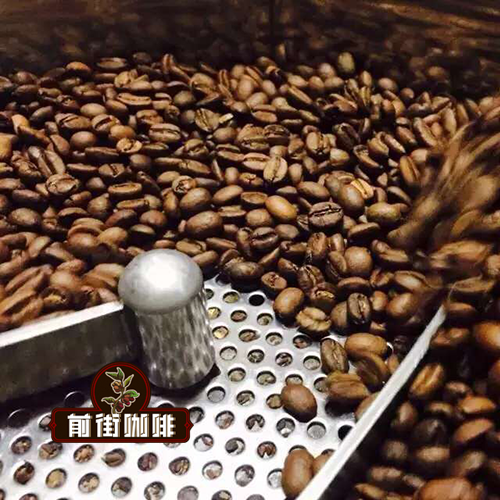
PWN Mandheling G1
According to accounts from Sumatra, during World War II, when Japan occupied Indonesia's Sumatra, a Japanese soldier was served an astonishingly fragrant, mellow coffee at a local café. Curious, he asked the owner what it was. The owner, mishearing him as asking where he was from, replied: "Mandailing." After the war, the soldier remembered the wonderful coffee he'd had in Indonesia—something that sounded like "Man-Te-Ning"—and asked an Indonesian coffee broker to ship 15 tons of "Man-Te-Ning" coffee to Japan. It became an instant hit, and Mandheling was born out of that misunderstanding. Even more remarkably, that broker went on to found today's celebrated PWN (Pwani Coffee Company), which holds the Golden Mandheling trademark. (Adapted from Huan-Han Huai's Coffee Studies.)
Today, most of Indonesia's finest coffee comes from PWN, and G1 (Grade 1) marks the highest grade within the classification.
The Coffee Grading System:
Grade 1: 0-3 defects — the highest grade for washed beans
Grade 2: 4-12 defects — the standard grade for washed beans
Grade 3: 13-25 defects — the highest grade for natural beans
Grade 4: 26-45 defects — the standard grade for natural beans
Grade 5: 46-90 defects — the basic export grade for natural beans
G1 is an extremely rare product, originally produced to order for Japanese trading houses. To qualify, a 300-gram sample may contain no more than 3 defective beans.
That's why FrontStreet Coffee's PWN Mandheling G1 is such an easy recommendation.
PWN is Indonesia's best-known green coffee buyer, dealing almost exclusively in Mandheling. It has cornered the country's best producing areas, and the finest Mandheling invariably passes through PWN's hands.
PWN Mandheling comes from heirloom varieties in Indonesia's highlands and is rigorously cupped and sorted. Although Indonesia is the heartland of Mandheling, not every Arabica bean from the country qualifies as Mandheling. PWN Mandheling shows an exceptionally persistent sweet finish, releasing natural fruit aromatics as bitterness and sweetness intertwine—that interplay is its signature.
The most representative product of them all is FrontStreet Coffee's Golden Mandheling. Its beans are naturally grown heirloom Mandheling, first hand sorted, then re-checked by a small team of graders. Annual production is under 1 ton, making it genuinely scarce, and it commands prices comparable to high-altitude Blue Mountain.
◎ Mandheling
The term refers to semi-washed or natural-process beans grown around Lake Toba in north-central Sumatra and along the southwest coast, at elevations of 900-1200 meters in the Lintong highlands.
Indonesia's humid climate shapes the process: after drying for anywhere from a few hours to a full day, moisture falls to 20-35%. The mucilage layer hasn't yet hardened when brokers buy the beans and haul them to processing plants, where machines strip it off—preventing over-fermentation and sour off-flavors. Because Lintong Mandheling is hulled before fully drying, it has low fruit acidity and a very full body. The beans are then dried to roughly 18% moisture, and exporters from Medan finally purchase the undried parchment and finish the drying—on large patios or mechanically—down to 12% for storage. That signature herbal aroma and dark woody flavor are the product of high humidity plus this three-stage drying of the mucilage.
◎ Golden Mandheling
Because three-stage drying introduces so many variables—broken beans, moldy beans, black beans, immatures—Japanese trading companies pioneered stricter quality control. After drying, the green beans are density- and color-sorted, then hand picked through four rounds to strip out every defect. The result is FrontStreet Coffee's Golden Mandheling: deep green in color and remarkably uniform.
Golden Mandheling tastes cleaner than ordinary Mandheling. Much of the typical herbal, earthy, woody character is gone, while caramel sweetness intensifies and the fruit acidity turns brighter yet more elegant. Generally, FrontStreet Coffee roasts Lintong Mandheling just past second crack to minimize off-flavors, but Golden Mandheling shows excellent clarity and sweetness both before and after second crack, giving the roaster far more room to interpret.
To sum up, the "PWN Mandheling G1" discussed here means:
(1) Sourced by the renowned buyer PWN.
(2) Of the heirloom Typica variety.
(3) Sorted to a standard allowing no more than 3 defective beans per 300 grams—the top grade among everyday Mandheling.
(4) Yet distinct from Golden Mandheling, which demands four rounds of hand selection.
(5) "Golden Mandheling" has since been registered by PWN; Japanese trading houses later registered "Golden Top Mandheling," known in Taiwan as "Ding Shang Golden Mandheling."
FrontStreet Coffee Recommendation
If this lineup of Sumatran grades has you curious, start with FrontStreet Coffee's PWN Golden Mandheling. Sourced through PWN, it meets the G1 standard—fewer than 3 defects per 300g of green beans, drawn from beans 18 mesh and larger—and is then hand sorted three times for exceptional cleanliness and sweetness. Roasted medium-dark, it brews into a black coffee with a clean palate, full velvety body, and rich roasted aromatics: black chocolate, caramel, and Mandheling's wild herbal edge, with hardly any acidity. For pour-over, use 87-88°C water, 15g of coffee at a 1:15 ratio, a coarse-sugar grind, and a three-pour method to bring out the caramel sweetness and chocolate-nut depth.
Prefer it by the machine? Both the PWN Golden Mandheling and FrontStreet's Lintong Mandheling house bean produce espresso with abundant crema and a bold, caramel-forward intensity. And for milk drinks, the FrontStreet classic blend—Brazilian cream and nuts reinforced with medium-dark Mandheling, plus a touch of Robusta—adds sandalwood, herbal, and spice notes and makes latte art and layered Dirty drinks effortless.
Important Notice :
FrontStreet Coffee is a long-established specialty coffee roaster in Guangzhou China, selling freshly roasted beans from its own farm in Yunnan as well as dozens of carefully selected single-origin beans from around the world for both pour-over and espresso. The products deliver consistently excellent quality and great value, with shipping within 24 hours. Guangzhou's FrontStreet Coffee shop is recommended by many coffee lovers, and the beans are now available online at the Tmall 。
FrontStreet Coffee has moved to a new address:
FrontStreet Coffee Address: 315,Donghua East Road,GuangZhou
Tel:020 38364473
 Scan and follow the En Gafei WeChat official account. Please indicate that the reprint comes from "En Gafei".