What is Starbucks Flat White Coffee and How to Make It? Flat White Coffee Milk Ratio and Brewing Recommendations
What is Flat White Coffee?
When people think of rich, milk-forward espresso drinks, Starbucks' Flat White often comes to mind first. Internationally the drink goes by the name Flat White. It was fairly obscure in China at first, but after Starbucks put it on the menu, it steadily gained recognition and worked its way into the ranks of popular coffee orders.

Where Does Flat White Come From?
Both Australians and New Zealanders lay claim to inventing the Flat White, and baristas from the two countries follow noticeably different recipes. We may never settle exactly which country it came from, but one thing is certain: the drink emerged from people's pursuit of a better milk coffee.
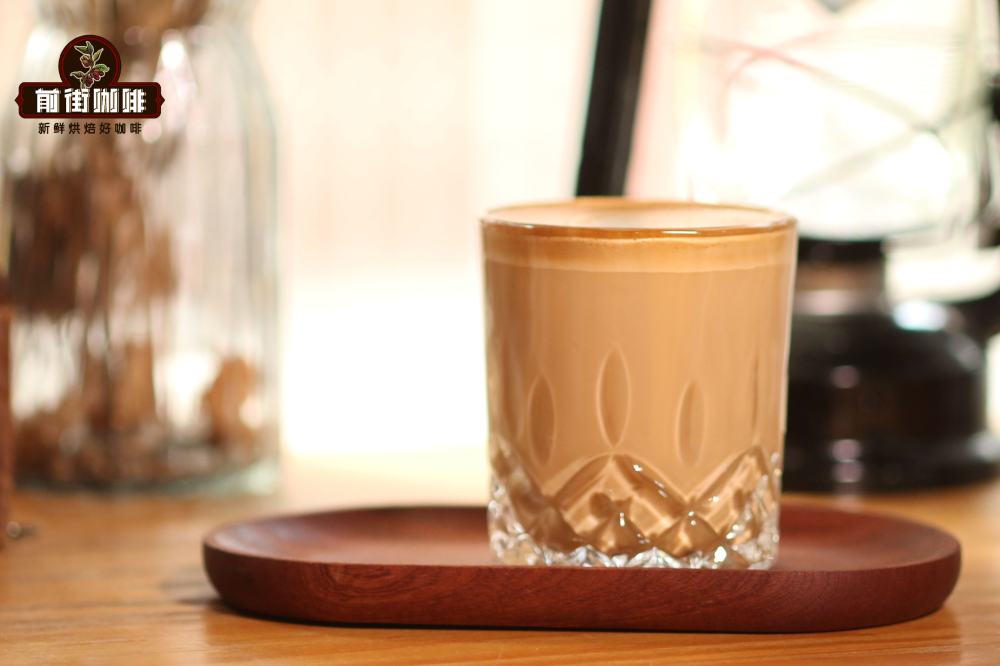
Before the 1970s, Australian cafés typically served black coffee brewed in French presses or by manual drip. In the early 1970s, Italian migrants brought espresso machines to Australia, kicking off a new wave of coffee culture. Compared with traditional lattes and cappuccinos, Australians wanted milk drinks with thinner foam and a stronger coffee presence. Milk coffee was continuously "improved" across Australia and New Zealand, and once the foam had been flattened into a thin layer sitting perfectly level with the rim of the cup, the drink was named Flat White -- "flat" for the level surface, "white" for the milk-softened coffee.
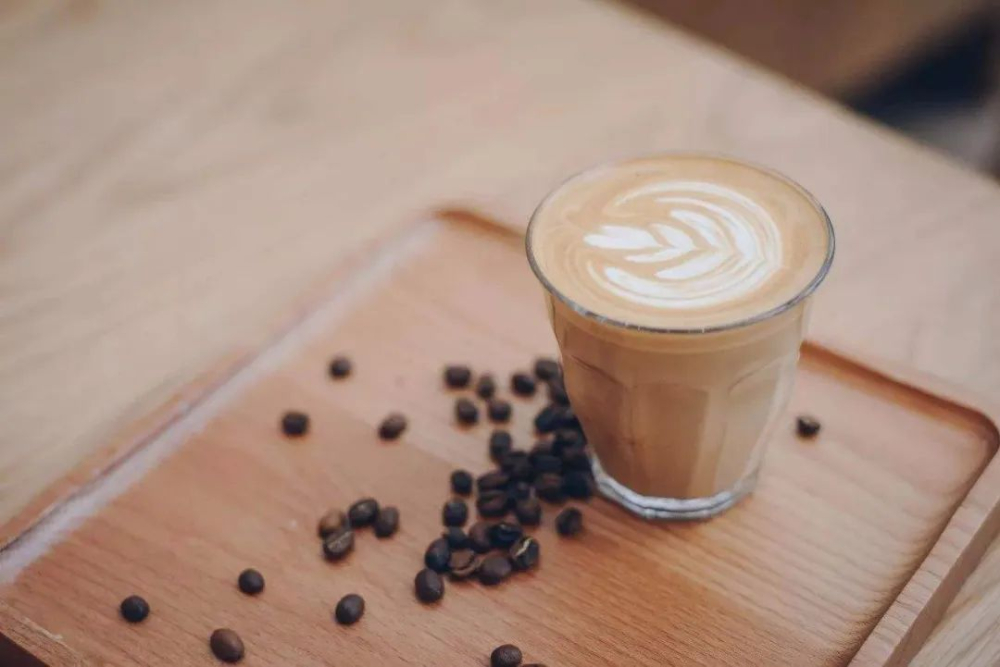
From the 1980s onward, Australians printed Flat White on their standard menus, and it soon spread to cafés across Europe and America. In China, the drink became widely popular after Starbucks introduced it in 2015 as the "Fu Rui Bai," one of its signature offerings -- a sign that this milk coffee had gone fully mainstream.
The Unique Characteristics of Flat White
Back to the drink itself: a Flat White puts the coffee front and center, with milk in a supporting role, so the coffee flavor reads fuller and richer than in most milk drinks. The thin blanket of microfoam on top means every sip of coffee carries a velvety, dense texture. The moderate serving temperature and smaller cup size also mean you can finish it before the foam separates.
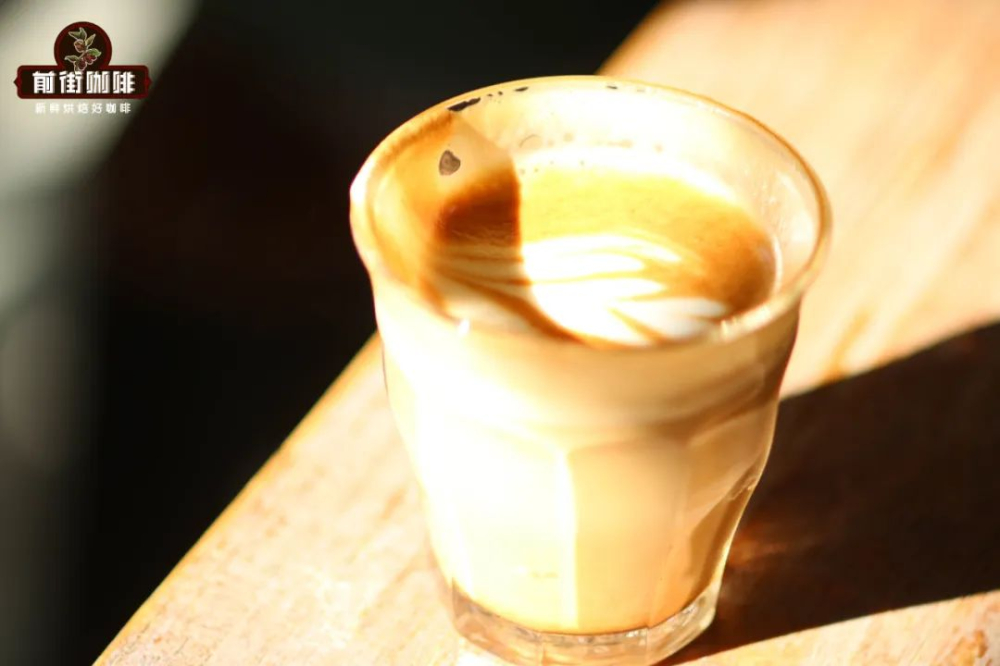
Beyond cup size and foam thickness, some baristas build the drink on a double ristretto instead, to show off the beans' aroma, with foam depth equivalent to a latte's but served in a 150 ml cup.
The Difference Between Ristretto and Espresso
Ristretto means "restricted" in Italian, and it is sometimes called Italian extra-strong coffee. Think of it as a restricted version of espresso, typically capturing only the front and middle portions of the shot. That makes it taste stronger and more concentrated.
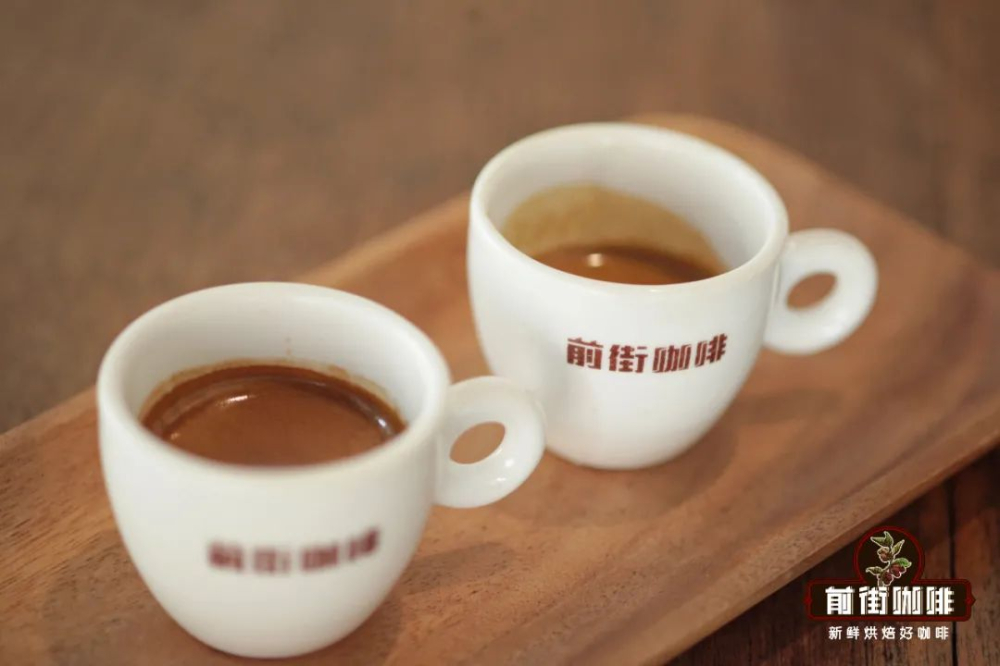
FrontStreet Coffee's espresso-based drinks mostly use espresso as the base, so the baristas dial in a standard shot as a reference before opening each day. The extraction recipe differs slightly from bean to bean -- it is adjusted daily around the "Warm Sun Blend" used in the shop.
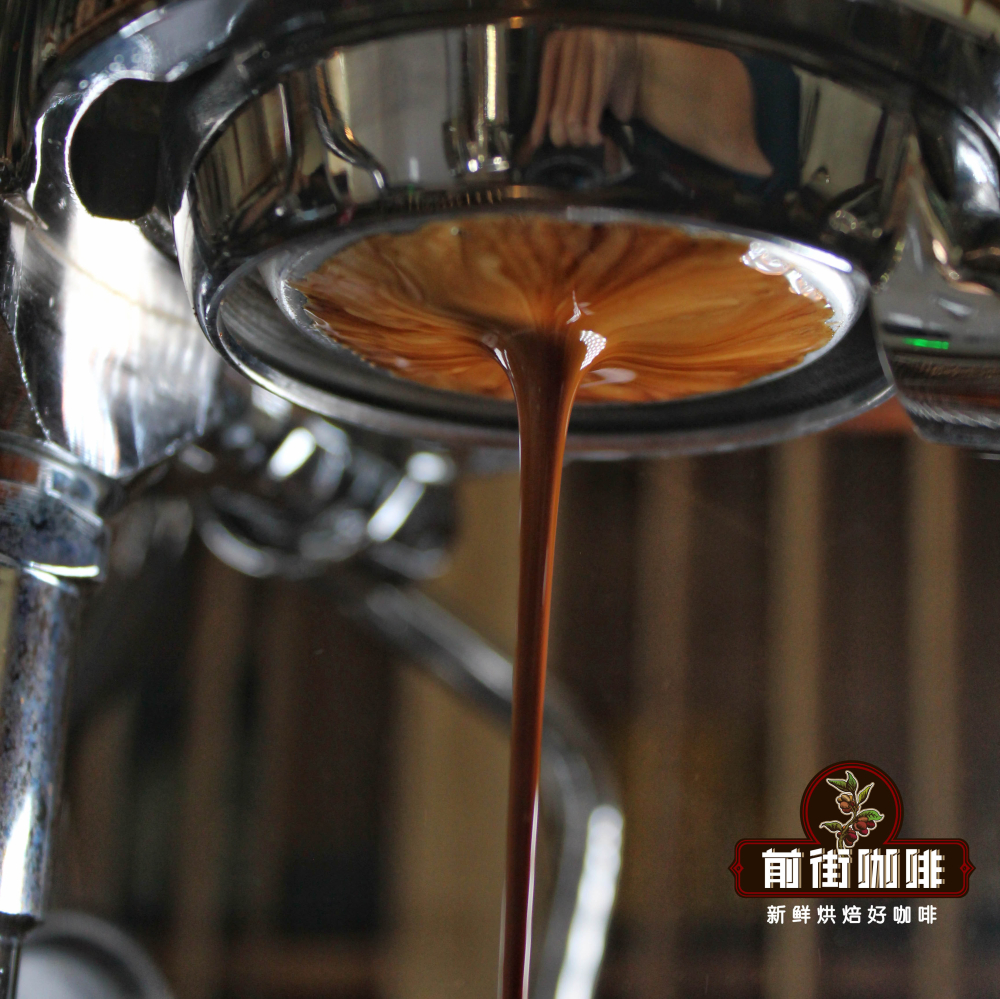
FrontStreet Coffee's espresso recipe: 20 g of ground coffee yielding 40 g of liquid in 28-30 seconds. For a ristretto, with grind size and dose unchanged, the same 20 g yields only 27 g of liquid in 20-25 seconds. Because a ristretto uses only the front and middle of the shot, it is more concentrated than espresso -- stronger on the palate, lower in caffeine, and more intense in berry acidity, winey aroma, and caramel flavors.
Making Flat White: The Coffee-to-Milk Ratio
FrontStreet Coffee builds its milk drinks on the house-roasted "Sunflower Warm Sun Blend," composed of 70% Honduras Sherry coffee and 30% Yirgacheffe Natural Red Cherry coffee. The sherry component's whiskey, vanilla, and cream notes meet the red cherry's tropical fruit and fermentation character, creating a rich, smooth cup.
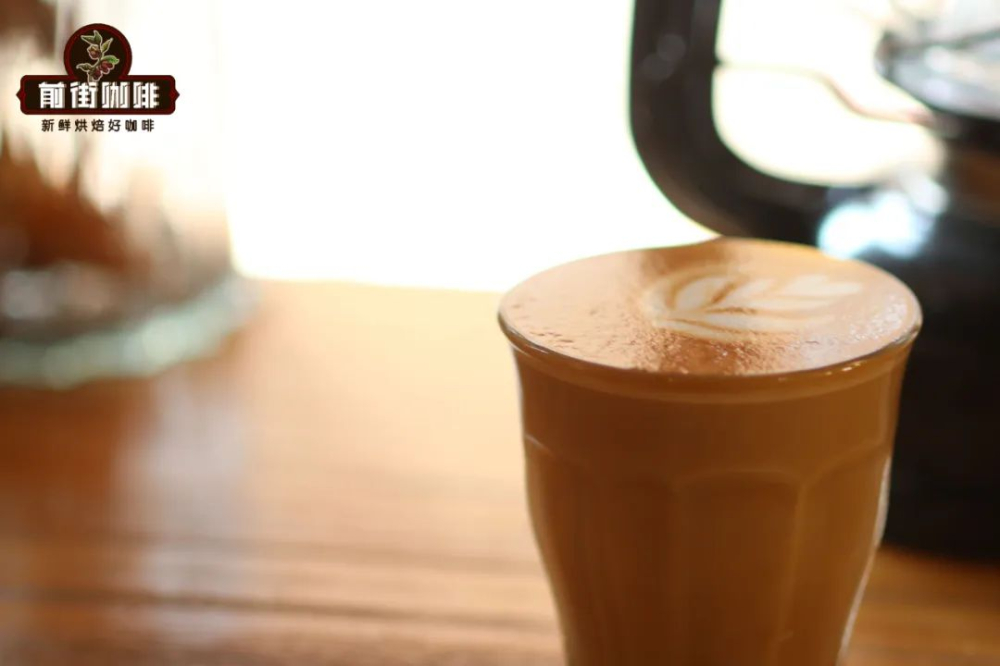
FrontStreet Coffee stays true to the drink's defining traits -- small cup, thin foam, double ristretto base. The shop uses a ceramic cup of about 200 ml, smaller than its hot latte cup, into which the freshly extracted double ristretto is poured. Milk is deliberately kept modest -- too much would drown the coffee's rich aroma -- so the coffee-to-milk ratio is 1:5, roughly 150 ml of fresh milk.

FrontStreet Coffee wants customers to feel the creamy, smooth texture without the drink turning watery, so a 0.3 cm foam layer is preserved -- which means steaming the milk with less air than you would for a latte. Milk temperature is held at 55-60°C, warm enough to highlight sweetness without scalding. Finally, the finished milk is folded evenly into the coffee and served.
FrontStreet Coffee's Flat White carries aromas of vanilla, cream, chocolate milk, whiskey-laced chocolate, and a touch of berry tartness. The entry is smooth, mellow, and full, with a very persistent aftertaste.
For professional coffee knowledge exchange and more coffee bean information, please follow Coffee Workshop (WeChat public account: cafe_style).
For more specialty coffee beans, please add FrontStreet Coffee's private WeChat account: qjcoffeex
FrontStreet Coffee Recommendation
If you want to enjoy coffee this rich at home without an espresso machine, the French press is hard to beat. It is a full-immersion brewer with a metal mesh filter, and using it is as simple as steeping tea: add grounds, pour hot water, stir, wait, then press. Because the water and coffee steep together, the finished cup carries more oils and a heavier, fuller body -- though if you dislike sediment or fine particles in your cup, it may not be the tool for you.
A few parameters make all the difference. Grind coarsely -- FrontStreet Coffee suggests the texture of coarse granulated sugar (EK43s at setting 10.5, or 26 clicks on a hand grinder), closer to small gravel than fine sand; grind too fine and fines will slip through the mesh and leave a muddy sediment, though a finer grind with a shorter steep can add layers if you watch for over-extraction. Use a 1:15 ratio -- 15 g of coffee to 225 g of water -- for a cup in the 1.1-1.2% strength range. Boiled water rested 2-3 minutes lands around 90°C; since immersion offers no agitation to boost extraction, running 1-2°C warmer than you would for pour-over helps. Steep for about 4 minutes as a starting point: 5 minutes can turn a dark roast bitter and astringent, while 3 minutes may leave a light roast underdeveloped. When time is up, press the plunger down slowly and pour gently so the bed stays undisturbed.
Immersion brewing suits medium and dark roasts best, since they express sweetness and caramel flavors well -- the FrontStreet PWN Golden Mandheling, triple hand-sorted plus machine-sorted and roasted medium-dark, delivers a thick body, good crema, and aromas of spice, caramel, cedar, and dark chocolate in a French press. For something more fragrant, the FrontStreet Strawberry Candy -- a custom blend of Costa Rica honey-process coffee and Panama washed Gesha -- blooms into rose, citrus, grape, and dried blueberry, and with milk it takes on a strawberry-soft-candy character that pairs beautifully with a flat-white-style milk drink.
Important Notice :
FrontStreet Coffee is a long-established specialty coffee roaster in Guangzhou China, selling freshly roasted beans from its own farm in Yunnan as well as dozens of carefully selected single-origin beans from around the world for both pour-over and espresso. The products deliver consistently excellent quality and great value, with shipping within 24 hours. Guangzhou's FrontStreet Coffee shop is recommended by many coffee lovers, and the beans are now available online at the Tmall 。
FrontStreet Coffee has moved to a new address:
FrontStreet Coffee Address: 315,Donghua East Road,GuangZhou
Tel:020 38364473
 Scan and follow the En Gafei WeChat official account. Please indicate that the reprint comes from "En Gafei".