Flavor Profile, Grading, and Distinctions: Sumatra Mandheling vs. Brazil and Colombia Coffee Varieties
FrontStreet Coffee often hears customers ask how to choose coffee beans. The physical stores and flagship online store carry more than 30 different coffees, each with its own character, and the selection is updated regularly with new growing regions. The goal is simple: every guest should be able to drink coffee they love and come to understand flavors from around the world, by understanding each variety, each region, and each processing method. This piece compares three staples side by side: Colombian coffee, Brazilian coffee, and Mandheling.
Comparing the Backgrounds
Colombia
Colombia's climate is a genuine natural pasture for coffee. The country has become the second-largest producer after Brazil, the world's largest exporter of Arabica beans, and the world's largest exporter of washed coffee. It grows coffee on approximately 875,000 hectares across 590 municipalities and 14 coffee-growing regions, exporting an average of 75% of its output; crops account for 10% to 16% of agricultural GDP. What surprises FrontStreet Coffee is how small most of these farms are: 60% of Colombian coffee farms are less than one hectare, while only 0.5% of growing areas exceed 20 hectares.
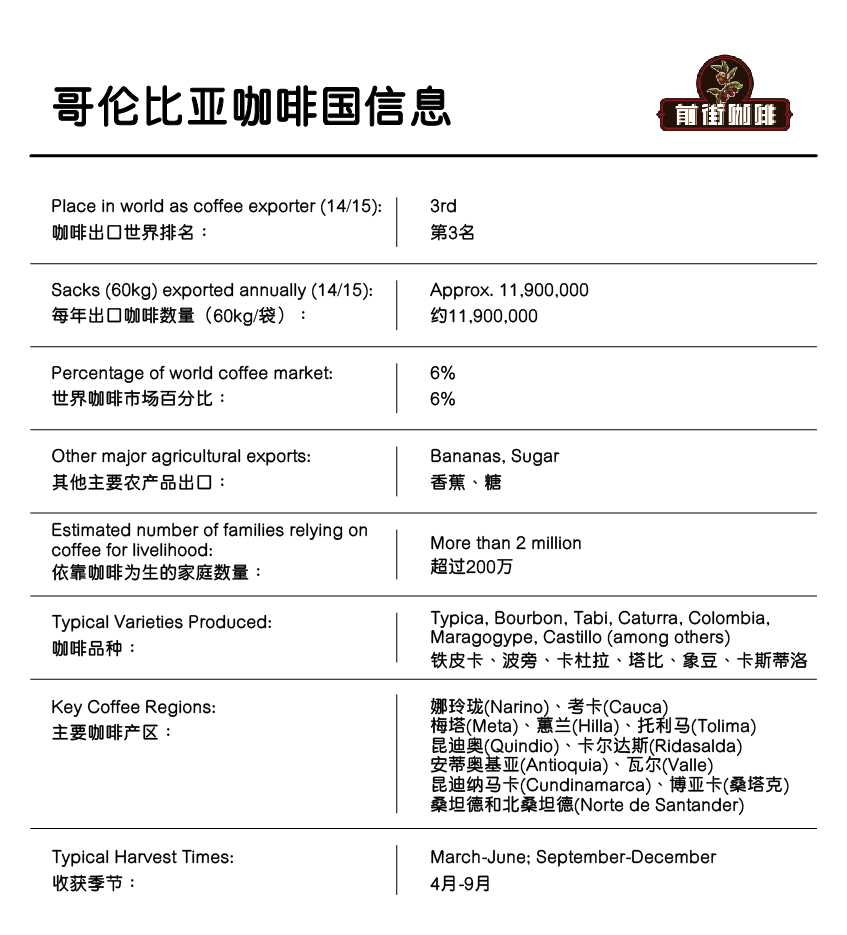
Colombian coffee is a strong representative of the Arabica species and a traditional dark roast with a bold, memorable taste. Its characteristics include a rich, thick aroma, bright high-quality acidity, high balance, occasional nutty notes, and a long finish. In both appearance and quality, Colombian coffee is considered top-grade.
Brazil
Coffee reached Brazil in the 18th century. Today the country's emerging middle class is driving rapid growth in its domestic coffee market, with consumption maintaining an annual growth rate of about 5%. Per capita consumption has already surpassed that of the United States, making Brazil the world's largest coffee-consuming country. Production ranks first globally, and whenever it is affected, global coffee prices move. Among FrontStreet Coffee's daily beans there is a Brazilian coffee with obvious chocolate and nut flavors and moderate richness and smoothness, a top choice for anyone who does not like acidic coffee. Brazil appears not only in the daily bean line but also in the current drip bag selection, which shows how indispensable the origin is to classic coffee flavor.
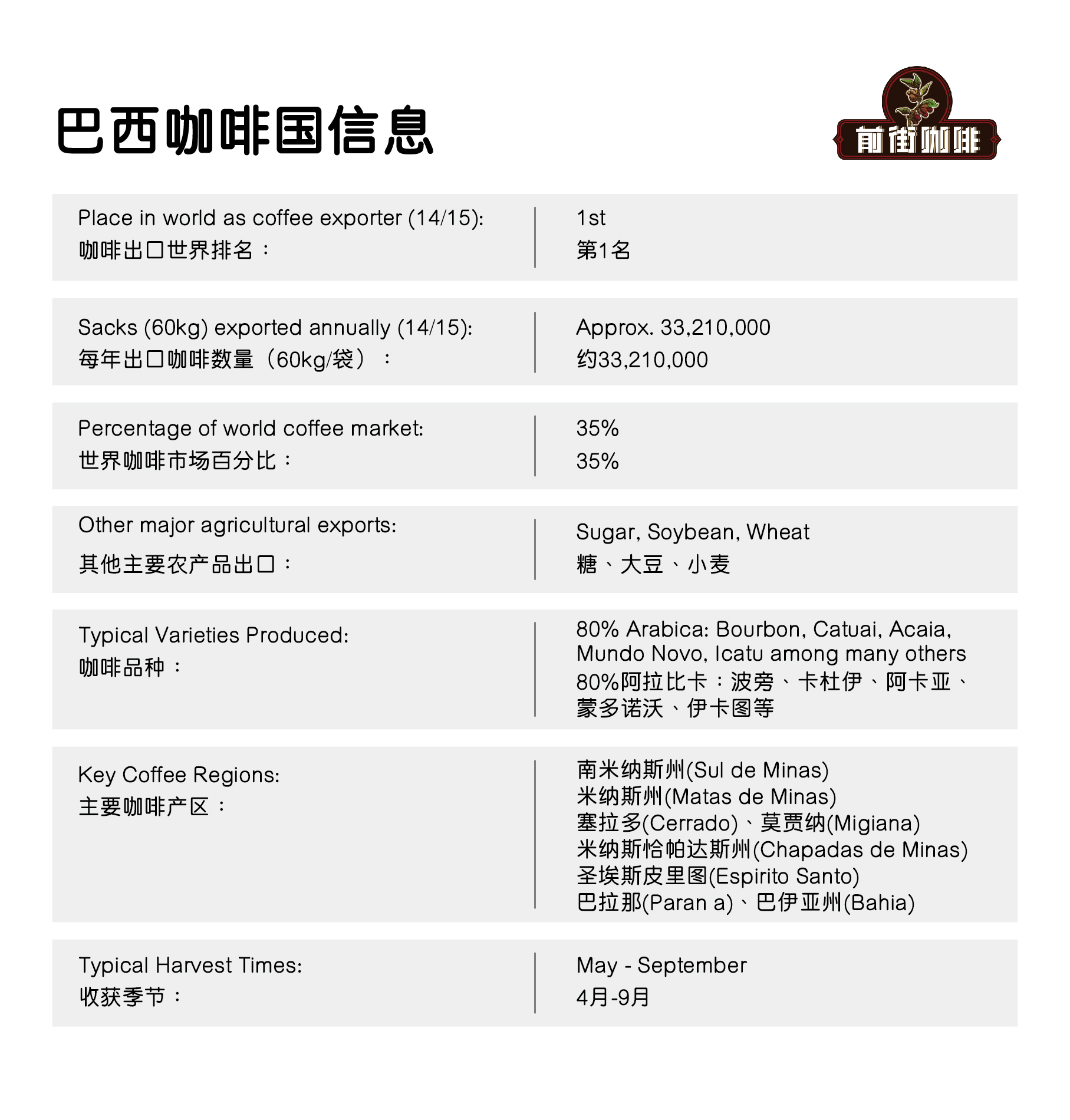
Brazil sits in the Latin American region of the Western Hemisphere, on the eastern side of South America along the western Atlantic. On land it borders every South American country except Ecuador and Chile. The vast majority of its territory lies between the equator and the Tropic of Capricorn, giving it the widest tropical range in the world. One-third of the country has a tropical rainforest climate and two-thirds a tropical savanna climate, conditions well suited to tropical crops such as coffee.
Brazil has made full use of that tropical geography, emphasizing coffee production and sales, and its output, export volume, and per capita consumption have ranked first in the world for many years. It is known as the "Coffee Kingdom."

Mandheling
Mandheling is not a region, a place name, a port, or a coffee variety. The name is simply a transliteration of the Indonesian Mandheling ethnic group.
During World War II, Japanese soldiers occupying Indonesia tasted especially good coffee locally. Back in Japan they could not forget it, and through trading contacts they asked locals to gather high-quality beans, including this Mandheling. The Japanese loved the coffee and asked for its name; because the business source was inconvenient to disclose, the locals casually said "Mandheling," and the name stuck by accident. Those locals were the owners of the Indonesian PWN company (Pawani Coffee Company), from whom FrontStreet Coffee buys its Golden Mandheling.
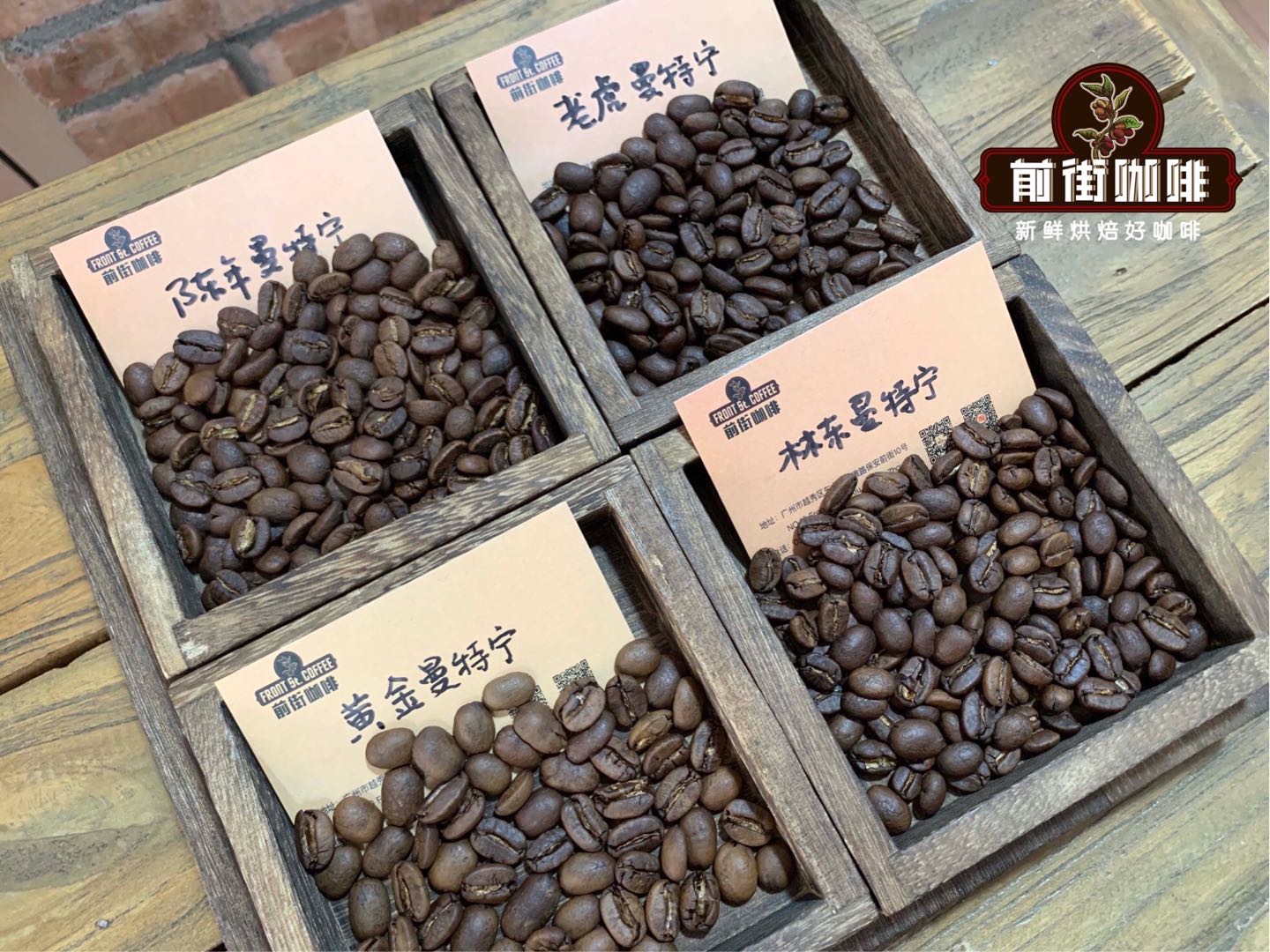
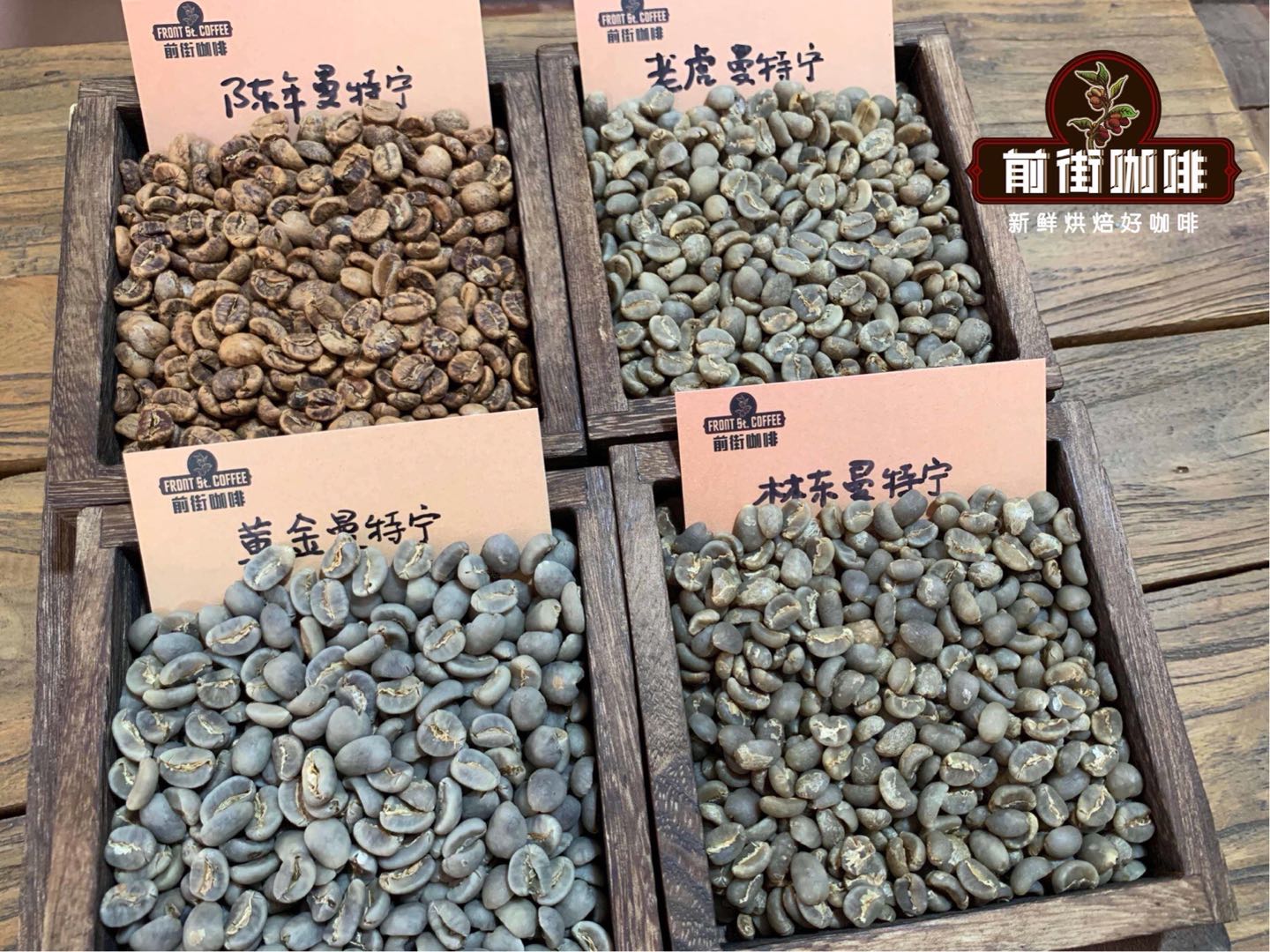
Indonesia's main coffee areas are Sumatra, Java, and Sulawesi, with Sumatra's Mandheling the most famous; Mandheling is also called Sumatran coffee. Coffee from the Lake Toba area in the north can be called Aceh coffee or Lake Toba coffee, while Lintong and the Lake Toba area can be called Mandheling. Strictly speaking, coffee produced around Lake Toba in northwestern Sumatra is what is called Mandheling.
Comparing the Grading Systems
Colombia
Colombia grades by bean size. Excelso and Supremo are both considered large beans, with Supremo slightly larger. Colombian coffee is often used as an example: knowing the growing region helps more with understanding quality than bean size alone.
Supremo: 17 mesh
Excelso: 14-16.5 mesh

Brazil
Among the coffee countries of Central and South America, Brazil's altitude is relatively low. So unlike Colombia and others that prize hard beans grown only at high altitude, Brazil grades coffee on four criteria: particle size, defect rate, cupping score, and flavor.
Flavor grade, from high to low: Strictly Soft (very smooth), Soft, Softish (slightly smooth), Hardish (unpleasant), Rioy (iodine taste).
Defect grading counts defective beans: 6 defective beans per 300 g of raw beans is NY.2. Only completely defect-free beans qualify as NY.1, but such beans are rare and cannot be supplied consistently, so the best raw beans in Brazil are NY.2.

Cupping quality grading, from high to low: Fine Cup, Fine, Good Cup, Fair Cup, Poor Cup, Bad Cup. FC (Fine Cup) and GC (Good Cup) are the most common.
Particle size grading: the largest mesh size for Brazilian beans is 19, but production is limited, so 17 and 18 mesh count as the highest grades.
Mandheling
G1: fewer than 11 defective beans
G2: 12-25 defective beans
G3: 26-44 defective beans
G4a: 45-60 defective beans
G4b: 61-80 defective beans
G5: 81-150 defective beans
Comparing Brewed Flavor
FrontStreet Coffee, Colombian Rose Valley
Farm: Colombian Big Tree Farm
Region: Santander
Processing: anaerobic double enzyme washed
Altitude: 1700 meters
Variety: Caturra

Roasting Suggestions
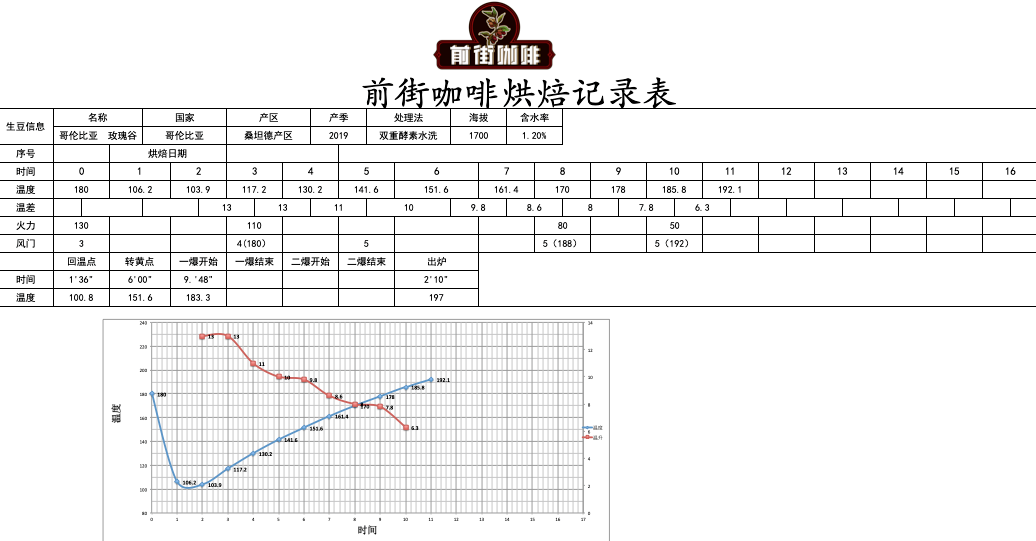
Bean entry temperature: 180°C; yellowing point: 6'00" at 151°C; first crack: 9'48" at 183.3°C; develop for 2'10" after first crack, then drop at 197°C.
Brewing Parameters
Filter: Hario V60
Water temperature: 90-92°C
Coffee: 15 g
Ratio: 1:15
Grind: EK43s setting 9.5 (80% pass-through on a China standard No. 20 sieve)
Brewing Method
First pour 30 g of water for a bloom of about 30 seconds. Second pour in stages to 125 g, then continue to 225 g once the water level drops and the bed is about to be exposed. Remove the filter as the bed is about to show. Extraction time: 2 minutes, timed from the bloom.

Flavor
Floral aroma, bright acidity, prominent acidity and sweetness, a juicy mouthfeel, grapes, strawberries, and green plums.
FrontStreet Coffee, Brazil Queen Farm
Region: Mogiana
Farm: Fazenda Rainha (Queen Farm)
Owner: Regina Helena Mello de Carvalho Dias, of the Carvalho Dias family
Variety: Yellow Bourbon
Processing: natural
Altitude: 1400-1950 m

Roasting Analysis
The raw beans have a solid texture and excellent flavor performance, with slight orange peel and spice notes. Raw bean moisture content: 9.9%.
This relatively low moisture makes the bean absorb heat strongly. FrontStreet Coffee's plan is therefore to charge at 200°C, then use high heat and low airflow to speed dehydration. After the dehydration phase, use medium airflow and medium heat for the Maillard reaction without rushing the time, and drop the beans near the end of first crack.
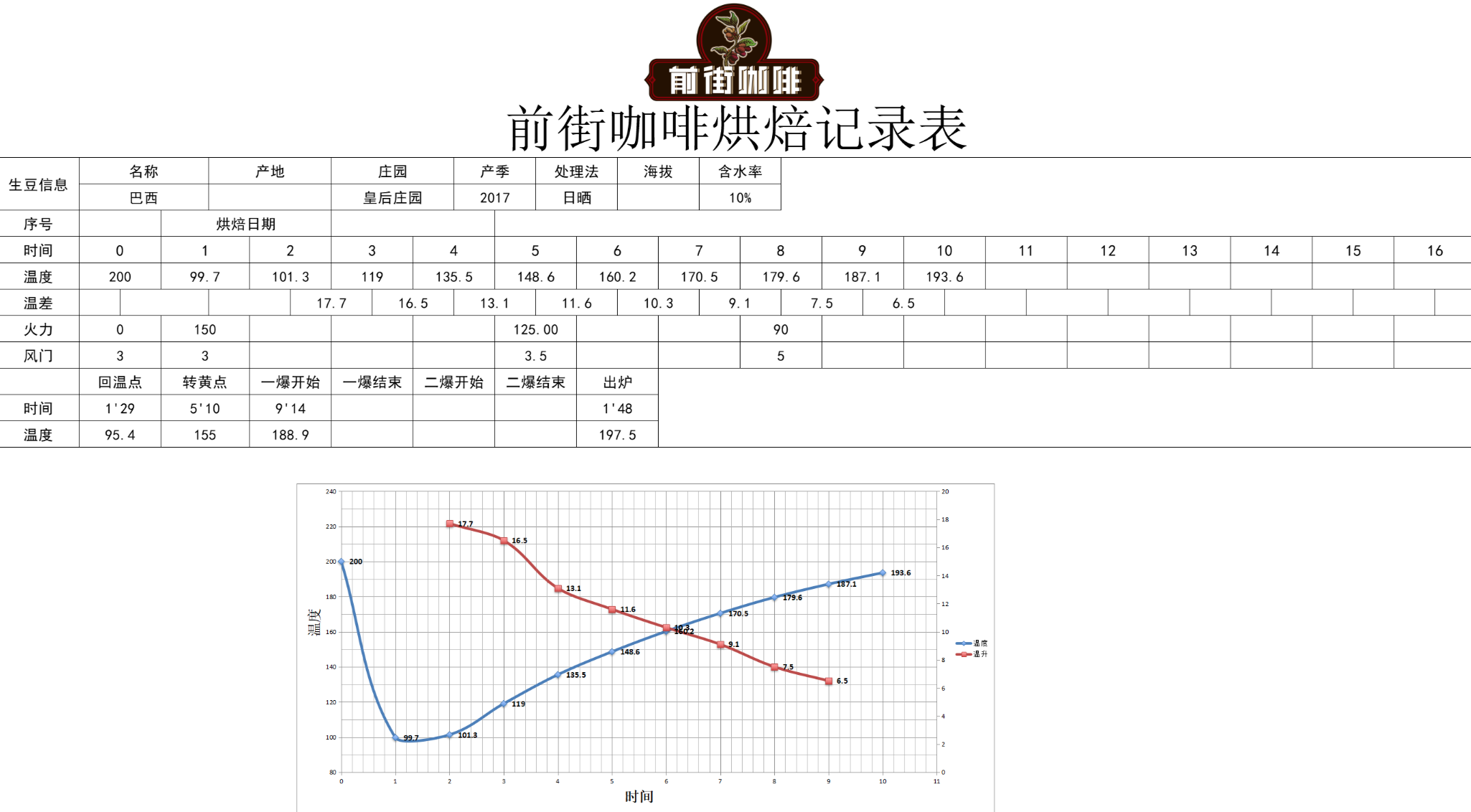
FrontStreet Coffee trial-roasted this bean 4 times and settled on 1 minute 45 seconds to 2 minutes after first crack ended. The flavor carries obvious but not dull sweetness, with a faint lemon aroma in the background that becomes more prominent in the wet aroma, and clear dark chocolate later on. The overall impression is round, showing Brazil's character while keeping some liveliness.
Brewing Parameters
Filter: KONO
Water temperature: 87°C
Coffee: 15 g
Ratio: 1:15
Grind: 70% pass-through on a China standard No. 20 sieve
Pouring method: three-stage
Brewing Method
First pour 30 g of water for a bloom of about 30 seconds. Second pour in stages to 125 g, then continue to 225 g once the water level drops and the bed is about to be exposed. Remove the filter as the bed is about to show. Extraction time: 2 minutes, timed from the bloom.

Flavor
Sweet and clean. The semi-natural processing leaves the acidity slightly bright but well balanced against the sweetness. The abundant aroma during brewing is especially appealing: fresh sugarcane-juice sweetness, black tea, a smooth, pleasant fruit sweetness, obvious nuttiness, balanced and smooth acidity, a weak and clean bitterness, rich chocolate and nut aromas, a bright and refreshing mouthfeel, and a smooth, delicate texture.
FrontStreet Coffee, Indonesian Golden Mandheling
Region: Aceh Gayo Mountain
Altitude: 1100-1600 m
Variety: Typica
Processing: wet-hulled

Roasting Curve
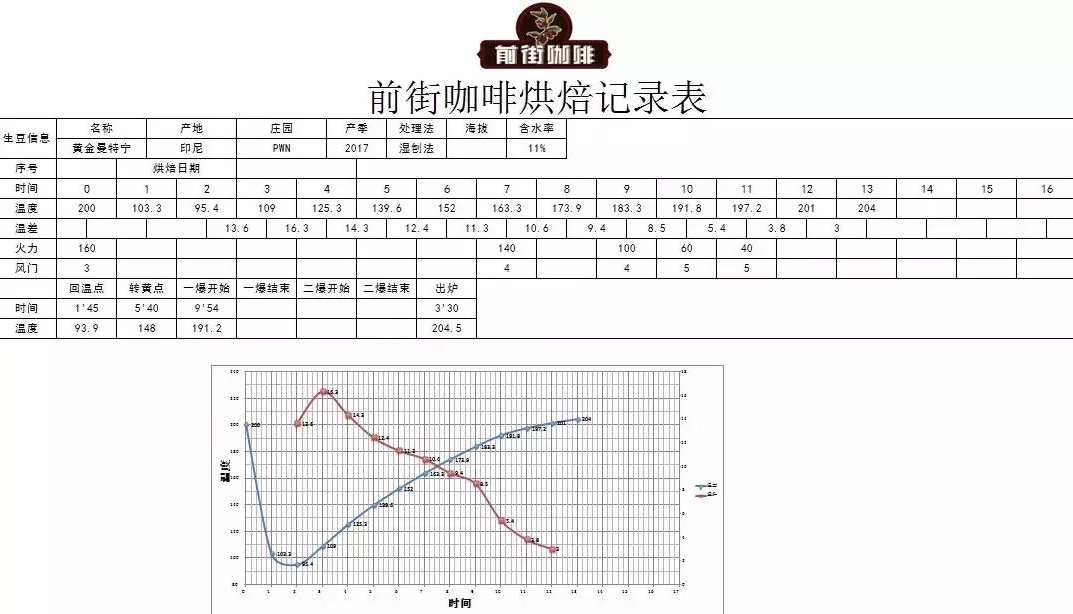
FrontStreet Coffee considers Golden Mandheling a relatively high-moisture raw bean, with wide moisture variation compared with natural-process beans, so dehydration needs special attention. For high-moisture raw beans, close the air damper immediately after charging, bloom for 30 seconds, then open it to 3 until the beans turn light green or white. Open the damper to 4, and to 5 (maximum) after first crack.
Brewing Parameters
For everyday Mandheling, FrontStreet Coffee recommends a KONO filter, which produces a rounder, richer mouthfeel and a more direct flavor. The KONO's only exhaust area is its short ribs; once the water level rises past them, pressure builds through the weight of the water, and because the outlet is small, the contact time between grounds and water lengthens. That drives extraction of soluble compounds more effectively, and FrontStreet Coffee's method reliably delivers the richness customers expect.
Filter: KONO
Water temperature: 87°C
Coffee: 15 g
Ratio: 1:15
Grind: 70% pass-through on a China standard No. 20 sieve
Pouring method: three-stage

Brewing Method
Segmented extraction: use 30 g of water for a 30-second bloom, then pour in small circles to 125 g to divide the pour. Continue to 225 g once the water level drops and the bed is about to be exposed, then stop. Remove the filter as the bed is about to show. Extraction time: 2 minutes, timed from the bloom.

Flavor
Multi-layered, rich, and clean, with high balance, rich nut and caramel aromas, chocolate notes, and a long-lasting finish.
FrontStreet Coffee Recommendation
Among the three origins compared here, Mandheling is the one to buy at the top of the range. FrontStreet Coffee's PWN Golden Mandheling comes from the Indonesian trading house PWN, which buys only high-quality Mandheling green coffee and screens it with one machine pass plus hand-sorting, so every bean is specialty grade. The beans are even, plump, and low in defects, and after medium-dark roasting they carry a rich roasted aroma; the brewed black coffee is clean yet full-bodied, which suits anyone who dislikes acidic coffee. FrontStreet Coffee's Lintong Mandheling, meanwhile, is roasted medium-dark to bring out dark chocolate and caramel while preserving the origin's wild herbal character.
Hand-pour shows Golden Mandheling best. Use 87-88°C water, 15 grams of coffee, a 1:15 ratio, a grind at coarse-sugar size, and a three-stage pour. Pour 30 ml to bloom and fully wet the grounds for degassing, add 100 ml to lift the golden foam and raise the bed, then finish with a gentle 95 ml center pour to build sweetness, which together present a full body with caramel sweetness and chocolate and nut flavors.
If you enjoy Mandheling's weight but want it in milk drinks, FrontStreet Coffee's Classic Blend is the most repeat-purchase-friendly option. It layers medium-dark Mandheling onto the creamy, nutty Brazilian base for pronounced butter, roasted chestnut, and caramel, and Mandheling both raises the body and adds sandalwood, herbal, and spice notes. A small amount of Robusta boosts crema, so lattes and layered Dirty drinks are easy to pull.
Important Notice :
FrontStreet Coffee is a long-established specialty coffee roaster in Guangzhou China, selling freshly roasted beans from its own farm in Yunnan as well as dozens of carefully selected single-origin beans from around the world for both pour-over and espresso. The products deliver consistently excellent quality and great value, with shipping within 24 hours. Guangzhou's FrontStreet Coffee shop is recommended by many coffee lovers, and the beans are now available online at the Tmall 。
FrontStreet Coffee has moved to a new address:
FrontStreet Coffee Address: 315,Donghua East Road,GuangZhou
Tel:020 38364473
 Scan and follow the En Gafei WeChat official account. Please indicate that the reprint comes from "En Gafei".