Introduction to the Origin Story of Nicaraguan Maragogype Coffee - Characteristics of Nicaraguan Coffee

Coffee has three main species: Arabica (the small-bean type), Robusta (medium bean), and Liberica (large bean). Arabica dominates commercial cultivation thanks to its superior flavor, but even within Arabica there's a "rebel." Unlike other Arabica varieties, it grows exceptionally large: the giant elephant bean. In this article, FrontStreet Coffee explains what makes the elephant bean remarkable beyond its sheer size.
What Are Elephant Beans?
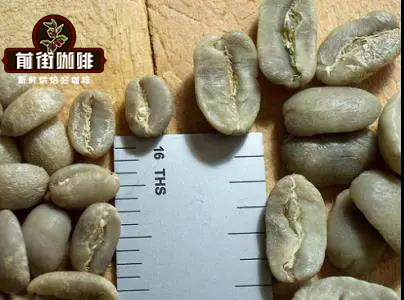
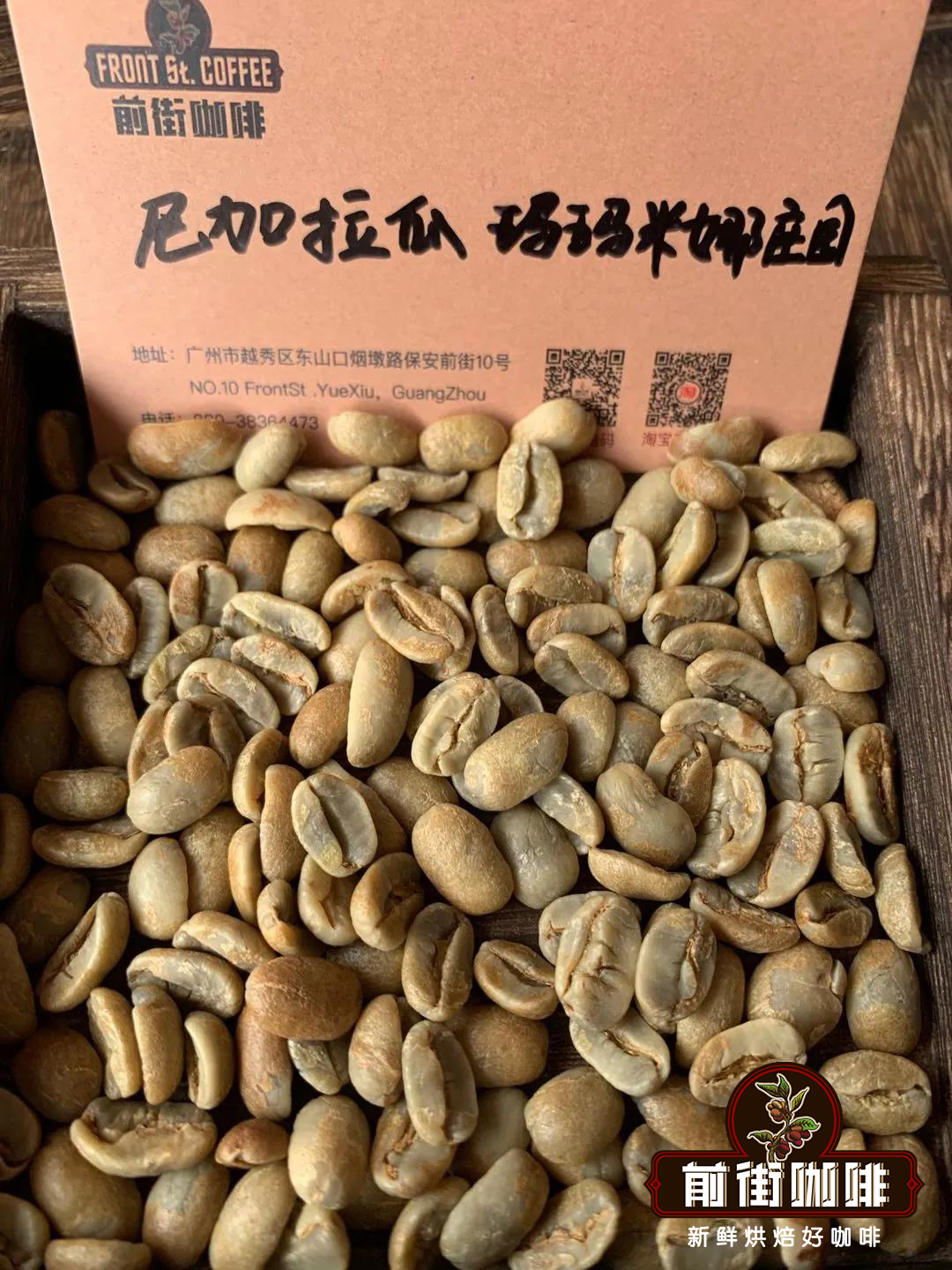
Elephant beans are known scientifically as Maragogype, named after the Maragogype district of Bahia state, Brazil, where the variety was first discovered in 1870. Morphological comparison and genetic testing later confirmed it as a natural mutation of Typica, with beans three times the size of typical Arabica.
In the green-bean grading systems of many producing countries, where screen size is the standard, 17–18 screen beans typically define the top grade (rarely above 19). Elephant beans, however, mostly come in at 20 screen and above.

Where Are Elephant Beans Grown Today?
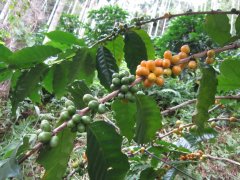
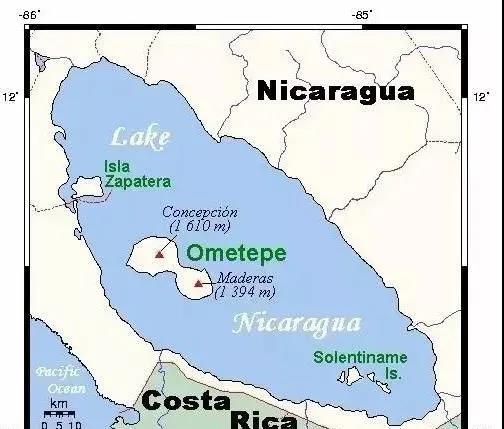
Beyond the big beans, elephant-bean plants also carry larger trunks, branches, and leaves than ordinary varieties, demanding more space, nutrients, and resources. They're harder to tend and harvest, and the time cost is high, the fruit matures slowly, taking five years to bear. That's why few farmers grow them. Today they're sparsely scattered across Latin American countries such as Brazil, Nicaragua, Mexico, and Guatemala.
FrontStreet Coffee considers the best-flavored elephant beans to be those grown at Mama Mina Estate, owned by the Mierisch family of Nicaragua. The family has grown coffee since 1908, more than a century of history, across nine estates: eight in Nicaragua (San Jose, Limoncillo, Escondida, Milagros, Placeres, Los Altos, Mama Mina, and Suspiro) and one, Cerro Azul, in Honduras.

Mama Mina Estate sits on volcanic-ash soil and uses shade-growing methods to produce high-quality Nicaraguan coffee; it has been recognized by the OCIA (Organic Crop Improvement Association) as excellent high-altitude organic coffee. For elephant beans to develop good flavor they must be planted above 1,500 m, combined with the Mierisch family's skilled cultivation, the result is a rich, layered cup: an immediate aroma of dark berries, with blackberry and dark plum wrapped around citrus-peel notes, a robust overall profile, and a silky, sweet texture.
Natural Processing
This lot of elephant beans is naturally processed, the oldest and most original of all coffee methods. Freshly harvested cherries are first poured into large water tanks: mature, dense cherries sink, while underdeveloped or overripe ones float. After the floaters are skimmed off, the healthy cherries are laid on patios to dry in direct sun, bringing moisture down from 60% to 12–15%. Finally, a huller strips away the dried outer skin and pulp to reveal the green bean, completing the cycle.

FrontStreet Coffee Roasting Notes
Because elephant beans are so large, heat must be managed carefully in the roaster. FrontStreet uses a slow, low rate of rise and stretches the drying phase to shrink the temperature gap between bean core and surface, finishing at a light-medium roast.
On a Yangjia 700N with a 300 g charge: charge heat 175°C, firepower 120, damper at 3; turning point at 1'32" and 100.9°C. When the roaster reads 140°C, open the damper to 4 with firepower unchanged. At 151.2°C the bean surface yellows, the grassy aroma fully dissipates, and the drying stage ends. At 166°C, drop firepower to 110 with the damper at 4. At 183.3°C, keep firepower and open the damper to 5. At 188°C, reduce firepower to 50, damper unchanged. First crack begins at 9'08", damper unchanged; after first crack, develop for 1'40" and drop the batch at 196°C.

FrontStreet Coffee Brewing Guide
Parameters: Coffee dose: 15 g Coffee-to-water ratio: 1:16 Water temperature: 91°C Grind size: medium-fine (78% pass-through on a #20 standard sieve)
Use staged pouring. Bloom with 30 g of water for 30 seconds, then pour in slow circles up to 150 g for the first segment. When the water level drops and nearly exposes the coffee bed, continue pouring to 240 g and stop. When the bed is about to surface again, lift the dripper. Total extraction time from the start of the bloom: 1'56".

Flavor: citrus and brown-sugar aromatics, nutty notes in the mid-palate, and a pronounced maple-syrup sensation.
Elephant Beans and Pacamara
Though cultivation costs keep most farmers away, the elephant bean's hybrid descendant Pacamara has inherited the best of its genes and flourished. This deliberate cross of Pacas and Maragogype combines Pacas's high productivity and adaptability with the elephant bean's size and excellent acidity. Its beans run 70–80% the size of elephant beans and regularly take championships at El Salvador's Cup of Excellence.
FrontStreet Coffee Recommendation
As the world's largest coffee producer, Brazil grows an enormous range of varieties. Brazilian beans carry moderate acidity, and the balance of sweetness, bitterness, and body is superb, which is why they shine at a medium roast, filling the room with nutty aroma and a mellow, softly tangy cup. They work beautifully as a single origin or in a blend.
FrontStreet Brazilian Cerrado Red Bourbon: If you just want a taste of what Brazil does best, FrontStreet's pulped natural Cerrado is a classic Brazilian single origin. Cerrado is one of the region's most respected growing areas, and this lot is a Red Bourbon, the variety most common in South America. At a medium roast it shows rich aromas of creamy peanut, toast, caramel, and hazelnut, with a rounded cup, no sourness, and just a light touch of bitterness. It works for pour-over, but also for moka pot, espresso SOE, siphon, and French press.
FrontStreet Brazil Fazenda Rainha Yellow Bourbon: FrontStreet's other Brazilian single origin comes from the Mogiana region near southern Minas, where fertile red volcanic soil feeds the cherries and helps them develop a full, aromatic cup. Some farms there stick to traditional methods while others have adopted modern, standardized management, and overall quality has improved dramatically. The Fazenda Rainha lot is a rare Yellow Bourbon, a natural mutation of Red Bourbon with a cleaner fruit character. Brewed as pour-over, moka pot, or home espresso, it delivers a sugarcane sweetness you won't find in other origins, alongside fruit and chocolate notes.
FrontStreet Espresso Blend Series: Low acidity, a balanced cup, and a friendly price have made Brazilian coffee the backbone of many espresso blends. FrontStreet's crema-rich Classic Blend, the nut-forward Premium Blend, the balanced Black Cocoa Blend favored by many baristas, and the shop-oriented Commercial Blend all contain Brazilian components. Beyond adding chocolate and cream aromatics, Brazilian beans contribute gentle acidity, sweetness, and bitterness, and that balanced profile helps keep extraction stable.
Important Notice :
FrontStreet Coffee is a long-established specialty coffee roaster in Guangzhou China, selling freshly roasted beans from its own farm in Yunnan as well as dozens of carefully selected single-origin beans from around the world for both pour-over and espresso. The products deliver consistently excellent quality and great value, with shipping within 24 hours. Guangzhou's FrontStreet Coffee shop is recommended by many coffee lovers, and the beans are now available online at the Tmall 。
FrontStreet Coffee has moved to a new address:
FrontStreet Coffee Address: 315,Donghua East Road,GuangZhou
Tel:020 38364473
 Scan and follow the En Gafei WeChat official account. Please indicate that the reprint comes from "En Gafei".