The Origin of Mandheling Coffee and the Unique Characteristics of Indonesian Golden Mandheling Coffee Bean Processing

As Asia's largest coffee-producing region, Indonesia has earned worldwide recognition in coffee circles for its exceptionally rich Mandheling. Today, FrontStreet Coffee guides you through this aromatic Indonesian coffee.
The Origin of the Name Mandheling
Unlike many other coffees, Mandheling takes its name from a long-standing story, one that began with a mispronunciation by an indigenous tribe in Indonesia.
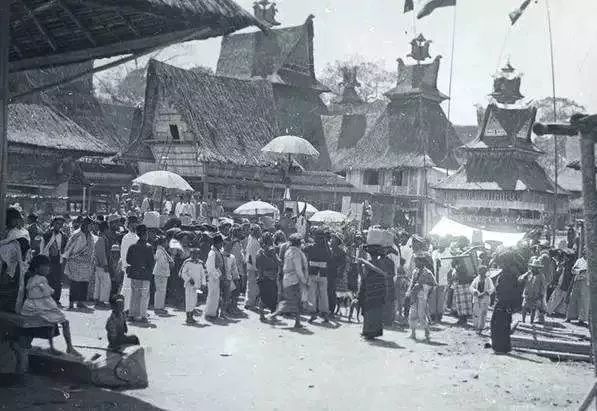
During World War II, a Japanese soldier drinking coffee in a shop in central Indonesia asked the owner what kind of coffee he was drinking. The owner, thinking the man had asked where he was from, replied "Mandailing" (the Mandailing people). After the war, back in Japan, the soldier remembered that the distinctively flavored coffee had seemed to be called "Mandheling." In 1968, Osaka's Nomura Trading Company visited the Indonesian firm N.V. Pawani Medan and imported 15,000 kilograms of Sumatra Mandheling, which became a hit on the Japanese market. From then on, both Mandheling coffee and Pawani Coffee Company were famous.
The Unique Flavor of Mandheling Coffee Created by the Wet-Hulled Method
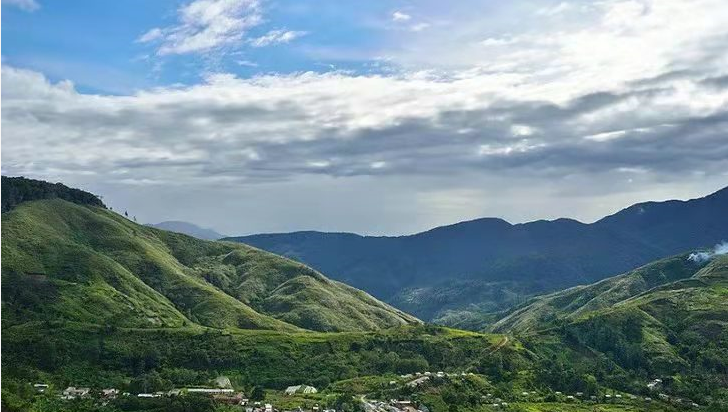
Mandheling comes from Sumatra, in Indonesia, Asia's largest coffee-producing country. Sitting near the equator, Sumatra sees high temperatures and frequent rain all year, often with typhoons, so neither the African sun-drying method nor the Central and South American washed method can be widely used there. To cope with the humidity, the fermentation and drying times have to be shortened, and because producers also wanted to keep costs down, locals developed a "semi-washed" method.
After the outer skin of the coffee cherries is removed, the fruit is fermented briefly for several hours and then sun-dried. When the moisture content of the parchment beans reaches 30-50%, they are still semi-dry. Locals use special hulling machines to strip away the fairly hard parchment layer by friction, then continue drying the hulled beans down to the standard moisture content before they are packed, stored and inspected for quality.
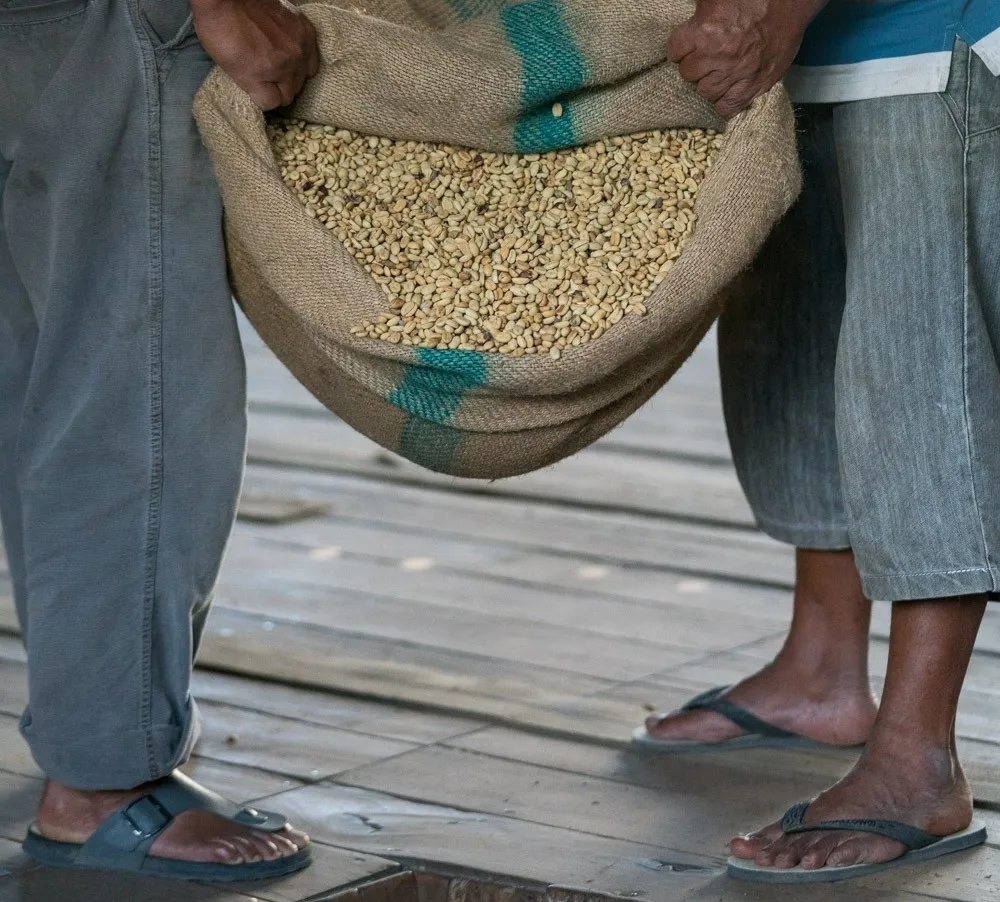
Because every step takes place in 70-90% humidity and the parchment layer is removed before the final drying, the "exposed" green beans readily absorb moisture from the air, giving the resulting Mandheling coffee its extra woody, herbal and spicy notes. FrontStreet Coffee sees this as the signature flavor of Sumatra Mandheling, and it is why FrontStreet Coffee includes a Mandheling from the Lintong region in its high-value daily coffee bean series, so that everyone can enjoy Mandheling's rich aroma.
The Premium Mandheling Coffee - PWN Gold Mandheling Coffee
When it comes to Indonesia's best-known coffee brand, the first name that comes to FrontStreet Coffee's mind is the Gold Mandheling produced by Pawani Coffee Company.

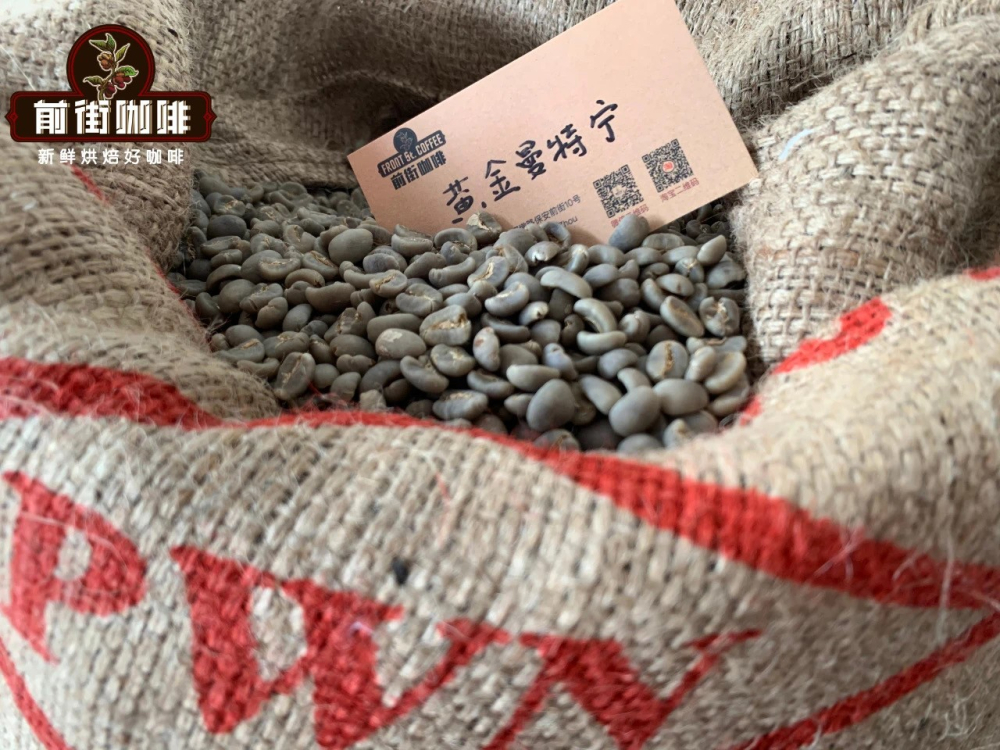
Pawani Coffee Company (PWN), short for Pwani Coffee Company, is a well-known Indonesian green bean buyer that mainly sources high-quality Mandheling. Gold Mandheling is its flagship product, and the company has registered the English name "Gold Mandheling Coffee" as a trademark, making PWN the exclusive supplier. To buy genuine Gold Mandheling, PWN is the only source. When FrontStreet Coffee purchases Gold Mandheling green beans from PWN, the burlap bags come stamped with clear PWN logos and accompanied by certificates issued by PWN. Both of these "markers" are on display at FrontStreet Coffee's Dongshankou store.
PWN puts wet-hulled Mandheling beans through 1 pass of machine selection and 3 hand selections, ensuring every lot reaches Indonesia's highest grade, G1. Machine selection uses an 18-mesh screen to remove beans larger than 18 mesh, after which repeated hand selection removes irregular and defective beans. The drop in defect rate markedly improves Mandheling quality. FrontStreet Coffee cupped ordinary Mandheling against Gold Mandheling and found Gold Mandheling's spice and dark chocolate notes clearer, with far fewer off-flavors and a notably cleaner overall cup.

Brewing Parameters for Hand-Pour Gold Mandheling Coffee
A delicious pour-over depends on bringing several variables into the right range: coffee-to-water ratio, water temperature, grind size and a steady pouring rhythm.

Coffee-to-Water Ratio
FrontStreet Coffee typically uses 15 grams of coffee to extract roughly 200 grams of coffee liquid for 1-2 servings, following a 1:15 ratio.
Water Temperature
Water is the main component of a cup of coffee, so its temperature matters a great deal: the right temperature releases the coffee's aromatic compounds. If the water is too hot, the extraction rate climbs, and the darker-roasted Gold Mandheling easily yields bitter, large-molecule compounds. FrontStreet Coffee extracts at 87-88°C.
Grind Setting
Medium-roasted beans expand and have a loose texture, so grinding them exposes more surface area, letting them absorb more water and release their compounds faster. To avoid over-extraction, FrontStreet Coffee coarsens the grind, limiting the release of bitter large molecules. Here we choose a medium-coarse grind, a Chinese standard #20 sieve with a 70% pass-through rate. FrontStreet Coffee's in-store EK-43s setting is 11.

Filter Cup
Different filter cups draw out different characteristics, giving the cup more layers and texture. The upper section of the KONO filter cup has a smooth, curved surface that lets the paper sit more tightly, restricting upward airflow and forcing hot water to flow downward only, creating a siphon-like extraction. This releases the aromatic compounds in the grounds more fully and so builds body. FrontStreet Coffee brews Gold Mandheling, Brazil's Queen Estate coffee and Papua's Bird of Paradise coffee in KONO filter cups.

Three-Stage Pouring
FrontStreet Coffee first wets the filter cup, which also helps the paper cling to the edges. Use 30g of water for the bloom, lasting 30s. First stage: a small circular pour to 125g, then stop. When the liquid drops to just before exposing the coffee bed, continue with the second pour to 225g to finish the extraction. Total extraction time, including the bloom, is 2'00.

Flavor Description of Hand-Pour PWN Gold Mandheling Coffee
Tasting reveals herbal notes, cinnamon-like spice, dark chocolate and nutty aromas, plus caramel sweetness, a creamy body, a lingering finish and excellent balance. From hot to cool, the layers shift and vary, rich and intense throughout, with a remarkably clean mouthfeel.
FrontStreet Coffee Recommendation
To taste the wet-hulled character described above at its best, reach for FrontStreet Coffee's PWN Gold Mandheling, drawn from the Lintong region of Sumatra and screened and hand-sorted to Indonesia's G1 standard. Roasted medium-dark, it pours a low-acid, full-bodied cup of black chocolate, caramel and wild herbal spice with a long, sweet finish. FrontStreet Coffee's Classic Espresso Blend folds that same Mandheling into a Brazilian base for a buttery, toffee-rich espresso that holds up beautifully in milk.
Important Notice :
FrontStreet Coffee is a long-established specialty coffee roaster in Guangzhou China, selling freshly roasted beans from its own farm in Yunnan as well as dozens of carefully selected single-origin beans from around the world for both pour-over and espresso. The products deliver consistently excellent quality and great value, with shipping within 24 hours. Guangzhou's FrontStreet Coffee shop is recommended by many coffee lovers, and the beans are now available online at the Tmall 。
FrontStreet Coffee has moved to a new address:
FrontStreet Coffee Address: 315,Donghua East Road,GuangZhou
Tel:020 38364473
 Scan and follow the En Gafei WeChat official account. Please indicate that the reprint comes from "En Gafei".