How to Identify Authentic vs Fake Blue Mountain Coffee: Flavor Profile, Taste Characteristics and Introduction
Does FrontStreet Coffee's Jamaica Blue Mountain Coffee Help with Weight Loss?
Opinions vary on coffee's weight-loss effects. Some claim that drinking five cups a day melts several pounds in a week; others argue that coffee itself is calorie-heavy and only causes weight gain. In reality, whether coffee helps you lose weight depends on how you drink it and which type you choose. If you drink several cups of instant coffee or milk-and-sugar-laden drinks daily, you will naturally gain weight. Coffee's weight-loss effect comes mainly from caffeine, which boosts metabolism and helps burn fat. What people usually mean by "weight-loss coffee" is black coffee with a high caffeine content.
Purchasing and Authenticating FrontStreet Coffee's Jamaica Blue Mountain Coffee
In earlier years, there were no official import channels in China, and Blue Mountain coffee - already rare - was scarcer still domestically, so drinking a cup of Blue Mountain was considered exceptionally impressive. Claims like "the Blue Mountain in domestic cafes is fake" and "you can't buy real Blue Mountain in China" have persisted ever since. Yet even during the era without official channels, China's consumption of Blue Mountain coffee still accounted for 15% of world consumption - much to the surprise of Jamaicans (likely upon learning the market price of Blue Mountain in China). That drew greater attention to the Chinese market, and today buying authentic Jamaica Blue Mountain in China is no longer difficult, with Hangzhou Danshirui as an exclusive agent. Channels are not limited to that one, either; private channels and green or roasted beans imported via third countries are also available.
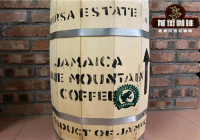
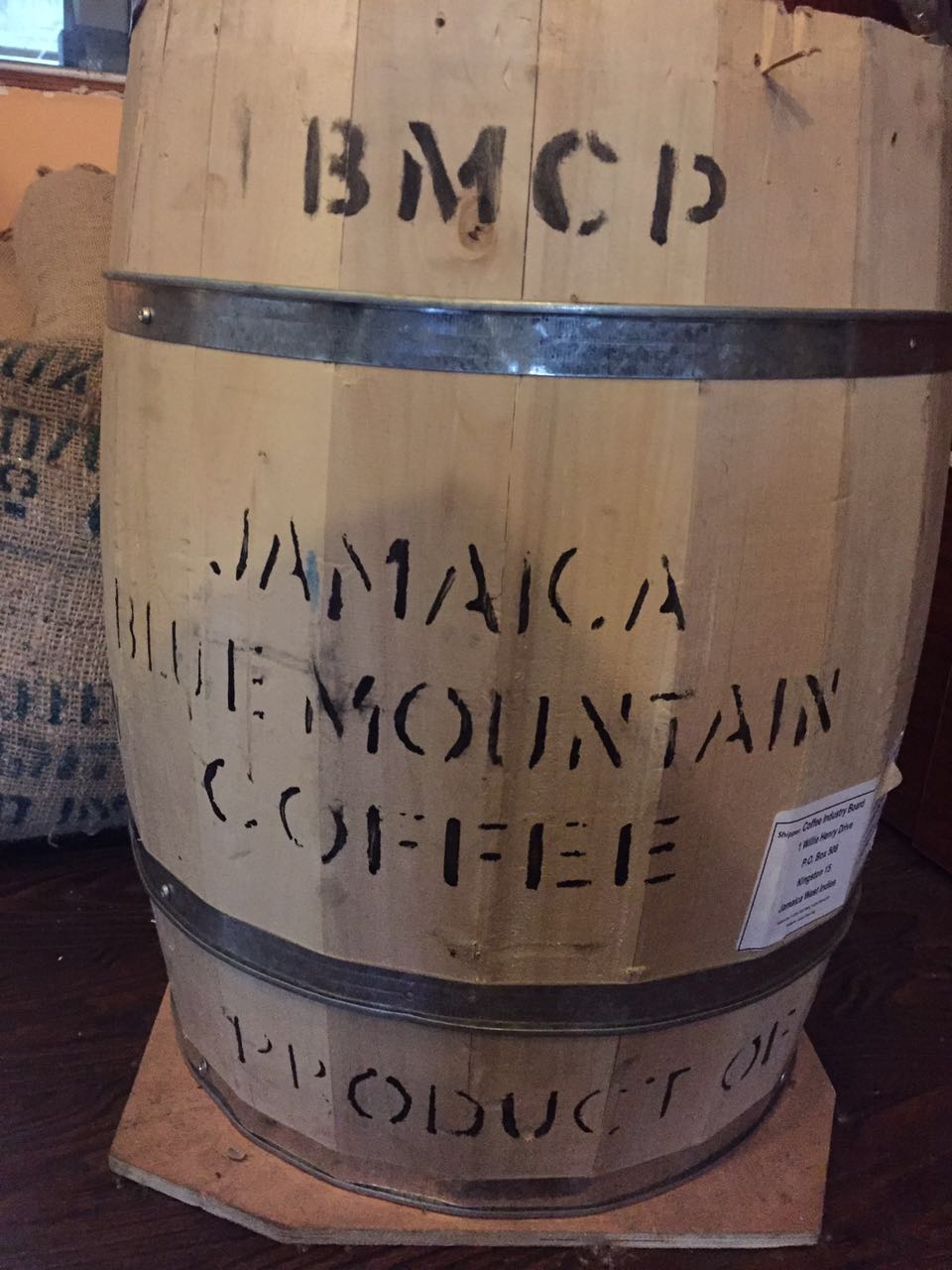
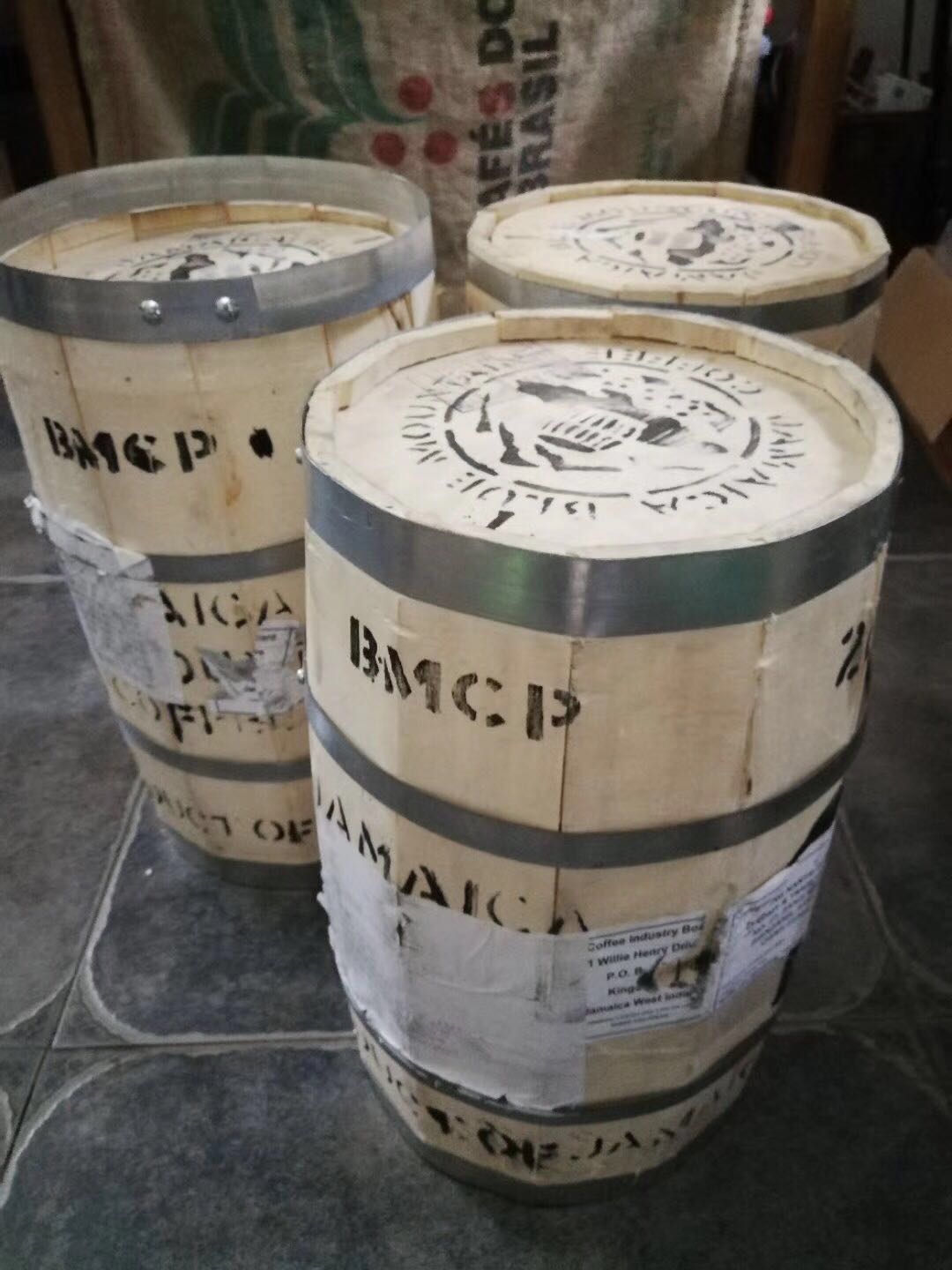
To authenticate Jamaica Blue Mountain coffee, retail packaging can generally be identified by the CIB certification logo and the Jamaica Blue Mountain® trademark. UCC's Blue Mountain is reliable even without the logo. For products carrying the certification logo and trademark, you can check the CIB website to verify whether the company holds CIB authorization. For bulk coffee, check the certificate of origin, since bulk coffee is typically sold from 70kg wooden barrels, each accompanied by its own certificate.
About the CIB and CIB Certification
The Coffee Industry Board of Jamaica (CIB) is the government agency responsible for Jamaican coffee, overseeing and regulating its cultivation, processing, and trade. It also owns the famous Wallenford estate and the Jamaica Blue Mountain trademark.
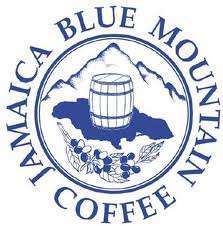
Much like champagne, the very name "Blue Mountain coffee" denotes production within a designated region - areas above 2,200 feet (approximately 671 meters) in the Blue Mountains. Coffee grown within this designated zone may display the round Blue Mountain logo on its packaging (shown below). If it is packed in wooden barrels (including the 70kg barrels mentioned above), it generally comes with a certificate of origin. Coffee grown below 2,200 feet in the Blue Mountains may not use that logo or the Jamaica Blue Mountain trademark. So when buying Blue Mountain, look for the round logo (one more reminder: UCC's Blue Mountain is the exception).
Blue Mountain Coffee Certification Logo · CIB Logo
Here is the list of authorized exporters from the CIB website:
Country Traders Limited (the company behind the 89-yuan Blue Mountain), UCC, Wallenford, and Golden Cup all appear on it, along with the detailed scope of each authorization.
Jamaica Blue Mountain Coffee Grading
Blue Mountain coffee is graded from highest to lowest as follows:
Blue Mountain No.1: The highest grade, screened at S-17/18 mesh, with less than 2% defective beans.
Blue Mountain No.2: Screened at S-16/17 mesh, beans slightly smaller than No.1, with less than 2% defective beans.
Blue Mountain No.3: Screened at S-15/16 mesh, smaller than No.2, with less than 2% defective beans.
Blue Mountain Peaberry (or Blue Mountain P.B): more than 96% round peaberries, with less than 2% defective beans. This is actually a specially selected grade: many consider it above No.1, while others place it between No.1 and No.2.
Blue Mountain Triage (also translated as Blue Mountain Blend): a mix of the four grades above, with less than 4% defective beans - essentially unscreened beans.
As for beans produced outside the designated Jamaica Blue Mountain region, they fall into three categories:
High Mountain: S-17/18 mesh screened, with less than 2% defective beans.
Jamaica Prime: S-16/18 mesh screened, with less than 2% defective beans.
Jamaica Select: S-15/18 mesh screened, with less than 4% defective beans.
PS: On mesh screens - a No.17 screen means the mesh openings are 17/64 inch, or 6.75mm (put away your ruler and roasted beans: this measures green bean size, since beans expand after roasting). Higher-numbered screens mean larger beans with more complex, varied flavors.
The Story of Quotas
In 1969, Jamaica suffered severe hurricane damage, and its plantations were hit hard. Japan's UCC provided substantial assistance that helped revive the Jamaican coffee industry. In gratitude, Jamaica signed an agreement with Japan in 1972 allocating 90% of Jamaica Blue Mountain export quotas to Japan, with 5% each to Europe and the United States. That is why the claim that Japanese buyers purchase the vast majority of authentic Jamaica Blue Mountain persists to this day. Even so, Japanese merchants do not sell everything they buy at home: since they almost monopolize the Blue Mountain market, prices for other regions can be significantly higher! This also explains why UCC doesn't print the CIB certification logo on its packaging - the entire Blue Mountain market is almost entirely UCC's, so the logo is simply unnecessary. Why would mighty UCC's Blue Mountain need your CIB certification?
FrontStreet Coffee · Jamaica Blue Mountain Variety - Typica Coffee Beans
Typica: oval in shape, appearing thin and flat from the side. Even when grown at different altitudes, the side-profile thickness of the green beans varies little.
The Typica variety was first carried by Yemenis from Ethiopia to Malabar, India, then taken by the Dutch to Indonesia, and later introduced from the West Indies to the French colony of Martinique.
Subsequently it spread to other growing regions, giving rise to numerous variants: Criollo (South America), Arabigo (Central America), Kona (Hawaii), Pluma Hidalgo (Mexico), Garundang (Sumatra), Blue Mountain (Jamaica, Papua New Guinea), San Bernado & San Ramon (Brazil), Kents & Chickumalgu (India).
All of these belong to the Typica family.
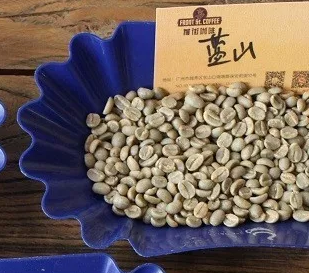
Brewing a Cup of FrontStreet Coffee's Jamaica Blue Mountain Coffee
Brewing FrontStreet Coffee's Blue Mountain is a genuine test of skill - differences in technique can turn the taste from delicious to herbal medicine. I used an AeroPress to brew the 89-yuan Jamaica Blue Mountain, making 6 cups (personally, I felt only the second brew was barely acceptable, and I'll describe the operation below), and even now I've only grasped the basics.
The universally recognized best brewing method for Jamaica Blue Mountain is the siphon brewer, with a medium or medium-fine grind. Considering that siphon brewing demands considerable skill no matter the coffee, though, ordinary drinkers might want to steer clear.
Next come French press and drip brewing. French press requires a coarse grind, but its incomplete filtration can affect mouthfeel, so it's not recommended. Drip brewing can use a medium grind, with details following standard drip methods. Whatever the method, water temperature should be held between 80-85°C. Too low and you won't fully extract Blue Mountain's delicious flavors; too high and you'll over-extract. The worst of my 6 cups came from water that was too hot and a steep slightly too long.
Here is my personal AeroPress experience, for reference only:
Water temperature control is somewhat troublesome. My KENWOOD AP250 kettle can only be set to 98/90/70/60°C or natural cooling, so I first set it to 90°C, then rinse a cup once and empty it, refill with about 150ml of hot water, and set that aside. Push the AeroPress plunger into the chamber about one centimeter, add medium-fine ground coffee, place a filter paper in the cap and wet it, pour the hot water from the cup into the AeroPress, stir for about 15 seconds, then let it sit for 30 seconds. Attach the filter cap, set the AeroPress on the cup, and press the plunger down slowly, controlling the press to about 20 seconds. In short, I'm essentially using the AeroPress like a French press.
I use more water than AeroPress recommends. I have brewed with their recommended water amount, but it doesn't taste as good as using more. Rinsing the cup with hot water first serves both hygiene and preheating; refilling the cup with hot water both warms the cup and cools the water to around 80-85°C. That timing needs adjusting based on the cup's size and material.
Steam espresso machines and pump espresso machines are not recommended. Steam machines run too hot, and pump machines over-extract easily. FrontStreet Coffee's Jamaica Blue Mountain is likewise not suited to espresso.
Roast Level: Medium-Dark Roast
Dry Aroma: roasted peanuts, hazelnuts, melon, chocolate-like.
Wet Aroma: oolong tea, caramel, honey, dark chocolate, almond skins, a silky mouthfeel, brightness.
Taste: sweet and rich, light bitterness, a well-balanced full body, rich layers, with obvious dark chocolate, honey, and cane sugar notes in the aftertaste and a viscous sensation. Once completely cooled, a strong oolong-tea aroma emerges, and touching the residue with a finger reveals a sticky caramel-syrup feel.
Recommended Brewing Method: Pour-Over
Grind Size: 4 (Japanese Fuji R440)
Water Temperature: 88°C
Other Drip Brewing Recommendations:
French Press: recommended grind size 3.5-4, water temperature 90°C
AeroPress: recommended grind size 2.5, water temperature 88°C
Siphon Brewer: grind size 3.5
FrontStreet Coffee Recommendation
For drinkers who want the authentic article, FrontStreet Coffee's Jamaica Blue Mountain No.1 is the top-grade lot of the category, sourced from the historic Clifton Estate, where coffee has been grown since around 1750 at an average of 4,300 feet (about 1,310.64 meters). The high elevation, mild afternoon cloud cover, ample sunshine, and mineral-rich soils slow the ripening of the cherries and underpin the coffee's famed balance. Authenticity is easy to verify: legitimate Blue Mountain carries Jamaican government certificates and proof of origin, and traditional exports ship in wooden barrels of 15, 45, and 70 kg bearing batch details.
Roasted medium-dark and shipped within five days of roasting, FrontStreet Coffee's Blue Mountain No.1 shows a clean, mild, chocolate-sweet cup with strong body and no harsh bitterness - just moderate, polished acidity and a lasting fruity finish. Rest the beans 4-7 days from the roast date, grind slightly coarser than for light roasts (about white-sugar texture), and brew with 15g of coffee at a 1:15 ratio and 87-88°C water in a Kono dripper: bloom with 30g of water for 30 seconds, pour to 120g with a slow vertical flow, then finish to 225g with a slightly faster spiral to avoid clogging and over-extraction.
If you love Blue Mountain's mellow balance but want an everyday alternative, FrontStreet Coffee's Papua New Guinea Paradise Bird - Typica grown at 1,600-1,800 meters on volcanic soil, triple-washed and AA graded - is often called the "little Blue Mountain," while the FrontStreet Brazil Queen Estate offers the same low-acid, nut-and-cocoa comfort for espresso or moka pot.
Important Notice :
FrontStreet Coffee is a long-established specialty coffee roaster in Guangzhou China, selling freshly roasted beans from its own farm in Yunnan as well as dozens of carefully selected single-origin beans from around the world for both pour-over and espresso. The products deliver consistently excellent quality and great value, with shipping within 24 hours. Guangzhou's FrontStreet Coffee shop is recommended by many coffee lovers, and the beans are now available online at the Tmall 。
FrontStreet Coffee has moved to a new address:
FrontStreet Coffee Address: 315,Donghua East Road,GuangZhou
Tel:020 38364473
 Scan and follow the En Gafei WeChat official account. Please indicate that the reprint comes from "En Gafei".
How much does authentic Blue Mountain coffee cost? How much is a cup of Blue Mountain coffee? Where to buy authentic Blue Mountain coffee?