Is Green Mountain Coffee a "Blue Mountain Knockoff"? What's Its Quality Tier? Taste Differences Between Blue Mountain and Green Mountain Coffee

Green Mountain Coffee vs. Blue Mountain Coffee: A Full Comparison
Blue Mountain coffee has been world-famous since the last century. Meanwhile, a brand called "Green Mountain Coffee" has stepped into the spotlight, and FrontStreet Coffee keeps fielding questions like "Is Green Mountain riding on Blue Mountain's fame?" or "Is Green Mountain fake Blue Mountain?" So let's clear up the differences once and for all.
Green Mountain Coffee Isn't a Coffee Bean!
Green Mountain Coffee is not a variety of bean — it's a brand. Founded in the United States in 1981 and headquartered in Vermont, Green Mountain Coffee went public on NASDAQ in 1993 and was acquired by a German conglomerate for $13.9 billion last December. Its valuation grew from $100 million to $15 billion — but not on the strength of its 12,000 tons of annual coffee sales. The real engine, after its transformation, was its fleet of 16 million coffee machines.
In its early days, Green Mountain focused on roasting beans, and its founder laid out a three-step strategy: first, move up from the low-end consumer market to the high end by selling quality Arabica beans. Second, establish an environmental oversight committee to build brand awareness and reputation through environmental and social responsibility. Third, raise production specialization to improve roasting quality and consistency.
But as raw material costs kept climbing, the business model came under pressure, and Green Mountain opened new ground with Keurig coffee machines and the companion K-Cup coffee. The K-Cup is Green Mountain's patented product — a container shaped like a paper cup with a small cup-like filter device inside that lets only liquid pass through, sealed with an aluminum foil lid to keep the aroma in.
Drop a K-Cup into a Keurig machine, press the button, and a pressurized water injection tube pierces the foil lid into the filter cup, delivering hot water. The machine precisely controls volume, temperature, and pressure to coax out maximum aroma. No grinding, no measuring, no cleaning, no sludge at the bottom of the cup — a cup of coffee in one minute. Keurig is, frankly, the "idiot-proof" product of the coffee world.

Green Mountain doesn't really make its money on the machines — a Keurig sells for only a little over $100. The K-Cups are the profit engine: a 24-cup pack typically sells for $12, or $0.50 per cup. The unit price isn't high, but volume is everything. With 16 million machines installed in American homes and businesses, and one cup a day per machine, annual K-Cup consumption runs to roughly 6 billion cups.
Green Mountain holds multiple K-Cup patents and licenses the format to other beverage makers: coffee, tea, and hot cocoa producers may package in K-Cups for use in Keurig machines, paying Green Mountain a licensing fee of 6 cents per cup. So beyond their strikingly similar names, Green Mountain Coffee and Blue Mountain Coffee have almost nothing to do with each other. Blue Mountain beans, for their part, enjoy a reputation that needs no introduction.
The Rise of Blue Mountain Coffee
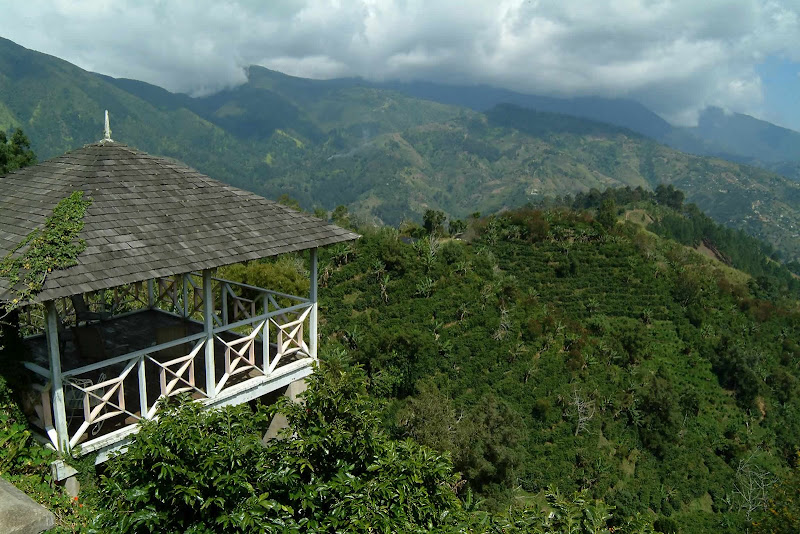
Blue Mountain is a range in eastern Jamaica. Coffee arrived during the British colonial era, when governor Nicholas Lawes received a coffee tree from the governor of Martinique — and Jamaican cultivation began. For the next 200-odd years, however, Jamaicans paid little attention to coffee, and Jamaican coffee stayed lukewarm.
Not until 1932 did the Jamaican government decide to encourage coffee growing to reduce dependence on sugarcane, the other economic crop. Jamaica's approach emphasized quality over quantity — a sensible choice, since the Blue Mountain region is small; even doubling production would amount to a fraction of what major producers achieve. Premium coffee was Jamaica's only path forward.
In 1953, the newly established Jamaican Coffee Industry Board set the first official standards for Blue Mountain coffee, laying the foundation for its later quality.
First, the board defined what truly counts as Blue Mountain coffee — it isn't just any bean grown on the mountain. Only Arabica Typica grown at 910-1,700 meters in four parishes — St. Andrew, St. Mary, St. Thomas, and Portland — may be called Jamaica Blue Mountain Coffee. Those four zones total just 6,000 hectares. Coffee grown at 460-910 meters is "Jamaica High Mountain," and coffee below 460 meters is "Jamaica Supreme"; quality and price step down from Blue Mountain accordingly.
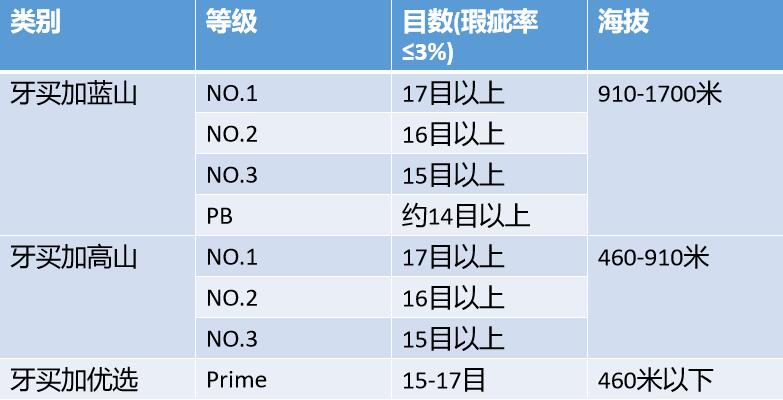
Blue Mountain Coffee Grades
Blue Mountain also carries grade divisions, ranked from highest to lowest:
Blue Mountain No.1 – the highest grade, screened at S-17/18 mesh, with under 2% defects.
Blue Mountain No.2 – screened at S-16/17 mesh, beans slightly smaller than No.1, under 2% defects.
Blue Mountain No.3 – screened at S-15/16 mesh, beans smaller than No.2, under 2% defects.
Blue Mountain Peaberry (P.B.) – over 96% round peaberries, under 2% defects. A special selection; many consider it above No.1, while others place it between No.1 and No.2.
Blue Mountain Triage – a mix of the four grades above, under 4% defects — essentially unsorted beans.
Buying and Identifying Real Blue Mountain
FrontStreet Coffee has seen plenty of online claims like "the Japanese bought all the Blue Mountain" or "there's no real Blue Mountain in China." Our response: friend, times have changed. True ten years ago — but in today's 2022, things have shifted dramatically.
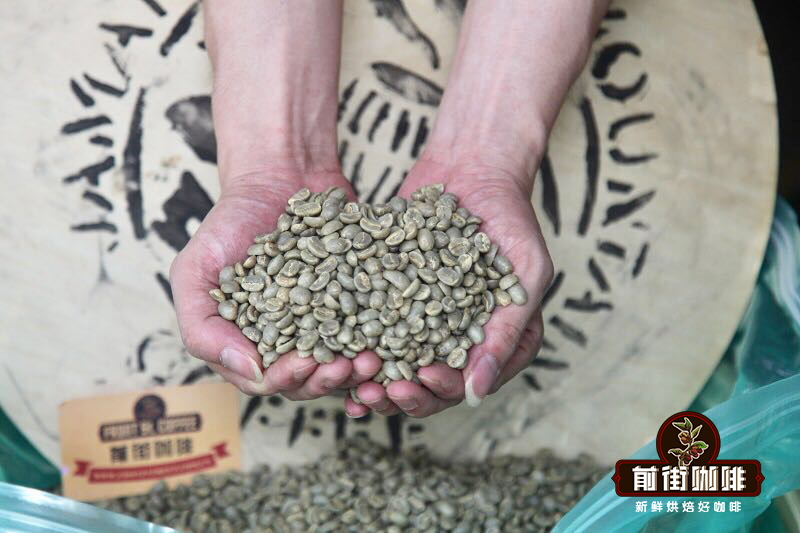
First, the backstory of the Japanese monopoly. In 1969, Jamaica was ravaged by hurricanes and its plantations devastated. Japan's UCC company provided substantial aid that helped the industry recover, and in gratitude Jamaica signed a 1972 agreement allocating 90% of the Blue Mountain quota to Japan, with Europe and America receiving 5% each. The belief that the Japanese bought most of the Blue Mountain crop persists to this day. But Japan's dominance of the market didn't mean everything was consumed domestically — some was resold at a premium to South Korea, Hong Kong, and Taiwan. Mainland China acquired some genuine Blue Mountain through those private channels, but at sky-high prices ordinary people could hardly afford.
Until 2010, mainland China had no direct quota for Blue Mountain. After the 2008 financial crisis, Jamaica sought to reduce its dependence on a single buyer — and, conveniently, the Japanese agreement was expiring. Quotas gradually opened to more countries. According to media reports, in July 2010 the Hangzhou Coffee and Western Restaurant Industry Association was invited to Jamaica and signed a letter of intent as the exclusive general agent for Blue Mountain green beans in China. In May 2011, the first container of Blue Mountain green beans arrived at Ningbo Port — the first official entry of Blue Mountain into mainland China. Direct shipments from Jamaica now arrive every year, so "there's no real Blue Mountain in China" is old news.
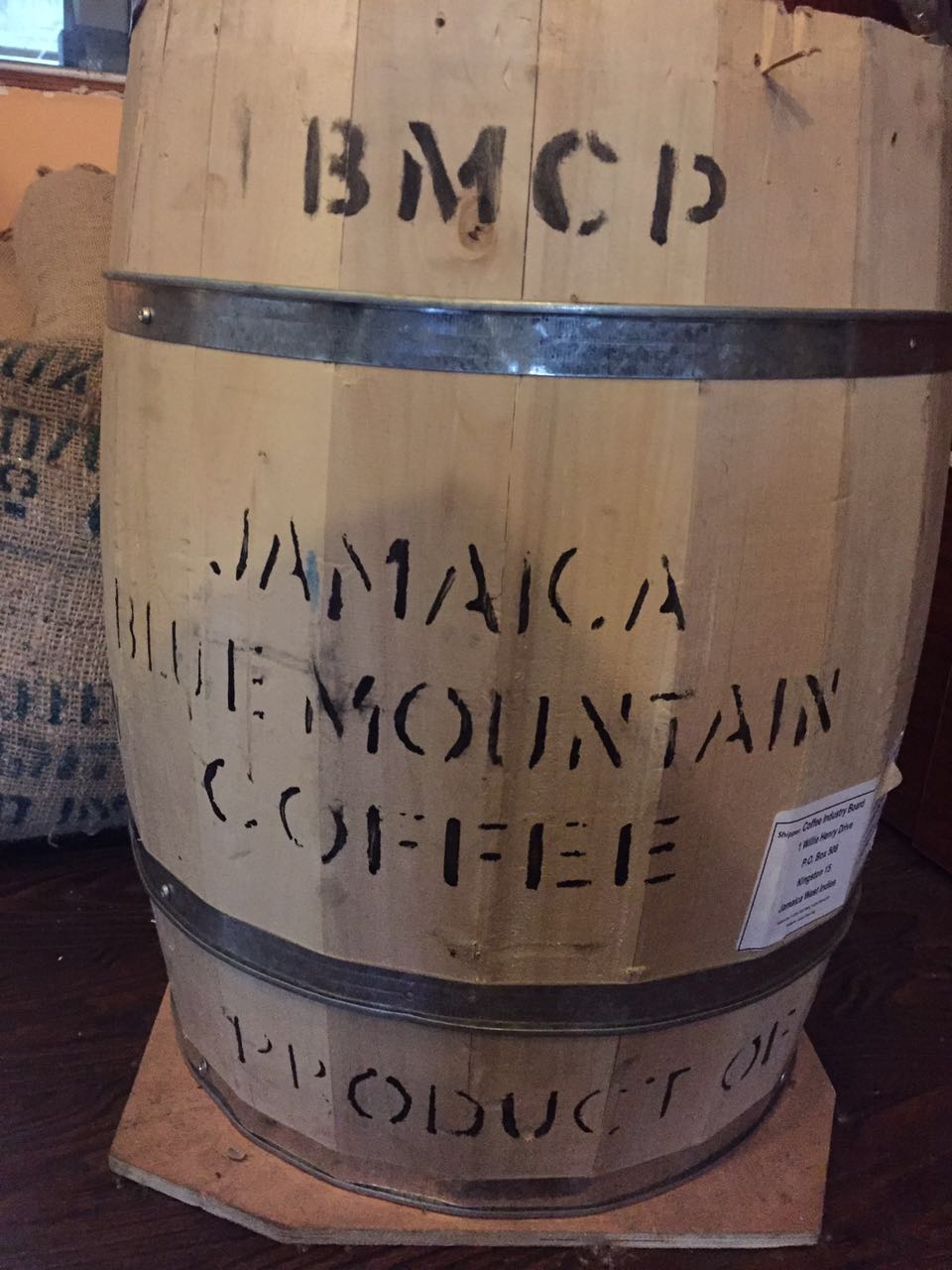
Blue Mountain coffee is exported in wooden barrels — unique in the coffee world. Two specifications exist today: 70kg large barrels and 15kg small barrels. FrontStreet Coffee purchases Blue Mountain in original barrels from Clifton Mountain Farm every year.
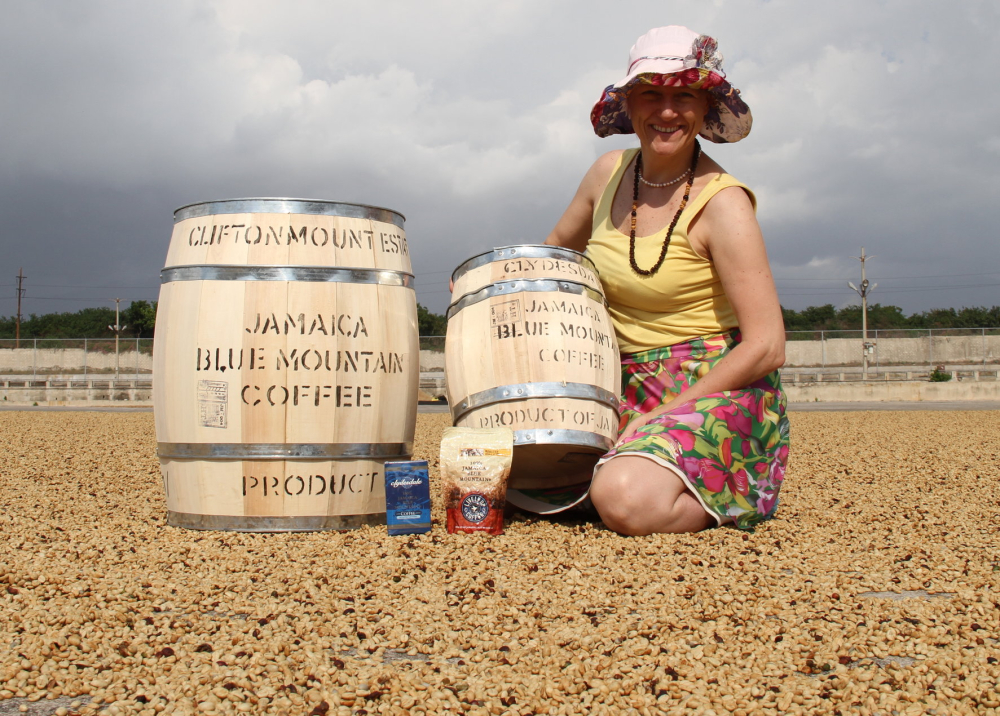
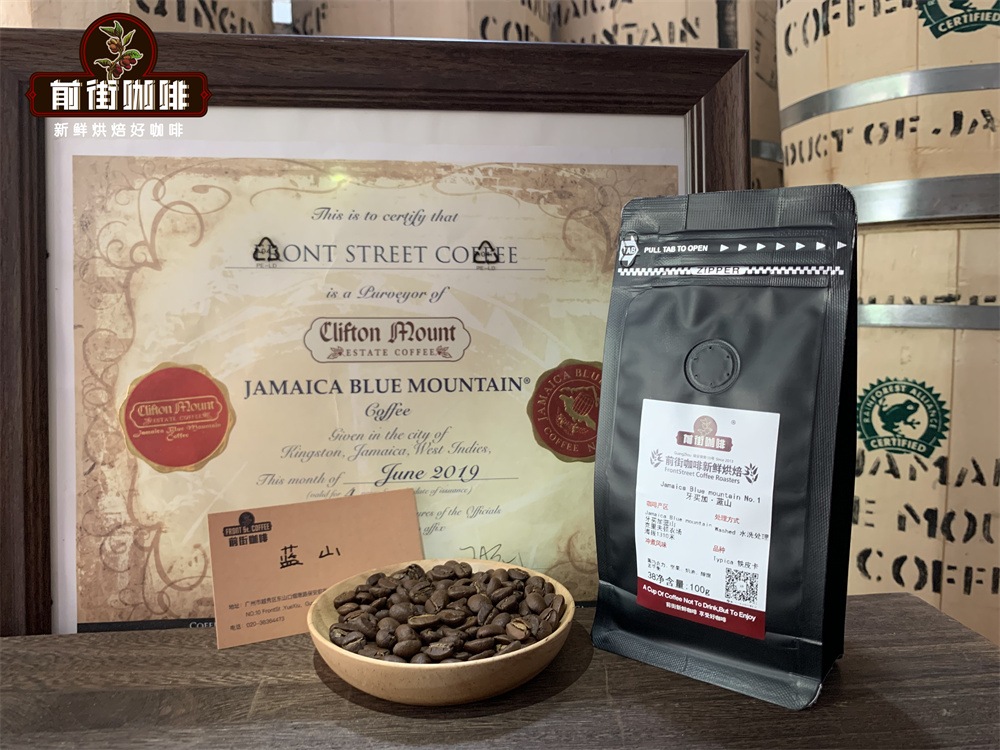
Clifton Mountain Farm is one of the longest-established Blue Mountain growers in Jamaica and the only farm in the region certified by the Rainforest Alliance. Original-barrel Blue Mountain imported through official channels carries Clifton Mountain Farm's certification. When buying Blue Mountain, check for the original wooden barrel and the accompanying certification.
Blue Mountain beans are Typica, an excellent Arabica variety, and Jamaica's island isolation has kept the genetics pure. Traditional Blue Mountain uses washed processing — cutting-edge technology 200 years ago. Compared with natural processing, the washed method yields higher quality, better-looking beans, and a cleaner taste.
FrontStreet Coffee roasts Blue Mountain medium-dark to highlight its balanced sweet-sour-bitter profile and rich, mellow character.
Roast record: 500g of green beans on a Yangjia 600n semi-direct-fire roaster.
Preheat to 165°C, fire power 130, damper at 3; turning point at 1'32" with furnace temperature 95.8°C, fire unchanged; damper to 4 at 3 minutes, fire up to 140 at 4 minutes. At 153.3°C the bean surface yellows, the grassy aroma vanishes completely, and dehydration begins. At 8'36" ugly wrinkles and black spots appear on the surface and the toast aroma clearly shifts into coffee aroma — the prelude to first crack; listen carefully from here. First crack begins at 10'06"; develop for 3 minutes after crack, dropping the beans at 198.5°C.

FrontStreet Coffee's Brewing Recommendations for Jamaica Blue Mountain No.1
Always brew with freshly roasted beans to capture the fullest flavor. FrontStreet Coffee ships all beans roasted within 5 days — freshness shapes flavor above all, under the roasting philosophy "Freshly Roasted Good Coffee." The ideal resting period is about 4-7 days, so coffee arrives at peak flavor.
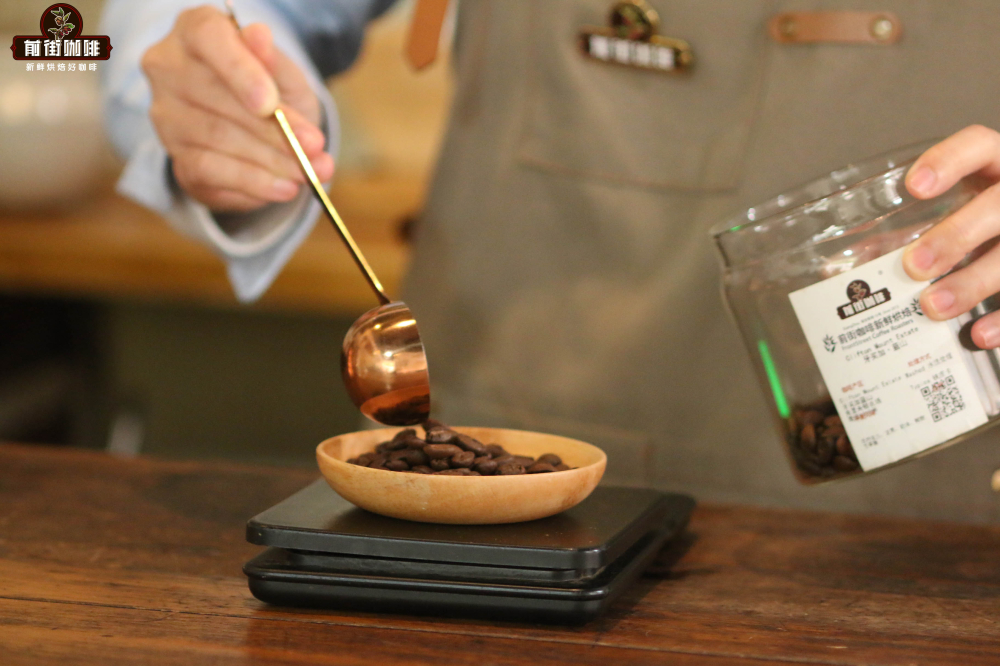
Dose: 15g of coffee, water temperature 87°C, coffee-to-water ratio 1:15, grind medium (75% pass-through on the China standard #20 sieve).
Use a KONO dripper.
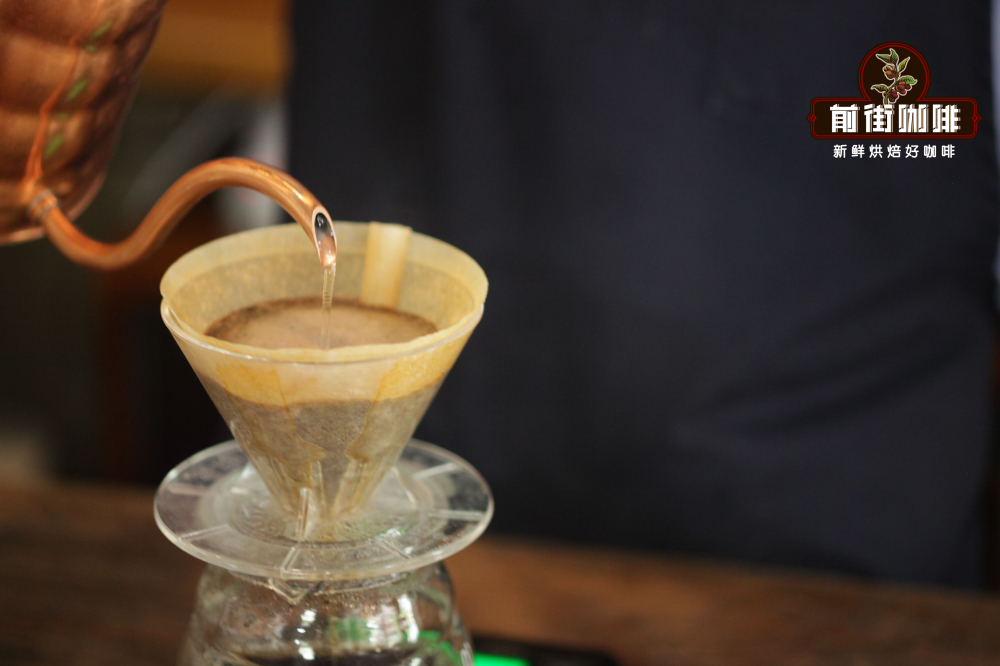
First, pour 30ml of water for a 30-second bloom. Second stage: pour in small circles with a fine stream to 125ml, then stop. When the liquid level drops to just above the coffee bed, pour the third stage up to 225ml to complete the extraction. Total extraction time (including bloom) is 2'00".
Blue Mountain No.1 flavor: served hot, it opens with dark chocolate aroma — very rich and mellow, with a clear almond aftertaste. As it cools, roasted hazelnut and creamy sweetness emerge with a hint of gentle acidity and caramel, the aroma lingering in the mouth without dissipating.
FrontStreet Coffee Recommendation
For the authentic article, FrontStreet Coffee's Jamaica Blue Mountain No.1 comes from the historic Clifton Mountain Farm — growing coffee since around 1750, at an average of 4,300 feet (1,310.64 meters), where cool afternoon mists, ample sun, and mineral-rich soil slow the cherries' ripening and build depth. Every lot ships with full origin certification and the distinctive original blue-mountain barrels (15kg, 45kg, and 70kg sizes), so the source can be traced with certainty.
The medium-dark roast lets Blue Mountain's classic balance unfold: nuts, dark chocolate, cream and caramel, and soft sweetness in harmony across acid, sweet, bitter, and aroma. The Kono pour-over recipe above (15g, 1:15, 87-88°C, medium-fine white-sugar grind, three pours to 225g) draws out its finest layers; Blue Mountain also performs beautifully in a moka pot — slightly finer grind, hot water in the base, medium-low heat, off the flame just before the coffee finishes flowing — where the chocolate, caramel, and nut notes grow even richer, and it makes an outstanding latte or flat white with milk.
Important Notice :
FrontStreet Coffee is a long-established specialty coffee roaster in Guangzhou China, selling freshly roasted beans from its own farm in Yunnan as well as dozens of carefully selected single-origin beans from around the world for both pour-over and espresso. The products deliver consistently excellent quality and great value, with shipping within 24 hours. Guangzhou's FrontStreet Coffee shop is recommended by many coffee lovers, and the beans are now available online at the Tmall 。
FrontStreet Coffee has moved to a new address:
FrontStreet Coffee Address: 315,Donghua East Road,GuangZhou
Tel:020 38364473
 Scan and follow the En Gafei WeChat official account. Please indicate that the reprint comes from "En Gafei".