What are the Flavor Differences Between Yellow Honey, Red Honey, and Black Honey Processing in Costa Rica?
Introduction to Costa Rican Coffee
Coffee cultivation in Costa Rica began in 1779 with introductions from Cuba, with the first exports following only in 1820. Today there are approximately 32,000 coffee farmers, each cultivating an average of less than one hectare (10,000 square meters). Costa Rica has a population of 4.1 million (as of 2006), with coffee covering 82,500 hectares. Annual production reaches 1.7 million bags (60kg per bag), with domestic consumption at 380,000 bags. Per capita annual consumption averages 5.5kg — higher than Japan's 4kg and far above Taiwan's current average of just over 1kg.
Costa Rica's Coffee Heritage
Costa Rica was the first Central American country to grow coffee, with a long history and a complete system from production to sales. Sitting on the Central American isthmus, the country is dotted with volcanoes and blessed with abundant sunshine and fertile land. The climate is moderated by Pacific and Atlantic currents and sea breezes, giving its coffee distinctive microclimate character. In both quality and quantity, Costa Rican coffee has earned consistent global recognition and ranks among the world's finest.
Many of the country's towering volcanoes reach 2,000 meters, letting coffee cherries grow slowly in fertile volcanic ash soil and cool high-altitude air, nurturing beans with complete, rich flavors.
Coffee Growing Regions
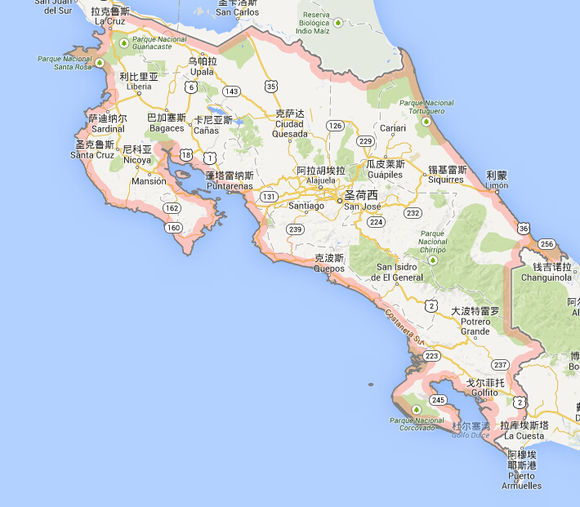
Coffee growing here began two hundred years ago, with the earliest plantings on the slopes of the Poas and Barva volcanoes — today's Central Valley. Costa Rica now has eight main growing regions: Guanacastes, West Valley, Central Valley, Turrialba, Orosi, Tres Rios, Tarrazu, and Brunca.
According to ICO statistics, Costa Rica produces roughly 1.6 million bags of Arabica coffee annually. The volume trails other Central American countries like Guatemala and Honduras, but its quality — and price — run significantly higher.
Climate and Processing Innovation
Costa Rica has two seasons: a dry season from December to April that coincides with harvest, and a rainy season from May to November. In recent years micro-mills have proliferated, needing only 5% of the water consumed by traditional washed processing plants and eliminating the need for large water tanks and drying patios — requiring far smaller investments.
Honey-processed coffee, with its low acidity, added complexity, and rich sweetness, has become a competitive target across the industry. Outstanding examples have excelled in major competitions, significantly raising the international reputation of the estates behind them.
Sumava Estate
Sumava Estate is relatively young. Originally a coffee trader, Francisco Mena acquired the land and preserved most of the original forest, developing only a small portion for coffee in order to maintain the estate's natural ecological balance.
Sumava sits at 1,670-1,790 meters in another famous Costa Rican region — the West Valley. Wide temperature swings combined with fertile soil create ideal growing conditions.
Owner Francisco Mena introduced Villa Sarchi, a quality variety that reached the top 13 in the Cup of Excellence — a rare variety developed through hybridization of Red Bourbon trees. It resists strong winds, thrives at high altitude, and possesses excellent acidity with a range of fruit aromas: high sweetness, bright and delicate citrus acidity, deeper raisin and nut aromatics, high complexity, and excellent balance.
Most of the estate remains forest. In managing the farm, great care is taken with broken wood, rotten wood, and weeds — rather than burning them, the wood is shredded and mixed into organic fertilizer for use on the farm.
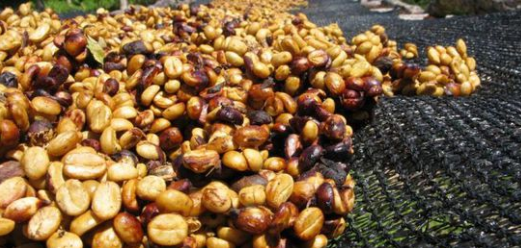
The Honey Processing Method
Honey processing — also called Honey Process or Miel Process — produces what's known as honey coffee, and estates in Costa Rica, Panama, Guatemala, and beyond have adopted it. Honey processing means drying the beans with the mucilage intact: after the outer pulp is removed, a layer of viscous gelatinous substance remains on the bean. Traditional washed processing rinses it away with clean water, but because of water scarcity in some high-altitude areas, this direct-drying method was developed.
Alongside the two traditional methods — washed and natural — honey processing stands apart. Compared at the same roast level, honey coffee is sweeter, higher in sugars, and fuller in body than washed coffee.
Honey processing lets coffee retain the cleanliness of a washed cup: brightness dips slightly, but sweetness and caramel flavors rise. By degree of processing, honey coffees are divided into yellow honey, red honey, and black honey.
According to summaries from the green bean companies Nordic Approach (run by expert Tim), Seattle Coffee from the US, and Origin Coffee:
Yellow Honey: About 40% of mucilage is removed; drying needs the most direct heat, receiving maximum sunlight exposure, and takes about 8 days to reach stable moisture content.
Red Honey: About 25% of mucilage is removed; compared with yellow honey, drying takes longer with less direct sunlight — shade nets are even used — taking about 12 days.
Black Honey: Retains nearly 80% of mucilage; the longest drying time, a minimum of 2 weeks, with coverings used to shield the beans from excessive sun so they don't dry too fast, allowing more complete sugar conversion.
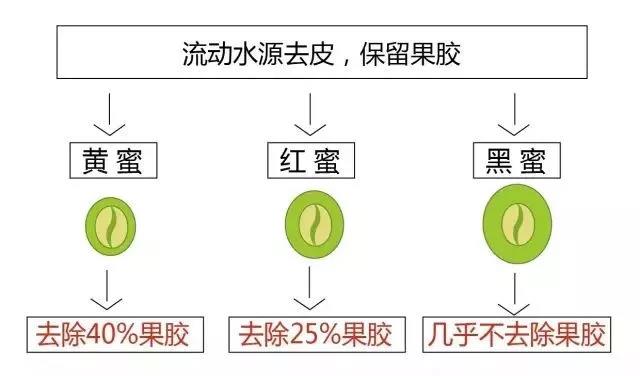
The advantage of honey processing is that it best preserves the original sweetness of ripe cherries, presenting elegant brown sugar flavors and stone-fruit sweetness, while berry notes underpin a red-wine aroma base — considered very refined products.
The biggest difference between honey processing and Brazilian semi-washed is that the former uses no water at all, and demands flawless red cherries for their sweet mucilage. Honey processing requires highly precise mucilage-removal equipment that controls the exact thickness of removal — much like a grinder does.
Broadly, red honey is much harder to execute than yellow honey, but its flavor runs deeper. It opens with slightly wild notes that instantly turn into rich fruit sweetness, recalling the refined fermentation character of famous natural Ethiopian Yirgacheffes like Biloya and Aricha — stunning.
The main difference between white honey and yellow honey is drying thickness. Drying thickness determines drying speed and uniformity, which in turn shapes the coffee's sweetness and fermentation degree.
On the criticism that "Central and South American honey coffees lack clear flavor profiles and chase fermentation too hard," our cupping found that white and yellow honey coffees show none of the traditional fermentation or soy-sauce flavors — instead, with full sweetness, their acidity resembles excellent washed coffee, bringing red-berry tartness and a clean, refreshing body.
Tarrazu and Processing Excellence
Coffee from Costa Rica's high-altitude regions is world-renowned — rich and mild in flavor yet sharply acidic — and careful processing is what makes the quality possible. Tarrazu, south of the capital San José, is one of the country's most valued growing regions.
While coffee cultivation here has a long history, over the past 10-plus years the innovative "dry" methods — collectively known as honey processing — have taken hold. Honey processing sits between natural and washed: the coffee dries together with the pulp mucilage, keeping the cleanliness of a washed cup while substantially boosting sweetness and caramel flavor.
What Does Failed Honey Coffee Taste Like?
Failed honey coffee carries a strong defective natural flavor — like rough naturals with onion, durian, fermented tofu notes, or in worse cases alcoholic, medicinal flavors. Proper honey coffee has soft acidity; if it makes you pucker, it's not a good product.
Honey processing prizes freshness: once a lot is more than 10 months past production, its charming fruit sweetness begins to fade.
Why Doesn't Natural Processing, Which Retains 100% of the Pulp, Have More Sweetness?
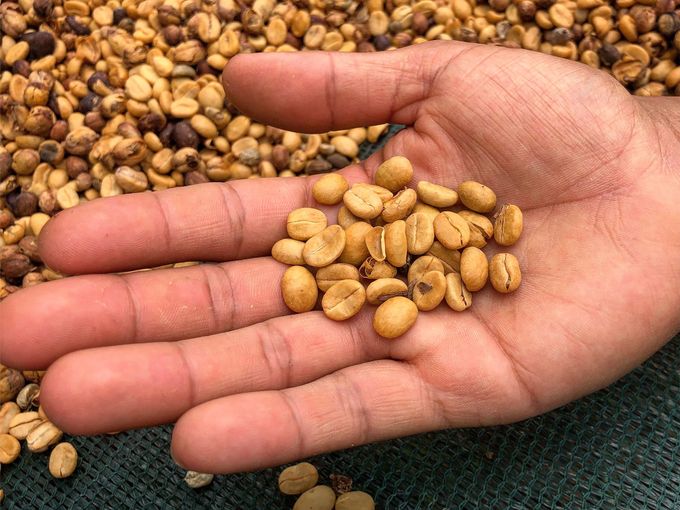
Natural processing keeps the fruit skin as well, and some of its microbial fermentation doesn't run as deep — so sugar can remain trapped in the dried pulp. Of course, each method has its own character, and each year's climate shifts the flavor. The most intuitive way to understand these differences is simply to taste them side by side.
Flavor Differences Between Yellow, Red, and Black Honey
The simple rule: the more mucilage retained, the richer the flavor and the higher the sweetness. Here are comparisons of several honey coffees from our shop:
Phoenix Estate Red Honey: Dried fruit, vanilla, honey, a thick yet delicate mouthfeel, excellent sweetness, gentle fruit acidity — round and full with a persistent aftertaste of plum, red berry, and chestnut, strong cane-sugar sweetness in the finish, and a fresh apple-peel lift.
Elisa Red Honey / Yellow Honey: Famous for superb natural conditions and superior farm management, its nearly perfect classic flavors show lively citrus acidity, blackberry fruit aromas, thick acidity and body, melon sweetness, smooth mouthfeel, and stone fruit with light florals — while the aftertaste carries a notable coffee-flower aroma. A coffee full of Latin countryside charm.
La Minita Estate Black Honey: With the gentle fruit acidity, smooth mouthfeel, and sweet berry flavors of honey processing, its most obvious difference is the rising sweetness from yellow to red to black, plus richer fruit notes. Its hallmark is astonishing sweetness, with preserved plum, honey, and brown sugar in the aftertaste.
Simple Summary:
Sweetness: Black Honey > Red Honey > Yellow Honey > White Honey
Cleanliness: White Honey > Yellow Honey > Red Honey > Black Honey
Balance: Red Honey/Yellow Honey > Black Honey/White Honey
FrontStreet Coffee's Honey Processing Brewing Recommendations
Our techniques don't adjust flavor itself — flavor is set by origin, processing, and roasting. Techniques adjust the speed and ratio of water passing through the grounds, thereby regulating how much flavor is extracted. Quality depends on:
1. Speed of water passing through the coffee grounds (equipment choice)
2. Water temperature
3. Grind size and condition
4. Roast level
5. Bloom time
For standard pour-over, single serving, 15g of coffee, with grind and water temperature adjusted to the roast:
1. Yellow Honey (medium roast): Fuji "Oni" grinder 3.5, water temperature 90-91°C, water-to-coffee ratio 1:14
2. Red Honey (medium roast): Fuji "Oni" grinder 4, water temperature 89-90°C, water-to-coffee ratio 1:15
3. Black Honey (medium-light roast): Fuji "Oni" grinder 3.5, water temperature 90-91°C, water-to-coffee ratio 1:14
FrontStreet Coffee Recommendation
To taste black honey at its best, try FrontStreet Coffee's Costa Rica Blackberry. Black honey removes almost no mucilage, dries for at least 2 weeks under coverings to prevent over-rapid drying, and demands constant turning to avoid uneven fermentation — more labor than any other honey style. Roasted medium-light, it gives off rich floral aromas when ground, with grape, berry, and mature blackberry flavors in the cup.
For an even more adventurous honey experience, FrontStreet Coffee's Costa Rica Mozart uses the innovative raisin honey process: cherries are pre-dried on raised beds for at least three days before depulping, retaining 100% of the mucilage — a feat of timing even harder than black honey. The result carries dried-fruit sweetness with osmanthus, pineapple, and raisin aromas, delicious as pour-over, cold brew, or moka pot. And the Strawberry Candy Geisha blend — Panama Geisha for classic orange-honey florals, Costa Rican raisin-honey coffee for grape, dried blueberry, soft acidity, and an almond finish — delivers that honeyed sweetness with Gesha elegance in a single bag.
Important Notice :
FrontStreet Coffee is a long-established specialty coffee roaster in Guangzhou China, selling freshly roasted beans from its own farm in Yunnan as well as dozens of carefully selected single-origin beans from around the world for both pour-over and espresso. The products deliver consistently excellent quality and great value, with shipping within 24 hours. Guangzhou's FrontStreet Coffee shop is recommended by many coffee lovers, and the beans are now available online at the Tmall 。
FrontStreet Coffee has moved to a new address:
FrontStreet Coffee Address: 315,Donghua East Road,GuangZhou
Tel:020 38364473
 Scan and follow the En Gafei WeChat official account. Please indicate that the reprint comes from "En Gafei".