How much does authentic Blue Mountain coffee cost? How much is a cup of Blue Mountain coffee? Where to buy authentic Blue Mountain coffee?

Buying Blue Mountain Coffee: How to Spot the Real Thing
Years ago, before official import channels existed in China, Blue Mountain coffee—already scarce worldwide—became even harder to find there. Drinking a cup of Blue Mountain turned into a badge of prestige, which is why claims like "every Blue Mountain in Chinese cafés is fake" and "you simply can't buy real Blue Mountain in China" still circulate today. Yet even in that era without formal channels, the Chinese market accounted for 15% of the world's total Blue Mountain consumption. When the Jamaicans found out, they were floored—probably once they learned the prices Blue Mountain was fetching in China—and began taking the Chinese market seriously. Today, buying Blue Mountain coffee in China is no longer difficult, and the channels are no longer limited to one: private imports, or green and roasted beans routed through third countries, are all available.
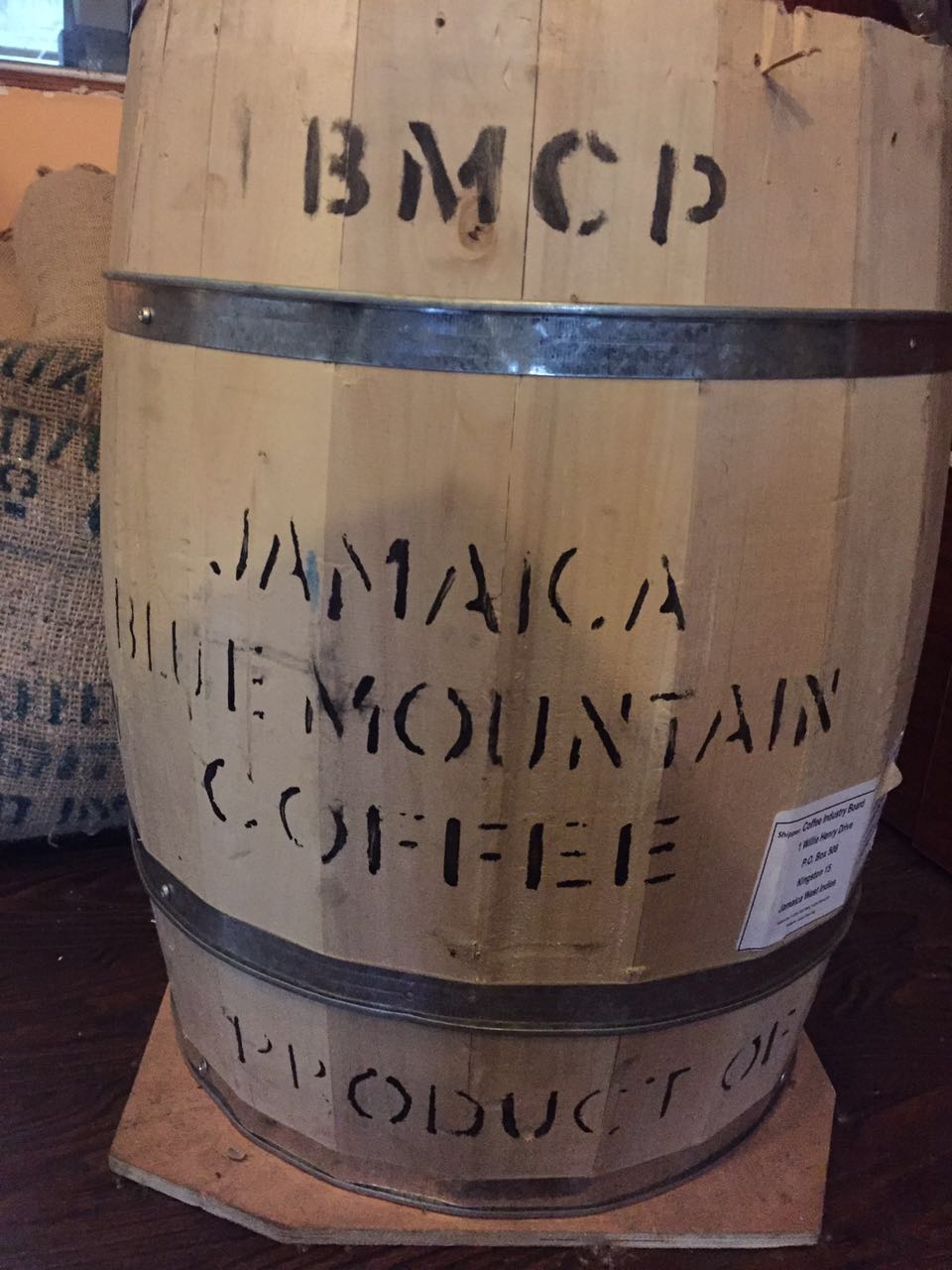
To verify that a retail-packaged product is genuine Blue Mountain, the first checkpoints are the CIB certification mark and the Jamaica Blue Mountain trademark. UCC's Blue Mountain is a reliable exception that carries neither. For products bearing the logo and trademark, you can look the company up on the CIB website to confirm it holds CIB authorization. For bulk purchases, ask for the certificate of origin—bulk coffee is typically portioned out from the 70kg wooden barrels, and every barrel ships with its own certificate.

What Is the CIB, and What Does Its Certification Mean?
The Coffee Industry Board of Jamaica (CIB) is the government body that oversees, regulates, and guides the island's coffee cultivation, processing, and trade. It also owns the famous Wallenford estate and holds the trademark rights to Jamaica Blue Mountain.
Like champagne, "Blue Mountain coffee" is a legally defined appellation: only coffee grown in the designated zone of the Blue Mountains—land above 2,200 feet (roughly 671 meters)—may call itself Blue Mountain. Coffee from that zone is entitled to display the round Blue Mountain logo on its packaging (shown below), and if it is packed in wooden barrels (including the 70kg barrels mentioned above), it generally comes with a certificate of origin. Beans grown below the 2,200-foot line are not permitted to use the logo or the Jamaica Blue Mountain trademark. So when you buy Blue Mountain, look for the circle—and remember, UCC's Blue Mountain is the one exception.
The Blue Mountain Certification Logo
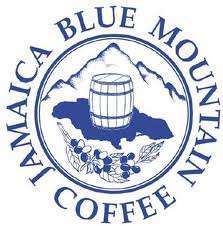
For reference, the CIB website also publishes a list of authorized exporters:
Which Blue Mountain coffees are worth buying? Country Traders Limited (the company whose Blue Mountain sells for 89 yuan), UCC, Wallenford, and Golden Cup all appear on that list, together with the exact scope of their authorizations.
How Blue Mountain Coffee Is Graded
Blue Mountain coffee is graded from highest to lowest as follows:
Blue Mountain No.1 is the top grade, screened at S-17/18 mesh size with a defect rate under 2%.
Blue Mountain No.2 is screened at S-16/17 mesh—the beans run slightly smaller than No.1's—and likewise allows less than 2% defects.
Blue Mountain No.3 is screened at S-15/16 mesh, with beans smaller still and a defect rate again below 2%.
Blue Mountain Peaberry (or Blue Mountain P.B.) consists of more than 96% round peaberries with less than 2% defective beans, and is really a specially selected lot. Many people place it above No.1; others rank it somewhere between No.1 and No.2.

Blue Mountain Triage (sometimes rendered as "Blue Mountain Blend") is a mixture of the four grades above, with fewer than 4% defective beans—in effect, unscreened beans.
Beans grown outside the legally designated Jamaica Blue Mountain zone fall into three categories:
High Mountain: screened at S-17/18 mesh, with a defect rate under 2%.
Jamaica Prime: screened at S-16/18 mesh, with a defect rate under 2%.
Jamaica Select: screened at S-15/18 mesh, with a defect rate under 4%.
A word on screen sizes: a No. 17 screen has openings of 17/64 of an inch, or 6.75mm (and put the ruler down—this refers to green bean size; beans grow larger during roasting). The higher the screen number, the larger the bean, and larger beans generally carry richer, more complex flavors.

The Story Behind the Blue Mountain Quota System
In 1969, a devastating hurricane battered Jamaica and wiped out much of the coffee crop. Japan's UCC stepped in with substantial aid that revived the island's coffee industry. As repayment, Jamaica signed an agreement with Japan in 1972 allocating 90% of the Blue Mountain quota to Japan, leaving Europe and America 5% each. That is why the notion that the Japanese buy up nearly all the Blue Mountain persists to this day. But having cornered the market, would the Japanese really keep it all for themselves? A monopoly means prices elsewhere can be excellent! This also explains why UCC doesn't print the CIB logo on its packaging: when the market is almost entirely yours, why bother? Does UCC's Blue Mountain really need the CIB's stamp of approval?

The Blue Mountain Variety
The Blue Mountain coffee that FrontStreet Coffee sources belongs to the old Typica variety, with oval-shaped beans that look flat and thin from the side. Even when grown at different altitudes, the side-profile thickness of the green beans barely changes. Typica's journey began when Yemenis carried it from Ethiopia to Malabar in India; the Dutch then took it to Indonesia, and from there it reached the French colony of Martinique in the West Indies.
As it spread to other growing regions, Typica gave rise to numerous variants: Criollo (South America), Arabigo (Central America), Kona (Hawaii), Pluma Hidalgo (Mexico), Garundang (Sumatra), Blue Mountain (Jamaica and Papua New Guinea), San Bernado and San Ramon (Brazil), and Kents and Chickumalgu (India).

Brewing a Cup of FrontStreet Coffee's Blue Mountain
Brewing Blue Mountain well takes a little care—one careless step, and its flavors can slide from delicious to medicinal, a waste of genuinely precious beans. Here, FrontStreet Coffee brews a pot of Blue Mountain pour-over with a dripper, then pulls a Blue Mountain Americano with a moka pot, to see what each method brings out.
Pour-Over Jamaica Blue Mountain Coffee
To showcase the rich, mellow body of FrontStreet Coffee's Blue Mountain No.1, we use a KONO dripper. Its ribs rise less than half as high as those of a typical cone—a deliberate design that keeps the filter paper pressed flat against the wall once wet, restricting airflow. That lengthens the coffee particles' contact time with water and evens out the overall extraction. (The KONO dripper is the one on the right in the photo below.)

FrontStreet Coffee's Blue Mountain pour-over parameters: 15g of coffee, a 1:15 coffee-to-water ratio, grind size set at 10.5 on the EK43s (a 75% pass-through rate on the China No. 20 standard sieve), water temperature 87-88°C, brewed in multiple pours.
FrontStreet Coffee seats the filter paper in the KONO, wets it thoroughly so it hugs the walls, and discards the rinse water from the server. The ground coffee goes into the dripper, with a gentle tap to level the bed. The first pour is 30g of water for blooming, held for 30 seconds. The second pour brings the total to about 125g, poured in steady, even spirals outward. Once the liquid has drawn down halfway, the final pour takes the total to 225g. After everything has dripped through, total brew time usually lands around 2 minutes.

The pour-over Blue Mountain No.1 opens with dark chocolate and nuts—very rich, with a clear almond note in the finish. As the cup cools, roasted hazelnut turns creamy and silky, with a touch of gentle acidity and caramel sweetness. The flavor lingers in the mouth without fading.
Blue Mountain Americano with a Moka Pot
Before brewing, prepare a bag of FrontStreet Coffee's Blue Mountain No.1 at peak freshness, weigh out 20g of coffee, and grind it to a fine-sugar consistency. You'll also need a gas or induction stove for heat, a grinder, and water.

1. Fill the bottom chamber with hot water, keeping the level 0.5cm below the pressure-relief (safety) valve. Starting with cold water lengthens the grounds' soak time, pushing the brew into over-extraction and bitterness. FrontStreet Coffee therefore recommends hot water—it shortens the extraction, too.

2. Grind the coffee finer than you would for pour-over but coarser than for espresso; the mesh of the basket screen is a useful reference for making sure no particles slip through. Fill the basket gently and level the grounds with a fingertip.

3. Seat the basket back in the bottom chamber, screw on the top, and set the pot on an electric ceramic stove to heat.

4. When you hear a hissing sound from inside the pot, turn the heat down to low and open the lid. Coffee and crema should now be flowing slowly from the spout.

5. When the top chamber is about half full, switch off the heat and set the pot on the counter, letting residual heat and pressure finish the extraction. One caution: the moka pot is all metal, so keep your hands off it while it's hot to avoid burns.

6. Finally, take a 250ml cup with 200g of warm water in it and pour in all the coffee extracted by the moka pot. A handsome golden crema floats on top, and the moka-pot Blue Mountain Americano is done.

Give the finished Americano a gentle stir with a spoon before tasting. Drunk hot, FrontStreet Coffee finds a rich roastiness with toasted nuts, caramel, and dark chocolate, and as the foam subsides a buttery aroma gradually emerges. The finish is pleasant and satisfying.
FrontStreet Coffee Recommendation
If this article has you craving genuine Blue Mountain, FrontStreet Coffee's Jamaica Blue Mountain No.1 is the place to start. It comes from the historic Clifton estate, which has been growing and producing coffee since around 1750, at roughly 4,300 feet (about 1,310 meters) of elevation—where cool afternoon mists, ample sunshine, and mineral-rich soils slow the ripening of the coffee cherry and build the balance Blue Mountain is famous for. The estate's certification documents and the original wooden shipping barrels are on full display, so the coffee's provenance is easy to trace.
FrontStreet Coffee roasts this Blue Mountain No.1 medium-dark to bring out its classic, mellow character—the traditional "bitter first, sweet after" profile of old-school coffee—and ships beans roasted within five days, so they arrive at their flavor peak. In the cup you'll find chocolate sweetness, a strong, dense body, and remarkable cleanliness: the sweetness, acidity, and bitterness fit together perfectly, with no harsh edges, only a restrained acidity and a long fruit-toned finish.
To brew it, FrontStreet Coffee recommends a KONO dripper to accentuate that mellow body: 15g of coffee (rested 4-7 days from roast), a grind slightly coarser than you'd use for light roasts—about the texture of white granulated sugar—87-88°C water, and a 1:15 ratio in three pours (30g bloom for 30 seconds, then to 120g, then to 225g). If you prefer something richer, the moka pot method above turns the same beans into a full-bodied Americano loaded with chocolate, caramel, and nut flavors—equally excellent with milk as a latte or flat white.
Important Notice :
FrontStreet Coffee is a long-established specialty coffee roaster in Guangzhou China, selling freshly roasted beans from its own farm in Yunnan as well as dozens of carefully selected single-origin beans from around the world for both pour-over and espresso. The products deliver consistently excellent quality and great value, with shipping within 24 hours. Guangzhou's FrontStreet Coffee shop is recommended by many coffee lovers, and the beans are now available online at the Tmall 。
FrontStreet Coffee has moved to a new address:
FrontStreet Coffee Address: 315,Donghua East Road,GuangZhou
Tel:020 38364473
 Scan and follow the En Gafei WeChat official account. Please indicate that the reprint comes from "En Gafei".