Introduction to Guatemala Antigua Coffee Region - Analysis of Flora De Dios Coffee Bean Roasting and Brewing Techniques Sharing
The high-altitude mountain regions of Guatemala's coffee lands are rich in fertile, mineral-laden volcanic soil. In a tropical climate zone with abundant sunshine and humid Pacific sea breezes, this favorable environment produces coffee with floral aromas and citrus acidity. FrontStreet Coffee has found that whether the beans are medium-light roasted single origins or medium-dark roasted espresso blends, the floral character is genuinely surprising.
Did Guatemala Experience a Coffee Industry Crisis in 2020?
According to reports from Coffee Finance Network and Bloomberg, Guatemala has been facing a severe coffee industry crisis: rising production costs exceeding market prices have stunted the country's coffee production growth. Juan Luis Barrios, president of Guatemala's National Coffee Association, stated: "Current coffee prices are insufficient to maintain minimum living standards. Small and medium-sized coffee estates cannot afford production costs, and coffee farmers lack motivation to expand production."
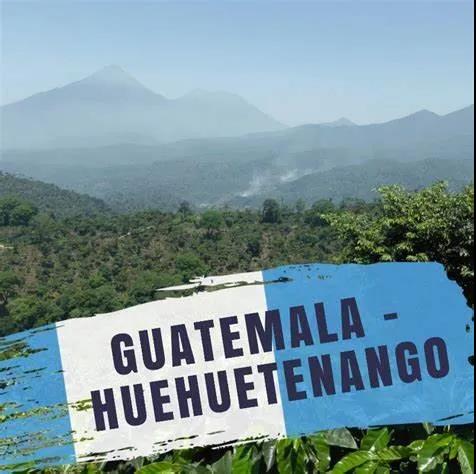
As global temperatures rise and climate patterns deteriorate, weather increasingly harms growers with more adverse events. In 2020, the Caribbean, Central America, and the United States experienced record-breaking storms, marking one of the three warmest years on record. The extra moisture from those storms has raised the incidence of fungal diseases such as leaf rust. On top of that, the COVID-19 pandemic pushed up production costs, mainly in harvesting and logistics. Given the situation, costs for the new season's Guatemala coffee were bound to exceed last year's $190-$230 per bag, further deepening the local industry crisis.
FrontStreet Coffee's Guatemala Coffee Comes from the Antigua Region
Antigua — full name Antigua Guatemala, meaning "old Guatemala" — is a famous ancient city in Guatemala, about 40 kilometers west of the capital, Guatemala City, founded in 1543. It was built in the Panchoy Valley at an altitude of 1,500 meters, ringed by mountains and several volcanoes; sitting close to the peaks of the Agua and Fuego volcanoes, the valley's center is frequently threatened by earthquakes.
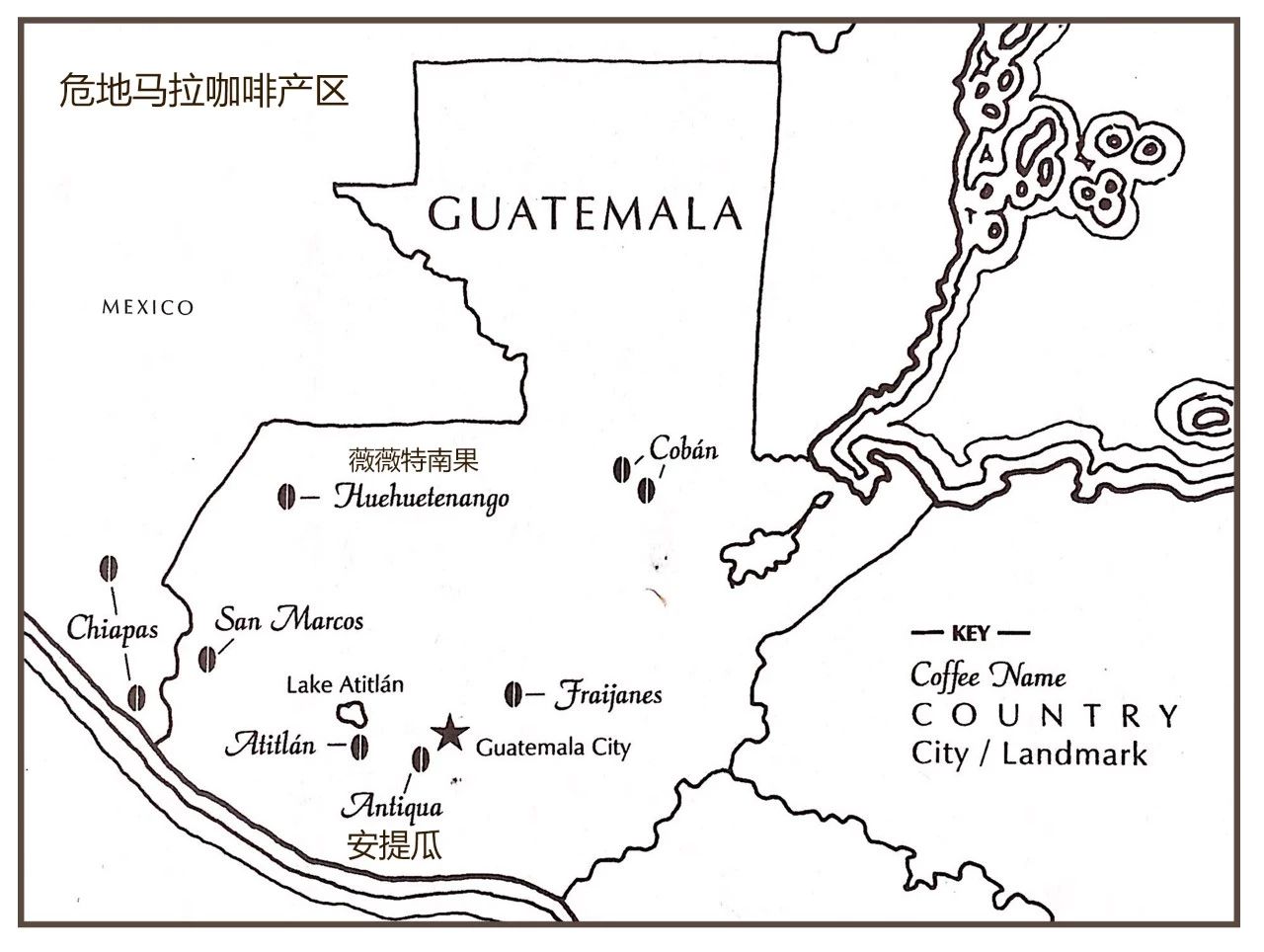
Those many volcanoes give the Antigua coffee region incredibly fertile soil, while the large day-night temperature difference slows the coffee trees' growth and allows richer flavor development in the beans. FrontStreet Coffee believes the high altitude and mineral-rich ground give coffee from this region white floral aromas and soft citrus acidity.
Antigua Flora De Dios Coffee Bean Varieties
The lot FrontStreet Coffee acquired uses Bourbon and Caturra varieties. Bourbon is a natural mutation of Typica: when the cherries ripen they turn wine-red, and the beans are relatively round. Bourbon grown at high altitude typically shows excellent aroma and bright acidity, with flavor characteristics reminiscent of red wine. Caturra looks very similar to Bourbon and can be hard to tell apart, but its tail end is slightly more curved — round and slender.
Antigua Flora De Dios Coffee Bean Processing Method
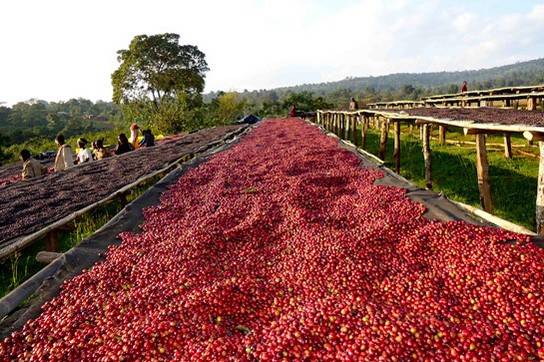
This coffee is washed. In washed processing, the selected cherries go into a depulper to remove skin and pulp; the beans, still coated in pulp and mucilage, are then fermented in water for about 18-36 hours. After fermentation, the beans in parchment pass through flowing washing channels to remove the remaining pulp and mucilage, and are then dried to a moisture content of about 12% before the parchment is hulled off. FrontStreet Coffee finds that washed beans give a cleaner, brighter cup with very lively acidity.
FrontStreet Coffee Roasting Records
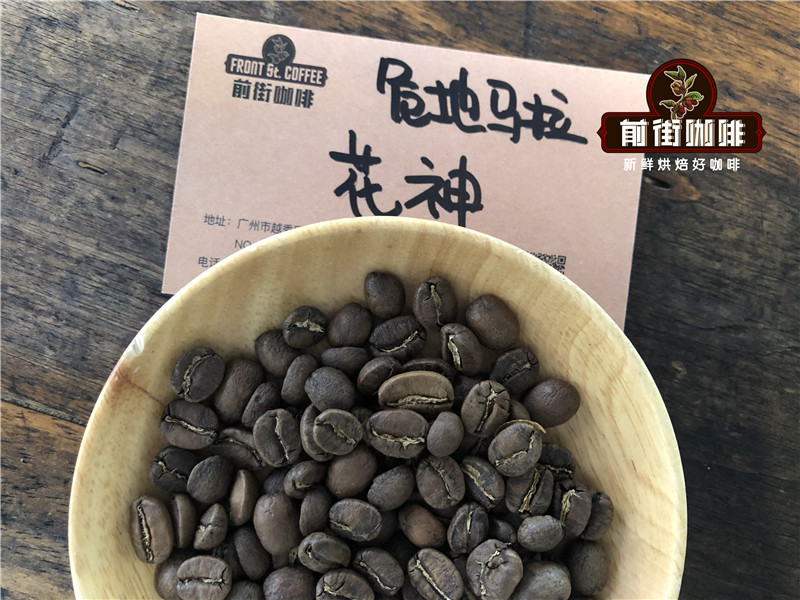
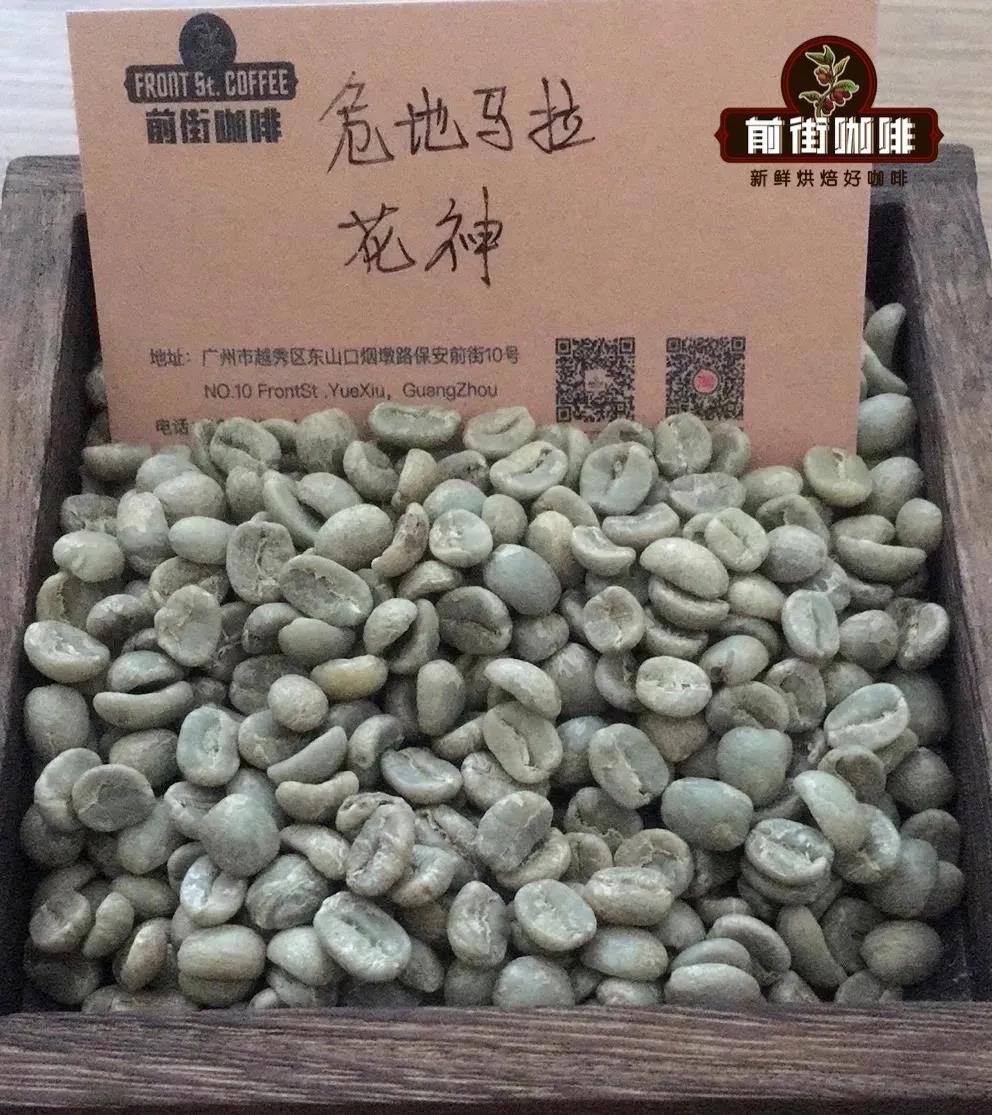
These green beans are round, green with yellow tones, well-uniform, and of medium moisture. FrontStreet Coffee's roaster therefore aims for a medium roast — enough to preserve the bright acidity that showcases the floral and fruity aromas while enhancing richness and balance.

Charge at 200°C with the damper open to 3; after 30 seconds, reduce heat to 160°C with the damper unchanged. Turning point at 1'36", then hold the heat. At 4'50" the bean surface yellows, the grassy aroma disappears completely, and the drying stage begins — reduce heat to 140°C and adjust the damper to 4. Drying completes at 4'50" with heat reduced to 140°C. At 8'32", wrinkles and dark spots appear on the bean surface and the toast aroma clearly transitions to coffee aroma — the prelude to first crack. Listen carefully here. First crack begins at 8'37"; reduce heat to 80°C and open the damper fully to 5 (ease the heat down very gently — too sharp a cut can stall the crack). Develop for 1'50" after first crack, then drop at 195.3°C.
FrontStreet Coffee Pour-Over Brewing Experience
Pour-over brewing highlights a coffee's finest flavors. To emphasize the floral tones and citrus character of this Flora De Dios coffee, FrontStreet Coffee uses a Hario V60 dripper with the following parameters:
- Coffee: 15g
- Coffee-to-water ratio: 1:15
- Water temperature: 92°C
- Grind size: Medium-fine (78% pass-through on a #20 standard sieve)
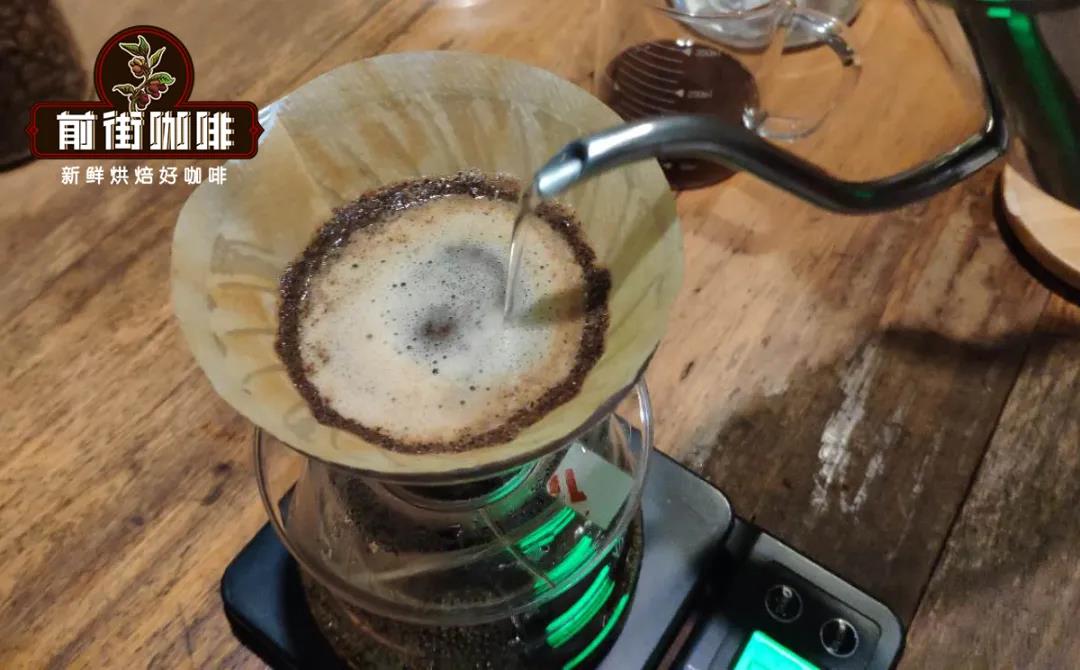
Brewing method: First pour 30g of water for a 30-second bloom. Then pour in circles outside the center line for 90g, reaching 120g total. When the water level drops to half, pour 105g more, reaching 225g total. End the extraction when all the coffee has dripped into the server — total time 1 minute 55 seconds.
V60 flavor: This method yields light jasmine florals and fruit aromas. The entry shows bright citrus acidity, the mid-section reveals honey sweetness, and the aftertaste carries chocolate notes; as the cup cools, a gentle smokiness gradually emerges.
FrontStreet Coffee Smart Dripper Brewing Experience
The Clever Dripper, affectionately known as the "lazy cup," makes coffee with stable flavors as long as you follow the parameters. To honor the spirit of the lazy cup — no technique interference — the setup is as follows:
- Coffee: 15g
- Coffee-to-water ratio: 1:16
- Grind size: Fine (83% pass-through on a #20 sieve)
- Water temperature: 93°C
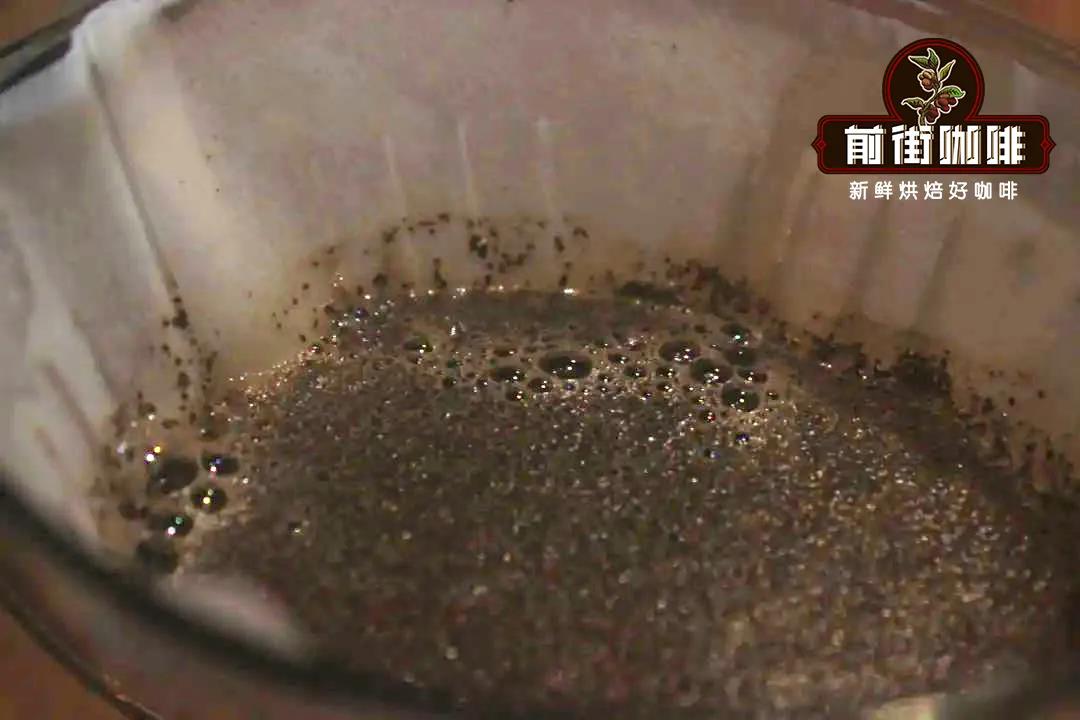
Brewing method: Place the filter paper, add the coffee, and pour 240g of water all in one go — heat the kettle to 93°C and pour. If you worry about over-pouring, pre-measure 240g of water with a scale or measuring cup, and even a heavy pour can't go wrong. After pouring, cover with the lid and start timing. After 4 minutes, open the lid and set the dripper on a mug, letting all the coffee flow through.
Smart Dripper flavor: This method leans toward balance, with the sweet-tart notes of mikan citrus, obvious chocolate and maple flavors through the middle and late sections, and a substantial mouthfeel.
FrontStreet Coffee Recommendation
Espresso beans generally come in two kinds: the blends most coffee shops use first, and single-origin espresso (SOE) chosen for a specific taste. Blends exist to make coffee better — roasters combine beans from different origins so that one bean's smoothness fills in another's missing aroma. If you prefer traditional-style americanos and lattes, FrontStreet Coffee's Classic Blend or Commercial Blend adds a touch of Robusta to the old Italian formula, giving butter, nut, spice, dark chocolate, and toast aromas, a wild yet thick body, and that explosive golden crema that makes latte art easy.
If you love nutty espresso — almond, walnut, the like — choose the Signature Blend or Dark Cocoa Blend: both carry a large proportion of Brazilian beans for a comfortable sweet-bitter base and creamy peanut aroma, silky on entry. The Signature Blend adds Colombian nut, chocolate, and caramel notes with balanced acidity; the Dark Cocoa Blend combines Yunnan small-bean ripe-plum acidity and a ground-bean aroma of creamy chocolate — balanced, versatile, and equally good for specialty coffee drinks as for lattes and americanos. For brewing the Antigua Flora De Dios of this article, stick with the pour-over recipe above: 15g of coffee at a medium-fine grind, 92°C water, a 1:15 ratio, and a total time of about 1 minute 55 seconds.
Important Notice :
FrontStreet Coffee is a long-established specialty coffee roaster in Guangzhou China, selling freshly roasted beans from its own farm in Yunnan as well as dozens of carefully selected single-origin beans from around the world for both pour-over and espresso. The products deliver consistently excellent quality and great value, with shipping within 24 hours. Guangzhou's FrontStreet Coffee shop is recommended by many coffee lovers, and the beans are now available online at the Tmall 。
FrontStreet Coffee has moved to a new address:
FrontStreet Coffee Address: 315,Donghua East Road,GuangZhou
Tel:020 38364473
 Scan and follow the En Gafei WeChat official account. Please indicate that the reprint comes from "En Gafei".