Flavor Characteristics and Story of Sun-Dried Yirgacheffe Red Cherry Project G1 Coffee Beans
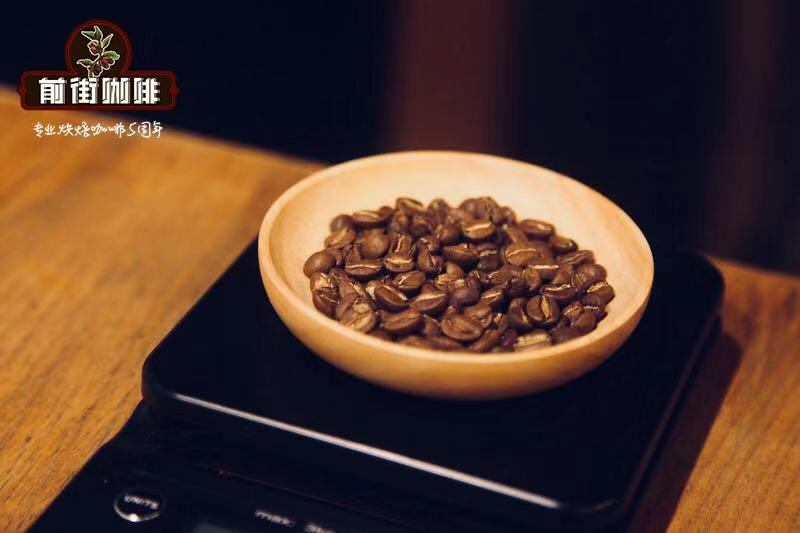
FrontStreet Coffee Yirgacheffe Red Cherry: Ethiopia's Pride
FrontStreet Coffee's Yirgacheffe, as Ethiopia's pride, is a renowned star in the specialty coffee world and a must-try recommendation for newcomers from FrontStreet Coffee. FrontStreet Coffee's Yirgacheffe commonly comes in two processing methods: washed and natural. Today, FrontStreet Coffee wants to discuss this natural-processed FrontStreet Coffee Yirgacheffe Red Cherry, because FrontStreet Coffee's natural Yirgacheffe offers more richness and complexity. The deliciousness of Yirgacheffe lives up to its reputation, because in the coffee from here, you can almost find the aroma of all fruits, mature fruit flavors, pleasant sweet and sour notes, with almost no detectable bitterness. Tasting it feels like drinking fruit tea. The natural-processed FrontStreet Coffee Yirgacheffe Red Cherry is even more so - it smells of rich dried fruit flavors, fresh strawberry, mango, and apricot jam aromas in a mixed fruit jam profile. Why do natural-processed beans have such complex aromas, with rich complexity and layers? The story behind this is worth exploring.
Region Introduction
Unique Geographical Environment
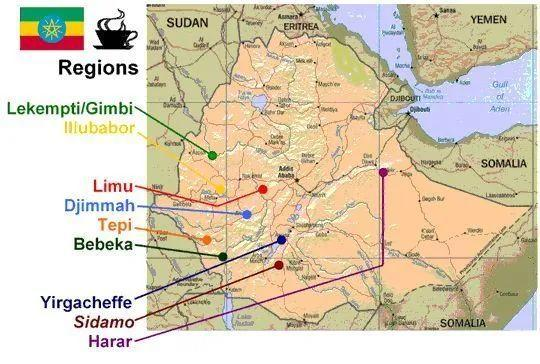
Yirgacheffe is a small town in Ethiopia, situated at an altitude of 1700-2100 meters, making it one of the world's highest-altitude coffee-growing regions and synonymous with Ethiopian specialty coffee. Lake Turkana, Lake Abaya, and Lake Chamo bring abundant moisture to this area. In the rift valleys, represented by Misty Valley, fog pervades year-round, creating a spring-like climate with gentle breezes, cool and humid conditions. Thousands of coffee tree varieties thrive and multiply here, nurturing FrontStreet Coffee's Yirgacheffe unique terroir where floral and fruity aromas ambiguously intertwine in ever-changing, unpredictable ways.
Initially, Yirgacheffe's coffee trees were cultivated by European monks (somewhat like Belgian monks growing grain to brew beer), later managed by farmers or cooperatives. Coffee trees naturally spread in forests, fields, and backyards. During harvest season, Ethiopian coffee trading companies come to town to purchase coffee beans collected by farmers, ultimately exporting them under the "Yirgacheffe" brand through auction.
About the Red Cherry Project
Speaking of the "Red Cherry Project," many friends are familiar with this name. But what exactly is the Red Cherry Project? Perhaps only a few people can explain it clearly.
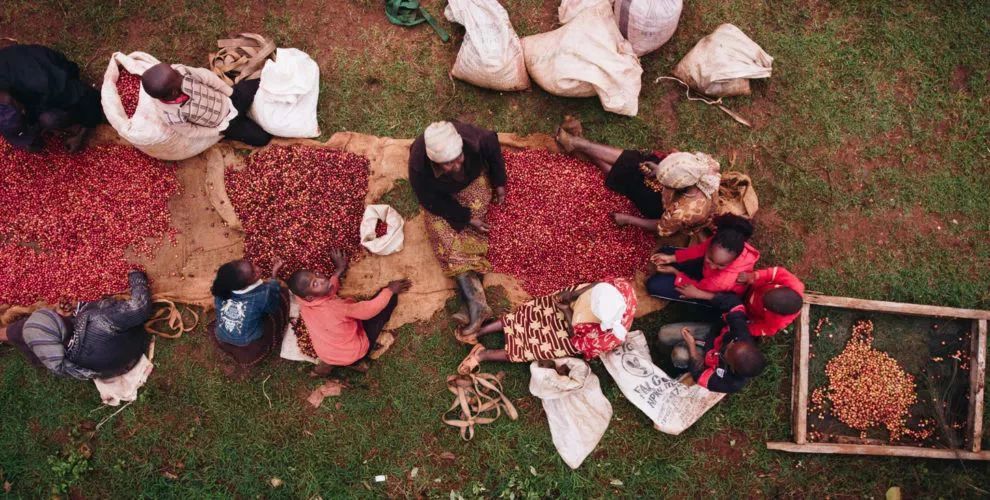
What is the "Red Cherry Project"?
The Red Cherry Project (ORC) is a quality improvement program for small-scale farms. In 2007, Trabocca, the Netherlands' largest green coffee bean supplier, proposed the "Red Cherry Project" in pursuit of high-quality Ethiopian beans. The project requires not only harvesting fully red coffee cherries but also doing so completely by hand - however, this is just the most basic requirement, and the project is far more complex. The main purpose is to encourage farmers and bring surprises to roasters. Trabocca, the largest Dutch coffee bean supplier, invites all Ethiopian farms before harvest season to produce small batches of about 1500-3000 kg (25-50 bags) of beans. Women can only select 100% fully mature red cherries, which makes a significant difference in the brewed coffee flavor. Therefore, diligent, detail-oriented Ethiopian women with good eyesight are crucial drivers of the Red Cherry Project.
The Red Cherry Project is also a reinforcement approach that makes farms invest more thought in the bean selection process. These coffees command relatively higher prices. The Red Cherry Project includes washed, natural, semi-washed, semi-natural, and experimental coffees. Main producing regions include Yirgacheffe, Sidamo, Bench Maji, Lekempti, Kembata, Illubabor, Harar, Limu, and in 2011, the Golocha region near Harar was added. These all feature unique flavors that fully showcase Ethiopian coffee characteristics. After receiving the coffee, Trabocca conducts further selection. Farms passing cupping quality tests in both Ethiopian and Dutch offices receive substantial bonuses. The project's promoter, Trabocca, invests all profits earned in recent years back into cooperative farms. Trabocca emphasizes this is a non-profit project, so the company uses only 4 people, including the owner and secretary, to execute the Red Cherry Project. Other administrative matters are supported by the parent company to reduce administrative expenses, with all profits returned to cooperative farms.
Trabocca, the largest Dutch coffee bean supplier, has deep roots in Ethiopia. The company's founder, Menno Simons, originally knew almost nothing about coffee until he traveled to Ethiopia and was accidentally amazed by the unique flavor of local indigenous coffee beans. The company also trades in other primary agricultural products, including cocoa and various fresh fruits, dedicated to finding high-quality raw materials while focusing on environmental protection and farmers' livelihoods. The company's vision is "Discover, Develop, Deliver." Since founding the company, Menno Simons has visited coffee-producing regions, estates, and processing plants throughout Ethiopia to discover fascinating coffee bean varieties. Thus, the "Red Cherry Project" was born.
First, cupping score requirements are high. In cupping rooms in Addis Ababa, Ethiopia, and Amsterdam, Netherlands, Trabocca conducts further screening after receiving coffee from producing regions, determining whether coffee beans meet standards through cupping tests in both Ethiopia and the Netherlands. Qualified coffee beans are organized by Trabocca for auction to global coffee buyers. Generally, coffee beans auctioned through this platform can achieve prices more than 4 times the international standard coffee spot price, with the highest reaching 20 times. Second, production requirements are small, but quality requirements are high. To ensure sufficient attention to these top-tier Ethiopian beans, Trabocca requires participating farms to produce small batches, typically between 1500kg-3000kg.
Finally, Trabocca's investment and attention to this project are substantial and highly valued. Trabocca has donated new natural drying racks, shade nets, generators, and other equipment locally. They also provide financial loan support, new hardware equipment, and production processing knowledge to help farmers improve production levels. Through real-time monitoring and safe transportation, they ensure "Red Cherry Project" beans receive the best care at every stage. Specifically, the Red Cherry Project encourages coffee farmers to be more diligent in every process of coffee bean harvesting and processing by increasing purchase prices for high-quality green coffee beans. This produces better-quality, better-tasting coffee beans that can gain better market recognition, thus balancing the relatively high coffee purchase prices.
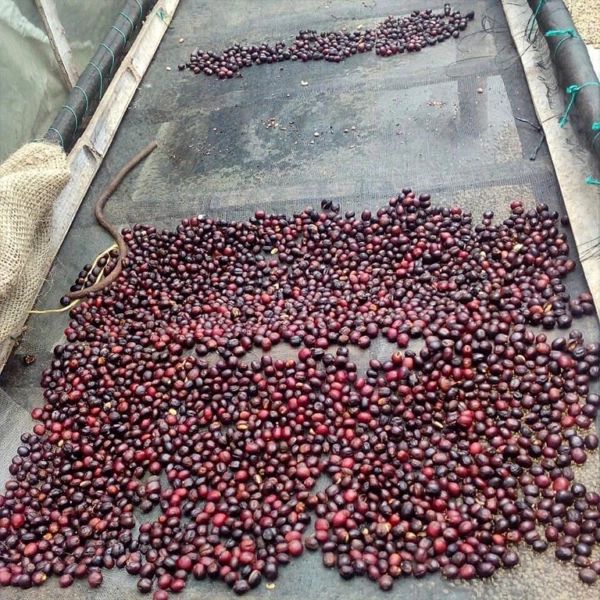
Processing Method
This natural-processed FrontStreet Coffee Yirgacheffe Red Cherry coffee has slightly larger beans with slightly lower density and moisture content. Every coffee from this processing plant can be considered high-quality specialty coffee, with characteristics superior to other coffees regardless of processing method. The coffee beans from here can be considered high-quality in the Yirgacheffe region. After the processing plant selects available coffee cherries, they place whole coffee cherries with intact pulp and skin on elevated racks for natural drying. It is this labor-intensive rack-drying method that isolates from ground contact, preventing earthy off-flavors during drying and creating exceptionally clean fruit flavors. After more than two weeks of natural drying, the dark brown coffee cherries are professionally stored to await full flavor development. Before shipment, the processing plant removes coffee beans from the cherries - the sweetness is imaginable.
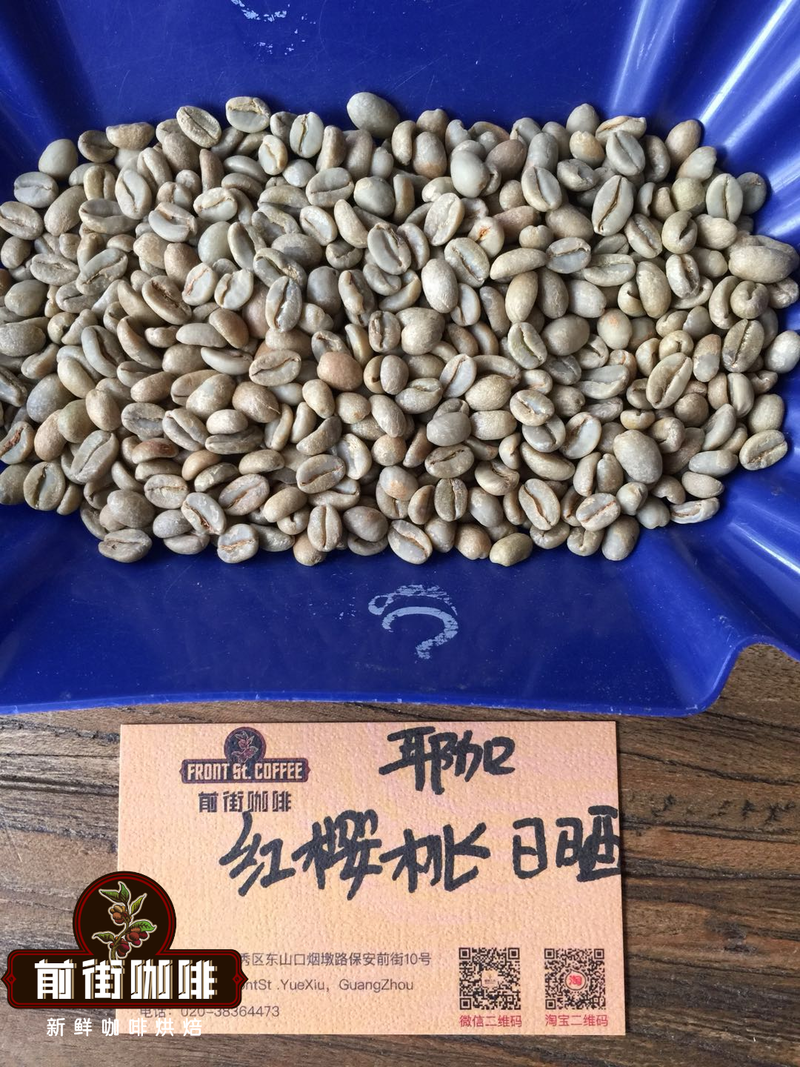
Green Bean Analysis
Yirgacheffe Grading
According to different green coffee processing methods, Yirgacheffe can be divided into two main categories:
Category A: Washed processing, with grading standards set by the Specialty Coffee Association of America (SCAA), divided into Gr-1, Gr-2, where smaller Arabic numbers indicate higher grades. FrontStreet Coffee's G1 Yirgacheffe has a distinctive style - the fusion of citrus and floral aromas in the coffee liquid is an irresistible flavor for everyone.
Category B: Natural-processed green coffee beans, graded Gr-1, Gr-3, Gr-4, Gr-5. Similarly, the highest-grade FrontStreet Coffee's G1 natural Yirgacheffe has rich fruit aroma. Opening a bag of freshly roasted FrontStreet Coffee G1 natural Yirgacheffe can subvert people's original understanding of coffee. Only those who have tasted the highest-grade FrontStreet Coffee natural Yirgacheffe will believe that coffee is a fruit.
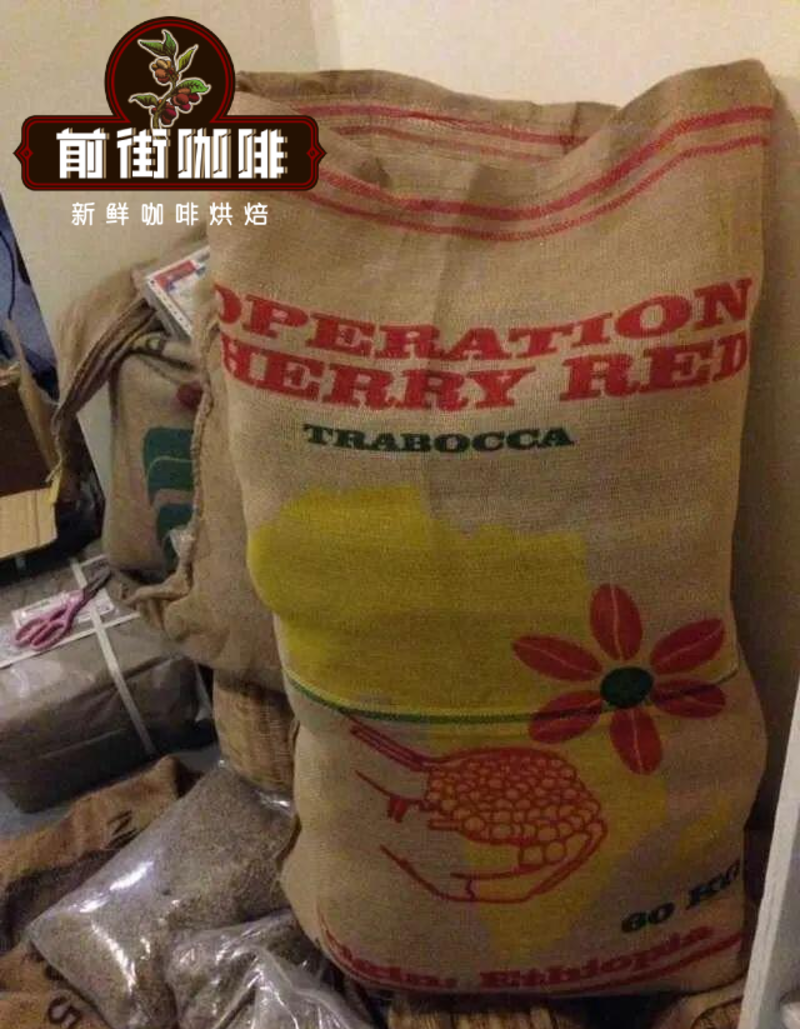
Exported in regular jute bags printed with Trabocca branding.
FrontStreet Coffee's Yirgacheffe variety is local indigenous, small-bean type, with relatively round appearance. The beans are very small, mostly between 14-15 screen size. The green beans have a yellow-green color, typical of natural-processed coffee, with uniform, full beans and few defects.
FrontStreet Coffee Natural Yirgacheffe Red Cherry Roasting Analysis
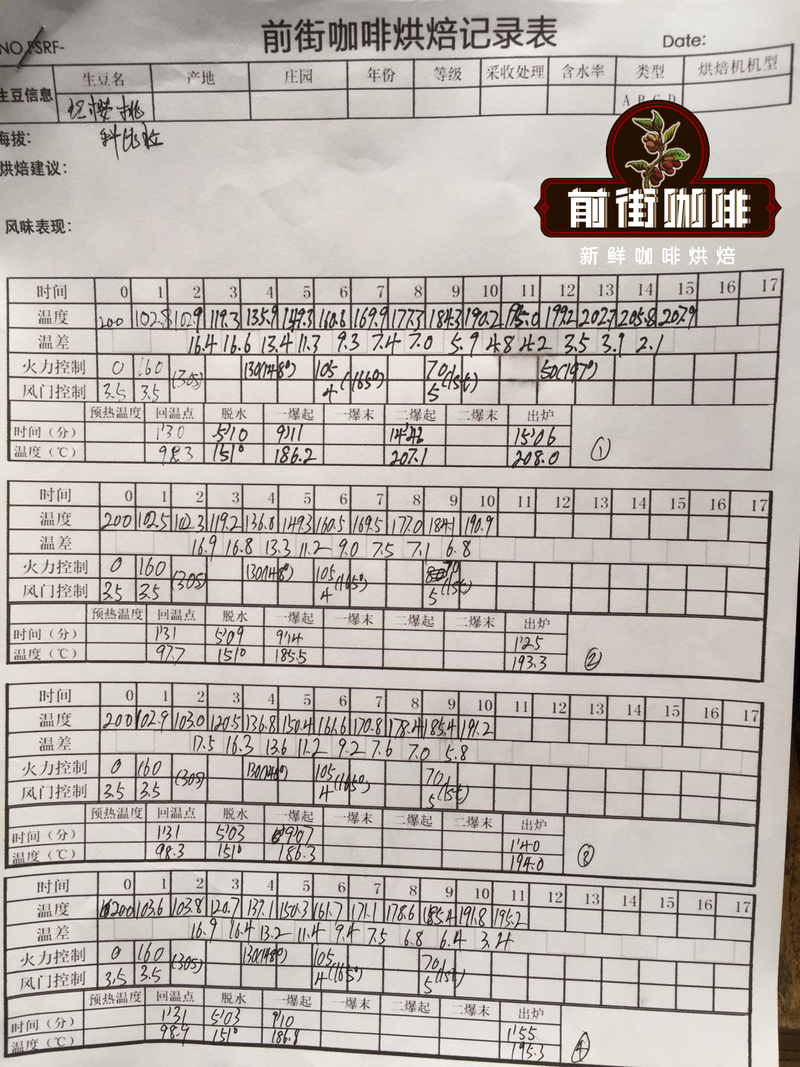
Beans with such brilliant flavors are naturally not suitable for medium-dark roasting. Therefore, this coffee is best roasted using a light, slow roasting method to best showcase its rounded sweetness and rich floral and fruity characteristics. This FrontStreet Coffee natural Red Cherry coffee has relatively small beans with low moisture content, absorbing more heat during roasting with a faster Maillard reaction process.
In the first roast, I used a higher dropping temperature, using 160 heat before the coffee beans dehydrated and turned yellow, ensuring sufficient heat to sustain through first crack and develop directly to second crack, confirming the development curve. In the second, third, and fourth roasts, with the same 200-degree entry temperature and same heat, I gradually reduced the heat during roasting as needed.
This roast is a quick-roasted light roast:
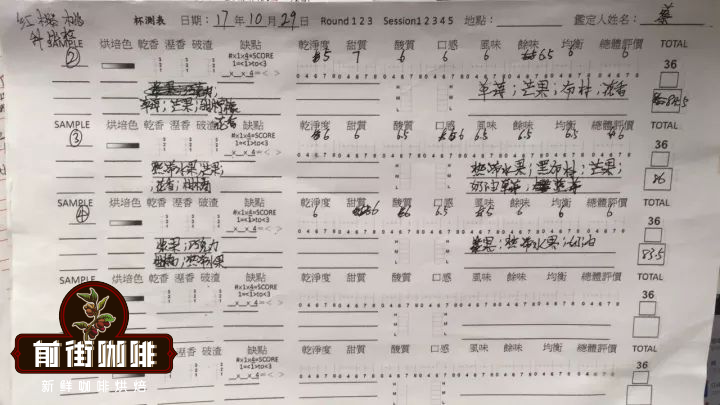
FrontStreet Coffee Yirgacheffe Red Cherry Cupping Records
Roast one: strawberry, raspberry, vanilla, honeydew, juicy
Roast curve 2: strawberry, raspberry, vanilla, honey, fruit juice
Roast two: mango, blackberry, citrus juice
Roast curve 3: mango, blackberry, blueberry, citrus juice
Roast three: citrus juice, cream
Roast curve 3: citrus juice, cream
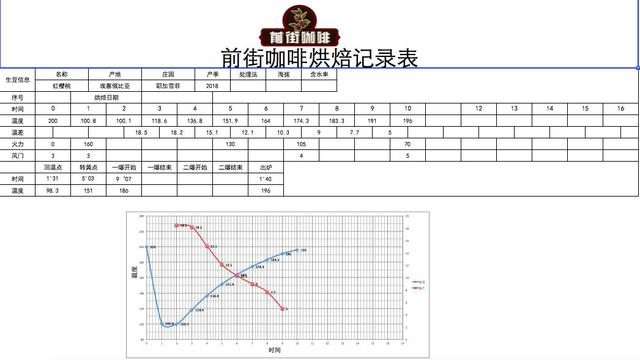
FrontStreet Coffee Natural Red Cherry Roasting Machine: Yangjia 600g Semi-direct Flame
Using quick-roast mode, enter beans at 200 degrees Celsius, air damper set to 3.5. After 1 minute, adjust heat to 160 degrees, air damper unchanged. Adjust heat once at 148 degrees, reducing to 130 degrees. Roast to 5'03", temperature 151 degrees, bean surface turns yellow, grassy aroma completely disappears, dehydration complete. Adjust heat to 105 degrees, air damper open to 4. At 8 minutes, bean surface shows ugly wrinkles and black spots, toast aroma clearly transitions to coffee aroma - this can be defined as the prelude to first crack. At this point, listen carefully for the first crack sound. At 9'07" first crack begins, reduce heat to 70 degrees, air damper fully open (adjust heat very carefully, not so low that cracking stops). Drop at 194 degrees.
FrontStreet Coffee Natural Red Cherry Cupping Results
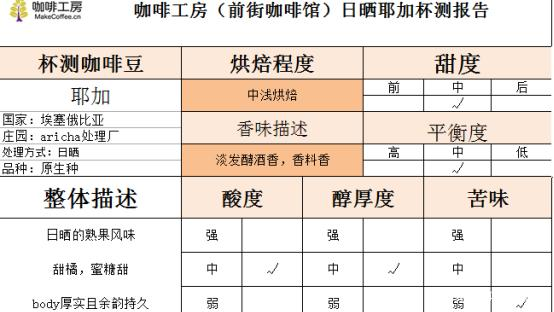
FrontStreet Coffee's Yirgacheffe dry aroma emits intense fruit fragrances with heavy dried fruit notes of strawberry, mango, and apricot jam. The wet aroma is like sweet syrup, resembling thick apricot pulp juice wrapped in rustic honey or chocolate. The entry is not intense, with medium body, acidity not obvious but lively and bright, like fruit black tea.
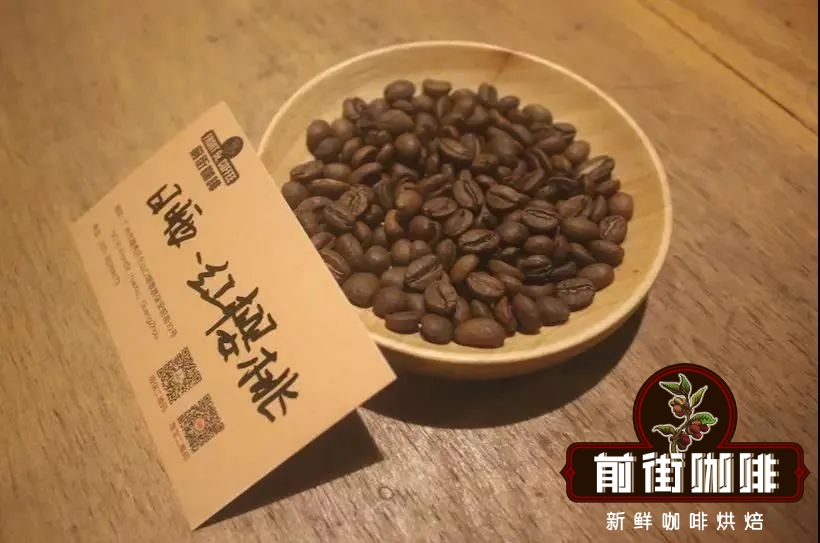
FrontStreet Coffee Ethiopia Yirgacheffe Red Cherry G1
Region: Yirgacheffe
Processing Station: Aletland
Altitude: 2300 meters
Variety: Local Indigenous
Processing Method: Natural Processing
FrontStreet Coffee Brewing Analysis
Regarding brewing methods, pour-over and siphon are optimal. When grinding, you can smell the overwhelming natural fruit aroma with noticeable sweetness. Gentle, elegant, sweet, and lovely. FrontStreet Coffee's Yirgacheffe emits extremely complex aromas, showcasing exceptionally outstanding flavor that is difficult to describe.
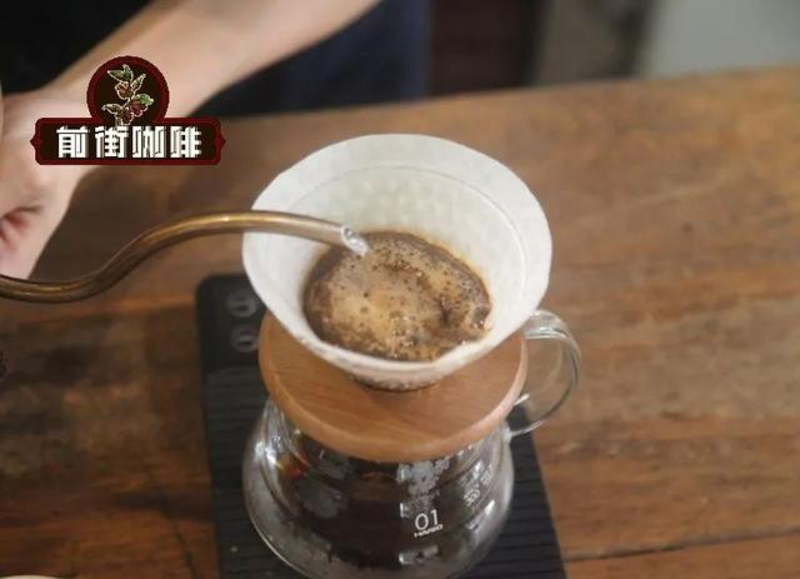
First Brewing:
V60 dripper, 15g coffee, water temperature 90 degrees Celsius, grind setting 4, water-to-coffee ratio close to 1:15. 31g water for bloom, bloom time 29s. Segmentation: pour to 99ml stop, then slowly pour to 230ml, i.e. 31-99-100
Flavor description: Obvious strawberry acidity, astringent finish, with off-flavors.
Adjust grind setting 4 - 3.5 (finer), lower water temperature.
Second Brewing (Correction):
V60 dripper, 15g coffee, water temperature 86 degrees Celsius, grind setting 3.5, water-to-coffee ratio close to 1:15, 27g water for bloom, bloom time 28s, segmentation: 27-105-88, time 1:50 (timing from start of bloom).
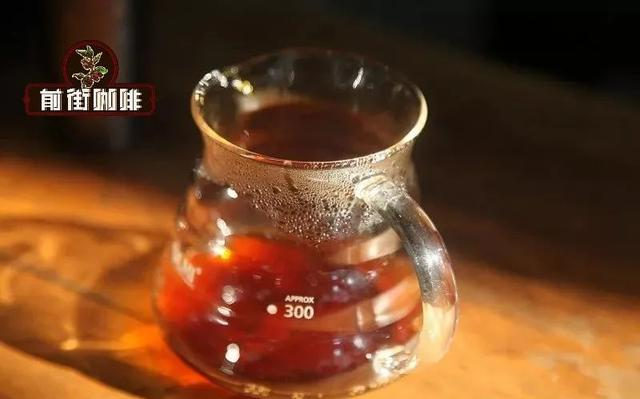
Flavor description: The wet aroma of fermented berry fruit wine makes it hard to believe this is Yirgacheffe, though personally I'm not fond of this wet aroma. However, from the extremely smooth entry to the delicate body, the emergence of sweet and sour ripe fruit is truly stunning. The sweetness exceeds any Yirgacheffe I've tasted before. The aftertaste performance is also excellent, worthy of its "fruit bomb" reputation - basically guaranteeing you'll still taste sweetness in your mouth half an hour after drinking.
FrontStreet Coffee Recommendation
If the Red Cherry Project's story inspires you to explore more of Yirgacheffe, FrontStreet Coffee's Natural Red Cherry is a great starting point: it uses only fully ripe, defect-free cherries, screened at the processing plant and then dried whole on raised beds, turned every 2-3 hours during the first days to prevent uneven heating and over-fermentation. After three to five weeks of sun-drying, the result carries both the classic Yirgacheffe character and the tropical fruit fragrance of a natural process - citrus-like acidity, berry juiciness, honeyed sweetness, and a creamy smoothness.
For washed Yirgacheffe with white jasmine florals and bright citrus and lemon acidity, the classic washed Yirgacheffe daily bean or the Guodingding Cooperative lot from the Worka micro-region - known as "Yirgacheffe's last piece of pure land" - are excellent, affordable choices for anyone entering specialty coffee.
To brew, FrontStreet Coffee recommends a V60 with 15g of coffee, a 1:15 ratio, and a three-stage pour - 30g of water to bloom for 30 seconds, then 95g to raise the bed, and a final 100g poured once the level drops to two-thirds - with drip completion in about 2 minutes to 2 minutes 10 seconds.
Important Notice :
FrontStreet Coffee is a long-established specialty coffee roaster in Guangzhou China, selling freshly roasted beans from its own farm in Yunnan as well as dozens of carefully selected single-origin beans from around the world for both pour-over and espresso. The products deliver consistently excellent quality and great value, with shipping within 24 hours. Guangzhou's FrontStreet Coffee shop is recommended by many coffee lovers, and the beans are now available online at the Tmall 。
FrontStreet Coffee has moved to a new address:
FrontStreet Coffee Address: 315,Donghua East Road,GuangZhou
Tel:020 38364473
 Scan and follow the En Gafei WeChat official account. Please indicate that the reprint comes from "En Gafei".