How Many Times Can Drip Coffee Bags Be Reused? Pros, Cons, and Proper Brewing Tutorial for Portable Drip Black Coffee

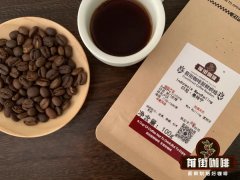
Specialty coffee has gone from a luxury item to a daily ritual (truly a spiritual one, haha), and drip coffee bags have played an indispensable role in that shift. Their portability breaks the barrier that specialty coffee requires complex equipment — no need to think about grind size or pouring technique. Simply open the drip filter bag, hang it over a cup, pour in hot water, and you can recreate the joy of pour-over. Some may think drip bags have cheapened specialty coffee, but FrontStreet Coffee sees no need to devalue them. After all, for any delicacy to enter the mainstream, it needs methods that are quick and convenient.

When did drip coffee bags appear?
In 2001, Japan's UCC Ueshima Coffee Company invented drip bag coffee, registered a patent, and brought it to market. In Japanese it's called "one-cup extraction type coffee," because the principle is simple: place coffee grounds in a filter bag of non-woven fabric or filter paper, with two paper clips on the outside that can be opened and hung over a narrow-mouthed cup. After brewing, simply pull it out to enjoy aromatic black coffee.

Pros and Cons of Drip Coffee Bags
Advantages: A drip coffee bag is essentially a super-simplified pour-over. The structure is a coffee filter bag with "ears" containing a pre-measured amount of pre-ground coffee. It eliminates the tedious steps of pour-over — grinding beans, preparing filter paper and a dripper — letting you move straight to brewing.

Disadvantages: Convenient as it is, because the coffee is pre-ground, even individually sealed, its aroma cannot be preserved for long. That's why FrontStreet Coffee only sells drip bags within 5 days of production and recommends drinking them within 30 days — so we don't suggest stocking up on too many at once. Also, the drip filter bag's design means the grounds cannot be evenly distributed, making it impossible to achieve the even extraction of a pour-over dripper. The layered expression of the coffee will be somewhat inferior.
Can drip coffee bags be brewed multiple times?
FrontStreet Coffee believes drip coffee is like a simplified pour-over. Like pour-over, it can only be brewed once, and you must control the ratio. If the ratio is too high (too much water), the coffee tastes weak. Why? Because the extractable substances in coffee account for only about 30% of the bean's weight, so pouring more water won't make it taste better.

How should coffee beginners choose drip coffee bags?
If you prefer strong coffee day to day, FrontStreet Coffee recommends our Brazil Red Fruit drip coffee — rich nutty flavors, the smoothness of peanut butter and cream, no acidity, and a full-bodied taste. If you can accept acidity, we recommend our Ethiopia Yirgacheffe drip coffee, with lemon acidity, white floral notes, bright acidity, and a refreshing taste. And if you like distinctive flavors, we recommend our Honduras Sherry drip coffee, with a rich whiskey aroma, vanilla-cream smoothness, low acidity, and a full body.

How to brew drip coffee bags?
FrontStreet Coffee's drip bags contain 10 g of coffee grounds each, and we recommend a 1:15 coffee-to-water ratio — that's 150 g of hot water per bag.
1. Tear open the outer packaging, take out the drip bag, tear open its top, pull the small "ears" on both sides, and hang them over your cup (the cup shouldn't be too wide, or it won't hang properly), and prepare water at 15 times the amount of the grounds.

2. The technique is actually similar to pour-over, just less rigorous — but water temperature and blooming still matter. FrontStreet Coffee's parameters for our drip bags can serve as reference: water temperature 90°C, a bloom of about 10 seconds with a bloom water amount equal to the grounds.

3. Wait for the grounds to sink slightly, then pour the second segment until the bag is about 80% full, and let the coffee filter through slowly. Repeat the pour to 80% full, then wait for all the liquid to drip through before enjoying.
What should you pay attention to when brewing drip coffee?
As with pour-over, the taste of drip coffee depends on the beans — different origins give different profiles. The difference is that drip coffee is pre-ground, so its aroma isn't as rich as freshly ground. Left too long, the grounds may age and turn "woody." Once beans are ground, their contact area with air grows, and the gases and aromatics inside are lost more quickly, shortening the optimal tasting window. The brewed coffee then has less aroma and tastes weak and thin. So when buying drip coffee, watch the freshness and drink it soon after purchase to enjoy a fuller aroma.

Brewing water temperature is crucial too. We usually control pour-over water between 86 and 93°C. If the temperature is too low, extraction slows and under-extraction is easy; if you can't raise the temperature, extend the contact time between grounds and water — in other words, steep a little longer.

The amount of water and the flow rate also change the concentration. FrontStreet Coffee recommends holding the ratio at 1:15, then adjusting up or down to taste. And if the flow is too fast, contact time is short and the coffee tastes weak, so it's best to keep a steady, small flow throughout for more even extraction.
FrontStreet Coffee Recommendation
The V60's cone shape and 60° angle force water to travel to the center before dripping through, extending contact with the grounds, while its single large hole leaves the flow rate almost entirely to the brewer's control — which is why it rewards the floral, fruit-forward coffees of the third wave. FrontStreet's lineup suits it especially well: the Yirgacheffe Gutiti, a classic Yirgacheffe with vivid citrus, berry, and florals and a green-tea finish; the Ethiopia Huakui, whose tropical fruit — strawberry, passion fruit, jackfruit, even lychee — makes it feel like "the coffee that doesn't taste like coffee"; and the Panama Esmeralda Red Label Geisha, with elegant jasmine, citrus, and bergamot over a clean, layered, long-sweet finish.
For a washed Kenyan, FrontStreet's Kenya Cherry Tomato comes from the Sika region at 1,550–1,750 meters, planted with the classic SL28 and SL34 varieties and given Kenya's signature 72-hour double washed fermentation, then roasted light to preserve its vivid acidity: cherry tomato and smoked plum, juicy and full, with pear and black plum mid-palate, brown-sugar sweetness, and a faint green-tea note in a clean finish.
FrontStreet also roasts for those who prefer depth. The PWN Golden Mandheling is dark-roasted for very low acidity, a long, mellow body, and plenty of herbal and black-chocolate notes with a hint of earth; the Brazil Queen's Estate is balanced and low in acidity, with rich nut and cocoa aromas, clear caramel sweetness, and excellent crema, whether you brew it as pour-over, espresso, or in a moka pot; and for non-acidic drinkers, FrontStreet's PNG Paradise Bird from the Sigri region uses Blue Mountain-lineage Typica grown at 1,600–1,800 meters on volcanic soil, washed three times and graded AA for a clean, sweet, low-acid cup.
Important Notice :
FrontStreet Coffee is a long-established specialty coffee roaster in Guangzhou China, selling freshly roasted beans from its own farm in Yunnan as well as dozens of carefully selected single-origin beans from around the world for both pour-over and espresso. The products deliver consistently excellent quality and great value, with shipping within 24 hours. Guangzhou's FrontStreet Coffee shop is recommended by many coffee lovers, and the beans are now available online at the Tmall 。
FrontStreet Coffee has moved to a new address:
FrontStreet Coffee Address: 315,Donghua East Road,GuangZhou
Tel:020 38364473
 Scan and follow the En Gafei WeChat official account. Please indicate that the reprint comes from "En Gafei".