What's the Difference Between "Two Lakes, Two Mandhelings" - Mandheling and Jamaica Blue Mountain?
FrontStreet Coffee · Indonesian Sumatran Mandheling vs. Jamaican Blue Mountain: The "Two Lakes, Two Mandhelings" Explained
Both the Lake Toba region in North Sumatra and the Lake Tawar region in Aceh produce Mandheling coffee—hence the famous saying "Two Lakes, Two Mandhelings."
What the two share is a rich, mellow cup. Where they differ: Lake Toba Mandheling is more subdued and deep, even carrying a hint of grass-jelly flavor, while Lake Tawar Mandheling shows brighter fruit acidity, sometimes with notes of fragrant cedar or woody flavors.
Mandheling, by the way, is not a coffee variety at all—it's a general term, a trade name.
The history is long. In the 17th century, the Dutch brought the first Arabica seedlings to Indonesia. In 1877, disaster struck the Indonesian islands: coffee leaf rust destroyed almost every coffee tree, forcing growers to abandon the Arabica they had cultivated for generations and introduce hardy Robusta trees from Africa instead.
On February 14, 1942, Japanese forces attacked Sumatra, and the Dutch surrendered a month later; on March 15 the Japanese occupied Indonesia. Since Indonesia had already been colonized in turn by Britain and the Netherlands, locals didn't react strongly to the new arrivals. One day, a Japanese soldier drinking coffee at a Sumatran café found it delicious and asked the owner what it was called. The owner mistook the question for one about his ethnicity and answered, "Mandailing people." And that's how "Mandheling coffee" was born.
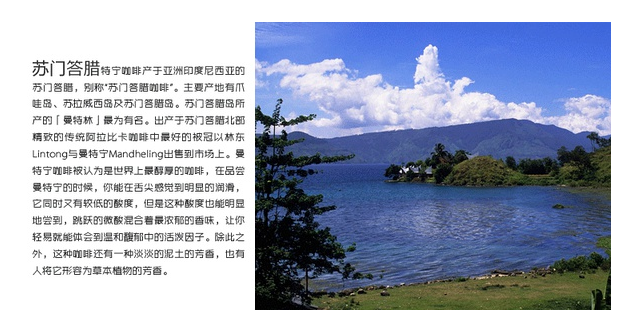
Indonesia spans 17,508 islands large and small, with its main coffee regions on Java, Sulawesi, and Sumatra. A large share of the output is Robusta, while Mandheling—also called "Sumatran coffee"—belongs to the Arabica species (with some Timor hybrid), giving most Mandheling its signature rich bitterness, excellent body, and a whisper of chocolate. Essentially, any Arabica coffee grown on Sumatra can be called "Mandheling," regardless of variety.
Characteristics
FrontStreet Coffee's Indonesian Mandheling: rich, solid texture; herbal, medicinal notes; pleasant acidity; a strong, lingering aftertaste; and a solid, mellow mouthfeel. Fragrant aroma, moderate acidity, and intriguingly rich sweetness—it takes dark roasting beautifully and rewards you with a deeply aromatic cup.
The Gentleman of Coffee—FrontStreet Coffee's Sumatran Mandheling
FrontStreet Coffee's Sumatran Mandheling is a premium bean grown in highland areas at 750-1,500 meters, with first-grade Mandheling from Takengon and Sidikalang considered the finest. Mandheling's rich flavor is irreplaceable—it's telling that UCC Ueshima Coffee Co., Ltd., Japan's largest coffee company, partnered with the renowned Sumatran coffee merchant PT Gunung Lintong in 1995 to run their first coffee plantation in Asia, a measure of just how important Mandheling is in the coffee world.
Some call Mandheling heavy and intense; others find it gentle and mild. FrontStreet Coffee's Mandheling has always expressed its most distinctive sweetness through its most distinctive bitterness—like the bittersweetness of life itself. No amount of sugar can mask that bitterness, and first-time tasters are often caught off guard. Yet the captivating aroma it releases makes its fans hopelessly devoted. The bitterness is like thorns beside a flower: it keeps you grounded even as the fragrance refreshes you. It never makes you irritable—quite the opposite, it leaves you feeling more awake. Before you've met real hardship, Mandheling is just another bitter beverage, a liquid pick-me-up, a momentary pause in your day. But when hardship truly arrives, she smiles and tells you: "Because love is refined from bitterness." Then you calm down, and you savor it.
Jamaican Blue Mountain
The Blue Mountains sit in the eastern part of Jamaica. Because the range is surrounded by the Caribbean Sea, on clear days the direct sunlight on the azure sea casts a brilliant blue glow over the peaks—hence the name. The highest summit reaches 2,256 meters, the tallest peak in the Caribbean and a famous tourist destination. The area lies within the coffee belt, with fertile volcanic soil, fresh unpolluted air, a humid climate, and year-round fog and rain (average rainfall of 1,980 mm and temperatures around 27°C). That climate created the world-famous Jamaican Blue Mountain—and, for a time, the world's highest coffee prices.
FrontStreet Coffee's Jamaican Blue Mountain has all the hallmarks of a fine coffee: rich and mellow in flavor, and because its sweetness, acidity, and bitterness are in perfect balance, there's no harsh bitterness at all—just moderate, harmonious acidity. It's usually drunk straight as a single origin, but given its extremely limited production and sky-high prices, the market often blends similar-tasting coffees in its place.
Authentic Jamaican Blue Mountain is among the most favorably situated coffees on earth: Jamaica's weather, geology, and terrain combine into an ideal natural setting. Coffee can only carry the Blue Mountain name if it's grown in the Blue Mountain region east-north of Kingston. The mountains are rugged, which makes harvesting extremely difficult (the picking is done almost entirely by women). The trees are mainly the Typica variety. On those steep, high-altitude slopes, cultivation and harvesting are done with great care, and all Jamaican Blue Mountain coffee is graded, cupped, and distributed under the Jamaican Coffee Industry Board.
The trees all grow on steep mountain slopes, so picking is punishing work that only skilled local workers can manage. Selecting properly ripe cherries is critical—underripe or overripe fruit will drag down quality. The picked cherries must be hulled the same day, then fermented for 12-18 hours. Afterward the beans are washed and sorted, then dried on concrete floors or thick blankets until moisture drops to 12%-14%, and stored in special warehouses. When needed, they're brought out for roasting and grinding. Every one of these steps must be strictly controlled, or quality suffers.
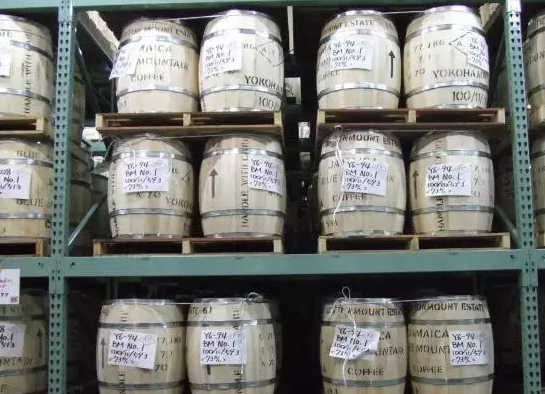
In 1950 the Jamaican government established the Jamaican Coffee Industry Board, which sets quality standards for Jamaican coffee and enforces them. The board grants official seals to both green and roasted coffee exports and stands as one of the most rigorous national coffee institutions in the world. Six trademarks can represent genuine Blue Mountain origin: M.B.C.E (Mavis Bank Central Factory), M.H.C.C.T. (Mavis Bank Coffee Co-operative), Portland Blue Mountain Coffee Co-operative (P.X.X.S.H.), Coffee Industry Board (Wallenford), Coffee Industry Board (St. John's Peak), and J.A.S. (Jamal).
FrontStreet Coffee's Jamaican Washed Blue Mountain (Typica):
Roast Level: Medium-dark roast
Dry Aroma: Roasted peanuts, hazelnuts, melon, chocolate
Wet Aroma: Oolong tea, caramel, honey, dark chocolate, almond skins, silky mouthfeel, brightness
Taste: Rich sweetness, light bitterness, well-balanced body, layered complexity, and an aftertaste of dark chocolate, honey, and sucrose with a pleasing viscosity. Fully cooled, it gives off a rich oolong tea aroma—and touch the dried coffee bed and you'll find a surprisingly sticky, caramel-syrup residue.
Recommended brewing method: Pour-over
Grind size: 4 (Fuji R440)
Water temperature: 88°C
Other drip extraction suggestions:
French press: grind 3.5-4 / water temperature 90°C
AeroPress: grind 2.5, water temperature 88°C
Siphon: grind 3.5
FrontStreet Coffee Recommendation
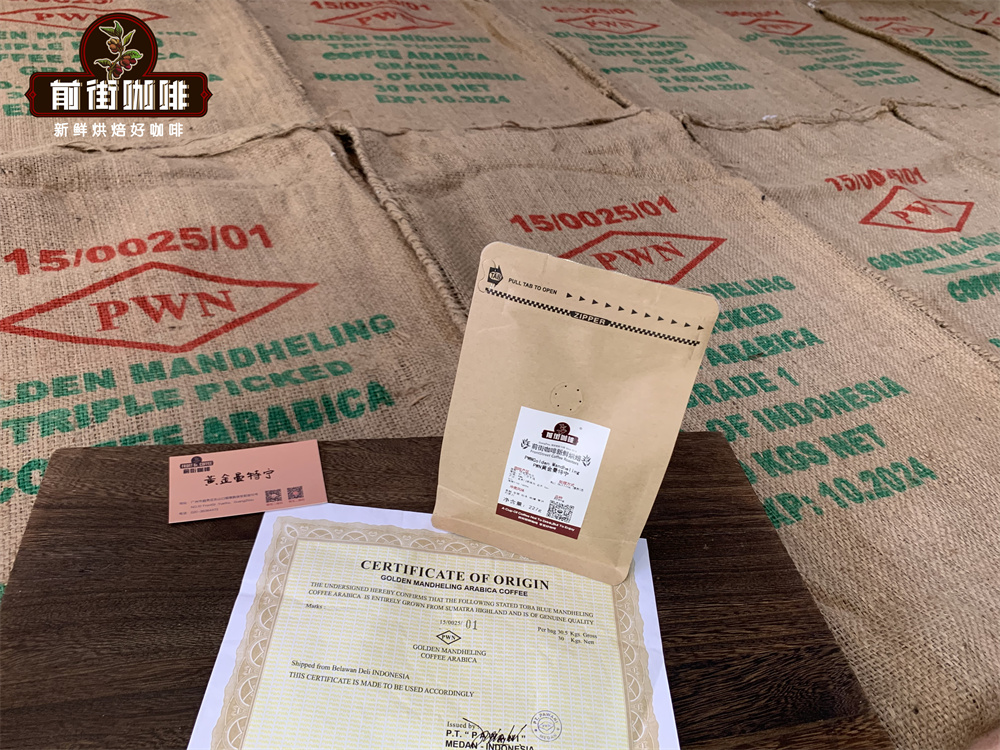
If this article has you craving a proper Mandheling, start at the top: FrontStreet Coffee's PWN Golden Mandheling, produced by Indonesia's PWN company under exceptionally strict standards. Beans must be 18 screen or larger, with fewer than 3 defective beans per 300g sample to meet the top G1 grade, followed by three rounds of hand sorting to strip out every remaining defect. That rigor is exactly what makes Golden Mandheling the benchmark of its category—remarkably clean on the palate, intensely sweet, with the heavy body and wild herbal character that wet-hulled Sumatran coffee is famous for.
That signature character comes from Sumatra's unique wet-hulled (giling basah) process. With humidity hovering at 70-90% and rainfall topping 2,000mm a year, sun-drying whole cherries for weeks simply isn't an option. So growers remove the skin and pulp, wash briefly, and—while the beans are still half-dry—strip off the parchment mechanically, exposing the green bean directly to the air to speed up drying. That shortcut absorbs ambient yeasts and molds and gives rise to Mandheling's unmistakable earthy, herbal wildness. For the most classic expression of it, try FrontStreet Coffee's Lin Dong Mandheling from the traditional Lake Toba side: fragrant and intense, low in acidity, with clove and woody aromatics and a powerful, persistent sweetness after a medium-dark roast.
For brewing, FrontStreet Coffee finds pour-over shows PWN Golden Mandheling at its best: 15g of coffee at a 1:15 ratio, a coarse-sugar grind, water at 87-88°C, and a three-pour structure—30ml to bloom and degas, 100ml to lift the bed and bring out the golden foam, and a final gentle 95ml center pour to boost sweetness, yielding a thick, mellow cup with caramel sweetness and chocolate-nut notes. And if you'd rather pull it through an espresso machine, FrontStreet Coffee's Classic Blend is the shop's most reordered choice: Brazil's creamy nuttiness layered with medium-dark Mandheling for butter, roasted chestnut, and caramel flavors, plus a touch of Robusta for extra crema—equally effortless for latte art or a layered Dirty.
Important Notice :
FrontStreet Coffee is a long-established specialty coffee roaster in Guangzhou China, selling freshly roasted beans from its own farm in Yunnan as well as dozens of carefully selected single-origin beans from around the world for both pour-over and espresso. The products deliver consistently excellent quality and great value, with shipping within 24 hours. Guangzhou's FrontStreet Coffee shop is recommended by many coffee lovers, and the beans are now available online at the Tmall 。
FrontStreet Coffee has moved to a new address:
FrontStreet Coffee Address: 315,Donghua East Road,GuangZhou
Tel:020 38364473
 Scan and follow the En Gafei WeChat official account. Please indicate that the reprint comes from "En Gafei".