PWN Gold Mandheling vs. Lin Dong Mandheling Coffee Beans: Pour-Over Flavor Profile Differences
Exploring the Unique Charm of Mandheling Coffee with FrontStreet Coffee
With the growth of the third wave of specialty coffee, people's acceptance of coffee has broadened. Take FrontStreet Coffee's Indonesian Mandheling beans, known for their herbal flavors and rich body — although they were quite controversial at first, FrontStreet Coffee has found that many people now enjoy them.
What defines specialty coffee? FrontStreet Coffee believes it should be evaluated from four dimensions: altitude, variety, processing method, and cupping score (above 80 points). In fact, FrontStreet's Mandheling doesn't reach 80 points in cupping. Some might argue, based on that, that FrontStreet's Mandheling isn't specialty coffee, but FrontStreet Coffee believes "specialty coffee" is merely a result that meets a public evaluation standard.
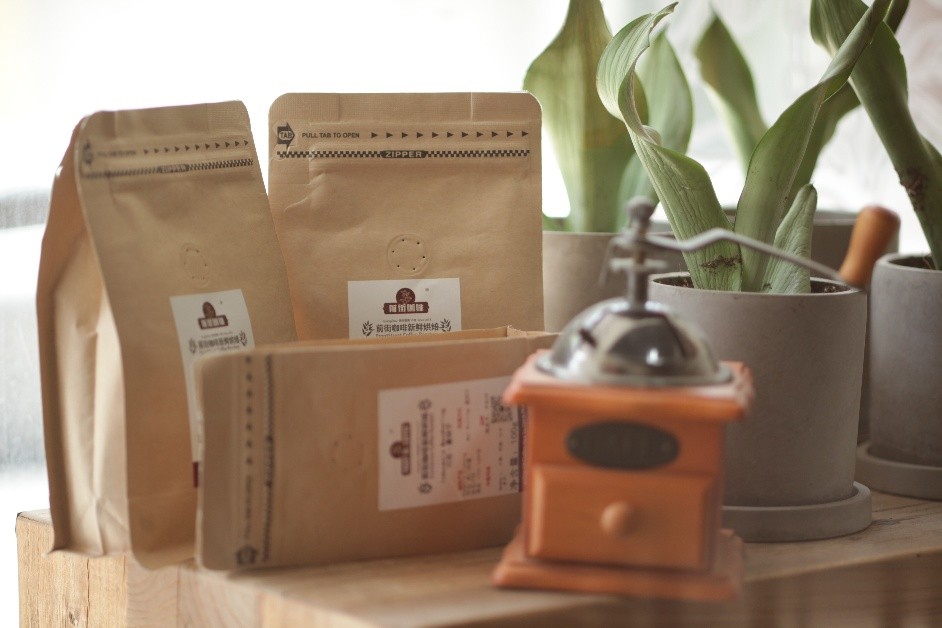
For coffees that highlight regional flavor, once their market acceptance is relatively high, whether they're classified as specialty coffee no longer matters. FrontStreet Coffee cups coffees meticulously while continuously sourcing beans from different regions, precisely to help everyone understand that coffee beans are constantly being discovered and changing. People's tastes evolve continuously too, so existing evaluation standards serve only as a foundation for understanding coffee. Beyond that, having your own coffee worldview has always been the philosophy FrontStreet Coffee aims to convey.
Now, let's explore FrontStreet's Mandheling coffee together with FrontStreet Coffee.
The Story of Mandheling Coffee Beans and the Development of Sumatran Coffee
Indonesia lies in Southeast Asia, and its coffee history dates back to 1696, when Dutch plantation owners tried to find broader coffee-growing areas. After extensive exploration, they settled on Java Island. After 30 years, Indonesia had established a sufficient foothold in the coffee market. Today, however, Indonesia's coffee representative is Mandheling — which isn't surprising, because most of the Java coffee originally exported to Europe actually came from the Sumatra region, and Mandheling originates from Sumatra. So Sumatra can be considered an important coffee-producing region in Indonesia.
The Origin of the Name Mandheling
Mandheling originally refers to an Indonesian tribal name. After Japanese soldiers returned from Indonesia's colonization, they couldn't forget the delicious local coffee. Through their trading connections, they asked locals to help transport high-quality coffee beans, including this Mandheling variety.

According to FrontStreet Coffee's understanding, Mandheling's fame originated with Pawani Coffee Company (PWN), which successfully launched Mandheling in the Japanese market. This export trading company was founded by a Chinese family from Quanzhou, Fujian, and is located in Medan, an important port in Sumatra. Since 1957 it has been in the export business, dealing in products such as rubber, cassia seeds, cloves, and patchouli oil, and of course exporting Sumatran coffee beans to Japan.
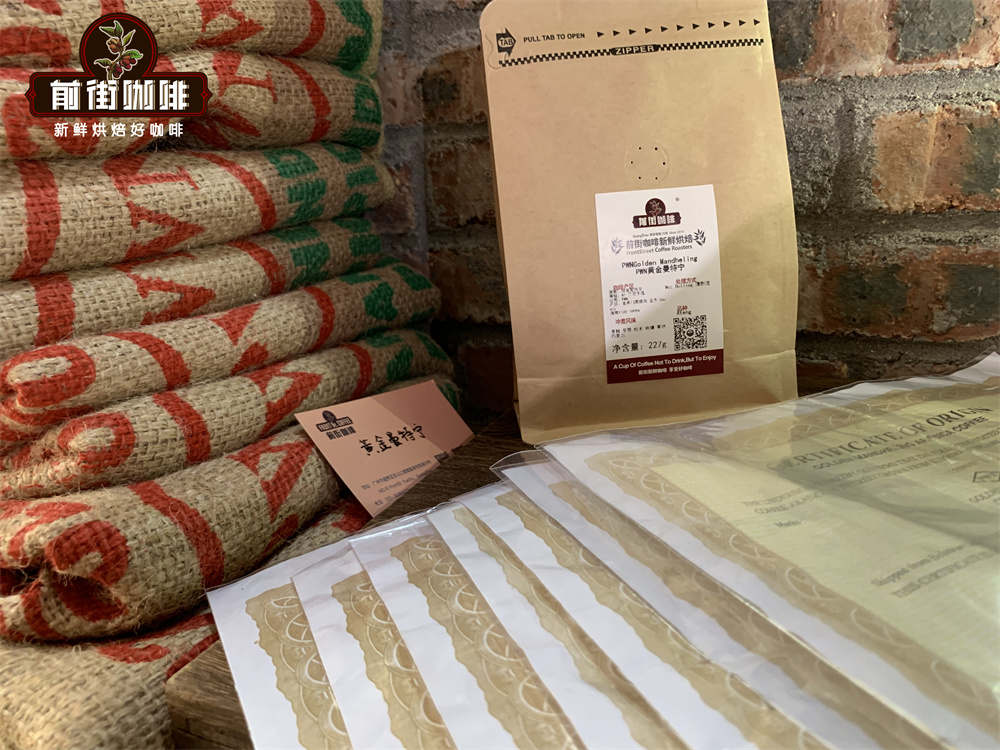
Unlike many local green bean merchants in Indonesia, PWN is an exclusive supplier of high-grade Golden Mandheling coffee, contracting the best Mandheling-producing regions in Indonesia. The Mandheling beans it produces are all of superior quality. The Golden Mandheling coffee, which consistently occupies a prominent place on FrontStreet Coffee's menu, is produced by PWN. The Dongshankou store also displays the burlap sacks used for green bean packaging along with certification certificates.
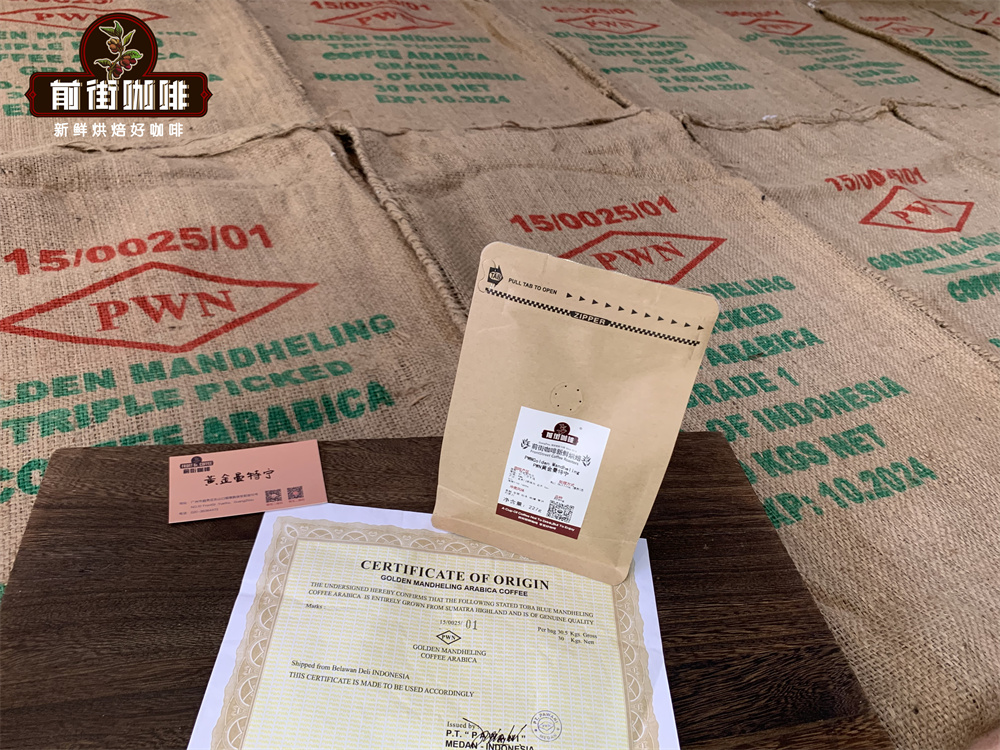
FrontStreet PWN Golden Mandheling Coffee
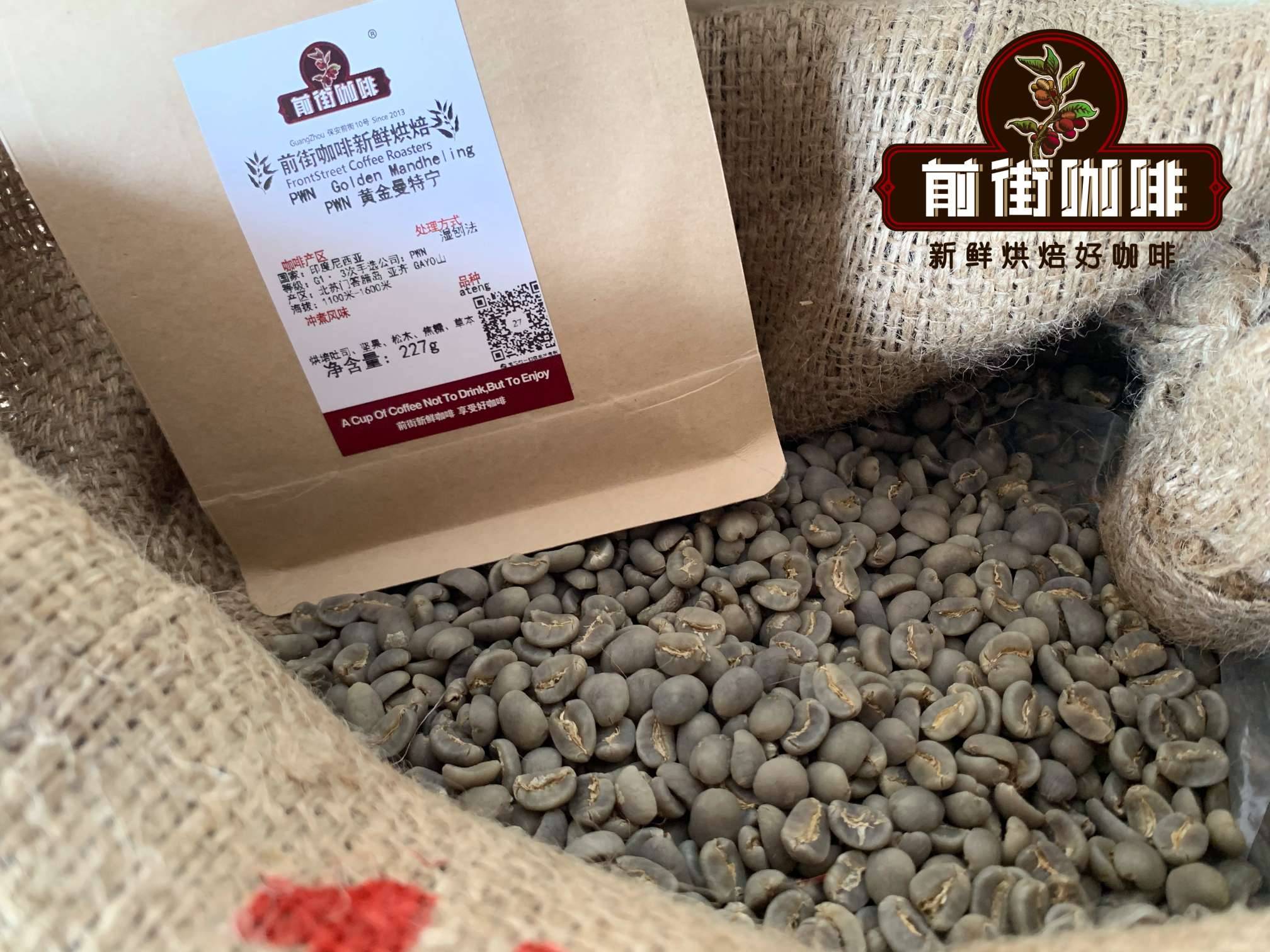
FrontStreet PWN Golden Mandheling coffee beans come from Lake Tawa in Mount Gayo, northwestern Sumatra. Since discovering Mandheling, the Japanese have paid great attention to this bean. During cooperation with local green bean merchants, they established strict screening standards. After processing, the green beans undergo density-based color sorting, followed by four rounds of manual bean selection, finally presenting Mandheling beans with uniform color and consistent shape. It's said that when processed, Mandheling emits a golden luster in sunlight — hence the name "Golden Mandheling."
The specification of FrontStreet PWN Golden Mandheling is 18 screen or above, with fewer than 3 defective beans (in 300g green bean samples), belonging to the highest G1 grade, with a dark green color and a flat, neat shape. After strict screening, FrontStreet Coffee has found that FrontStreet PWN Golden Mandheling beans not only lack the typical earthy impurities of regular Mandheling but also taste cleaner and brighter, with more intense sweetness.
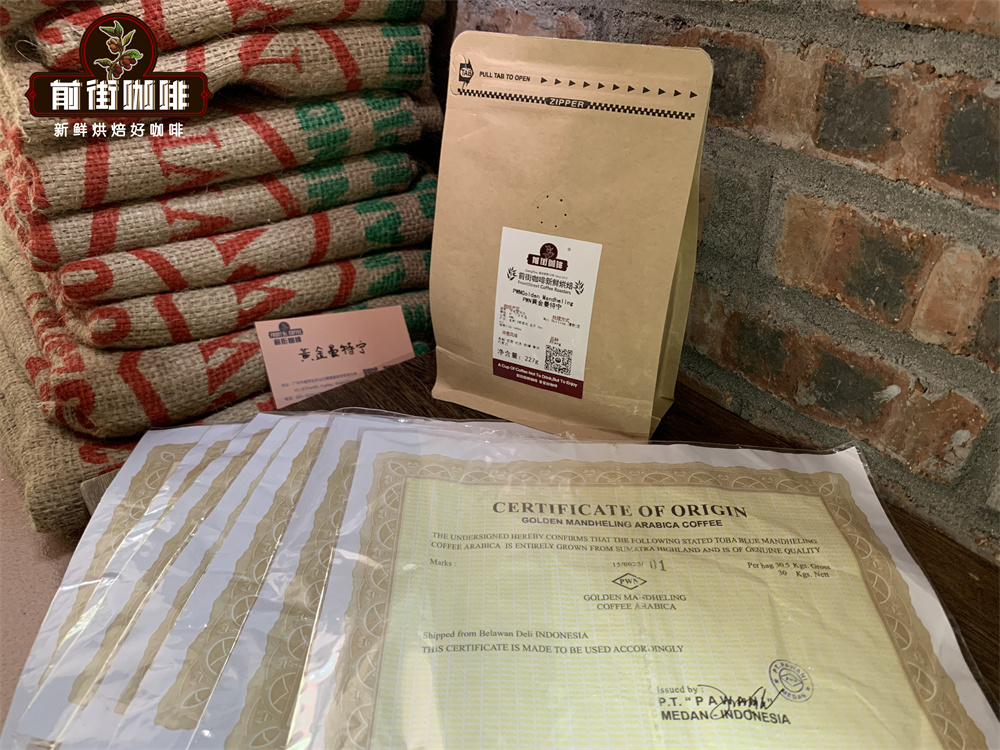
However, it wasn't a Japanese company that registered Golden Mandheling as a trademark, but rather the local Indonesian company PWN (Pawani Coffee Company) that had previously cooperated with Japanese companies to export Mandheling. The Japanese company registered "Gold Top Mandheling," another premium golden Mandheling variety. FrontStreet Coffee believes that in terms of flavor performance there is actually little difference between the two, but due to different brands and marketing strategies, public opinion may have shifted. Which of the two Golden Mandheling coffees is superior ultimately comes down to personal preference.
Types of Sumatran Mandheling Coffee Beans
The commonly available and widely accepted Mandheling varieties on the market today are Lintong Mandheling and Golden Mandheling. After discussing Golden Mandheling, let's introduce FrontStreet's Lintong Mandheling.
FrontStreet Lintong Mandheling
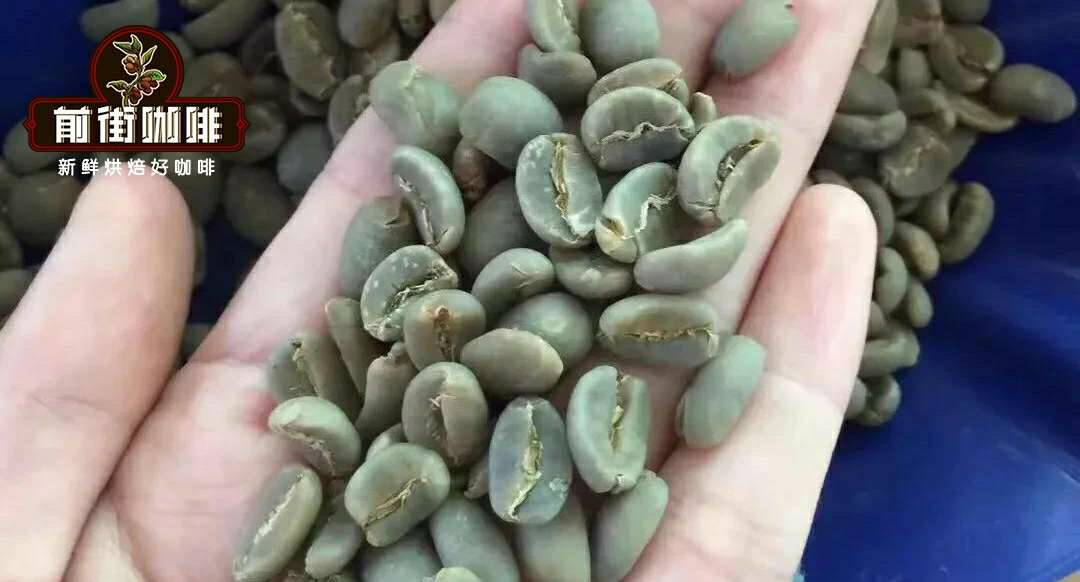
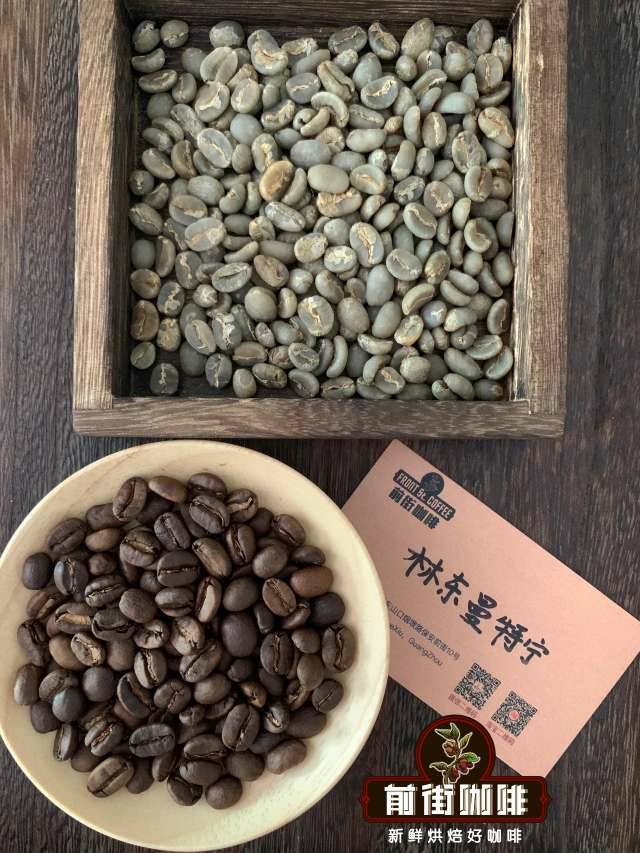
Lintong Mandheling is produced in the Lintong mountainous area of north-central Sumatra, near Lake Toba. Lintong Mandheling is the standard version of Mandheling. FrontStreet Lintong Mandheling also uses the conventional wet-hulling method, which creates its characteristic low acidity and high body. A consequence of wet-hulling, however, is that when the semi-hard, semi-soft moist green beans are hulled to remove the mucilage and parchment, they are easily crushed. The damaged beans split open like goat hooves, commonly known as "goat hoof beans." FrontStreet Coffee considers this a very distinctive characteristic of Mandheling, not a defect.
FrontStreet Lintong Mandheling doesn't focus on intensive screening, but that doesn't diminish people's appreciation for its rich flavor.
In addition, FrontStreet Coffee offers three other Mandheling varieties: FrontStreet Tiger Mandheling, FrontStreet Aged Mandheling, and FrontStreet Sumatra Wahana Estate Natural Mandheling. Here, FrontStreet Coffee will introduce them one by one.
FrontStreet Tiger Mandheling
The FrontStreet Tiger Mandheling selected by FrontStreet Coffee comes from the Tiger Estate in Sumatra, Indonesia, hence also known as "Mandheling Tiger" or "Sumatra Tiger Mandheling." Northern Sumatra has relatively high altitudes, with Aceh Province (where Lake Tawa is located) and North Sumatra (where Lake Toba sits) being the main Arabica-producing regions. The requirement for FrontStreet's Tiger Mandheling is that it must have a Chinese herbal medicine aroma and must be 17 screen or above with a defect rate below 4% to be called Tiger Mandheling.
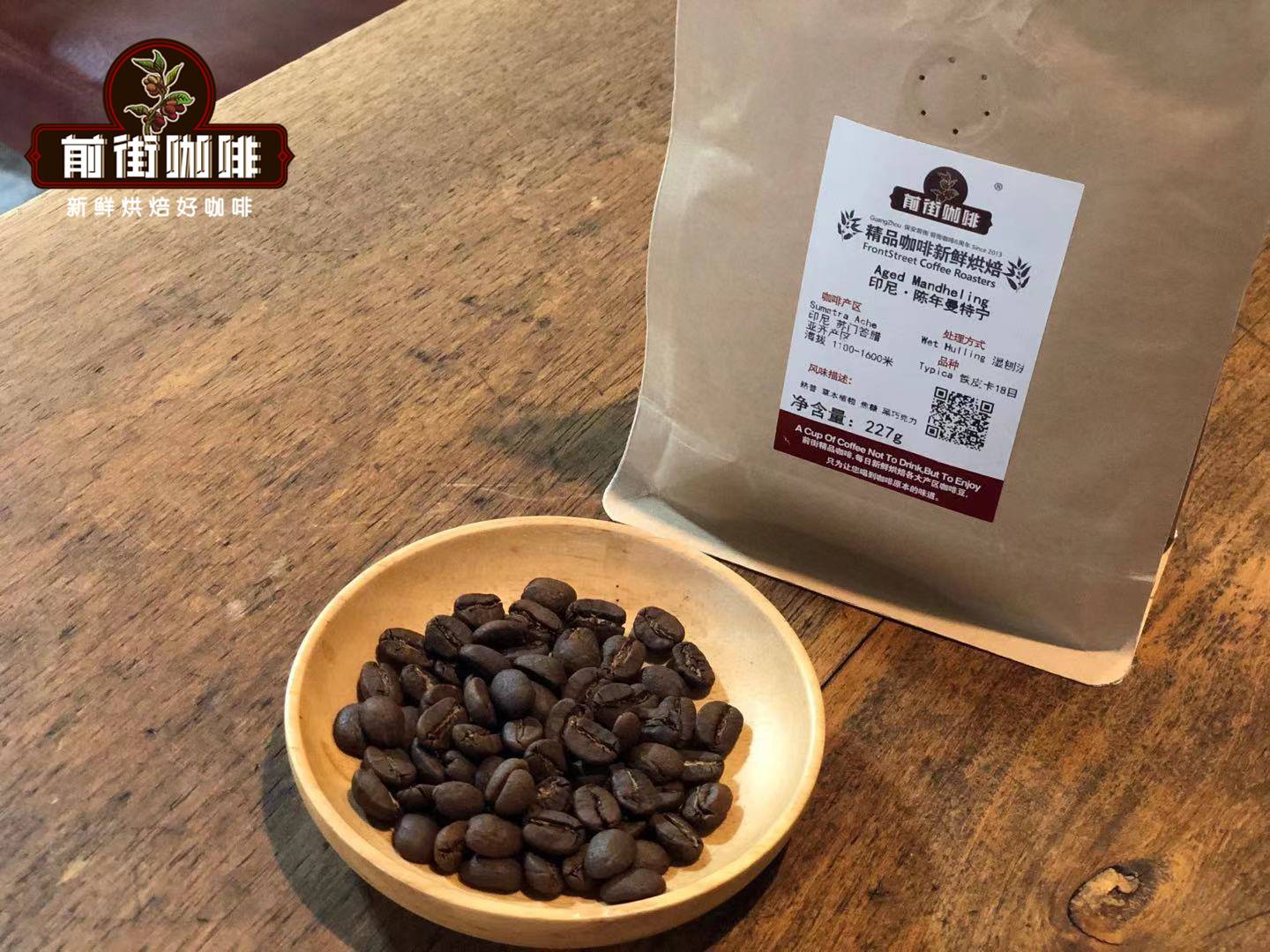
FrontStreet Aged Mandheling
Aged coffee beans don't simply mean leaving green beans to sit for a long time — that won't work, because green beans deteriorate over time, changing from fresh green to white, then yellow, becoming tasteless, and even growing insects. Like aged wines, green beans must undergo proper processing and long-term storage before they can be called true "Aged Coffee."
FrontStreet Sumatra Wahana Estate Natural Mandheling
The processing method for these FrontStreet Wahana Estate Natural Mandheling beans is not the wet-hulling method unique to Indonesian coffee, but the more challenging natural processing method. Natural processing first requires manual selection of defective beans, as well as immature or overripe cherries. Afterward, the cherries are spread evenly on drying patios and turned several times daily. The drying process usually takes about 2-3 weeks depending on local climate, and Indonesia's rainy weather may extend this time. When the moisture content inside the beans drops to 11-13%, the natural drying step is complete. After drying, the cherry husks have become dry and hard and only need to be removed with a hulling machine.
Special Processing Method: Wet-Hulling
As mentioned earlier, most Mandheling coffee uses the wet-hulling method unique to Sumatra. This is due to the local weather, which is predominantly rainy with constant typhoons, making it impossible to achieve the good weather required for natural drying. The local economy was also not prosperous, making the more expensive washed processing equally impossible. This led to the highly localized wet-hulling method. Although Indonesia's coffee industry has developed beyond its previous poverty, and there are now many estates and companies with the conditions to use washed processing, why hasn't wet-hulling been abandoned? FrontStreet Coffee believes wet-hulling is one factor that helped Mandheling gain global recognition — when people mention Mandheling coffee, they immediately think of wet-hulling. The two have developed a complementary relationship.

The specific steps of wet-hulling can be divided into two stages:
First stage: Using a wooden peeler to remove the skin and pulp, followed by 3 hours of fermentation, then drying to reduce moisture content to a semi-dry, semi-wet state of 30-50%.
Second stage: Removing the mucilage and parchment layer, then continuing with the final drying process, which takes 2-4 days and reduces moisture content to 12-13%.
In addition to conventional wet-hulling, there is also aged wet-hulling. The beans are first processed using ordinary wet-hulling, then sealed in warehouses for 2-3 years. The warehouse environment must be cool and ventilated, with regular turning of the beans to prevent mold and spoilage. During this period, the coffee's acidity gradually diminishes and converts to sugars, and the color becomes deeper, mostly yellowish-brown or dark brown. The Mandheling beans on FrontStreet Coffee's menu that use this processing method are called FrontStreet Aged Mandheling coffee beans.
Wet-hulling created the distinctive flavor of Mandheling coffee. One could say Mandheling and wet-hulling have a bound relationship, but today's coffee market is no longer satisfied with unchanging tradition. Even though wet-hulling is a characteristic of Mandheling, attempts with other processing methods are still being made. As mentioned earlier, FrontStreet Coffee's Wahana Estate Mandheling beans use the natural processing method.

Characteristics of Five Mandheling Coffee Beans
FrontStreet Coffee offers five distinct Mandheling varieties, each with unique characteristics:
- FrontStreet Golden Mandheling: From Aceh, Mount Gayo; Altitude: 1100-1600m; Varieties: Ateng, Typica, Caturra; Processing: Wet-hulling
- FrontStreet Lintong Mandheling: From Sumatra Lintong region; Altitude: 1100-1600m; Varieties: Typica, Caturra, Sidikalong; Processing: Wet-hulling
- FrontStreet Tiger Mandheling: From Aceh, Sumatra near Lake Toba; Altitude: 1500m; Varieties: Typica, Caturra; Processing: Wet-hulling
- FrontStreet Aged Mandheling: Altitude: 1500m; Varieties: Typica, Caturra; Processing: Wet-hulling
- FrontStreet Sumatra Wahana Estate Natural Mandheling: Altitude: 1000-1700m; Varieties: Bourbon, Typica; Processing: Natural processing
Roasting Recommendations for Five FrontStreet Mandheling Coffee Beans
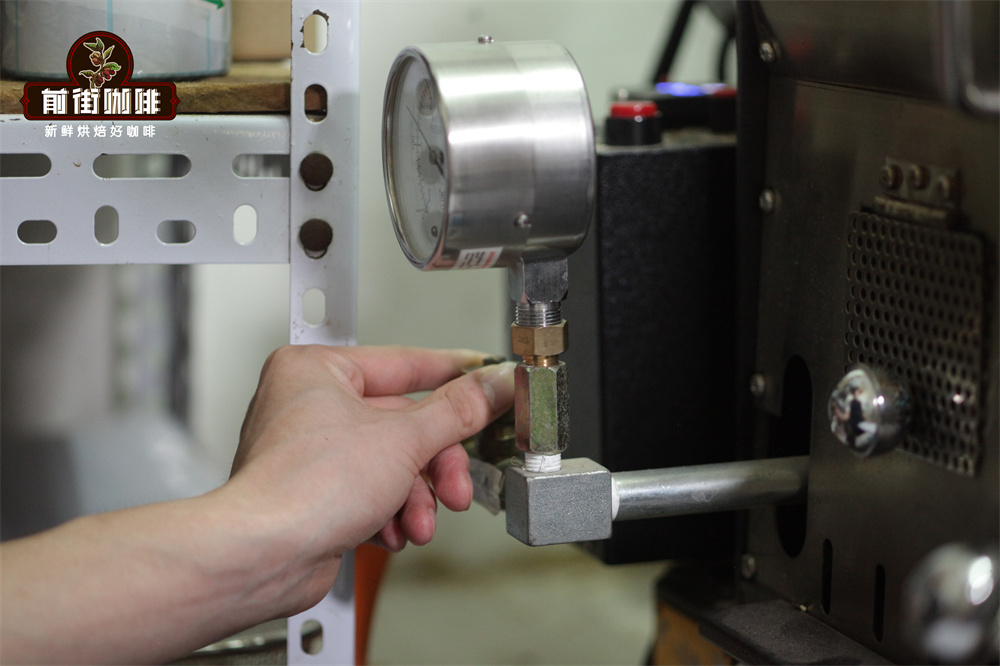
When roasting these five FrontStreet Mandheling coffees, FrontStreet Coffee uses a medium to dark roast level, aiming to eliminate excessive acidity while enhancing body and balance. Based on the characteristics of each Mandheling, FrontStreet designed five roasting profiles as follows:
Machine: Yangjia 800N, 550g green bean input
| Coffee Bean | FrontStreet Golden Mandheling | FrontStreet Lintong Mandheling | FrontStreet Tiger Mandheling | FrontStreet Aged Mandheling | FrontStreet Natural Mandheling |
|---|---|---|---|---|---|
| Entry Temperature | 200°C | 200°C | 200°C | 200°C | 175°C |
| Yellowing Point | 5'40", 148°C | 5'18", 147.7°C | 5'18", 147.7°C | 5'35", 146.1°C | 5'50", 154°C |
| First Crack | 9'54", 191.2°C | 9'00", 186°C | 9'00", 186°C | 9'30", 186.8°C | 9'39", 183.6°C |
| Development after First Crack | 3'30", 204.5°C out | 4'00", 202°C out | 4'00", 203°C out | 3'20", 197.5°C out | 2'30", 195°C out |
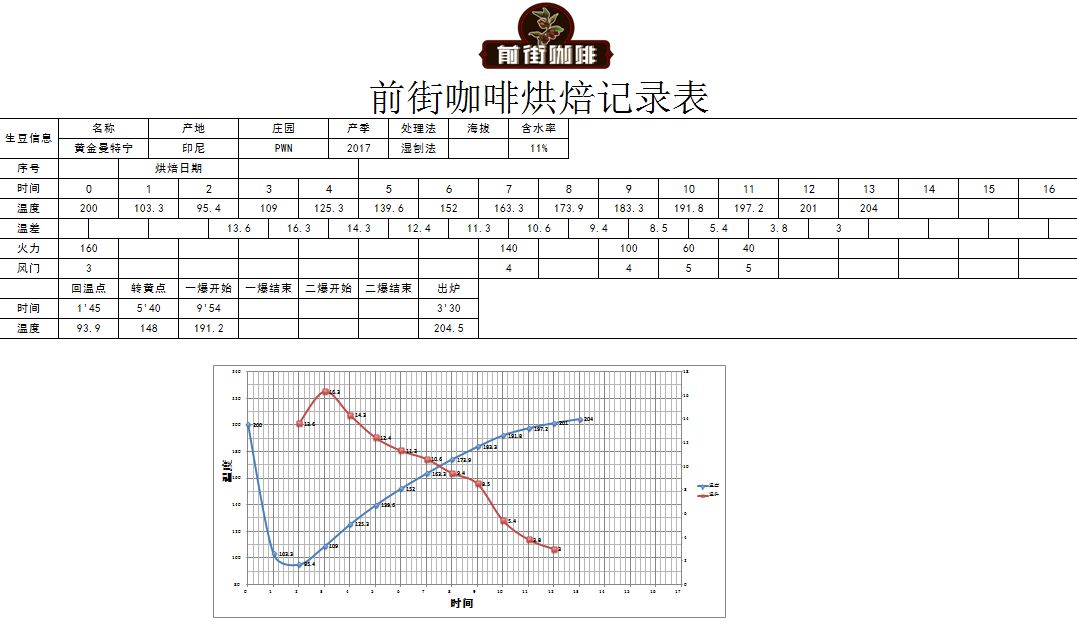
FrontStreet Golden Mandheling roasting record
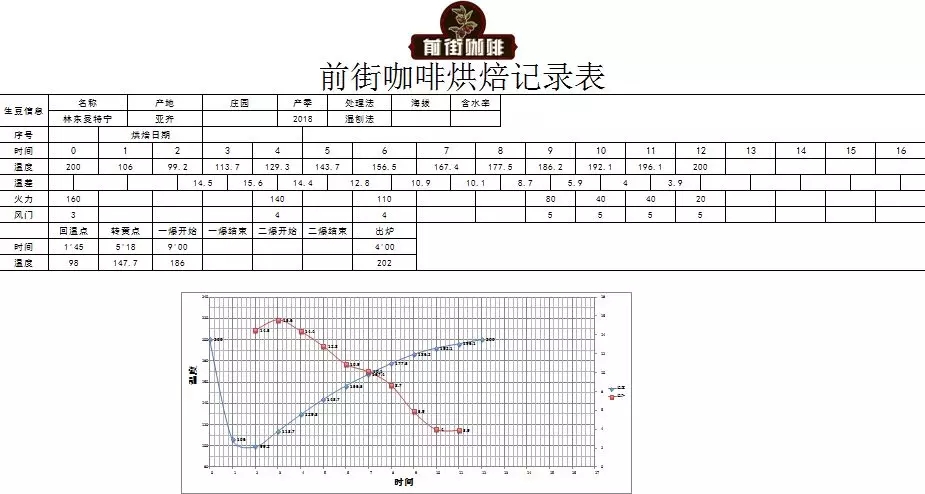
FrontStreet Lintong Mandheling roasting record
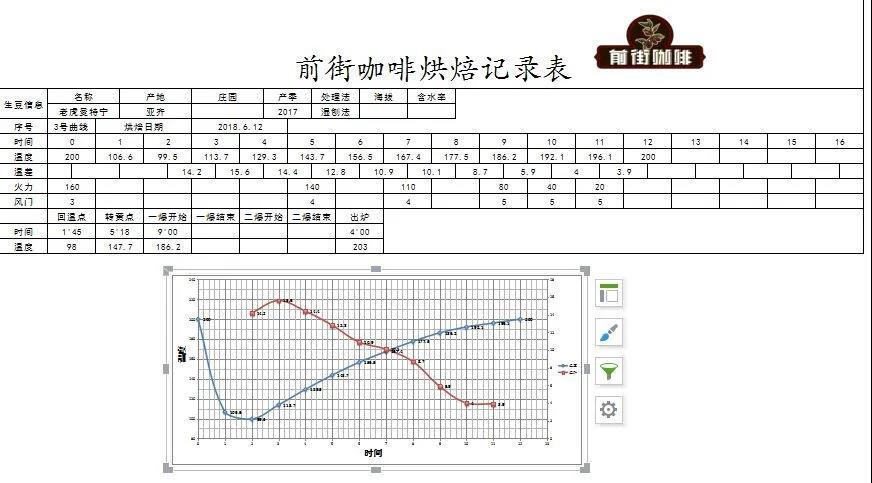
FrontStreet Tiger Mandheling roasting curve
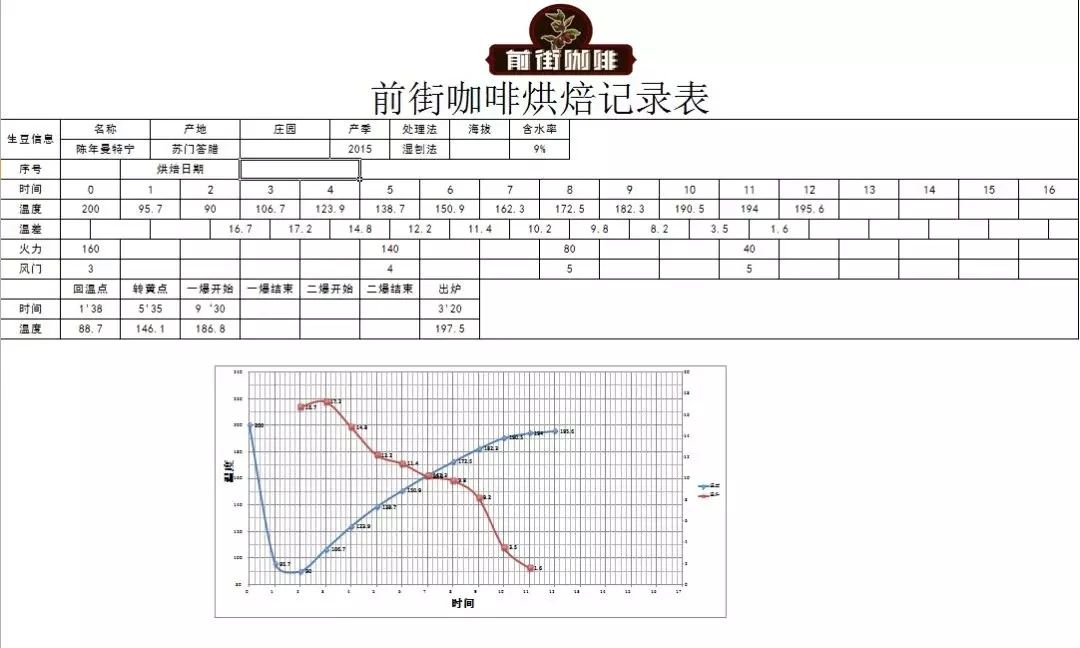
FrontStreet Aged Mandheling roasting curve
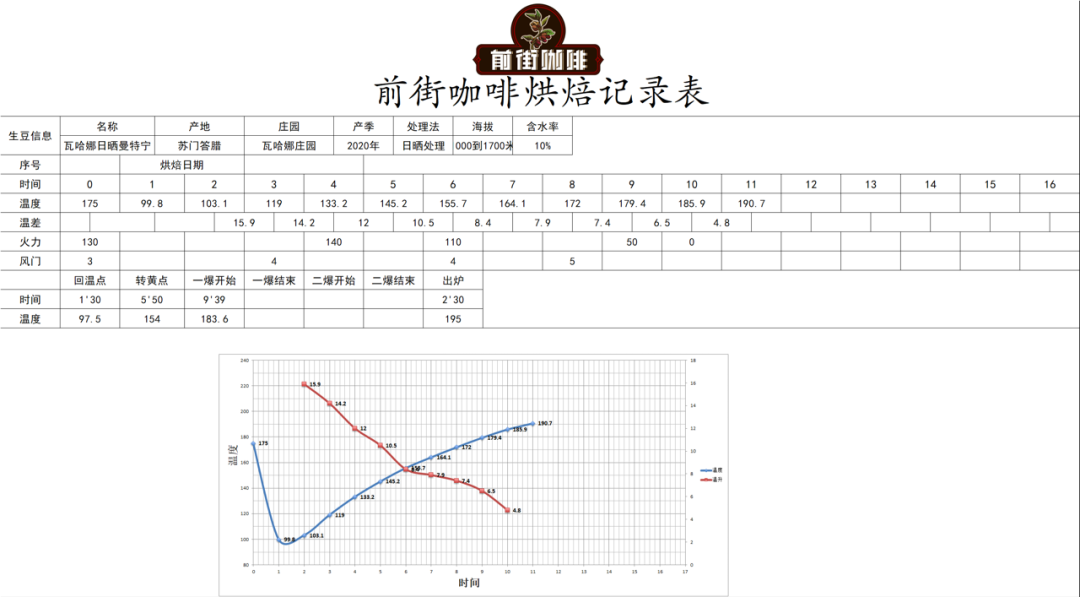
FrontStreet Wahana Estate Natural Mandheling roasting curve
Brewing Recommendations
FrontStreet Coffee recommends the following brewing parameters: Kono dripper, 88°C water temperature, 15g coffee dose, 1:15 coffee-to-water ratio, grind size 70-75% pass-through rate on a China standard #20 sieve.

Regular readers of FrontStreet Coffee articles will know that light-roasted and dark-roasted beans need different water temperatures and drippers. Lower water temperature is used to avoid extracting excessive undesirable flavors. When FrontStreet Coffee chooses dark roasts, many aromatic compounds have already been released; if extraction continues at the water temperature used for light roasts, over-extraction will occur. FrontStreet Coffee chooses the Kono dripper because a V60 has too fast a flow rate and can under-extract at low water temperatures. The Kono dripper has fewer ribs located at the bottom, letting the filter paper fit closely against the dripper, restricting airflow and increasing contact time between water and grounds. This ensures full extraction and enhances body, making it suitable for brewing medium-dark roasted beans such as FrontStreet Golden Mandheling and FrontStreet Jamaica Blue Mountain Coffee.
FrontStreet recommends using freshly roasted beans to maximize the rich flavors of the coffee. Beans shipped by FrontStreet Coffee are roasted within 5 days, because FrontStreet understands well that freshness has a significant impact on flavor. FrontStreet's roasting philosophy is "Freshly roasted good coffee," ensuring every customer receives the freshest coffee when the order arrives. The degassing period is about 4-7 days, so when customers receive their coffee it's at its peak flavor.

Brewing Technique
FrontStreet Coffee uses a staged extraction method: bloom with 30g of water for 30 seconds, then pour in a small circular motion to 125g for the first stage. When the water level drops to just before exposing the coffee bed, continue pouring to 225g and stop. Wait until the water level drops to just before exposing the bed, then remove the dripper. (Timing starts from the bloom.) Total extraction time is 2'00".

Flavor Descriptions
FrontStreet Lintong Mandheling: Herbal, chocolate, caramel, overall well-balanced
FrontStreet Golden Mandheling: Nuts, spices, herbal plants, licorice, chocolate, caramel, clean and smooth flavor
FrontStreet Tiger Mandheling: Nuts, cream, dark chocolate, caramel, Chinese herbal medicine, noticeable sweetness, relatively clean and clear flavor
FrontStreet Aged Mandheling: Ripe pu-erh tea, caramel, herbal, chocolate, lower acidity
FrontStreet Wahana Estate Natural Mandheling: Tropical fruits, fermentation notes, moderate acidity, smooth texture, noticeable sweetness
FrontStreet Coffee Recommendation
If the wet-hulled, full-bodied style of Mandheling is what you're after, FrontStreet PWN Golden Mandheling is the top of the line. It's produced by Indonesia's PWN company, which sets extremely strict standards: only beans of 18 screen or above, fewer than 3 defective beans per 300g green sample to meet the highest G1 grade, and then three rounds of hand sorting to remove every remaining defect. That rigor raises both the cup's cleanliness and the intensity of its sweetness — which is why supply is limited and quality is so consistent.
Roasted medium-dark, FrontStreet PWN Golden Mandheling comes through clean and full-bodied, with black chocolate, caramel, and gentle herbal-spice notes and very low acidity. To brew it, FrontStreet suggests 87-88°C water, 15g of coffee at a 1:15 ratio, and a grind about the texture of coarse sugar, pouring in three stages: a 30ml bloom to wet all the grounds, then to 100ml to bring up the golden foam and lift the bed, and finally 95ml in a soft, centered pour to build sweetness — the result is a thick, full cup with caramel sweetness and chocolate and nut flavors.
For the traditional, untamed side of Sumatra at an easier price, FrontStreet Lintong Mandheling brings clove, woody aromatics and a strong, stimulating entry with a thick, lingering sweetness. And if you'd rather have that Mandheling depth on an espresso machine, FrontStreet Classic Blend builds a medium-dark Mandheling onto the creamy, nutty base of Brazilian coffee, adding butter, roasted chestnut, and caramel with sandalwood, herbal, and spice accents — plus a touch of Robusta for richer crema, so lattes and layered Dirty drinks come together easily.
Important Notice :
FrontStreet Coffee is a long-established specialty coffee roaster in Guangzhou China, selling freshly roasted beans from its own farm in Yunnan as well as dozens of carefully selected single-origin beans from around the world for both pour-over and espresso. The products deliver consistently excellent quality and great value, with shipping within 24 hours. Guangzhou's FrontStreet Coffee shop is recommended by many coffee lovers, and the beans are now available online at the Tmall 。
FrontStreet Coffee has moved to a new address:
FrontStreet Coffee Address: 315,Donghua East Road,GuangZhou
Tel:020 38364473
 Scan and follow the En Gafei WeChat official account. Please indicate that the reprint comes from "En Gafei".