Flavor Profile and Taste Differences Between Indonesian Mandheling and Jamaican Blue Mountain Coffee Beans
Questions That Keep Coming Up: Is Mandheling an Arabica? Why Is Blue Mountain So Expensive? How Do They Differ in the Cup?
FrontStreet Coffee has written extensively on these questions and run many side-by-side comparisons. This piece gathers the results in one place, starting with Indonesian Mandheling and then turning to Jamaican Blue Mountain.
First, Indonesian Mandheling Coffee
In Indonesia the most famous coffee is undoubtedly Mandheling. FrontStreet Coffee currently offers four Mandheling coffees, each with a distinct profile, including the well-known Indonesian PWN Gold Mandheling.
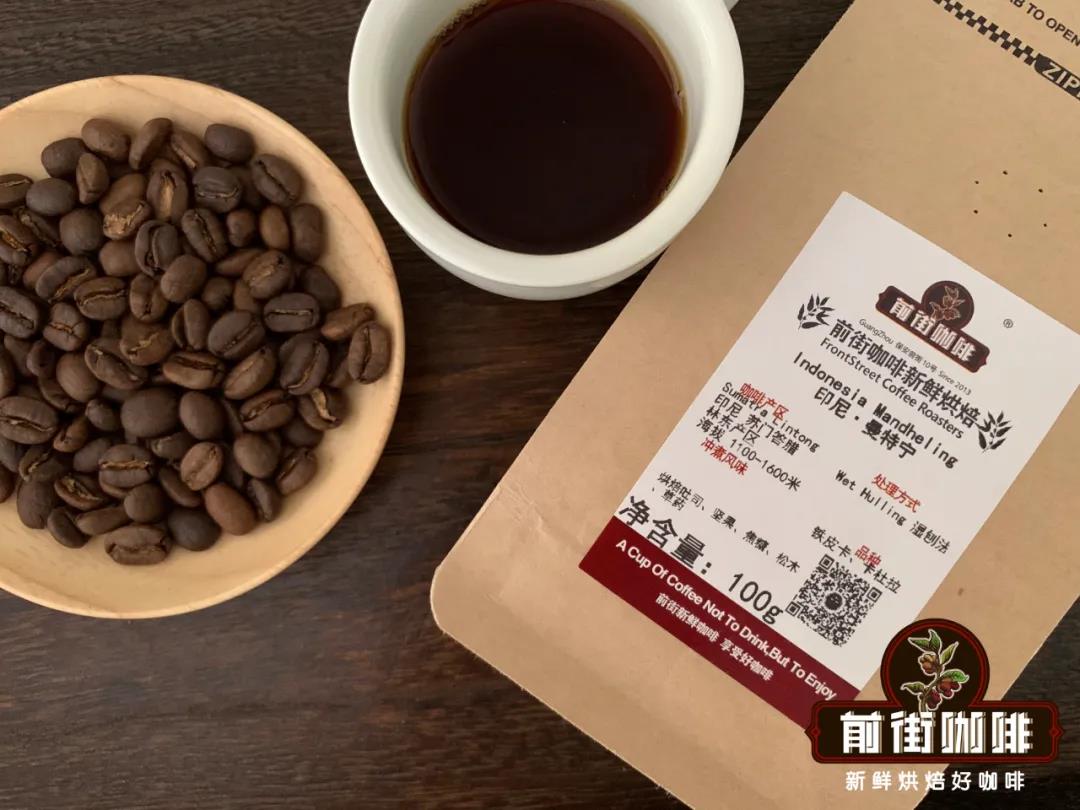
Customers often ask what separates the PWN Gold Mandheling from ordinary Indonesian Mandheling. In appearance and in taste, the difference is easy to see. Through careful comparative brewing, FrontStreet Coffee found that PWN Gold Mandheling is cleaner and more layered than regular Mandheling. The main reason is that PWN Gold Mandheling undergoes three or more rounds of hand selection, and the beans kept are 18 screen size or larger, so the bean size is very uniform, which naturally produces a more balanced flavor.
Where Indonesian Mandheling Comes From
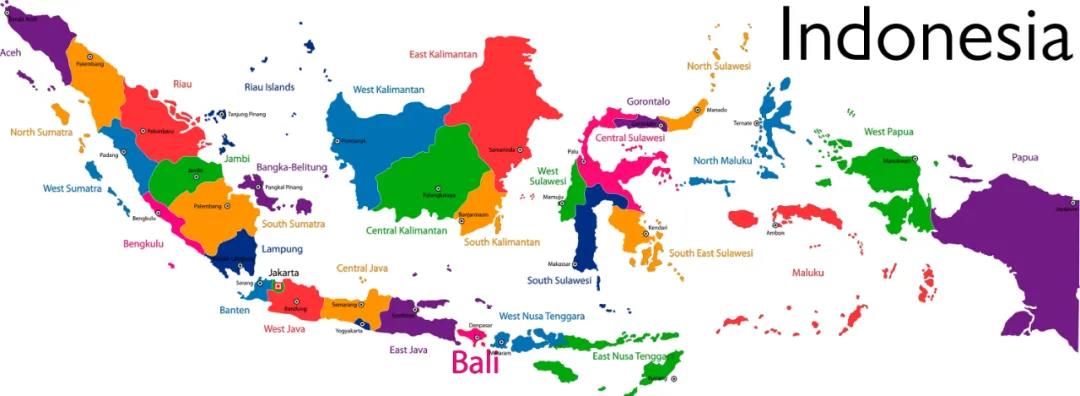
Indonesia is in Southeast Asia, and its coffee history reaches back to 1696, when Dutch plantation owners looked for broader growing areas. After extensive exploration they settled on Java. Within 30 years Indonesia had established a firm footing in the coffee market. Most of the Java coffee exported to Europe came from the Sumatra region, and Mandheling originates in Sumatra, which makes Sumatra an important coffee-producing area for the country.
The name "Mandheling" is unusual. It is not a region, a place name, a port, or even a variety name, unlike African names such as Yirgacheffe or Sidamo. It is simply a mispronunciation of the Indonesian Mandheling ethnic group.
How did an ethnic group become tied to coffee? The story is a serendipitous one.
During World War II, Japan occupied Indonesia. One day a Japanese soldier tasted exceptionally good coffee in a shop and asked the owner its name. Because of the language barrier, the owner thought the officer was asking where he was from, and answered "Mandheling tribe."
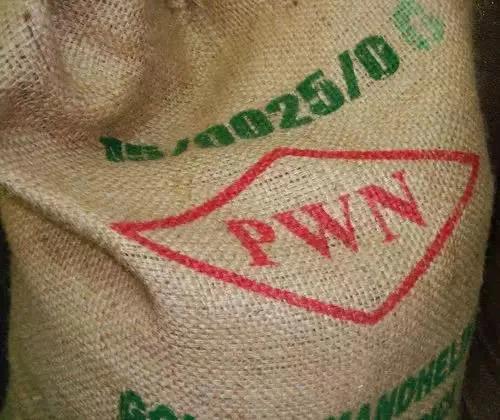
After the war ended, the soldier remembered that coffee and asked an Indonesian broker to ship him fifteen tons of Mandheling to Japan. It became overwhelmingly popular in the Japanese market, and the name has been passed down ever since. That broker went on to establish the Pwani Coffee Company (PWN), the trademark owner of Gold Mandheling.
Sumatra's Unique Processing Method
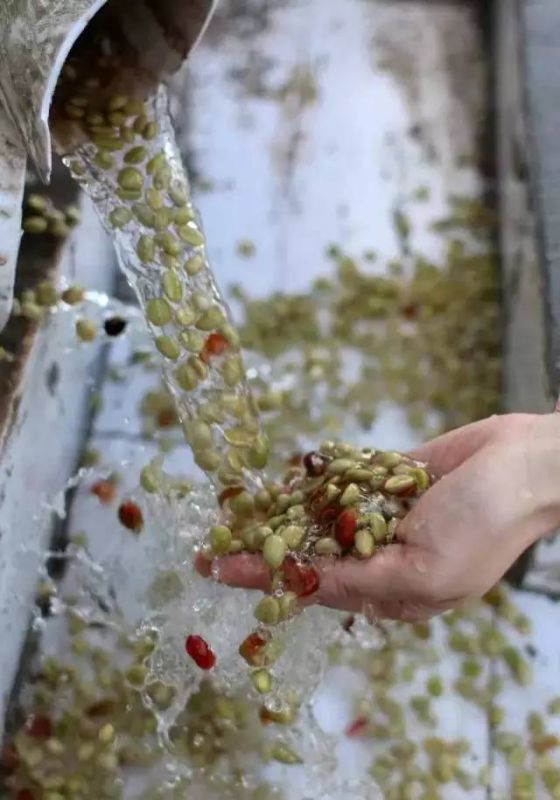
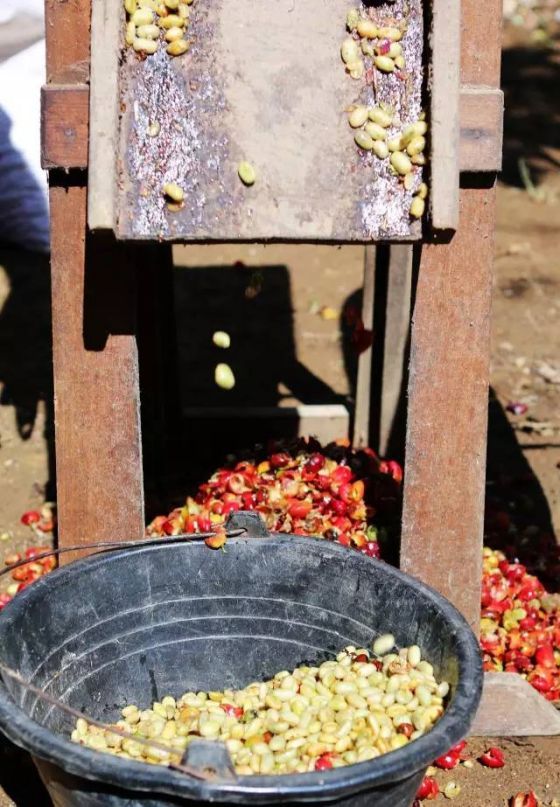
Most Indonesian Mandheling uses Sumatra's distinctive wet-hulled method. Local weather is rainy and frequently typhoon-prone, so the good drying conditions sun-drying requires are impossible, and the local economy cannot afford the more expensive washed method. Wet-hulling developed as the local answer.
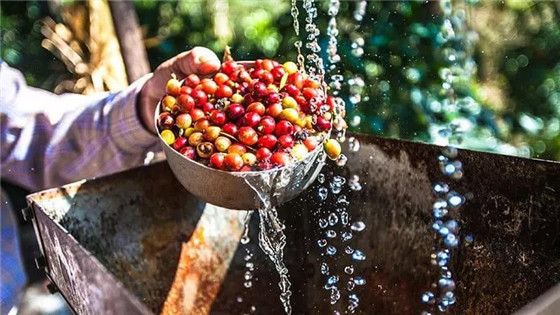
In the first stage, a wooden peeler removes the skin and pulp, followed by 3 hours of fermentation and drying that brings moisture down to a semi-dry, semi-wet 30-50%. In the second stage, the mucilage and parchment are removed and final drying continues for 2-4 days, bringing moisture to 12-13%.
There are four common Mandheling types, presented here in turn: Lintong Mandheling, PWN Gold Mandheling, Tiger Mandheling, and Aged Mandheling.
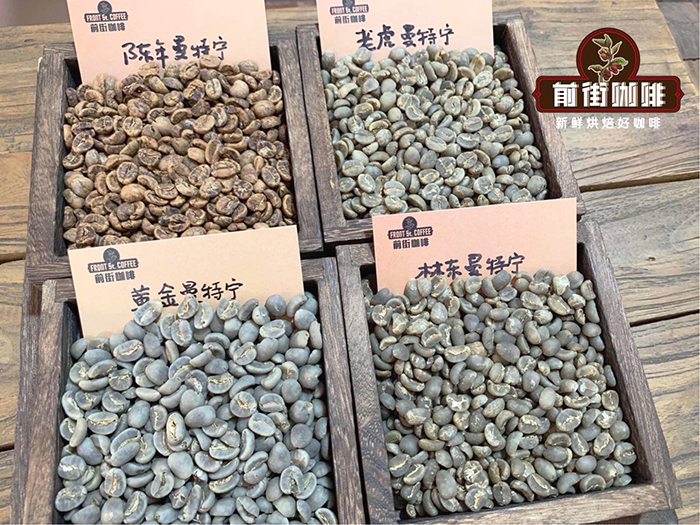
1/ Lintong Mandheling
This premium Mandheling comes from the Lintong region and features relatively large beans with a hard texture. Indonesian coffee quality varies widely, but what is generally called Mandheling is Typica or its relatives grown in the mountains around Lake Toba. Coffee connoisseurs around the world have said that Sumatran Mandheling has the best texture in the world.
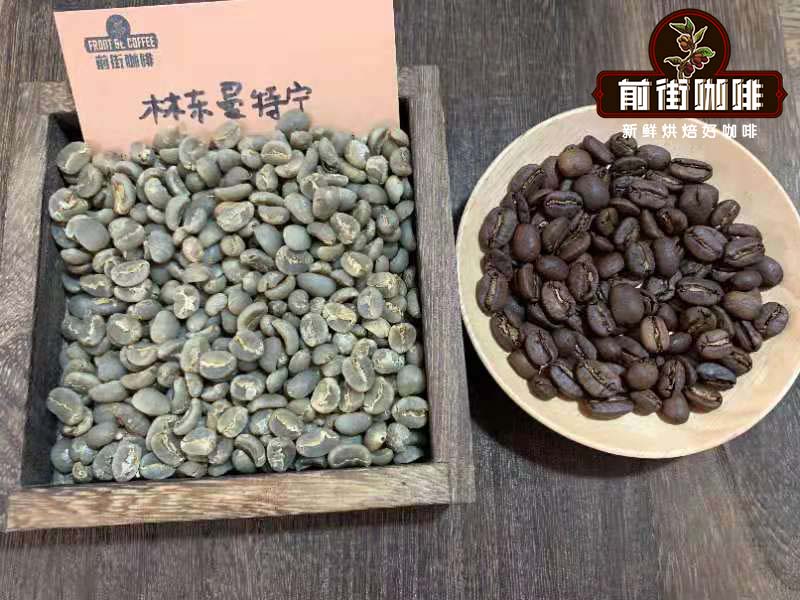
Mandheling beans are large and hard, and because defects are common, strict selection is required during processing. Mandheling is indispensable in blends. The flavor is rich, sweet, and purely bitter, mellow with slight sweetness and subtle acidity.
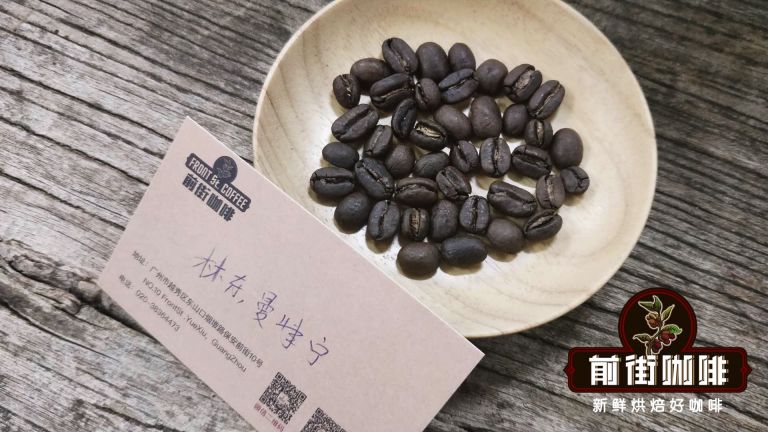
FrontStreet Coffee, Lintong Mandheling
Region: Lintong
Altitude: 1100-1600 m
Varieties: Typica, Caturra
Processing: wet-hulled
2/ PWN Gold Mandheling
Gold Mandheling was trademarked by Indonesia's PWN company, making it exclusive to PWN.
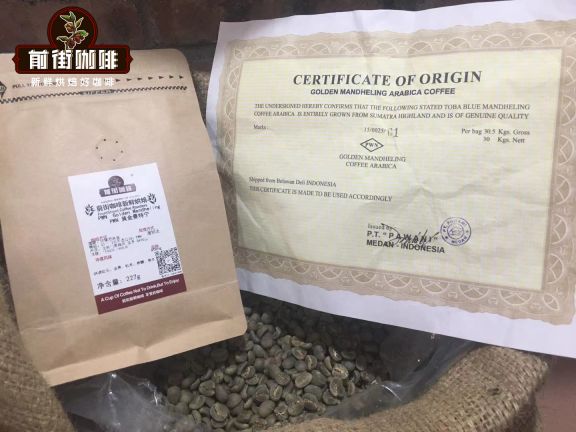
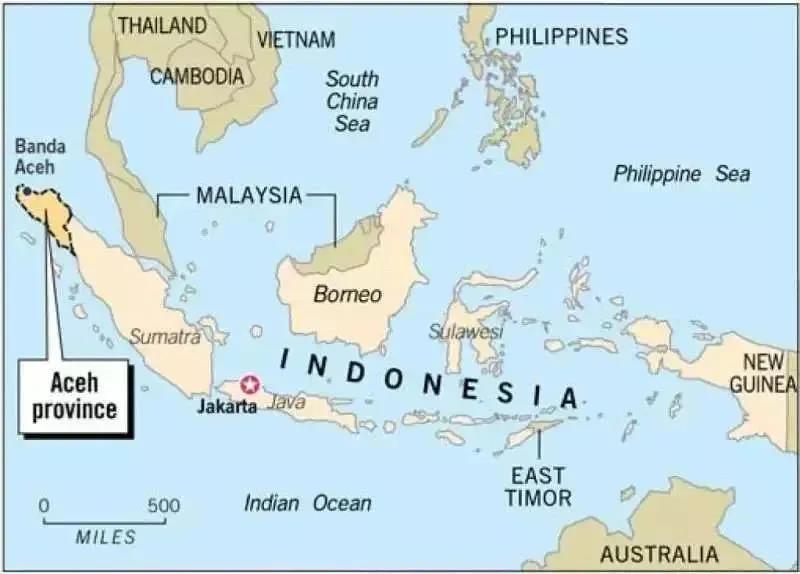
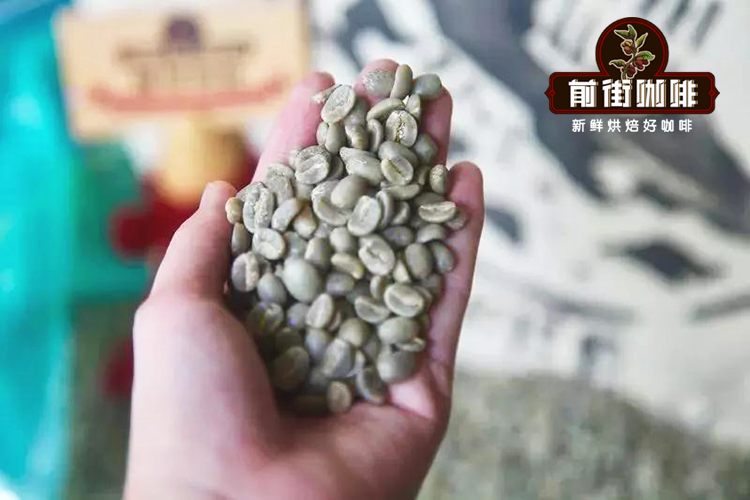
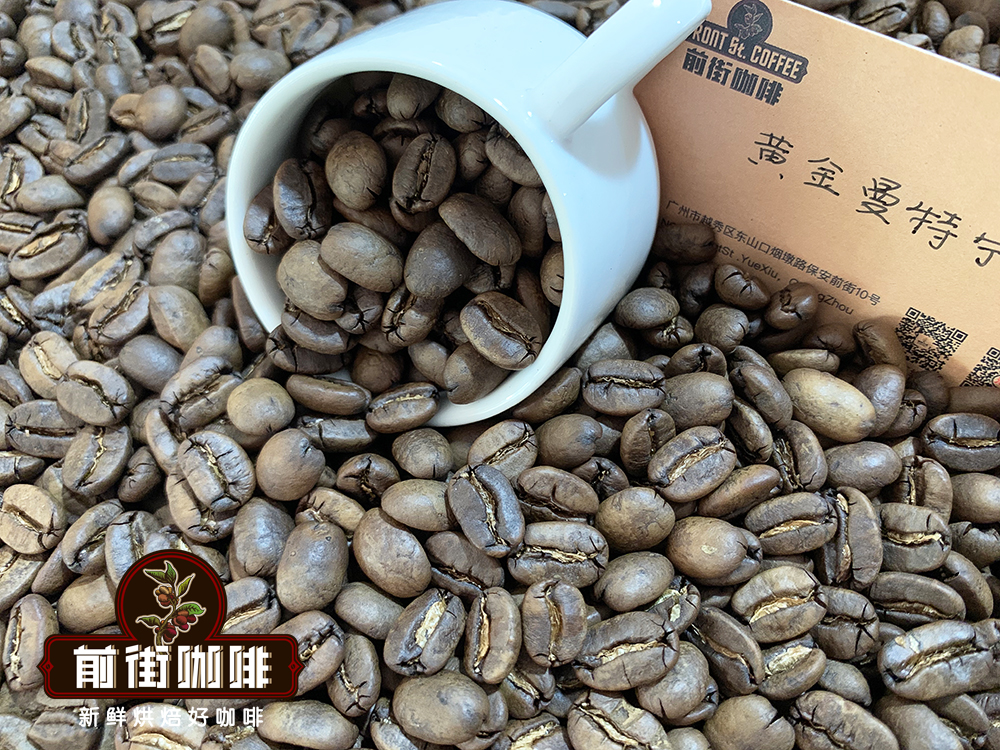
Gold Mandheling is produced in the Gayo mountains of the Aceh region of North Sumatra. The variety is Ateng, a hybrid of Arabica and Robusta widely grown in Sumatra and on other Indonesian islands; it is a branch of Catimor, with Ateng as the local name. Gold Mandheling 19 screen beans undergo four hand selections to higher quality standards.
FrontStreet Coffee, Indonesian PWN Gold Mandheling
Region: Aceh Gayo mountains
Altitude: 1100-1600 m
Varieties: Typica
Processing: wet-hulled
FrontStreet Coffee's PWN Gold Mandheling is selected premium coffee from the Indonesian green bean company Pawani. PWN Gold Mandheling is a trademark and established itself as Indonesia's top coffee brand, which is why Pawani searches across Sumatra to acquire high-quality beans.
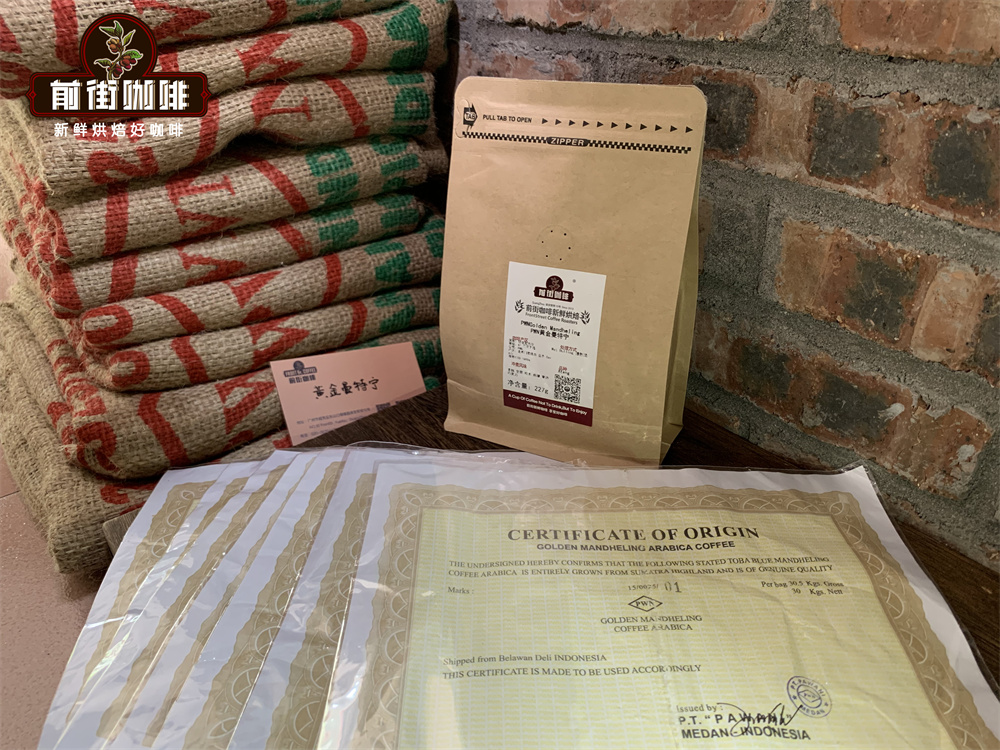
The variety in FrontStreet Coffee's new-harvest PWN Gold Mandheling is Ateng. Local Indonesian names for varieties differ from those used elsewhere: what Indonesians call Tim Tim is Timor, and Ateng is the local name for Catimor. Ateng adapts very well to cultivation and flavor development in Aceh.
3/ Tiger Mandheling
Only Mandheling with a defect rate below 4% and a screen size of 17 or larger can be called Tiger Mandheling.
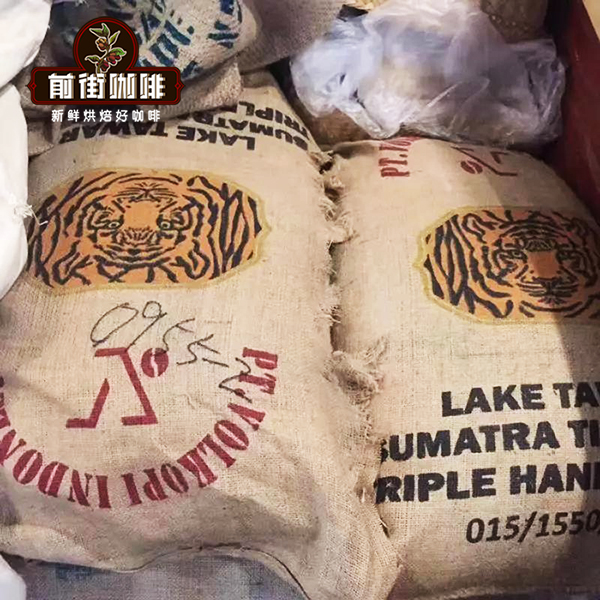
The main varieties behind Tiger Mandheling are Caturra and Typica. Caturra brings citrus and lemon acidity, while Typica brings a lasting finish and full sweetness. The overall flavor is relatively balanced with high clarity.
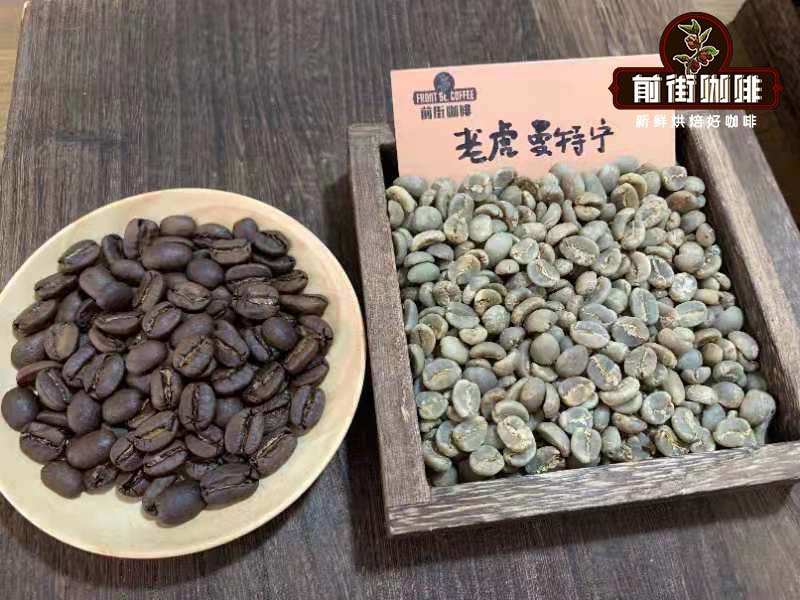
FrontStreet Coffee, Tiger Mandheling
Region: Aceh
Altitude: 1500 m
Varieties: Typica, Caturra, Sidikalong
Processing: wet-hulled
4/ Aged Mandheling
Aged coffee is not simply coffee left to sit for a long time, which would be unacceptable, since beans spoil over time. Green coffee shifts from fresh green to white, then yellow, and finally turns tasteless or develops pests. Like aged wine, green beans must undergo proper processing and long-term storage to truly be called aged coffee.
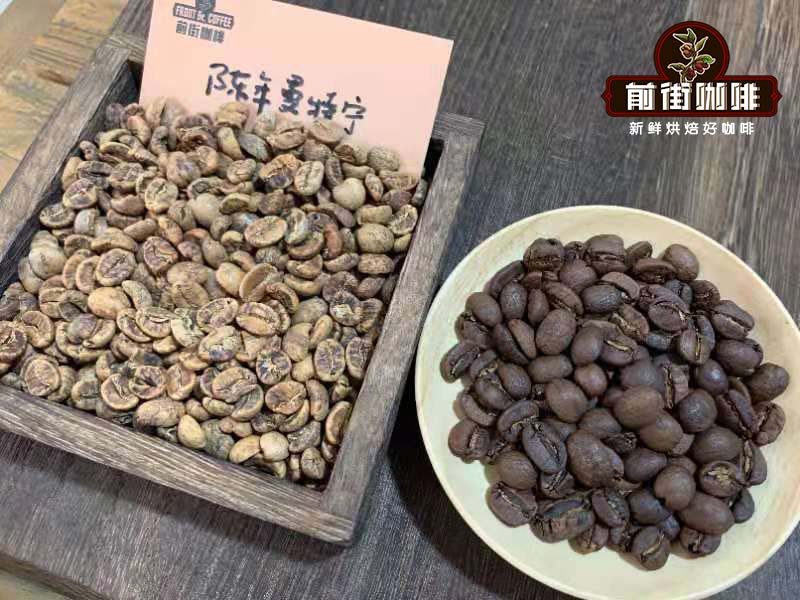
FrontStreet Coffee, Aged Mandheling
Region: Sumatra
Varieties: Typica
Processing: wet-hulled
Aged coffee is green coffee that matures naturally through extended storage, usually 2-3 years. The changes include reduced acidity, a shift in color, and a thickened bean texture. The storage environment must be cool and well-ventilated. Because of the darker setting and the longer time, aged coffee often shows complex notes reminiscent of mustiness or of burlap and leather.
Brewing Indonesian Mandheling
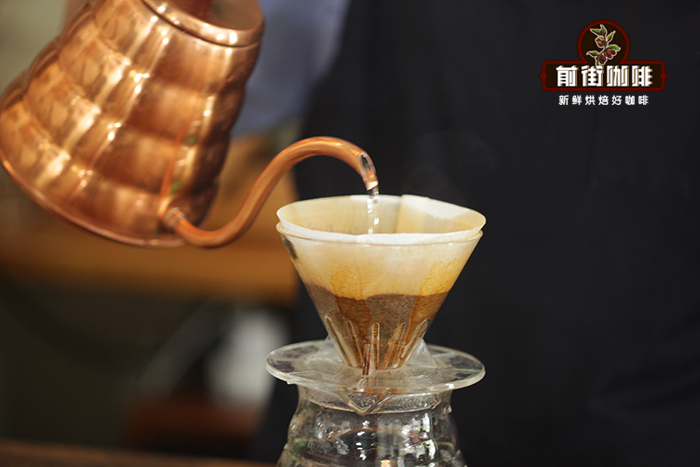
Grind Mandheling slightly coarser than a light roast, so that 80% passes a 0.85 mm screen, around EK43S setting 10. Unlike light roasts, where the goal is terroir and complexity, FrontStreet Coffee wants a fuller, richer mouthfeel here, so it chooses a KONO dripper. Use 15 grams of coffee at a 1:15 ratio, which means 225 grams of water, and a water temperature of 88°C to keep high-temperature bitterness out of the cup.
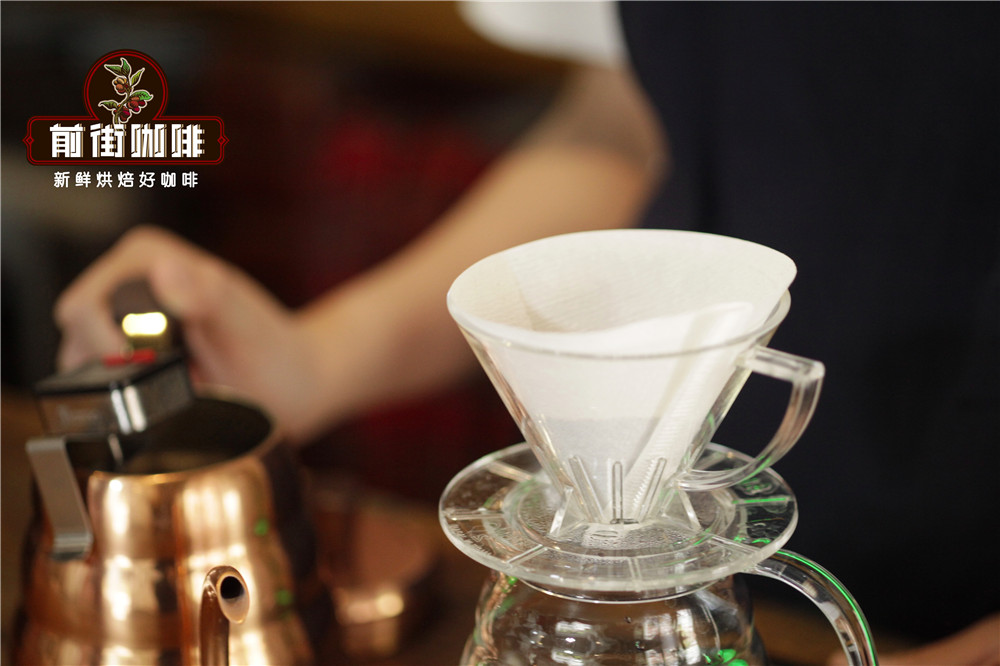
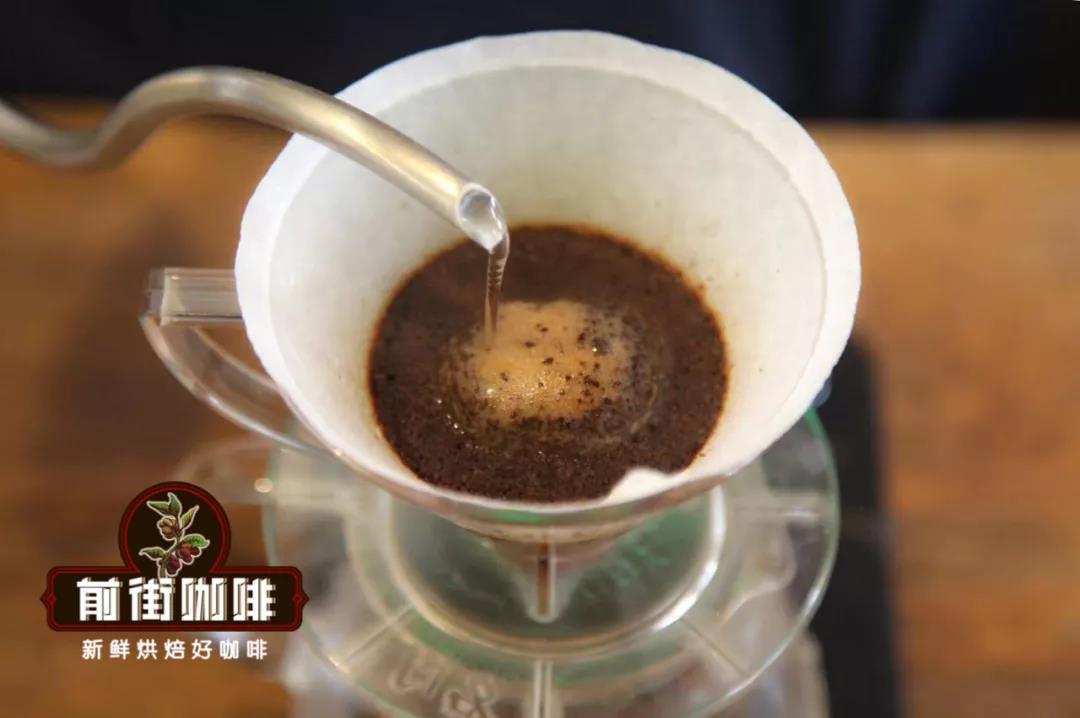
FrontStreet Coffee's standard dose is 15 grams at 1:15. Preheat the dripper, add the grounds slowly, and keep the bed as level as possible without vigorous shaking or tapping. The first stage pours 30 g in small circles at the center for a 30-second bloom, during which the bed swells into a "hamburger" shape. The second stage pours 100 g in circles from the center outward, keeping the pour height close to the bed and the motion slow to avoid over-agitating. The final stage adds 95 g, again in small center circles. Stop when all the liquid has dripped into the server. Extraction time should fall between 1 minute 50 seconds and 2 minutes.
With Mandheling covered, let's turn to Jamaican Blue Mountain.
What Variety Is Jamaican Blue Mountain?
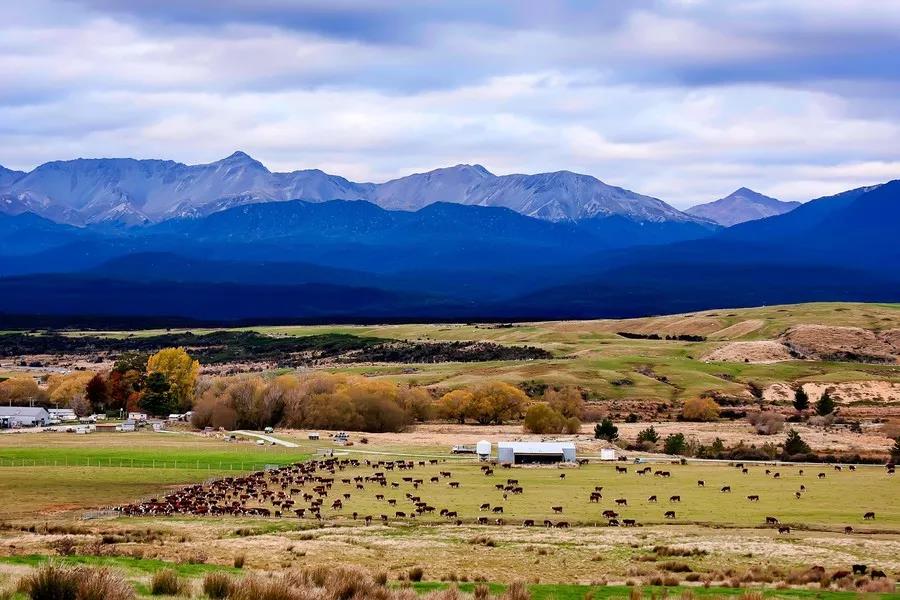
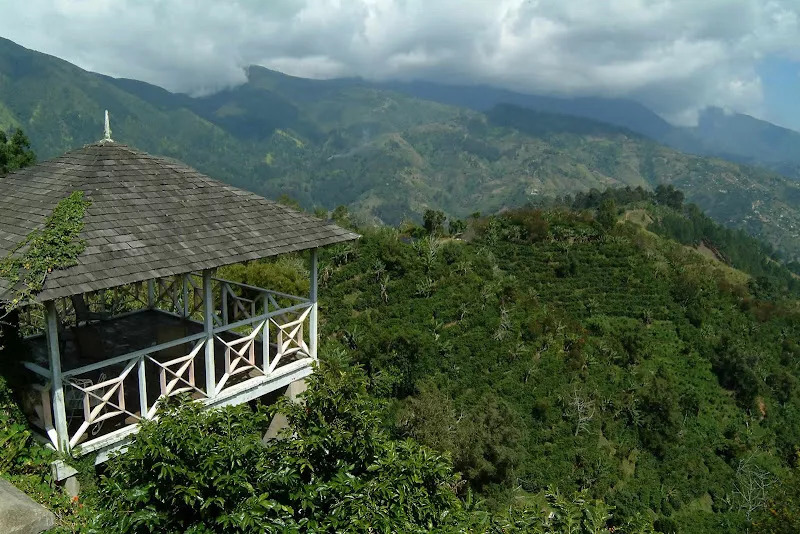
Blue Mountain's fame is widespread. Some love its clean taste, others its chocolate notes. The Blue Mountain region has grown coffee since the 18th century and has always cultivated Typica, though in recent years Jamaica has introduced Yirgacheffe and Panama Geisha for research. The authentic Blue Mountain No.1 we can taste is 100% Typica.
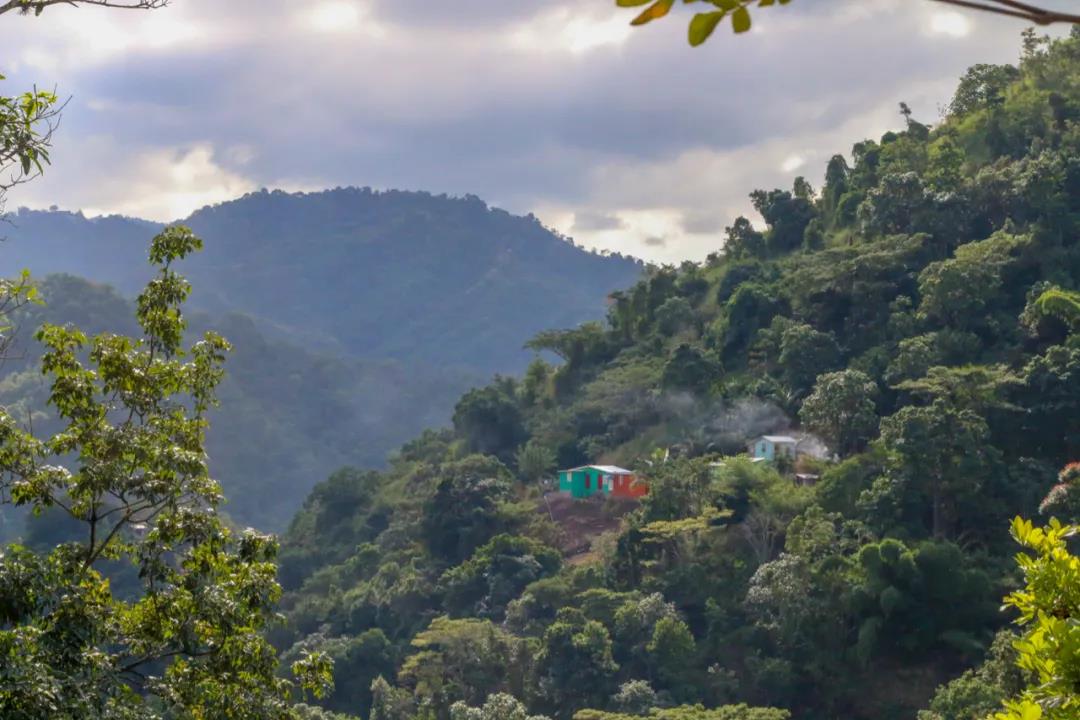
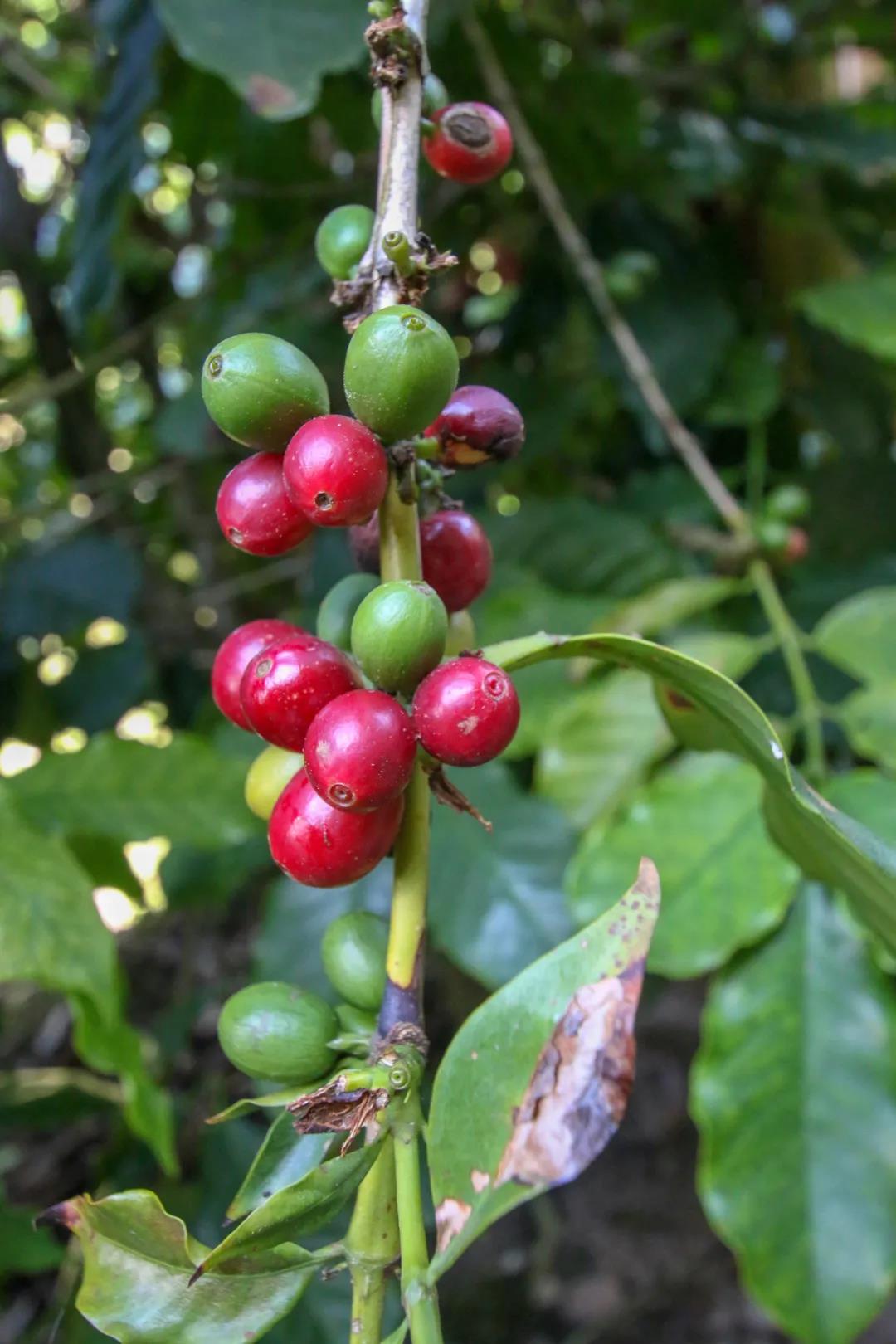
Typica is the oldest Arabica variety. Its top leaves are bronze, its leaves long and elliptical with smooth surfaces, and its trees tall and slender with slightly inclined branches. The flavor is elegant, but the plant is weak, prone to disease, and low-yielding per tree. Typica trees have long terminal branches with few side branches. The flowers are white, growing at the base where leaf stems meet branches. Ripe fruit is bright red, cherry-shaped, and the beans are elliptical or slender and pointed.
What Does Blue Mountain Taste Like?
Its excellent quality is what creates Blue Mountain's clean taste. In the medium-dark roast era, Blue Mountain often shows a perfect balance of sweet, sour, and bitter, with subtle nut and chocolate notes and a very comfortable finish. It represents the highest quality in coffee and is rightly called the king of coffees.
How to Identify Authentic Blue Mountain
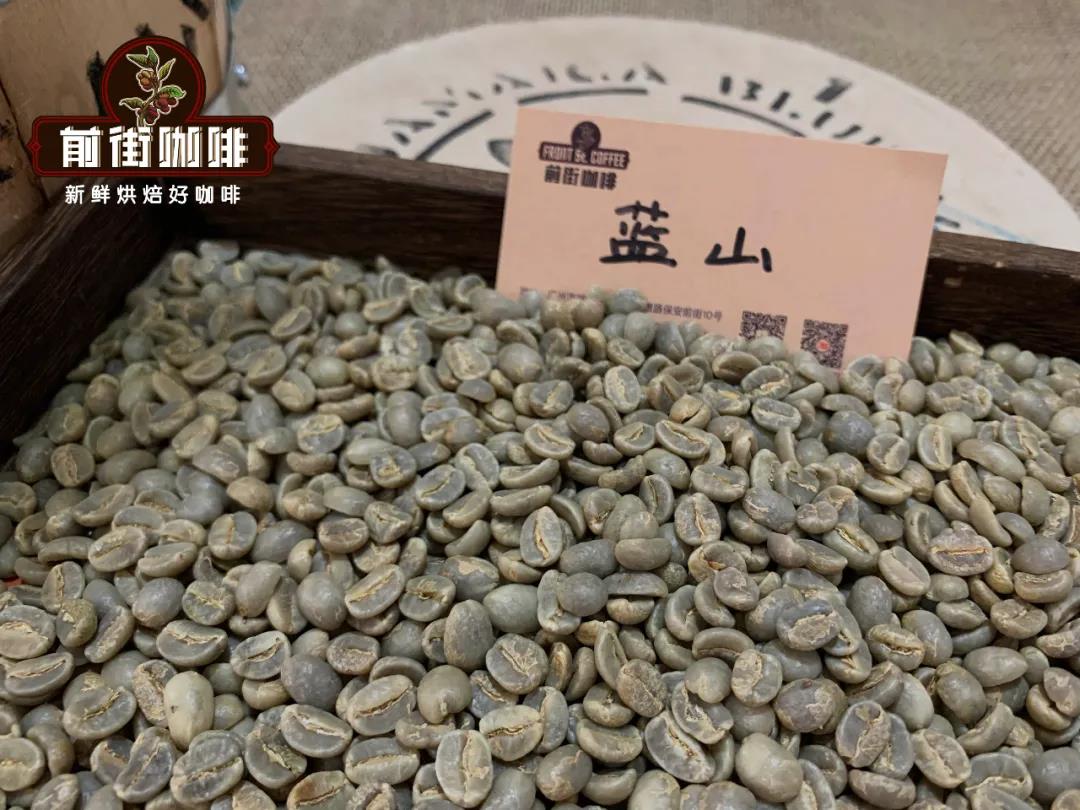
A "Blue Mountain blend" often appears on the market, and it actually has no connection to Blue Mountain coffee.
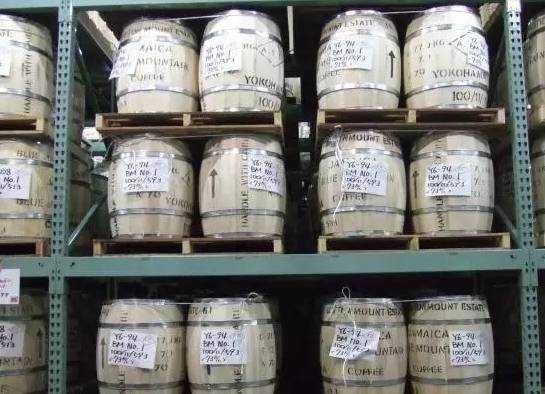
The situation arose because early Blue Mountain was rare and expensive. Operators created coffee that mimicked its taste by blending beans and roasting dark, working from Blue Mountain's flavor profile. Conscientious merchants tell customers that such products are blended, Blue Mountain-style, or Blue Mountain-flavored coffee, not genuine Blue Mountain. According to official CIB information, the first import record for Blue Mountain coffee into China was in 2011, when the Hangzhou Coffee and Western Restaurant Association imported 1000 barrels of Blue Mountain coffee at a specification of 70 kg.
Since 2011, then, there has been legitimate Blue Mountain in China, and Japan's monopoly on the coffee has ended.
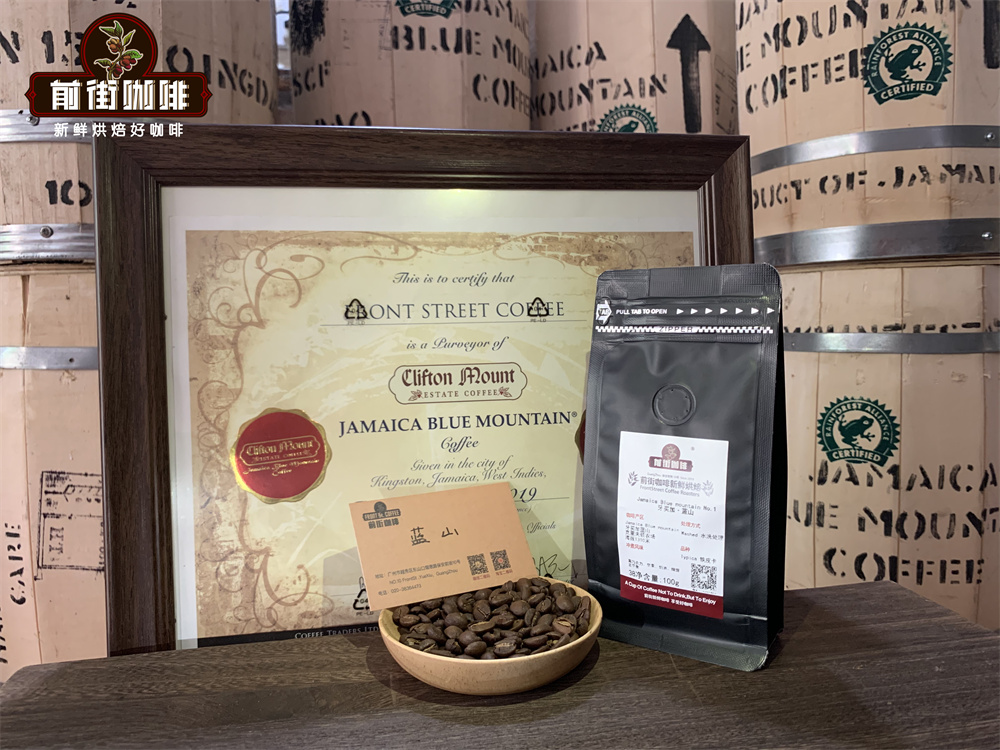
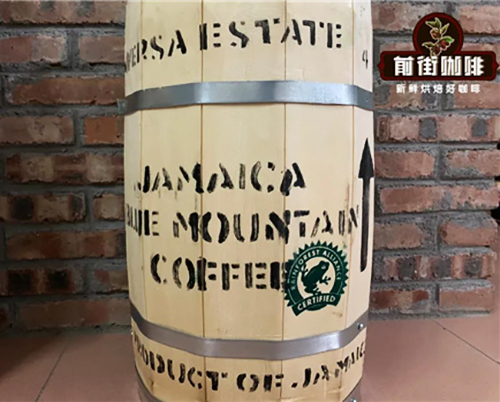
Some guides suggest distinguishing real from fake by appearance, aroma, or taste, but most drinkers do not have deep knowledge of beans. The simplest verification is to ask the merchant for Blue Mountain certificates and Blue Mountain barrels.
There are three types of certificate.
1/ Quality certification from the Jamaica Coffee Industry Board
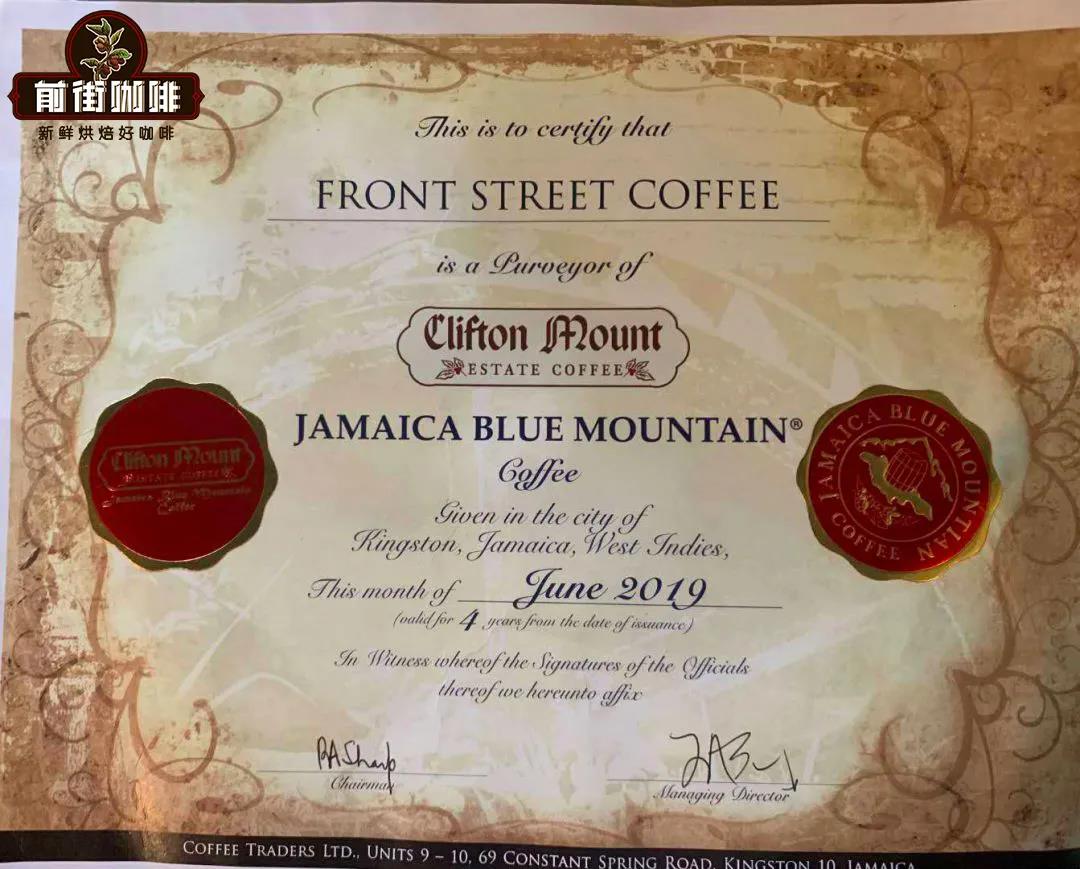
2/ Authorized sales certificate from the Blue Mountain producer
Blue Mountain is distributed by 4 Jamaican government-licensed processing producers and exported by 16 licensed exporters.
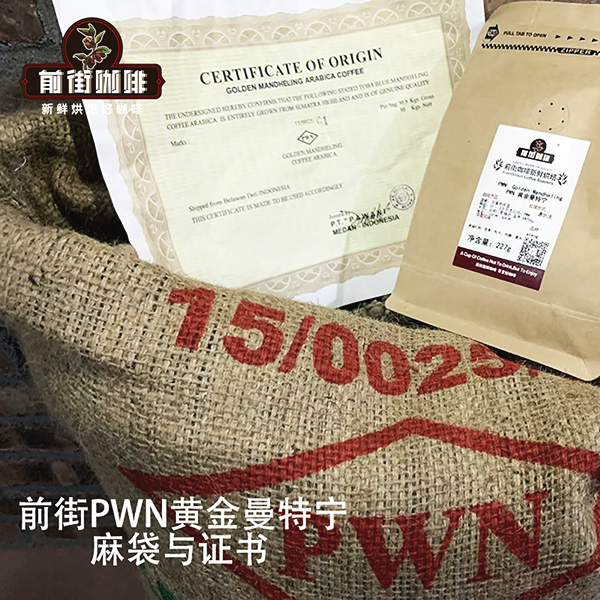
3/ Certificate of origin for Jamaican Blue Mountain
FrontStreet Coffee's Blue Mountain is exported by a coffee board-designated export company, with green beans packed in wooden barrels and carrying Rainforest Alliance certification.
Blue Mountain Processing Methods
Blue Mountain once used only washed processing, but experiments with natural processing began last year. This year FrontStreet Coffee also had the chance to see what natural-processed Blue Mountain looks like.
Washed processing first uses machines to remove skin and pulp, then fermentation to break down the mucilage. After fermentation the beans are dried to about 12% moisture and stored until export. Natural processing dries the whole fruit directly, reducing moisture to about 11% before the pulp and other layers are removed.
How Clifton Farm Processes Blue Mountain
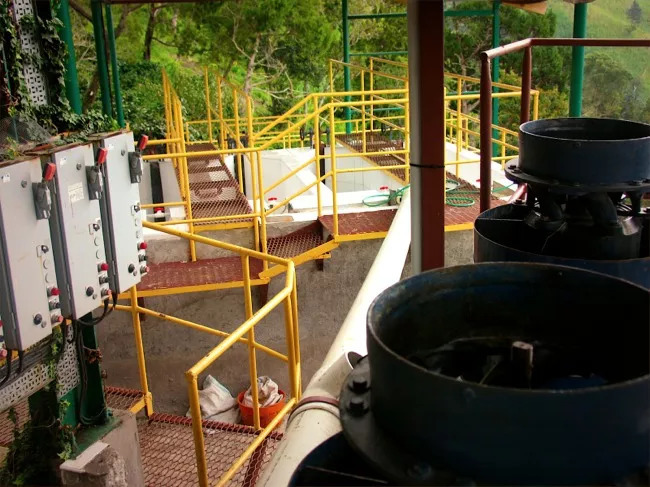
Before 2019, Clifton Farm's Blue Mountain green coffee was consistently washed. During processing, the skin and pulp are removed, followed by 12-18 hours of fermentation. The fermented beans are then placed in pools and moved back and forth, using the friction of the beans and the force of the water to wash them until smooth and clean. After washing, the beans remain in parchment at 50% moisture and must be sun-dried down to 12-14%, or they will keep fermenting and spoil.
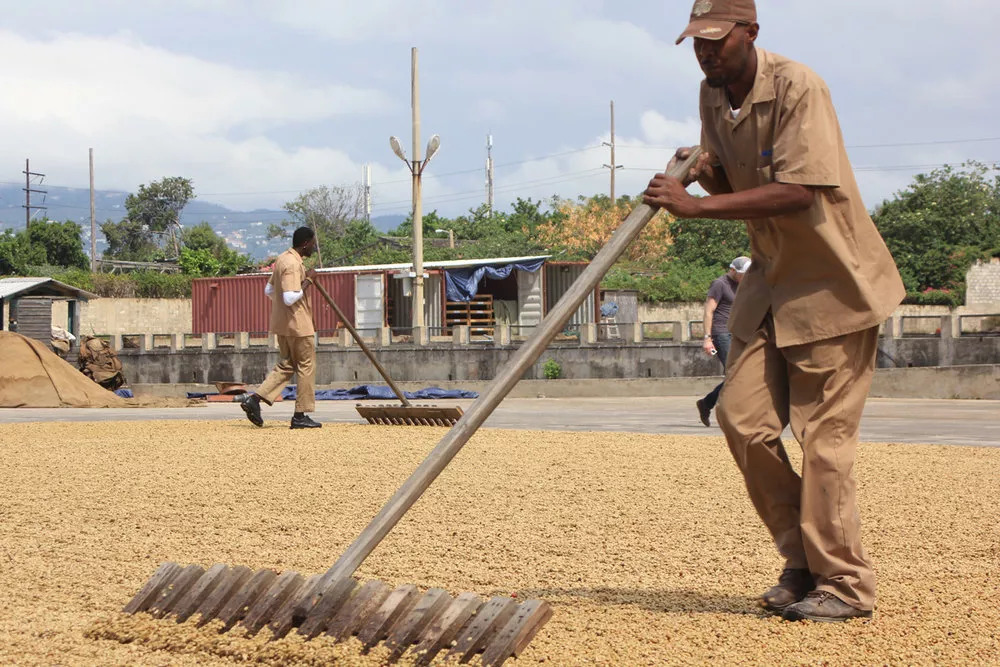
The beans are then sorted and stored in dedicated warehouses. Washed processing gives Blue Mountain its rich aroma, balanced taste, and essential character, with no single flavor dominant or missing. In 2019, Clifton Farm broke with tradition and used natural processing for the first time; influenced by market trends, Blue Mountain coffee experimented with the method in 2019 and began exporting small lots of natural-processed Blue Mountain in 2020.
For FrontStreet Coffee, this natural-processed Blue Mountain changes the coffee's flavor structure simply because the processing method changed. When introducing beans from a specific region, FrontStreet Coffee always recommends washed coffee first, because washed processing best represents regional character.
Blue Mountain's move to natural processing, of course, is more about following the market.
Brewing Washed Jamaican Blue Mountain No.1
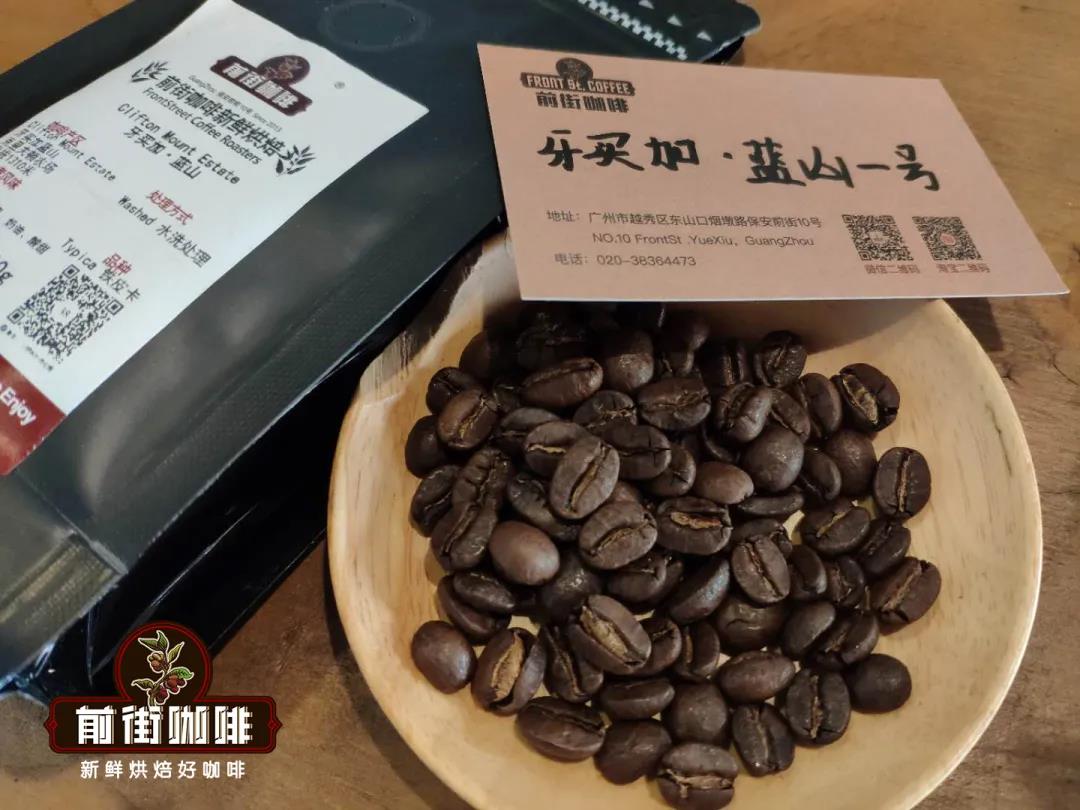
FrontStreet Coffee, Jamaican Blue Mountain No.1
Region: Jamaican Blue Mountain
Estate: Clifton
Altitude: 1310 meters
Varieties: Typica
Processing: washed
FrontStreet Coffee uses a 1:15 ratio with a grind of 75% pass-through on a standard No. 20 screen. The goal is to highlight Blue Mountain's balance, richness, and gentle fruit acidity, so the water temperature is 88°C. For the dripper, slower-flow equipment comes first: KONO, Kalita Wave, or flannel filters.
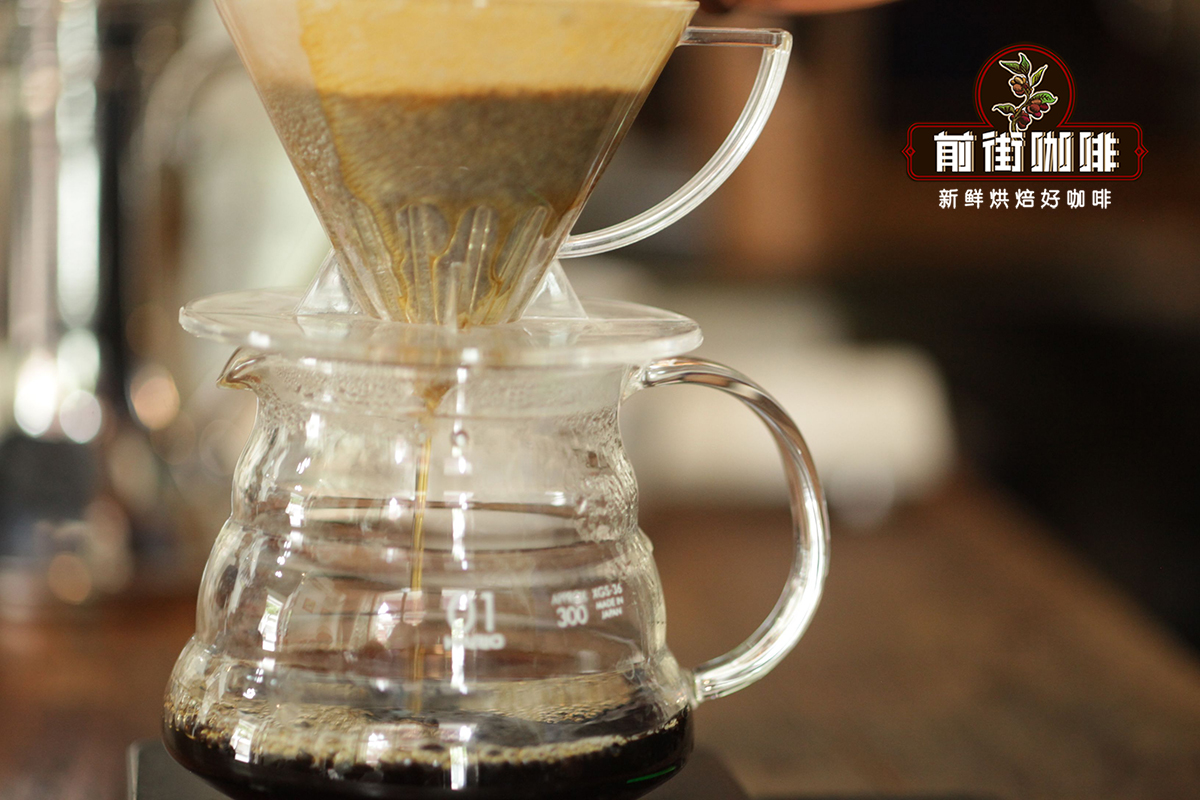
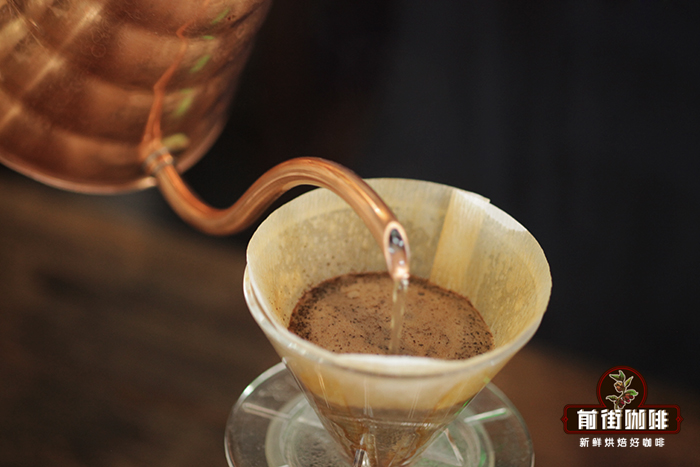
FrontStreet Coffee uses segmented extraction, beginning with 30 g of water for a 30-second bloom. Using small circles, pour until 125 g and pause. When the water level drops and the bed is about to be exposed, continue to 230 g and stop. When the bed is about to show again, remove the dripper. Timing starts from the bloom, and extraction should take 2'00".
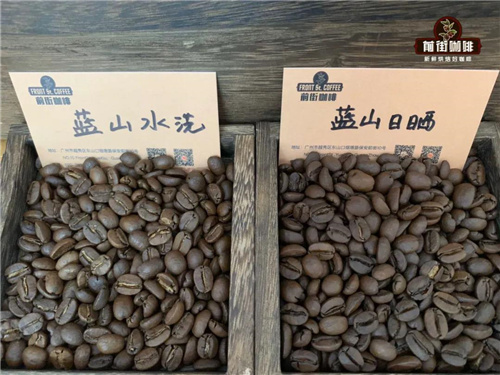
Flavor: Washed Blue Mountain
Very clean, complex, and gentle, with chocolate sweetness and a very strong body. Rich and mellow, with a perfect balance of sweet, sour, and bitter, no bitterness at all, only moderate and polished acidity, and a lasting fruity finish.
Flavor: Natural-Processed Blue Mountain
A slight berry acidity reminiscent of preserved plum and mulberry, overall balance, black cocoa and nut flavors, and light fermentation and smoky notes.
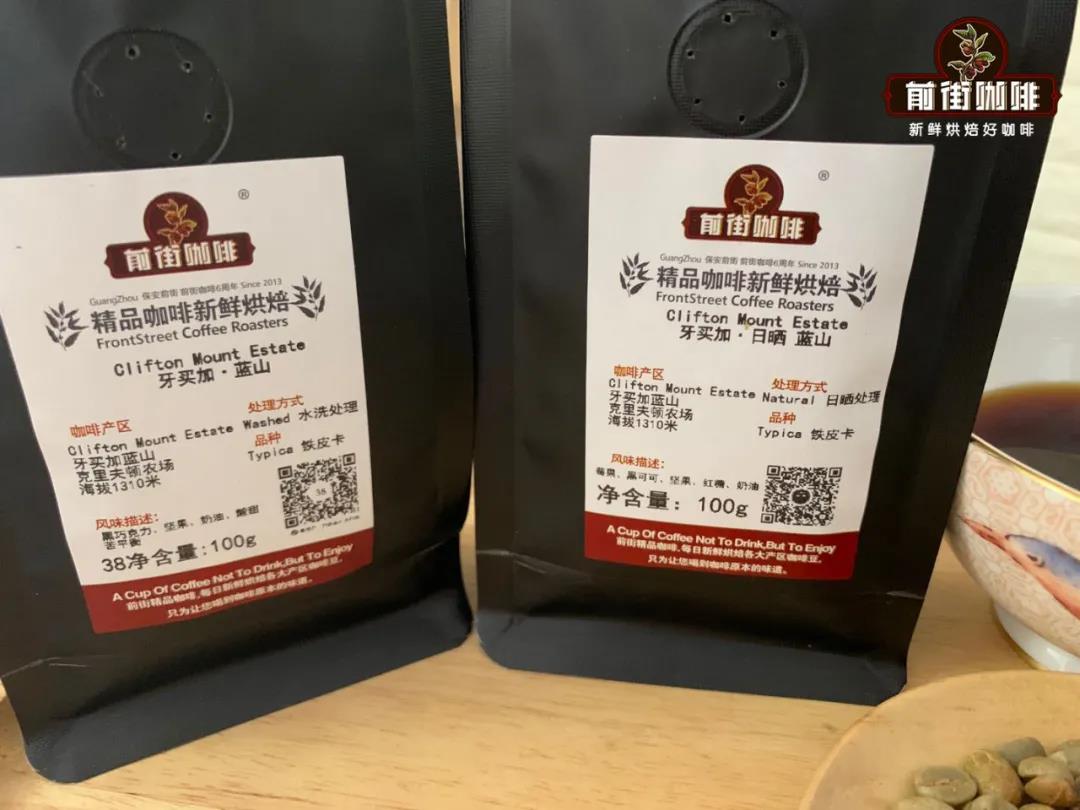
By comparison, and unlike washed Blue Mountain No.1, the natural-processed version shows a slight berry acidity recalling preserved plum and mulberry, along with subtle tea notes.
FrontStreet Coffee Recommendation
Both Mandheling and Blue Mountain are coffees people come to for depth rather than acidity, and it is worth starting with the top grade. FrontStreet Coffee's PWN Gold Mandheling comes from the Indonesian trading house PWN, which buys only high-quality Mandheling green coffee and screens each batch with one machine pass plus hand-sorting, so the beans are specialty grade: even, plump, and low in defects. After medium-dark roasting they carry a rich roasted aroma, and the black coffee is clean yet full-bodied, ideal for anyone who dislikes acidic coffee. FrontStreet Coffee's Lintong Mandheling is roasted medium-dark to keep the dark chocolate and caramel notes while preserving the origin's wild herbal character.
Hand-poured, the Gold Mandheling is at its best with 87-88°C water, 15 grams of coffee, a 1:15 ratio, a coarse-sugar grind, and a three-stage pour. A 30 ml bloom fully wets the grounds for degassing, a 100 ml pour lifts the golden foam and raises the bed, and a gentle 95 ml center pour finishes the cup with a full body, caramel sweetness, and chocolate and nut flavors.
If you like Mandheling's weight in milk drinks, FrontStreet Coffee's Classic Blend layers medium-dark Mandheling over a creamy Brazilian base for pronounced butter, roasted chestnut, and caramel, with Mandheling adding sandalwood, herbal, and spice notes and raising the body. A small amount of Robusta boosts crema, so lattes and layered Dirty drinks pull easily. For a benchmark of balance instead, FrontStreet Coffee's Jamaica Blue Mountain No.1 is aged on a proven record: low acidity, rich nut and cocoa aromas, and clear caramel sweetness, smooth whether brewed as pour-over, espresso, or moka pot.
Important Notice :
FrontStreet Coffee is a long-established specialty coffee roaster in Guangzhou China, selling freshly roasted beans from its own farm in Yunnan as well as dozens of carefully selected single-origin beans from around the world for both pour-over and espresso. The products deliver consistently excellent quality and great value, with shipping within 24 hours. Guangzhou's FrontStreet Coffee shop is recommended by many coffee lovers, and the beans are now available online at the Tmall 。
FrontStreet Coffee has moved to a new address:
FrontStreet Coffee Address: 315,Donghua East Road,GuangZhou
Tel:020 38364473
 Scan and follow the En Gafei WeChat official account. Please indicate that the reprint comes from "En Gafei".