Horse Champion Coffee Bean Guji Region Flavor Profile Description & Sidamo Horse Champion 8.0 Coffee Pour-Over Tutorial
The Importance of Coffee Processing Methods
Besides variety, origin, and cultivation, FrontStreet Coffee believes one more factor shapes what ends up in your cup: the processing method. Different processing doesn't just produce different flavor profiles — it can express a coffee's essence. Take Ethiopia, for example: washed processing amplifies the citrus and lemon aromas innate to Yirgacheffe, creating the unmistakable "Yirgacheffe character," while natural processing lets FrontStreet Coffee's Queen Crown coffee show off its strawberry-and-cream aromatics to competition-winning effect.
Coffee: The Core of Ethiopian Culture
In Ethiopia, coffee production is both the labor of millions and a pillar of national income, woven deep into the country's culture and economy. Ethiopia is the world's sixth-largest coffee producer. By some reports, 100 million people worldwide worked directly or indirectly in coffee in 2018, and Ethiopian coffee workers accounted for 20% of that total. In 2017 the country produced roughly 470,000 tons of green coffee, of which about 160,000 tons were exported — meaning Ethiopia exports less than half of what it grows and drinks the rest at home.
Coffee has been part of Ethiopia's social fabric for centuries. A common phrase in local social life is "buna tetu" — "drink coffee." And one of Ethiopia's best-known proverbs is "buna dabo naw": "coffee is our bread."
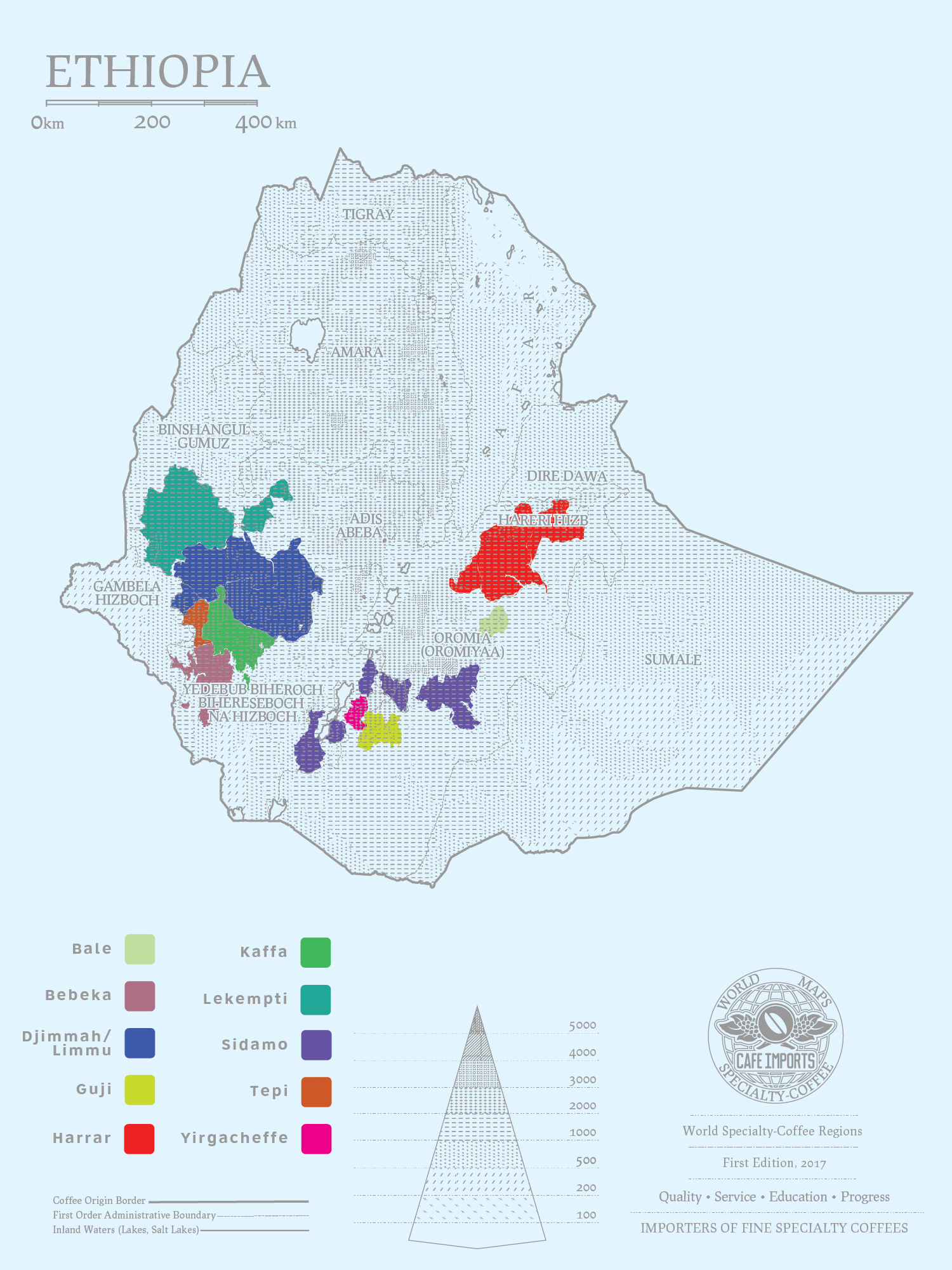
Ethiopia's main coffee-producing regions span eight areas: Lekempti, Limu, Illubabor, Djimmah, Harar, Teppi/Bebeka, Sidamo, and Yirgacheffe.
Sidamo Region
FrontStreet Coffee's Sidamo coffees are remarkably diverse — different soils, microclimates, and countless native varieties. The landscape runs from towering mountains, highlands, and plateaus to valleys and plains. The underlying geology is fertile, well-drained volcanic soil reaching nearly two meters deep, with a dark-brown to brown surface layer.
Sidamo lies at 4,600-7,200 feet above sea level in the southern Ethiopian highlands, one of the country's famous specialty regions. It borders Kenya to the south, sits southeast of Jimma, and lies directly south of the capital. The coffee is typically distinctively sweet and widely loved; annual output runs about 225,000 bags of 60kg each. The region's great strength is maintaining soil fertility through organic recycling — fallen leaves and plant residue from surrounding trees serve as fertilizer — which gives the coffees of its various towns pronounced individual character.

Ethiopia's administrative divisions have four levels: Region, Zone, Woreda, and Kebele. FrontStreet Coffee's Queen Crown beans come from Guji city in Sidamo province, further narrowed to the Hambella Kebele of Shakisso Woreda. Say "Hambella" to most people and they think of FrontStreet Coffee's Queen Crown — that's how famous these beans are.
On the map of Ethiopian coffee regions, Guji stands apart from Sidamo because its location is favorable enough and its flavor signature distinctive enough that in 2010 the ECX (Ethiopia Commodity Exchange) separated it from Sidamo. Shakiso is the most noteworthy micro-region within Guji, averaging over 1,800 meters in elevation.

Guji Region Introduction
The Guji region lies southeast of the famous Yirgacheffe region. Administratively it belongs to the Guji Zone of Oromia and is recognized as a regional green-coffee designation in its own right. Like Yirgacheffe before it, which became a household name and was carved out of greater Sidamo, Guji earned independent status. This lot comes from smallholder farmers of the Shilcho Cooperative near Dara Woreda in Sidamo province. The cooperative was founded in 1976 and belongs to the Sidamo Coffee Farmer Cooperative Union (SCFCU), one of Ethiopia's largest coffee alliances, which currently counts about 46 member cooperatives and is the country's second-largest coffee production organization.

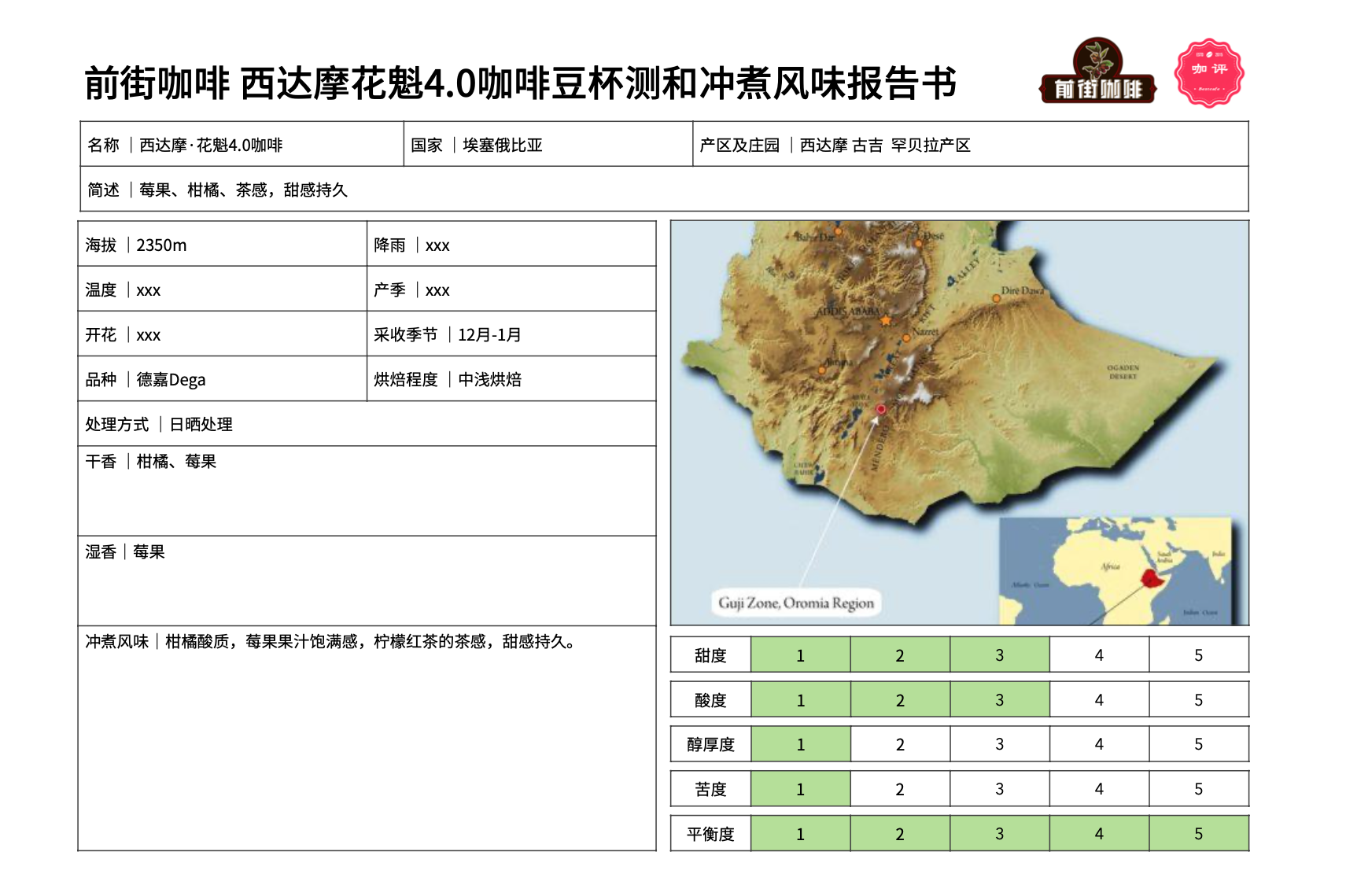
FrontStreet Coffee · Ethiopia Queen Crown 4.0 Coffee Beans
Country of Origin: Ethiopia
Region: Sidamo, Guji, Hambella
Processing Station: BUKU
Altitude: 2350m
Variety: Dega
Processing Method: Natural
Hambella Region Introduction
Hambella sits within Guji, Ethiopia's largest coffee-producing region, under the Oromia administration. To its west, across the mountains, lies Yirgacheffe's Kochore; the two are separated by high ground at 3,200 meters above sea level and roughly 30 kilometers wide. To the southeast, east, and north it borders Guji's Shakiso, Uraga, and Kercha sub-regions respectively, making Hambella Ethiopia's highest-altitude coffee sub-region (Harrar remains the highest-altitude main producing region).

There are currently about 20 processing stations of various sizes in Hambella. In 2017, a natural-processed coffee from DW Company's Buku Abel station won the Ethiopia National Taste of Harvest Competition, and a Chinese green-coffee importer christened it "Queen Crown" — a coffee then celebrated for its rich strawberry and cream aromas. DW's Hambella heartland of Dimtu has since grown from a single estate station to four: Buku Abel, Buku Saysay, Haro Soresa, and Tirtiro Goye, producing about 1,100 tons of coffee a year. FrontStreet Coffee's Queen Crown comes from the familiar Buku Abel station each year, and this season's Queen Crown 8.0 is no exception.

Buku Processing Station (Buku Abel)
The Buku Abel station sits in the village of the same name at 2,200 meters. From the start, the coffee was planted in a privileged "family environment" — humus-rich reddish-brown soil, shaded by Ensete trees that let the fruit soak up full light without draining excessive nutrients, keeping more of the coffee's essence locked inside the cherry.

During harvest and processing season (December-January), the station's unique setting and climate shape Queen Crown's distinctive flavors. First, farmers verify that the sugar content of the harvested red cherries reaches 30 or above before natural processing begins. For the first two days of drying, workers keep the cherries moist so their fructose can kick off fermentation properly. Meanwhile the high altitude lets night temperatures fall to around 12°C, preventing over-fermentation odors from heat. When midday temperatures climb, farmers shade the beds promptly so the cherries don't sunburn. They also cap the depth of the fruit layer and turn it around the clock for even drying and ventilation — tighter control of fermentation.
Buku Abel means "NEW" in the local language — a new place. Checking the maps, FrontStreet Coffee found Buku Abel in the far southeast of Ethiopia, a high-altitude tribal area of Hambella in Guji with about 30,000 inhabitants. Like most Ethiopian coffee gardens, this small village grows amid wild primary forest; farmers here have passed down their traditions for generations, cultivating native bananas with local landrace coffee interspersed among the banana trees.

Strictly speaking, only natural-processed coffee from the "Buku Abel" station earns the name "Queen Crown." That's why the station's naturals were named Queen Crown 2.0, Queen Crown 3.0, and Queen Crown 3.1 in 2018 and 2019.
The 2020-season lot was named Queen Crown 4.0 to set it apart. By the fourth year of this coffee, the growing area had expanded to several times its original size under more scientific cultivation, and FrontStreet Coffee's Queen Crown 4.0 cupped even better, earning wide praise — so FrontStreet Coffee bought the new-season lot for roasting and cupping.

Dega Coffee Bean Variety
This year Ethiopia hosted the Cup of Excellence (CoE) for the first time, and the variety detail among the top 28 finalists was impressively granular. The 21st-ranked Dega has two very different origin stories. One says the name comes from a type of firewood whose burning aroma resembles Dega's smell in the roaster. The other explains that "dega" is the root word for "highland and shady place" in the local language, and Dega indeed favors high-altitude ground. Unfortunately, since Dega didn't make the top 14 at CoE, no official flavor description was collected. FrontStreet Coffee's Queen Crown 4.0 is precisely Dega variety.
Green Bean Analysis
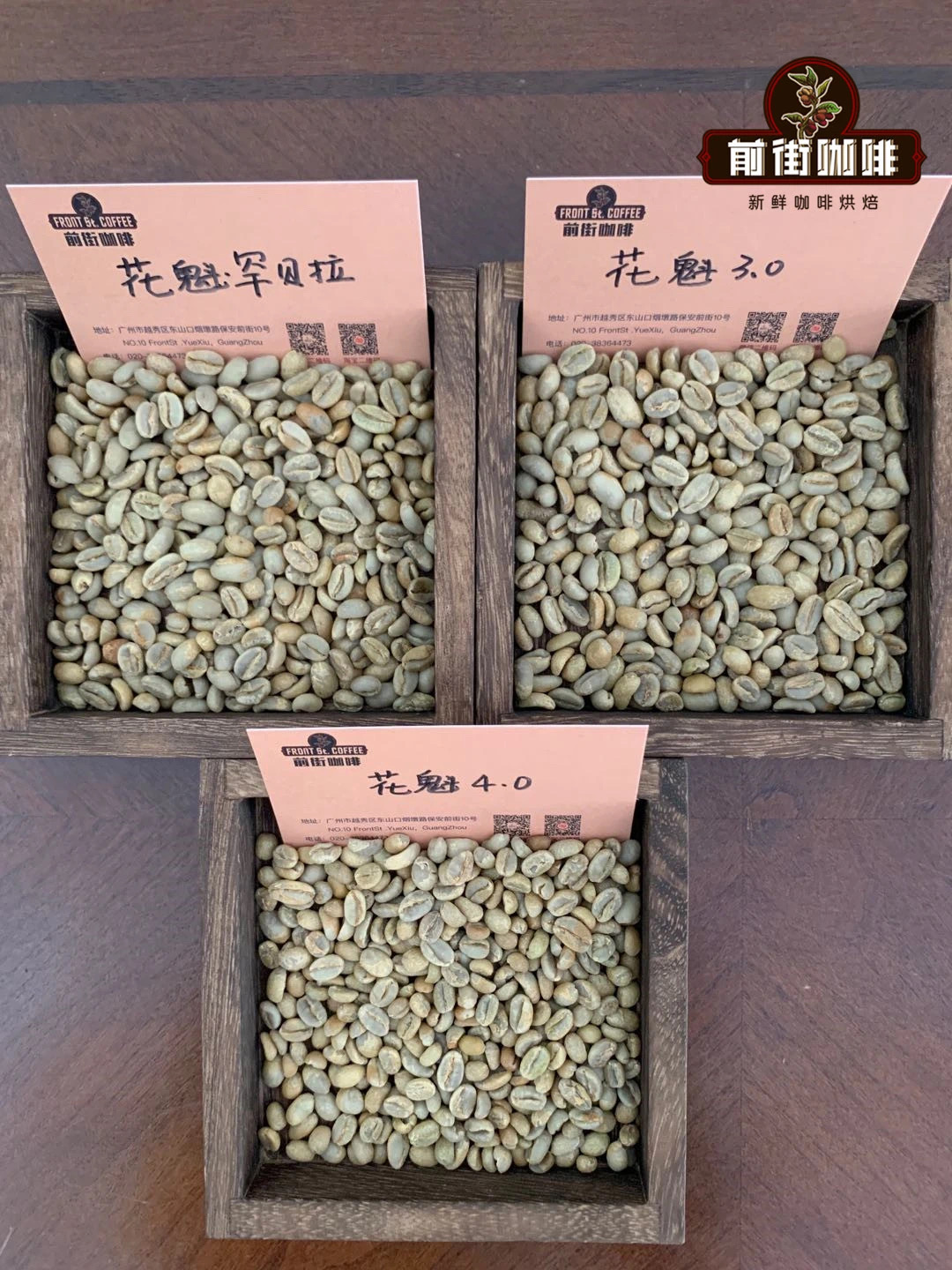
Side by side, FrontStreet Coffee's Queen Crown 4.0 runs smaller than the two Queen Crown 3.0 lots — a matter of variety. Queen Crown 3.0 uses Ethiopian landrace coffee, while Queen Crown 4.0 is Dega. The two Queen Crown 3.0 lots also look more uniform because they were sorted after harvest; Queen Crown 4.0 was not sorted, so bean size varies.
Coffee Processing Methods
Natural sun-drying is the most traditional processing method: cherries are dried whole in the sun after harvest, following these steps:
- Farmers lay harvested cherries directly on drying beds to dry in the sun;
- During drying the cherries must be stirred and turned to avoid uneven drying or unwanted fermentation;
- After several days they are completely dry;
- The dried cherries are hulled to strip pulp and skin and extract the green beans.
Advantages: natural processing keeps the mucilage with the bean, and mucilage is sweet. As the sugars migrate into the bean during drying, the finished coffee shows pronounced sweetness, rich mouthfeel, and distinct layers.
Disadvantages: more defective beans and uneven appearance; the beans also pick up odors and earthy notes from the ground more easily.
Roasting Suggestions
Cupping Report
Brewing Parameters
Brewing Device: HARIO V60
Coffee Dose: 15 grams
Coffee-to-Water Ratio: 1:15
Water Temperature: 90°C
Grind Size: medium-coarse (80% pass-through on the China standard #20 sieve)
The V60's ribs are curved top to bottom and vary in length, giving smoother air release and a relatively faster flow. That's why this dripper typically calls for segmented extraction — either slowing the pour or structuring it to improve extraction, which offsets the under-extraction a fast flow can cause.

Brewing Technique
FrontStreet Coffee uses segmented extraction — the three-pour method.
First Pour: Bloom (for degassing)
During roasting, coffee undergoes a series of chemical and physical transformations and, once roasted, holds a large reserve of gas (mostly carbon dioxide).
Generally, the fresher the roast, the more the grounds bubble during blooming; dark roasts degas harder at bloom than light roasts. FrontStreet Coffee's beans ship freshly roasted, so we usually advise customers to rest them three days first — letting the beans vent carbon dioxide up front avoids instability and under-extraction during brewing.
Once blooming releases the gas, the particles can absorb water evenly for uniform extraction. A good bloom lets the grounds degas quickly, fully, and evenly, while letting water saturate them thoroughly — both key to even extraction.

Four Points to Note During Blooming:
- Level the coffee bed before pouring the bloom water.
- Pour gently during the bloom.
- Keep the drawdown during the bloom minimal; if too much liquid collects in the server, reduce the water or check your grind size. (Too much bloom water and heavy dripping washes solubles straight off the outer layer of the grounds, dissolving outer-layer bitterness and astringency — a cup that is simultaneously thin and over-extracted. Too little bloom water and nothing drips at all means the grounds never absorbed enough to degas fully, causing under-extraction.) After repeated bloom experiments, FrontStreet Coffee found pouring twice the coffee's weight in water during the bloom works best.
- Bloom for about 30 seconds. When the domed surface stops expanding and begins to shrink, the bloom is done and you can pour on. (Time-wise: blooming too long breeds bitterness and astringency; too short leaves the grounds under-soaked and the coffee under-extracted.) Every bean finishes its bloom at a slightly different moment, but since beginners need standardization and simplicity, FrontStreet Coffee recommends a 30-second bloom for freshly roasted beans; experienced brewers can adjust to taste.

Second Pour
Start the second pour at the center, targeting the bottom of the coffee bed with a small stream. To concentrate the stream's penetrating power, keep the circles tight — about the width of a one-yuan coin — before spiraling outward. Watch the water volume: don't let the level rise past the bed's height, i.e., stop pouring as the water nears the filter paper.
Third Pour
As the thicker ring of grounds near the paper grows waterlogged and heavy, it slumps inward and the bed thins as the level falls. Start the third pour when the level has dropped to about half.

From the third pour on, track how fast the level falls. Again pour from the center in circles, never above the bed's height. By now foam coats the surface. The third pour should agitate the particles — getting all the settled grounds rolling so their solubles keep dissolving.
The particles settle once you stop pouring. From there, only the flow of the dropping water level creates friction between particles; once they sink, the bed compacts and slows. So rhythm matters — too many pauses effectively leave the grounds steeping, and the final cup turns astringent and bitter.
Summary:
FrontStreet Coffee's full routine for this Queen Crown 4.0: bloom with twice the dose in water — 30g — for 30 seconds. Pour in small circles to 125g, then pause. When the level falls to just shy of exposing the bed, pour on to 225g and stop. When the level again nears the bed's surface, remove the dripper (timing from the start of the bloom). Total extraction: 2 minutes.
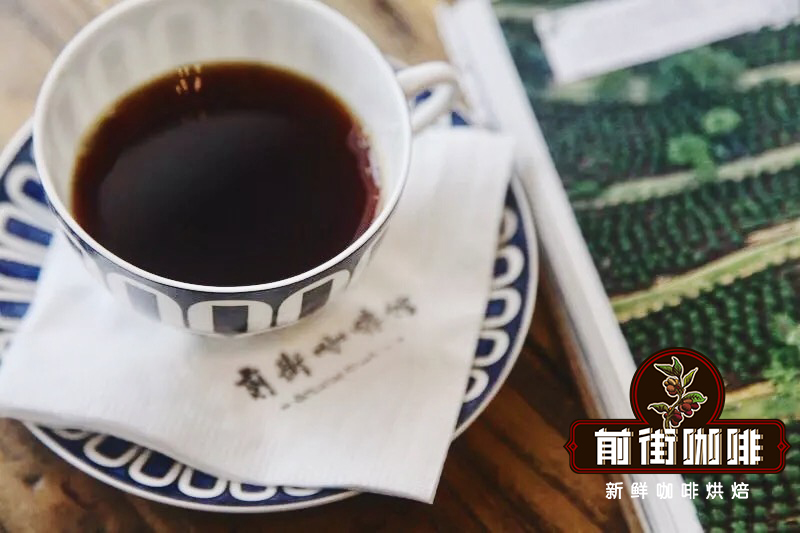
[FrontStreet Coffee Ethiopia Queen Crown 4.0] Flavor Description: citrus acidity, a full berry-juice sensation, lemon black tea notes, persistent sweetness.
FrontStreet Coffee Recommendation
If Queen Crown's strawberry-and-cream natural left you curious about Ethiopian naturals, the FrontStreet natural Red Cherry is the classic next step. Sourced from Yirgacheffe and made only from fully ripe, defect-free cherries, it is sun-dried three to five weeks on raised beds — turned every 2-3 hours in the early days to prevent uneven fermentation — and delivered medium-light. Expect the trademark Yirgacheffe backbone of citrus acidity plus a tropical-fruit lift from the drying fruit: berry-juice juiciness, honeyed sweetness, and a cream-smooth texture.
Prefer your Yirgacheffe clean and floral? The FrontStreet washed Yirgacheffe daily bean is the benchmark entry point: white jasmine, bright citrus and lemon acidity, and a tea-like finish at a genuinely friendly price. Brew either on a V60 — 15g of coffee, a 1:15 ratio, 90-91°C water — and let the coffee speak for its region.
Important Notice :
FrontStreet Coffee is a long-established specialty coffee roaster in Guangzhou China, selling freshly roasted beans from its own farm in Yunnan as well as dozens of carefully selected single-origin beans from around the world for both pour-over and espresso. The products deliver consistently excellent quality and great value, with shipping within 24 hours. Guangzhou's FrontStreet Coffee shop is recommended by many coffee lovers, and the beans are now available online at the Tmall 。
FrontStreet Coffee has moved to a new address:
FrontStreet Coffee Address: 315,Donghua East Road,GuangZhou
Tel:020 38364473
 Scan and follow the En Gafei WeChat official account. Please indicate that the reprint comes from "En Gafei".