Catimor Coffee Beans: A Heritage of Arabica and Robusta Lineage

FrontStreet Coffee · Catimor
Currently, the most widely distributed "small bean coffee" in Yunnan is called "Catimor," which accounts for the vast majority of Yunnan's total coffee production, with other varieties making up only a small portion. The Yunnan daily bean launched by FrontStreet Coffee is made from the Catimor variety from Baoshan, processed using the washed method. In this article, we'll discuss the Catimor variety.
Catimor CIFC7963
Catimor is a hybrid variety developed by the Portuguese Coffee Rust Research Center (CIFC) specifically to combat coffee leaf rust. This variety exhibits characteristics such as a compact tree form, dwarf growth, abundant branching, and short fruit nodes. It grows vigorously with extremely strong vitality, with its most notable features being remarkable rust resistance and high productivity.
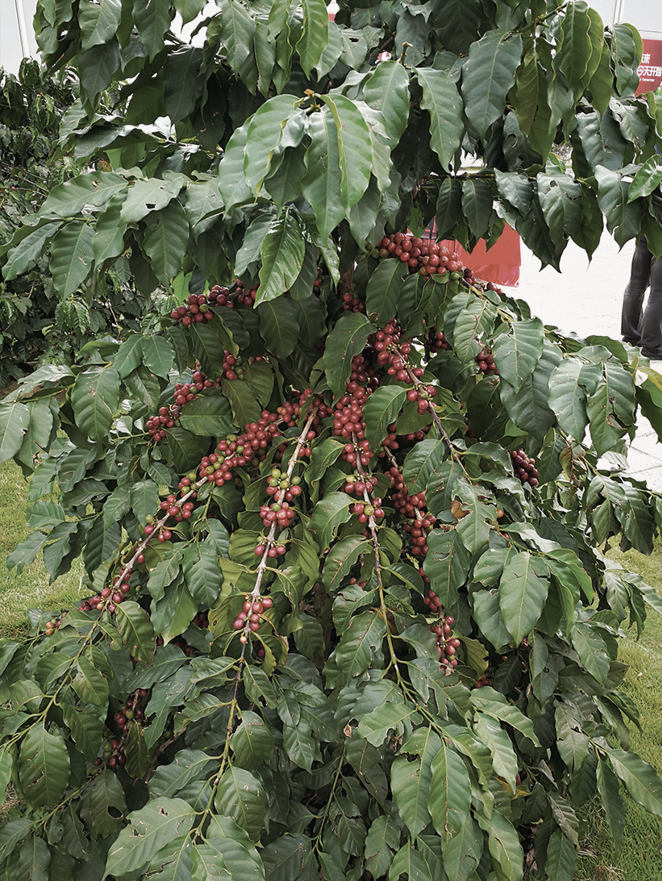
Although Catimor is classified as an Arabica variety, genetically it is a hybrid between the Timor variety (which belongs to the Robusta species) and Caturra (a variant of Bourbon). Therefore, Catimor carries one-quarter Robusta genes. Robusta itself contains higher levels of chlorogenic acid, is less susceptible to pests and climate influences, is typically grown in low-altitude environments, and has high yields with rapid fruit maturation. Dark-roasted Robusta generally exhibits rich coffee oils, strong flavors, prominent bitterness, and can easily develop astringency and stimulating musty flavors if not processed properly.
In contrast, the "picky" Arabica variety has weaker disease resistance in plants and relatively lower yields per plant. High-altitude environments create significant day-night temperature differences, slowing the maturation period of coffee cherries, allowing them to absorb more nutrients and develop richer aromas. The microclimates in various coffee-growing regions provide diverse growing conditions for Arabica, resulting in unique flavor profiles.
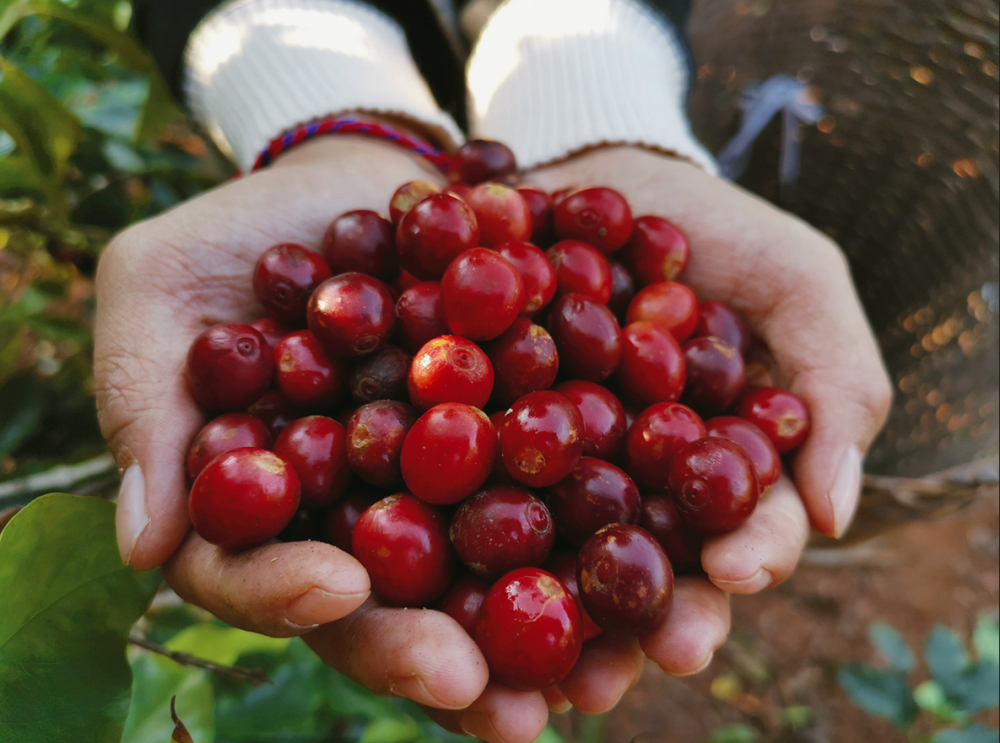
Catimor inherits characteristics from both Robusta and Arabica, featuring strong disease resistance and high productivity. When tasted after roasting, it possesses both fruity acidity and sweetness. However, the Robusta heritage also brings flavor defects, with a flavor profile dominated by nuts and brown sugar, lacking the rich, uplifting high-end flavors such as citrus, floral notes, and tropical fruits. Additionally, with previous rough processing methods for green beans, Yunnan coffee was often described as having a "devil's aftertaste" and struggled to compete with pure Arabica varieties like Caturra in competitions. Furthermore, Catimor's rust resistance gradually diminishes after 20-30 years. For Yunnan's coffee industry to improve overall quality and maintain long-term development, gradual variety replacement is necessary.
As coffee grown in our own country, FrontStreet Coffee believes it's essential to understand it well. That's why FrontStreet Coffee consistently maintains a Yunnan small bean daily coffee on its menu for everyone to taste - the most common Catimor variety in Yunnan, processed using the washed method and medium roast, hoping to present the typical "Yunnan flavor."
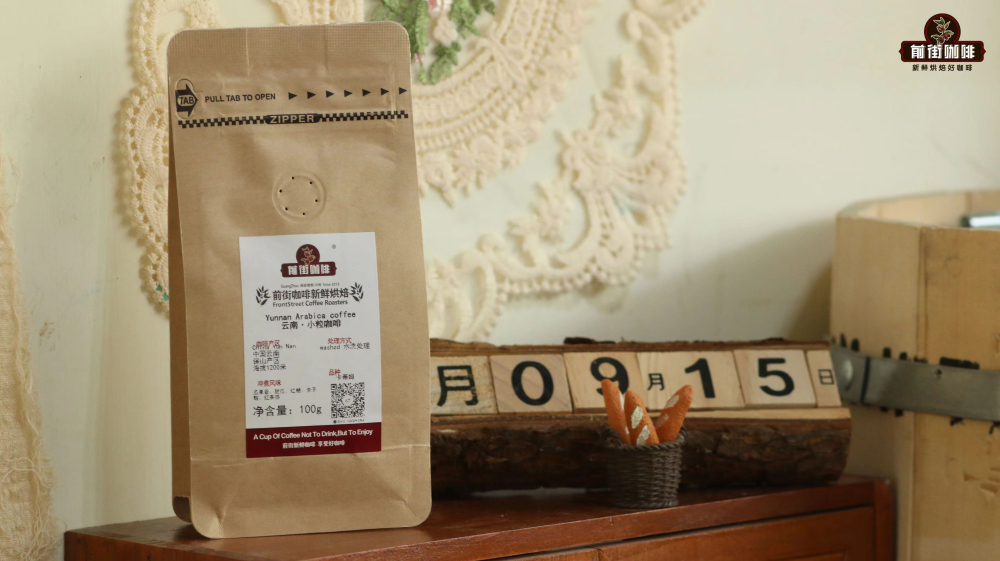
Washed Yunnan Catimor
Some merchants use novel flavor-enhancing processing methods to cover up the inherent defects of Yunnan beans, adding numerous aromas to increase prices. FrontStreet Coffee believes this approach neither genuinely preserves the flavor of Yunnan coffee nor misleads consumers. Some friends, after tasting Yunnan coffee beans processed with special methods, find the aromas particularly prominent and mistakenly believe this represents the mainstream processing approach for Yunnan coffee. In reality, most Yunnan coffee farmers face difficult conditions and do not possess expensive processing equipment. Therefore, the vast majority of Yunnan coffee beans can only use natural processing methods, namely washed and natural processing.
If you truly want to explore the "Yunnan flavor," FrontStreet Coffee recommends FrontStreet Coffee's Yunnan small bean daily coffee, processed using the washed method. The daily beans launched by FrontStreet Coffee are carefully selected from 7 classic origins, covering multiple highly representative producing areas and varieties, adopting the natural processing methods commonly used in these origins to present the unique flavor characteristics of each region.
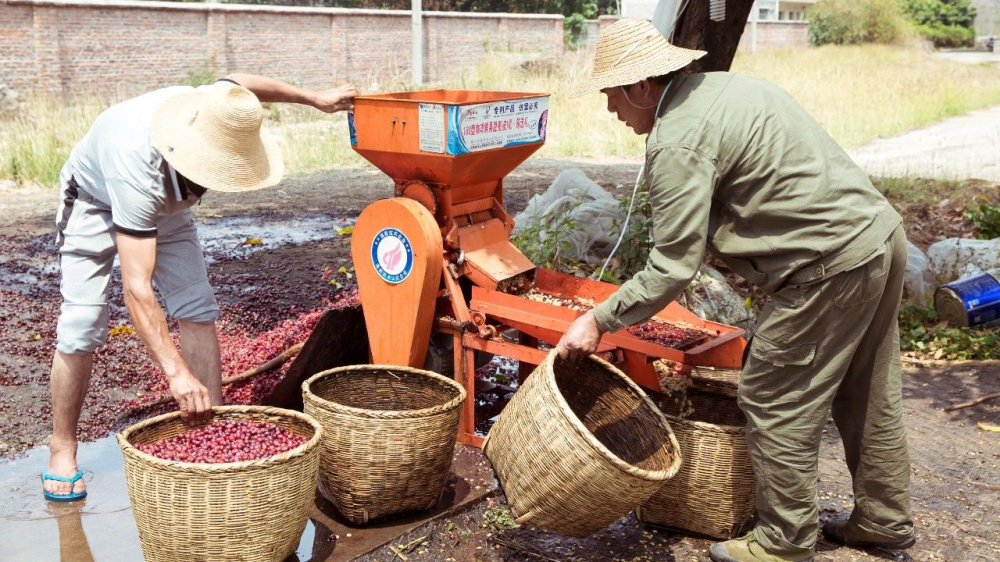
The washing process involves: removing the skin and pulp of harvested coffee fruits using machines, placing the skinned coffee beans in fermentation tanks for fermentation, using fermentation to decompose the mucilage layer, repeatedly washing the fermented coffee beans with clean water to remove the decomposed mucilage, and finally drying the coffee beans in the sun for 1-2 weeks. Washed Yunnan coffee not only reduces the defect rate but also produces more stable quality and higher flavor cleanliness.
FrontStreet Coffee believes that the coffee flavor produced by Yunnan's terroir belongs to a neutral, balanced profile, meaning it contains acidity, sweetness, and bitterness. Therefore, FrontStreet Coffee's Yunnan coffee all uses medium roasting to highlight the roasted aromas of chocolate and nuts while preserving some acidity. Through cupping, FrontStreet Coffee finds that the Yunnan small bean daily coffee presents notes of nuts, herbs, brown sugar fragrance, melon and fruit sweetness, and plum acidity, with a balanced mouthfeel.
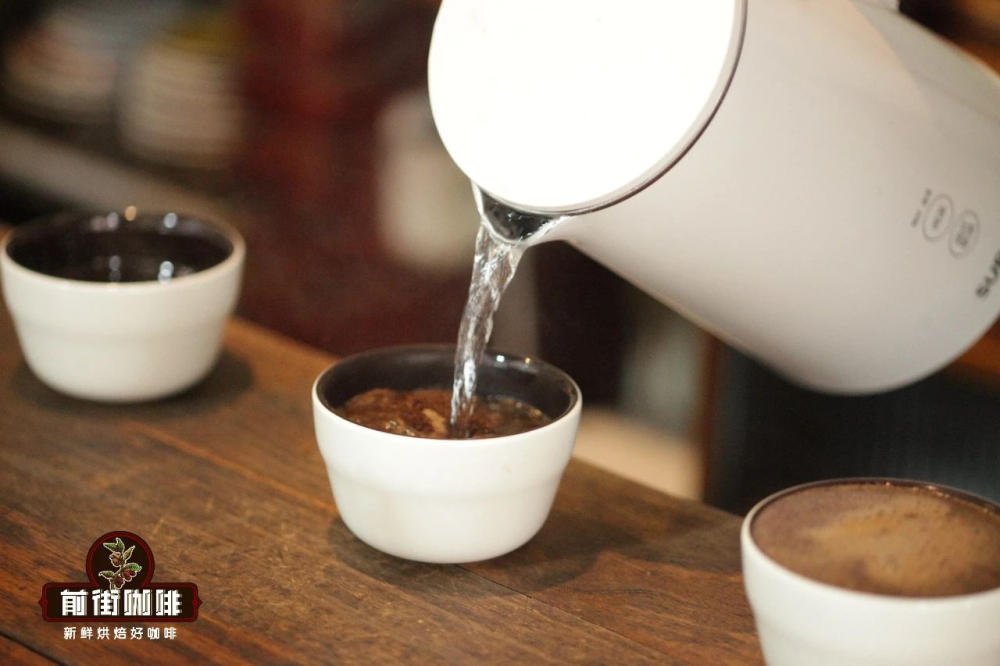
Brewing Parameters for FrontStreet Coffee's Yunnan Small Bean Coffee:
Dripper: KONO
Dose: 15g
Water Temperature: 90 degrees Celsius
Grind Size: 75% pass-through rate through No. 20 sieve
Water-to-Coffee Ratio: 1:15

Three-stage pouring: Wet the coffee bed with twice the amount of water as the coffee dose, forming a dome and blooming for 30 seconds. Then, using a small water stream, pour in concentric circles from inside to out until reaching 125g, then pause. Wait until the coffee bed drops to half the height of the dripper, then continue with the same fine stream for the third stage until reaching 225g. Remove the dripper once all coffee liquid has filtered through, with a total time of approximately 2 minutes.
FrontStreet Coffee's Yunnan small bean daily coffee flavor: It has a prominent nutty aroma, with notes of herbs, chocolate, and caramel upon entry, a light fruity acidity in the aftertaste, overall balanced mouthfeel, and excellent cleanliness.
FrontStreet Coffee Recommendation
For an entry-level taste of Chinese Arabica, FrontStreet Coffee recommends the Yunnan small bean daily coffee from Baoshan: washed processing and a medium roast highlight a certain caramel sweetness while keeping some acidity, faithfully presenting the terroir of the region. Baoshan's coffee history began in the mid-1950s, and the frost-free, warm climate of the Lujiangba dry-hot river valley - with its large day-night temperature swings and moderate rainfall - gives the beans their distinctive lingering sweetness.
To step up to a clearer Yunnan profile, try FrontStreet Coffee's 2013 Yunnan Sun-Dried Typica from its own estate. Typica is one of the oldest and purest Arabica varieties - and the very variety first brought to Yunnan by a French missionary in 1904 - and after natural processing and a medium roast it offers a fuller body with more pronounced sweet-and-sour notes: citrus and berry tones, a hint of fermented wine aroma, caramel sweetness, and a creamy finish.
If you would like Yunnan flavor as an espresso, FrontStreet Coffee's Black Cocoa blend combines Yunnan small bean with Brazil Cerrado: Brazil provides mixed nut aromas and balance, while Yunnan contributes chocolate and citrus notes. The resulting Americano is balanced in acidity, sweetness, and bitterness with nutty, brown-sugar sweetness, and the latte is smooth with almond and cream - a great choice for beginners.
Important Notice :
FrontStreet Coffee is a long-established specialty coffee roaster in Guangzhou China, selling freshly roasted beans from its own farm in Yunnan as well as dozens of carefully selected single-origin beans from around the world for both pour-over and espresso. The products deliver consistently excellent quality and great value, with shipping within 24 hours. Guangzhou's FrontStreet Coffee shop is recommended by many coffee lovers, and the beans are now available online at the Tmall 。
FrontStreet Coffee has moved to a new address:
FrontStreet Coffee Address: 315,Donghua East Road,GuangZhou
Tel:020 38364473
 Scan and follow the En Gafei WeChat official account. Please indicate that the reprint comes from "En Gafei".