Sidamo Coffee Origin Green Bean Processing Methods Grade Regions Flavor Description
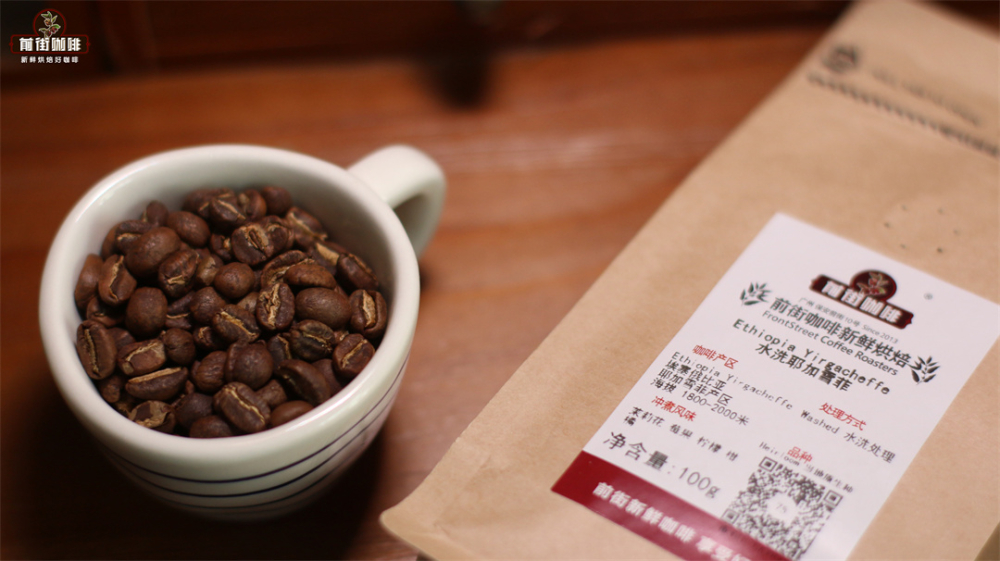
Ethiopian coffee is represented by the bright lemon acidity and floral aromas of Yirgacheffe. Some people even treat Yirgacheffe as the representative coffee of Ethiopia itself. Ethiopian coffees are basically named after their producing regions: the well-known Yirgacheffe region produces Yirgacheffe coffee, and the Sidamo region produces Sidamo coffee. FrontStreet Coffee's introductory Ethiopian coffee is Yirgacheffe.
Although both regions are in Ethiopia, their processing methods are completely different. Yirgacheffe beans use the washed method, while beans from the Sidamo region use the natural method. When it comes to representative natural-processed beans from Sidamo, "Hana Asacha" stands out. Whether by popularity or by flavor, Hana Asacha can be considered the leader among natural-processed Ethiopian coffees.

Geographical Location of Sidamo Region
Geographically, the Sidamo region sits on the highland plateau of southern Ethiopia, near Lake Hawassa in the East African Rift Valley and bordering Kenya. Its high altitude, suitable rainfall, fertile soil, and countless native tree species make it extremely suitable for coffee. Coffee trees here mostly grow at 1,550-2,200 meters. High altitude means the cherries ripen more slowly, producing more complex and intense aromatic structures. The harvest here is also later than in other regions of Ethiopia.
Historical complexities have left the Sidamo region intermixed with other administrative districts, making it one of the most complex and difficult-to-understand origins in the world. Compared with other regions, Sidamo covers a large and extensive area. The Ethiopia Commodity Exchange (ECX) has divided it into five areas by geographical indication: A, B, C, D, and E. These five areas each govern multiple sub-regions, containing over 50 cooperatives and more than 200 washing stations. Under the influence of different altitudes, humidity, soil, and microclimates, subtle flavor differences exist between villages.

Historical Development
In the last century, Yirgacheffe belonged to the Sidamo region and was labeled "Large Sidamo Coffee" when exported. Because its outstanding flavor won worldwide attention early on, it was the first to break away from the Sidamo category and become independent. With support from the Ethiopian government, this town's coffee was successfully registered globally as the "Yirgacheffe®" flavor trademark in 2007.

Similarly, around 2008, when the Ethiopia Commodity Exchange was established, Guji coffee was classified under the "Sidamo A" category in auction listings. Later, as more smaller origins from the area made their way into the top ranks of international green bean competitions such as COE with excellent flavor, Guji's reputation grew. In 2015 the ECX separated it out as a new category representative.

Guji Region
The Guji region was originally administered under Sidamo. Because of its remote location and underdeveloped infrastructure, Guji coffee rose to fame relatively late, and initially its reputation was not as prominent as regions like Yirgacheffe and Harar. Later, thanks to the excellent flavor of its beans, it was separated out as a new producing region. The area has fertile black soil with an average altitude above 1,800 meters, and its unique geography creates terroir highly favorable for coffee.
Compared with other traditional regions, Guji is decidedly remote. Transportation is inconvenient amid high mountains and dense forests, and in the past the area was isolated from the outside world. The people here originally made a living from pastoralism, and later the discovery of large mineral resources underground led to the rise of mining. Only in recent years, as more international buyers recognized Guji's high-quality coffee, has the coffee industry developed quickly as a new and important part of the region.

Unlike Yirgacheffe, Guji is a rising star. Because its coffee industry developed late, it benefits from high altitude, mineral-rich soil, and abundant available land, which favor large-scale washing stations and natural processing facilities. The protection of its original forests is also more complete, safeguarding water and soil conservation and the uniqueness of its flavor.
On FrontStreet Coffee's Guji distribution map, the well-known sub-regions include Ana Sora, Hambela, Shakiso, Uraga, and Rogicha. Hana Asacha, mentioned above, comes from Hambela and uses natural processing.

Hambela
Unlike traditional regions such as Yirgacheffe, Hambela is actually a coffee farm belonging to the locally renowned METAD Agricultural Development PLC. It is both an independent farm and the main processing station for nearby planting areas, processing coffee grown in the vicinity and selling it as an independent lot. METAD, an Ethiopian native coffee export company, was founded by Aman Adinew in 2013. Its coffee comes from the Guji Zone and Hambela Estate in the Gedeo Zone, Gedeb District of the Southern Nations, Nationalities, and Peoples' Region (SNNPR), and the Oromia Region.

Aman comes from a coffee family; his grandmother established coffee farms in Ethiopia's Harar and Sidamo regions in the last century. Aman himself served as Chief Operating Officer (COO) of the Ethiopia Commodity Exchange. After leaving government service, and to help modernize the local coffee industry, he founded METAD and worked with thousands of small farmers in Yirgacheffe and Guji.
The Hambela farm covers 200 hectares, about 75 kilometers from Yirgacheffe, in Ethiopia's best coffee-central area. Its processing stations are already well established in equipment, management, and scale. Fertile volcanic soil, natural organic farming, and relatively mature post-processing are the key factors that have made coffee from here a blockbuster in recent years.

Buku Abel
Before this bean was called "Hana Asacha," it had only the English name "Hambella." What we call Hana Asacha Coffee is actually a traditional natural G1 coffee from the Hambela region, and Buku Abel Processing Station is its more precise traceability information, located in Dimtu town.
After Hana Asacha became famous overnight, DW company established five independent green bean drying stations in Hambella Wamena Wereda to meet the surge in demand, all within the core producing area of Dimtu town. In addition to the original Buku Abel, four other small villages, Buku Saysay, Haro Soresa, Tirtiro Goye, and Seke Bokosa, also joined the production of natural-processed beans. At this point the annual production of Hana Asacha under DW had already reached tens of millions of tons.

Since the 2018 production season, Hana Asacha from the same origin and station has already shown some flavor changes. FrontStreet Coffee found through cupping that although the 2018 and 2019 Hana Asacha were similar in flavor to the 2017 lot, they were inferior to the "first-generation Hana Asacha" in body, aftertaste, and other mouthfeel aspects.
To keep selling this natural-processed coffee from Hambela while distinguishing it from the original, domestic green bean traders used 2017 as the starting point and added X.0 suffixes to each subsequent year's batch. The 2018 batch is called "Hana Asacha 2.0," the 2019 production "Hana Asacha 3.0 and 3.1," and so on, with last year's release being "Hana Asacha 7.0." The suffix lets buyers identify which year's batch a given Hana Asacha comes from.

Natural Processing - Green Bean Processing Method
Although washed beans from Yirgacheffe are famous, Ethiopia is actually dominated by natural processing; even now, natural processing accounts for about 70% of national production. Natural processing is one of the oldest and most classic methods, and its steps are simpler than others. The cherries are sun-dried for several weeks until moisture content drops to about 11%, then machines remove the skin and pulp. The beans are then stored in warehouses awaiting export.
Sidamo mostly uses natural processing. FrontStreet Coffee believes natural processing there better reflects the region's clear fruit acidity and smooth mouthfeel. Natural processing is also called "natural drying," with the beans spread directly under the sun for 27-30 days, reducing moisture from 60% to about 12%. FrontStreet Coffee finds it brings the sweet and sour sensation of tropical fruit, preserves the natural richness of the beans, and offers rich flavor layers, sometimes with a slight fermented wine aroma.
Pour-over Recommendations for Hana Asacha Coffee Beans
Light-roasted beans have a relatively hard texture. FrontStreet Coffee uses high-temperature water at 92°C-93°C to extract the floral and fruity aromas. We recommend a medium-fine grind (78% pass rate through the China standard #20 sieve). Too coarse a grind cannot extract the body substances, leaving the cup thin; too fine a grind at high temperature easily leads to over-extraction and bitterness.
On the ratio, FrontStreet Coffee finds both 1:15 and 1:16 acceptable. For a richer mouthfeel, use 1:15. To perceive the floral and sweet sensations more clearly, use 1:16 so the flavors spread out more.

Brewing Parameters:
Dripper: V60
Water Temperature: 92-93°C
Coffee Dose: 15g
Coffee-to-Water Ratio: 1:15
Grind Size: Fine sugar size (78% pass rate through #20 standard sieve)
Pouring Technique: Three-stage pouring

Three-stage Pouring Technique:
Use twice the coffee's weight in water to wet the coffee bed, forming a dome, and bloom for 30s. Then, using a small flow, pour in circles from inside to outside to 125g and pause. When the coffee bed drops to half the height of the dripper, continue with the same fine flow for the third stage to 225g. Wait until all the coffee liquid has filtered through, then remove the dripper. The total time should be about 2 minutes.
FrontStreet Coffee Recommendation
To explore this style, start with FrontStreet Washed Yirgacheffe. It is prized for white jasmine, bright citrus and lemon acidity, and a tea-like body, and its accessible price has made it the gateway bean into specialty coffee for many drinkers. Brew it as pour-over with a V60 at 90-91°C, 15g of coffee at a 1:15 ratio, ground to fine-sugar size with about 80% passing a #20 sieve. Bloom with 30g of water for 30 seconds, pour to 95g (about 125g on the scale) over roughly a minute, and when the level falls to two-thirds of the bed add the remaining 100g (about 225g), finishing the pour by about 1'35". Complete the drip at 2:00-2:10 and remove the dripper.
FrontStreet Dinding Cooperative is the micro-lot to seek out. It comes from Dinding village at the southeastern edge of Yirgacheffe. The cooperative began as part of the Worka cooperative under the YCFCU before being recognized as a single origin, and it follows the traditional washed method. The cup has no bitter leaning, just clean, bright citrus and lemon acidity with jasmine fragrance.
FrontStreet Yirgacheffe Natural Red Cherry is the natural-processed counterpart. Only fully ripe, unblemished cherries are used, sorted, and dried on raised beds, turned every two to three hours in the first days to prevent uneven heat and over-fermentation. After three to five weeks of drying the fruit is hulled and the beans stored. Because the fruit dries on the bean, it keeps the typical Yirgacheffe character while adding tropical fruit, with citrus acidity, berry juice, honey sweetness, and a creamy smoothness.
Important Notice :
FrontStreet Coffee is a long-established specialty coffee roaster in Guangzhou China, selling freshly roasted beans from its own farm in Yunnan as well as dozens of carefully selected single-origin beans from around the world for both pour-over and espresso. The products deliver consistently excellent quality and great value, with shipping within 24 hours. Guangzhou's FrontStreet Coffee shop is recommended by many coffee lovers, and the beans are now available online at the Tmall 。
FrontStreet Coffee has moved to a new address:
FrontStreet Coffee Address: 315,Donghua East Road,GuangZhou
Tel:020 38364473
 Scan and follow the En Gafei WeChat official account. Please indicate that the reprint comes from "En Gafei".