Introduction to Kenya AA Coffee Variety Characteristics and Description of Hand-Poured Flavor and Taste of Kenya Coffee Beans
Kenyan coffee beans have wonderfully delightful and satisfying aromatics, balanced and pleasing acidity, uniform particles, and excellent fruit flavors. FrontStreet Coffee has compared Kenyan beans with those from neighboring Ethiopia and found that although both are characterized by fruity acidity, they present completely different sensations. Kenyan acidity is strong and full-bodied, while Ethiopian acidity is gentle and bright. For those trying African coffee beans for the first time, FrontStreet Coffee suggests starting with FrontStreet Coffee's Ethiopian beans and gradually transitioning to FrontStreet Coffee's Kenyan beans.
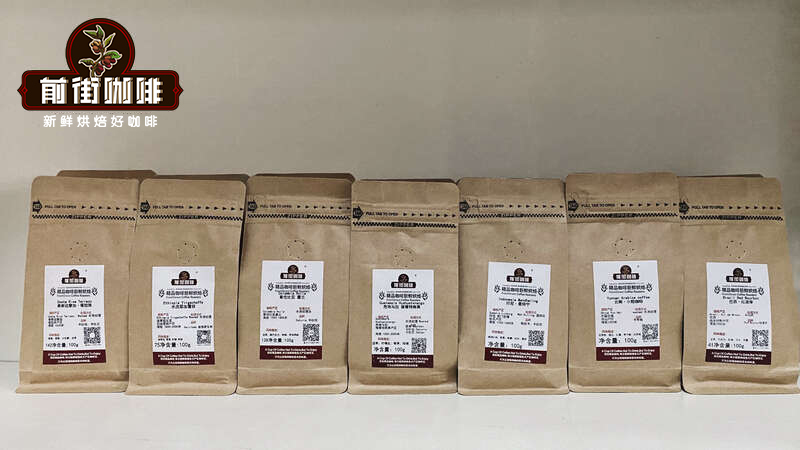
Speaking of trying coffee for the first time, many people ask FrontStreet Coffee how to choose coffee beans. Whether at FrontStreet Coffee's Guangzhou stores or its online shop, FrontStreet Coffee has a "FrontStreet Coffee Daily Bean" series that includes FrontStreet Coffee Ethiopian Yirgacheffe, FrontStreet Coffee Brazilian Cerrado, FrontStreet Coffee Colombian Huila, FrontStreet Coffee Indonesian Mandheling, FrontStreet Coffee Costa Rican Tarrazú, FrontStreet Coffee Guatemalan Huehuetenango, and FrontStreet Coffee Yunnan Catimor—seven varieties covering the major coffee-producing regions.
When FrontStreet Coffee selects a "FrontStreet Coffee Daily Bean" for listing, it carefully chooses beans that best represent the original local flavors of each region. They are packaged in 100g samples at introductory prices. The point of FrontStreet Coffee Daily Beans is that everyone can identify the basic flavors of the major regions at low prices, such as the lemon acidity of FrontStreet Coffee Yirgacheffe, the herbal notes of FrontStreet Coffee Indonesian Mandheling, and the nutty chocolate flavors of FrontStreet Coffee Brazilian and FrontStreet Coffee Colombian varieties.
The Development History of Kenyan Coffee
Kenya is located in East Africa, bordering Ethiopia. Kenya's coffee history is not as ancient as Ethiopia's, with coffee introduced only around the turn of the 20th century. When coffee was first introduced to Kenya, the country was under British colonial rule. At that time, the British colonial government widely promoted coffee cultivation to earn foreign exchange, shipping harvested beans to London for export sale.
In 1922, Kenya established the Scott Agricultural Laboratory (Scott Labs, after which SL28 and SL34 were named) to conduct coffee cultivation research. In the decade following its establishment, they selected SL28 and SL34 from 42 coffee varieties as most suitable for cultivation in the region, providing an excellent start for the coffee industry's development. Today, these two varieties occupy 90% of Kenya's cultivation area.

The Kenyan government places great importance on coffee sales. In 1931, the Kenya Growers Cooperative Union and the Kenya National Coffee Committee were established to guide coffee industry development from both the civil and national levels. In 1937, the Nairobi Coffee Exchange was established, beginning Kenya's coffee auction system in which good coffee commands good prices, setting the tone for coffee pricing. In 1938, the Kenyan government issued a coffee grading system, which we know today as AA, AB, PB, providing a basis for FrontStreet Coffee's Kenyan coffee quality standards.
Kenyan Coffee Cultivation
Most Kenyan coffee grows in the fertile, loose, acidic volcanic red soil of the highlands north and east of Nairobi. This area enjoys abundant sunlight, good drainage, and elevations between 1400-2000 meters. Because of the greater temperature differences between day and night at higher altitudes, Kenyan coffee has a longer maturation period than lower-altitude origins, resulting in higher density and richer flavors.

FrontStreet Coffee's Kenyan coffee typically flowers after rainfall, occurring in March and April. Coffee cherries (fruits) mature from May to July and then again from September to October, allowing two harvest seasons per year.
Kenyan Coffee Regions
Kenya's coffee regions are mainly distributed in the central and western parts of the country. Major coffee regions in the central area include Kiambu, Nyeri, Kirinyaga, Muranga, Embu, Machakos, Ruiri, and Thika. Western regions include Kisii and Bungoma, located on Mount Elgon.
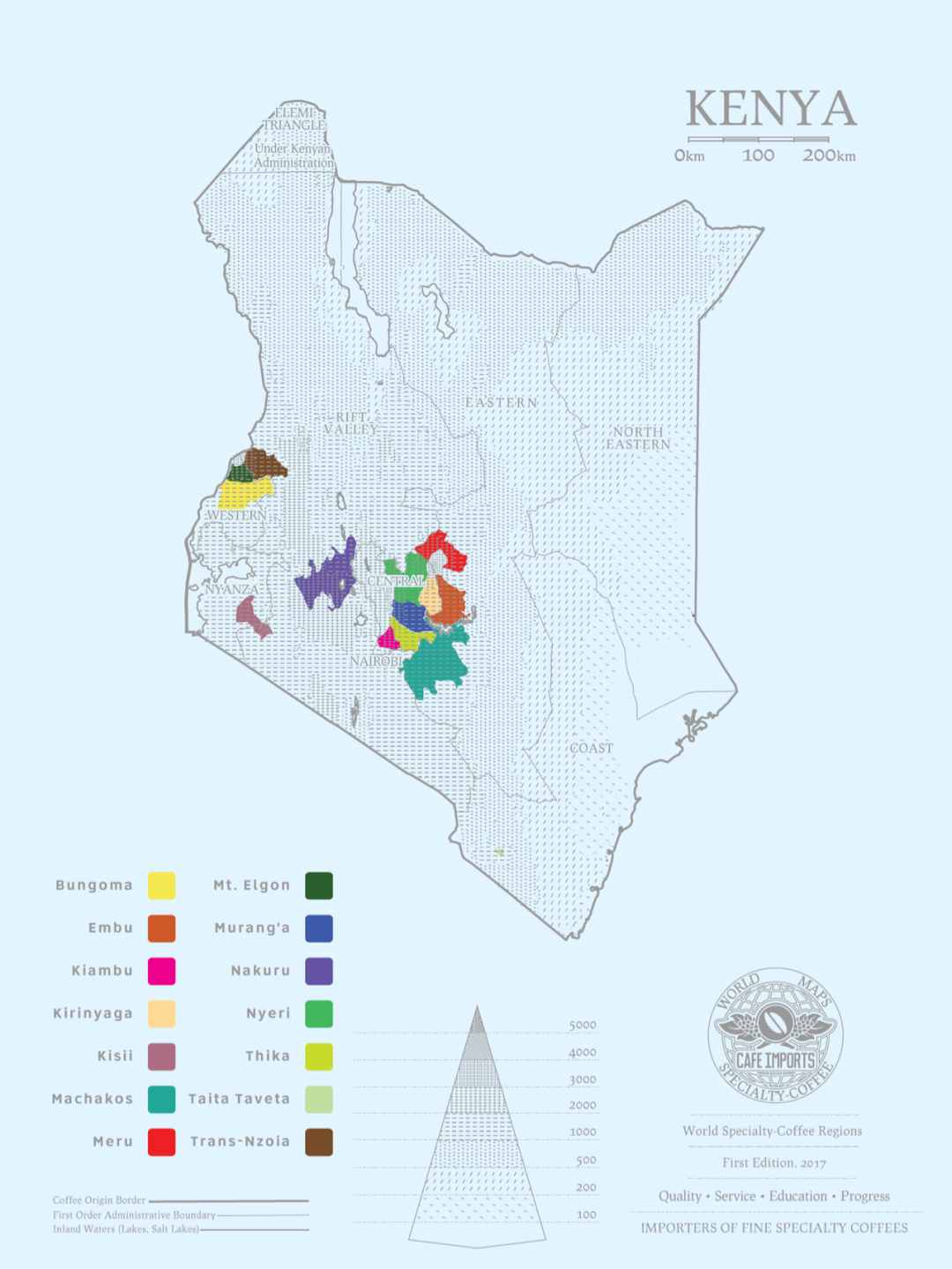
FrontStreet Coffee periodically updates the coffee regions on its bean list, and Kenya is no exception. Last month, FrontStreet Coffee acquired a batch of Kenyan beans from different coffee regions. Through multiple stages of roasting, cupping, and pour-over tasting, we found that each region has its unique characteristics.
Kiambu and Muranga show brighter and fuller acidity.
Nyeri has bright citrus and floral aromas, slightly inferior to Ethiopian Yirgacheffe but with rich berry acidity.
Kirinyaga's acidity tends toward brightness and fullness, with delicate sweetness.
Embu's acidity is not as full and strong as the previous regions, with balanced flavors and a persistent aftertaste.
Machakos also shows outstanding acidity, with a delicate texture and persistent finish, gradually gaining attention from coffee buyers.
Kisii and Bungoma differ most from other regions, with prominent fruit sweetness, gentle acidity, and nutty flavors.

Kenyan Coffee Cultivation Models
Kenyan coffee is cultivated by two main types of operations: large plantations, with over 3,000 large farms accounting for about 25% of Kenya's coffee cultivation land. The remaining 75% consists of agricultural cooperatives, totaling 270 cooperatives composed of 700,000 small farmers.
In the 1960s, small-farmer cooperatives began developing shared processing facilities, enabling them to harvest and process coffee like large plantations. FrontStreet Coffee believes this model allows farmers to focus more on coffee cultivation and production. Ethiopia's main coffee cultivation model also involves small-farmer cooperatives, and FrontStreet Coffee recently acquired a batch of FrontStreet Coffee Yirgacheffe Konga cooperative beans, which demonstrated excellent floral and fruit flavors.

Kenyan Coffee Varieties
In Kenya, common coffee varieties are SL28, SL34, and Ruiru 11.
In 1922, Kenya established the Scott Agricultural Laboratory to conduct coffee cultivation research. In the decade following its establishment, the laboratory selected SL28 and SL34 from 42 coffee varieties as most suitable for cultivation in the region, providing a good start for the coffee industry's development. Both SL28 and SL34 are varieties selected through multiple breeding cycles. SL28 belongs to the Bourbon genetic group, carrying the bright and rich acidity of original Bourbon. SL34's lineage is closer to Typica genes, with gentler acidity than SL28. SL28 and SL34 currently account for 90% of Kenya's production, and South America is actively introducing SL28 as a cultivation variety. FrontStreet Coffee's favorite FrontStreet Coffee Kenya Assalia coffee is composed of these two numbered varieties.

Ruiru 11 was born because of the global outbreak of coffee leaf rust. At that time, many Arabica varieties suffered from the disease. To prevent a reduction in coffee production, the hybrid variety Ruiru 11 was developed, showing excellent disease resistance but far inferior flavor quality compared with SL28 and SL34.
Kenyan Coffee Grading System
Kenya grades coffee by bean size and cupping results. According to bean size, shape, and hardness, grades from high to low are E, AA or AA+, AB, C, PB, TT, T.
E (Elephant Beans): Here "E" stands for Elephant, but not the Maragogype elephant bean variety. It's a defect caused by abnormal development in which two seeds intertwine, forming what appears to be a single bean. Normally one fruit contains two seeds facing each other, creating one flat side called flat beans or female beans. E-grade beans occur when two seeds fuse together during growth, becoming oversized beans. E-grade beans are about 18 mesh (one mesh = 1/64 inch) or larger and are rare.
AA: This grade ranges from 17-18 mesh (about 6.7-7.1mm), the most commonly heard Kenyan coffee grading. In specialty coffee, this grade is usually called AA TOP and is promoted by many coffee shops, but AA does not necessarily mean the best—it only indicates bean size and should not be confused with flavor.

FrontStreet Coffee Kenya Thathini Coffee Beans AA Grade
AB: Most coffee beans fall into this grade. It's called AB mainly because A-grade beans are 6.80mm while B-grade are 6.20mm, and these two sizes are mixed and sold together, hence AB. The size ranges from 15-16 mesh (about 6.0-6.4mm). FrontStreet Coffee Kenya Assalia Coffee Beans AA TOP Grade.
C: Size ranges from 14-15 mesh (about 5.6-6.0mm), smaller than B-grade.
PB: Full name is Peaberry, also called small round beans or male beans. Compared with regular flat beans, these are also rare, accounting for about 10% of all coffee beans, mainly because only one seed develops fully inside the fruit, resulting in small, round beans. Some people particularly love PB flavors, so PB beans are sorted and sold separately.
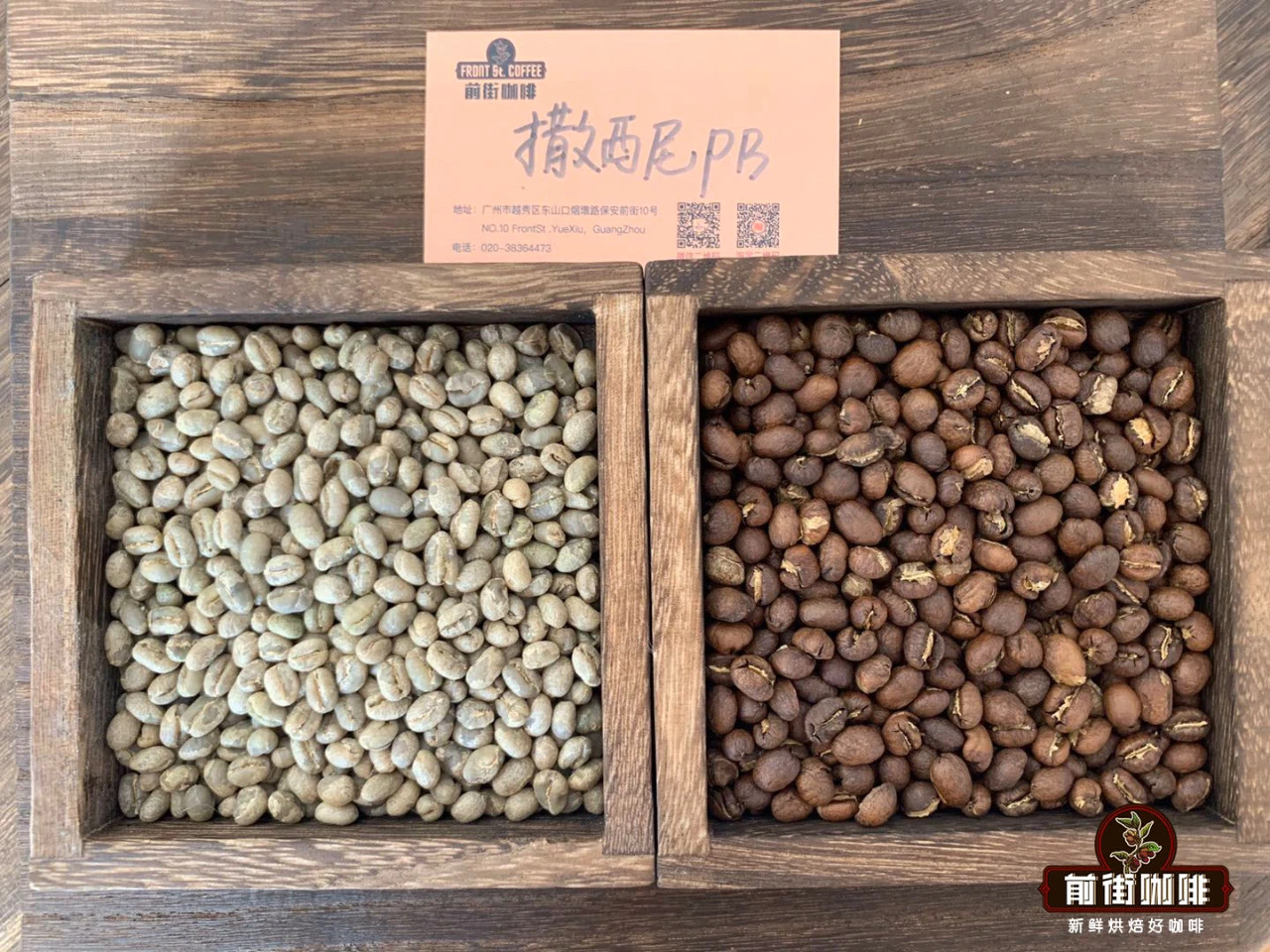
FrontStreet Coffee Kenya Thathini Coffee Beans PB Grade
TT: These beans are light beans screened from AA and AB beans using air classifiers, usually lightweight, below standard hardness, and include broken and defective beans.
T: Lighter beans screened from C-grade beans, mixed with broken beans and even fragmented pieces.
Additionally, there's the MH/ML grade: these beans are not exported, usually overripe beans that have fallen to the ground with poor quality, accounting for about 7% of all coffee beans, only for Kenya's domestic market.
For AA and AB grade green coffee beans, special grading based on cupping results has been added (not officially recognized by the Kenyan government, but established by exporters), ranked from high to low as TOP, PLUS (+), FAQ. FrontStreet Coffee's Kenya Assalia flavor grade reaches TOP level, but as mentioned earlier, this is not an officially recognized grading system. Several Kenyan regional beans acquired by FrontStreet Coffee don't all carry flavor grades, so there's no need to focus on this too much. Generally, reaching AA and AB grades already implies very high quality by default.
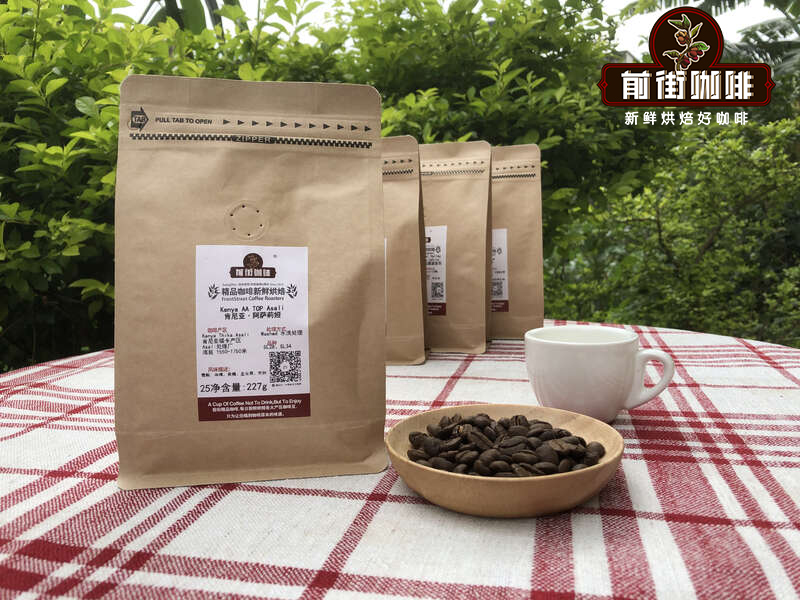
FrontStreet Coffee Kenya Assalia Coffee Beans AA TOP Grade
Kenyan Auction System
FrontStreet Coffee mentioned earlier that during Kenya's colonial history, local farmers didn't benefit much from coffee, which could be considered a dark moment in Kenyan coffee cultivation history. In 1931, to help farmers achieve better prices and income without being constrained by distant traders, the government established the Kenya Growers Cooperative Union and the Kenya National Coffee Committee, creating an auction mechanism. In 1937, the Nairobi Coffee Exchange was established, and the auction trading system became more widespread and widely supported.

Most coffee beans are uniformly graded and inspected by the Kenya Coffee Board and then sold at auction. The public auction system dates back to before 1934. The auction uses an agent system. Kenya has 50 licensed agents who send sample beans to their respective clients for cupping. Clients can bid on desired coffee through agents at auctions, but this approach seems to encourage middle agents while eroding farmers' income. Therefore, in 2006, Kenya opened up to allow 32 independent sales agents to directly contact foreign coffee buyers without going through auctions.
However, all must meet Kenya Coffee Board standards for quality, storage, and bank guarantees. Both systems operate in parallel. After years of development, it has become the most transparent auction distribution system, where better-quality coffee can achieve better prices through cupping, encouraging more cooperatives and farms to join. FrontStreet Coffee also closely monitors the coffee auction market, which not only helps understand local coffee market changes but ultimately benefits not just farmers but also buyers from around the world through the improved auction mechanism.
Two Main Trading Models for Kenyan Coffee Beans
1. Nairobi Coffee Exchange Auction (Central Auction System) - 85% of coffee beans are traded through the auction system.
Since the establishment of the auction system in the 1930s, the vast majority of Kenyan coffee has been traded this way. Coffee auctions are held every Tuesday during harvest seasons. It evolved from an "open outcry" auction system in which each trader bids by pressing an electric trigger. Through this system, competition among agents drives prices for high-quality, highly sought-after coffee sky-high.

2. Direct Trade (often called "Second Window") - Only 15% of coffee beans are traded through direct trade.
After 2006, the Kenyan government allowed farmers and foreign buyers (such as roasters or importers) to trade directly. They can discuss and agree on a price different from auction prices before or during harvest. Some exporters also purchase coffee directly from relevant marketing agents or factories, using the previous week's auction prices for specific grades as a reference for negotiation. Direct trade allows farmers producing high-quality coffee to earn more income. When direct trade is not feasible, coffee returns to the exchange for auction sale.
What Kenyan Coffee Beans Does FrontStreet Coffee Have?
Through several rounds of tasting, FrontStreet Coffee started with over a dozen different regional beans and narrowed them down to just two or three that finally made it to the shelves. This doesn't mean the other beans were inferior. FrontStreet Coffee's original intention was not just to sell, but through this process to understand every coffee region, the different varieties within the same region, the different processing methods for the same variety, and to build a corresponding database, as well as comparisons between different coffee regions. FrontStreet Coffee hopes to let more coffee enthusiasts understand the world of coffee.

FrontStreet Coffee Kenya Assalia Coffee Beans
Region: Kenya, Thika Region, Asali Processing Station
Altitude: 1550-1750m
Processing: Washed
Varieties: SL28 & SL34
Flavors: Tomato, Pear, Black Plum, Brown Sugar, Plum, Cherry Tomato
Roasting Suggestions
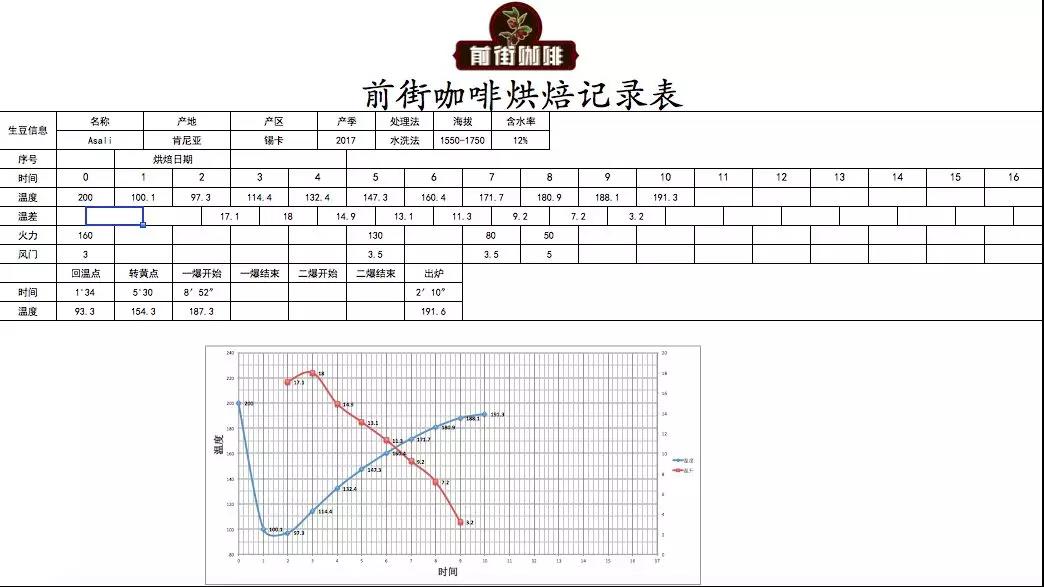
This FrontStreet Coffee Kenya Assalia bean has full, round particles. To fully express its bright, rich acidity, FrontStreet Coffee uses a light roast.
Cupping Flavors
FrontStreet Coffee Pour-over Suggestions
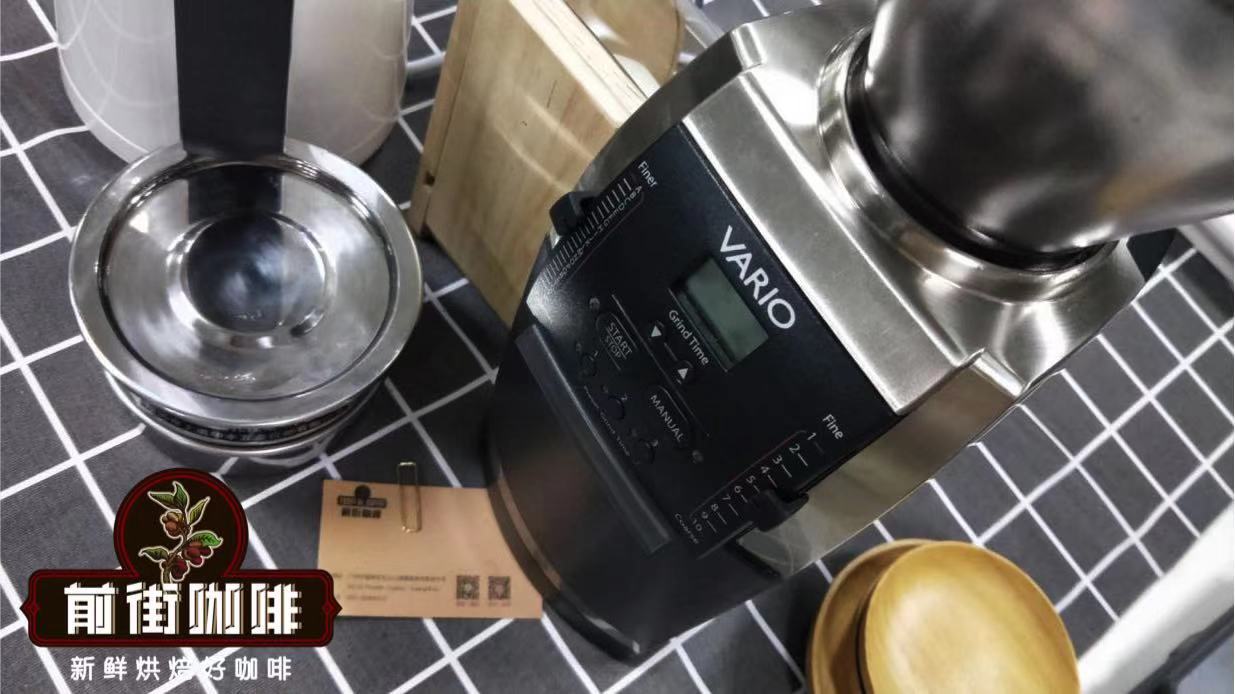
FrontStreet Coffee uses these brewing parameters: V60 dripper, water temperature 90°C, 15g coffee grounds, 1:15 coffee-to-water ratio, grind size similar to fine granulated sugar (80% pass-through rate on China standard #20 sieve).
FrontStreet Coffee wants to explain why we determine grind size through sieving. This is actually a grinding suggestion provided by the Specialty Coffee Association (SCA) for pour-over coffee. FrontStreet Coffee has conducted extensive verification, finding significant differences in finished products when using different grind sizes for brewing, and each coffee bean's optimal grind size differs. This is the significance of sieving. If you don't have a sieve at home, FrontStreet Coffee suggests observing water flow speed to judge—if water flows too fast, the grind is too coarse; if too slow, the grind is too fine.
FrontStreet Coffee uses segmented extraction, blooming with 30g water for 30 seconds, then pouring in small circles to 125g for segmentation. When the water level drops to just expose the coffee bed, continue pouring to 225g and stop. Remove the dripper when the water level drops to just expose the coffee bed (timing starts from blooming). Extraction time is 2'00".

FrontStreet Coffee Kenya Assalia Coffee Bean Flavors
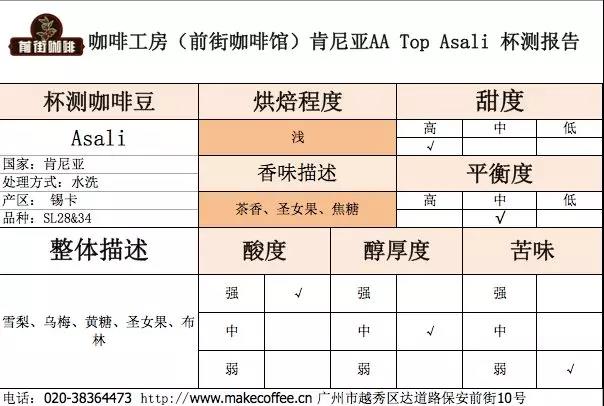
The wet aroma has ripe tomato and floral notes. The entry reveals cherry tomato and black plum flavors, with bright acidity and a clean, rich texture. The mid-palate shows prominent sweetness with a juicy mouthfeel. The finish has berry fragrance and brown sugar sweetness, with a green tea aroma.
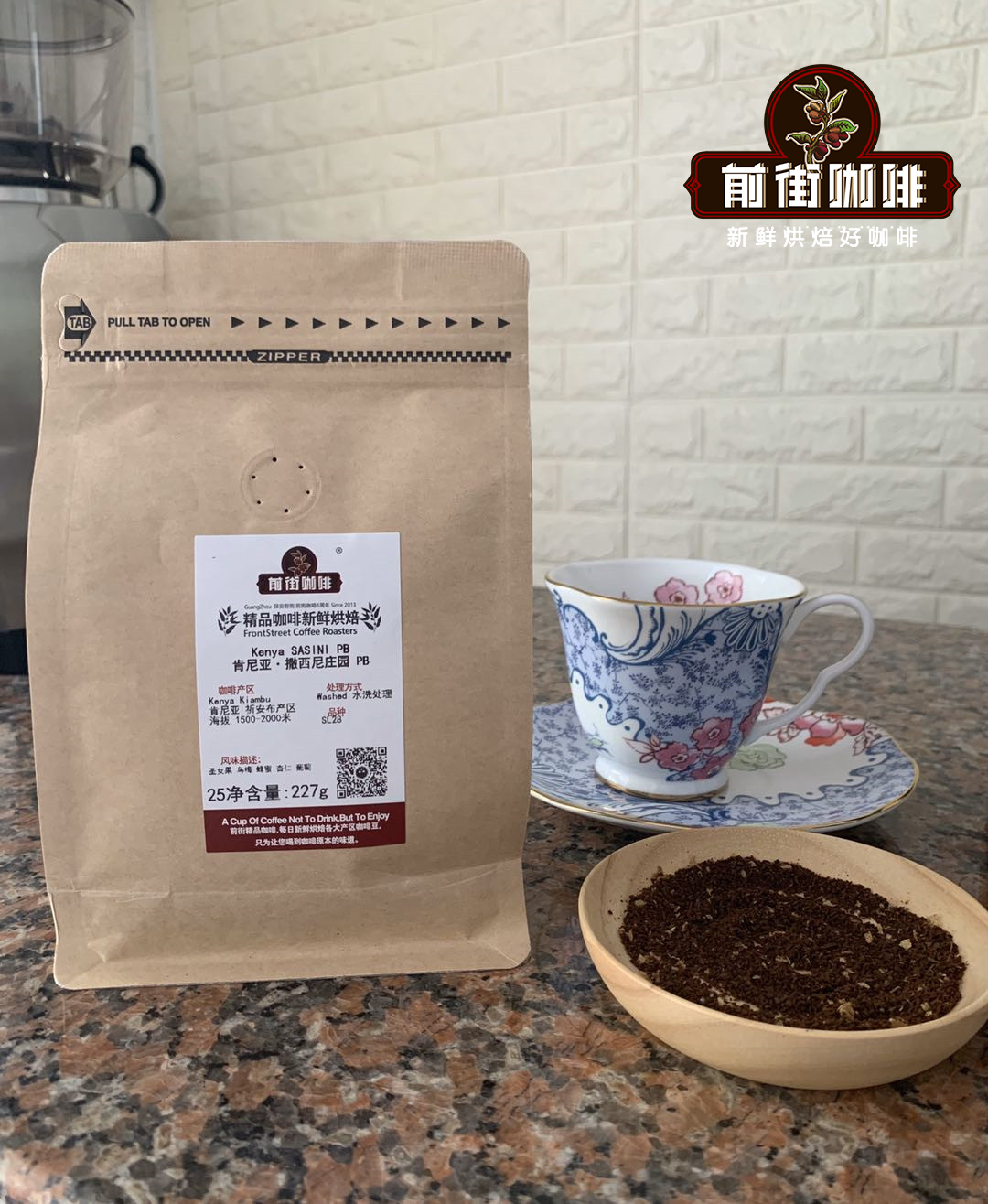
FrontStreet Coffee Kenya Thathini Estate PB Coffee Beans
Region: Kiambu Region
Estate: Thathini Estate
Altitude: 1680 meters
Grade: PB
Varieties: SL28, SL34 & Ruiru
Processing: Washed processing
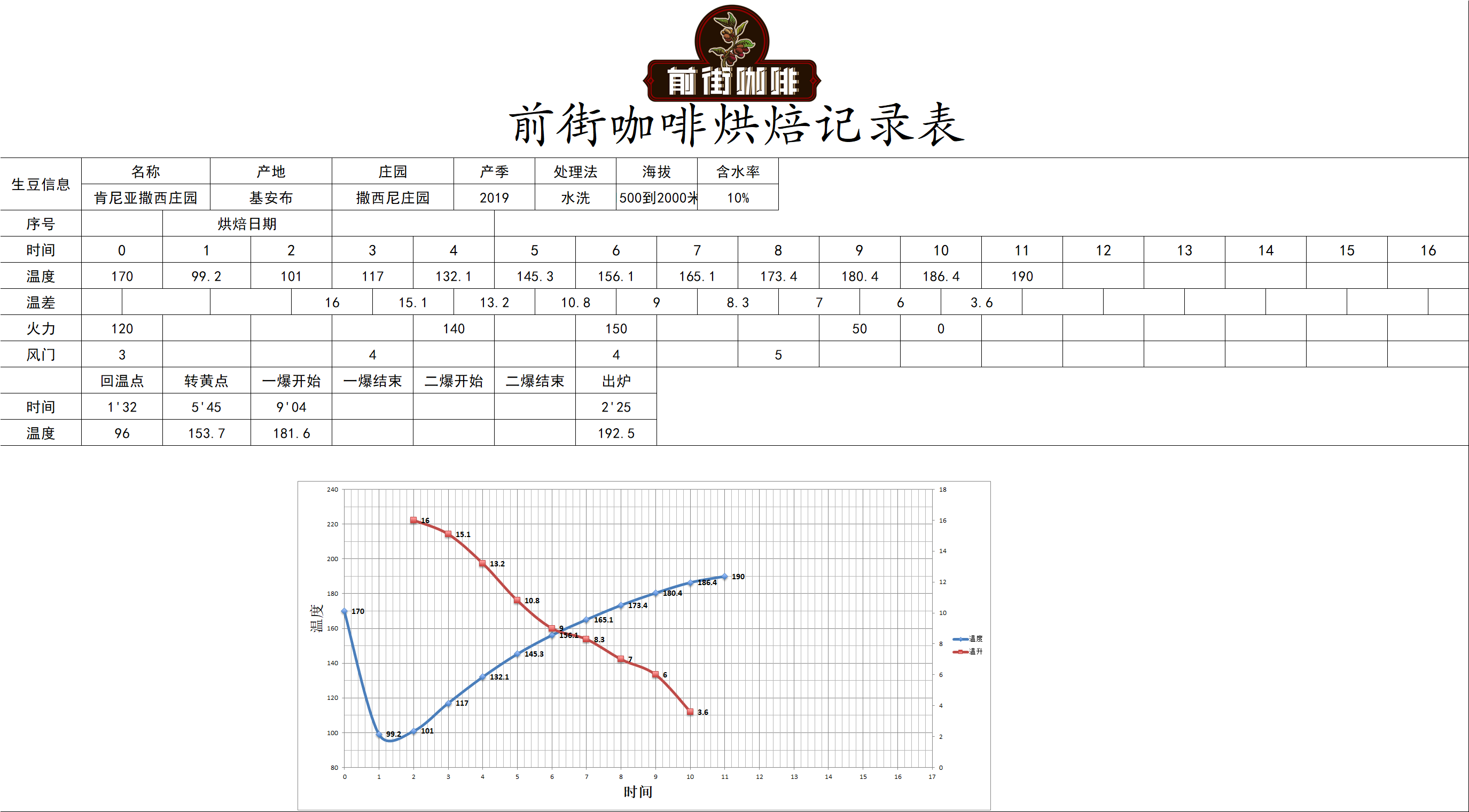
Roasting Suggestions
FrontStreet Coffee uses a light roast. As mentioned earlier, the overall flavor of Kenyan beans all features bright acidity. To emphasize this point, FrontStreet Coffee suggests adjusting toward a light roast.
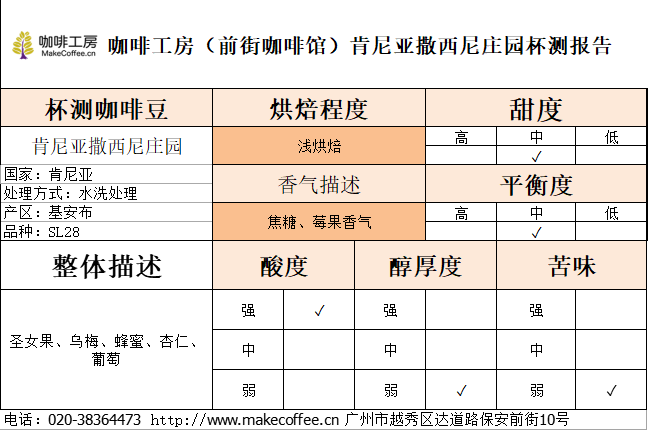
Cupping Flavors
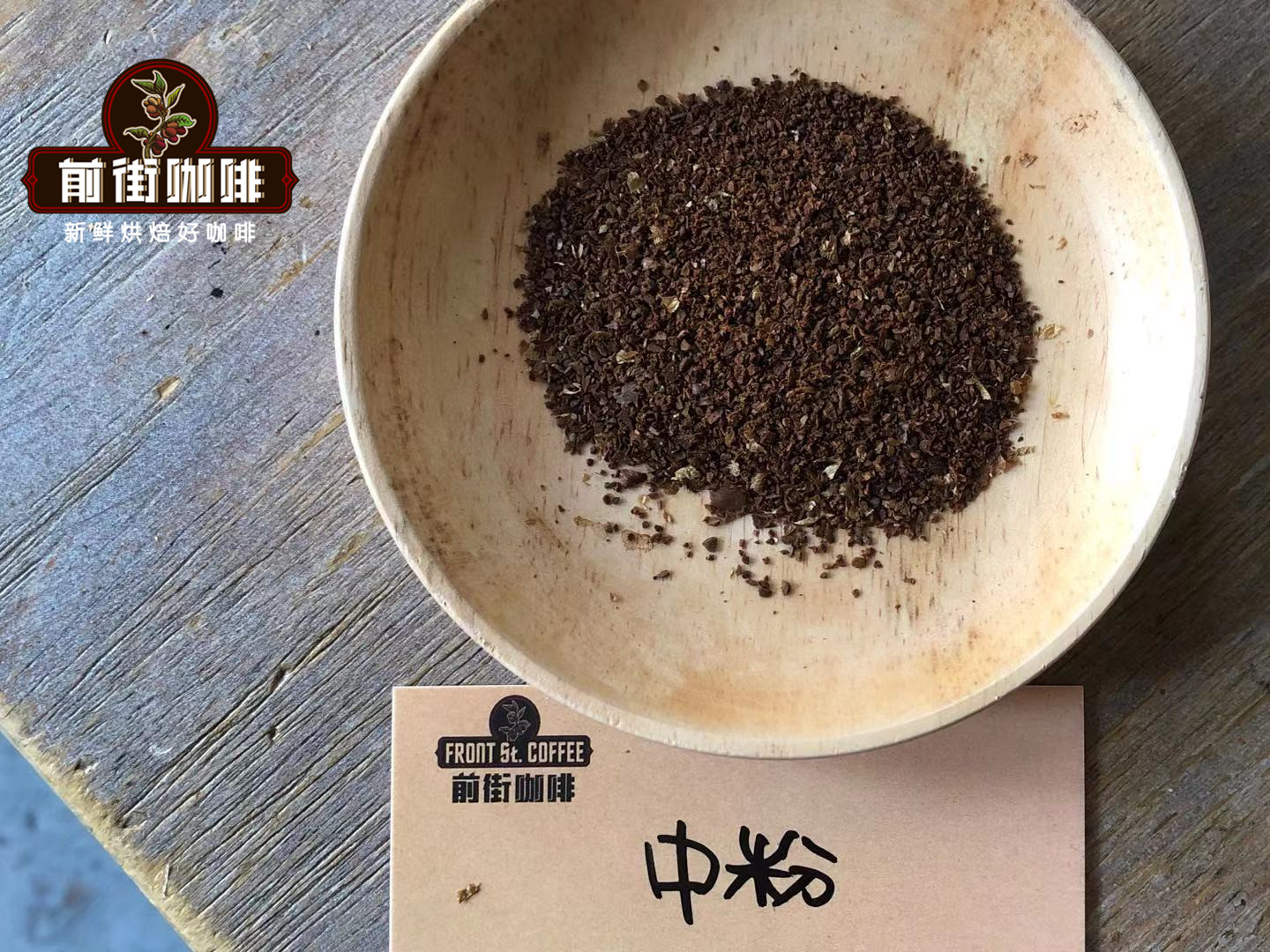
FrontStreet Coffee Pour-over Suggestions
FrontStreet Coffee uses these brewing parameters: V60 dripper, water temperature 90°C, 15g coffee grounds, 1:15 coffee-to-water ratio, grind size BG #5I (80% pass-through rate on China standard #20 sieve).
Perhaps observant readers will notice that FrontStreet Coffee's grinding parameters for this Kenyan bean differ from the previous one. Each bean has a different optimal grind size due to factors like variety, altitude, processing method, and roasting. Therefore, when FrontStreet Coffee receives a new roasted bean, we first sieve it to determine the appropriate pour-over grind.
FrontStreet Coffee uses segmented extraction, blooming with 30g water for 30 seconds, then pouring in small circles to 125g for segmentation. When the water level drops to just expose the coffee bed, continue pouring to 225g and stop. Remove the dripper when the water level drops to just expose the coffee bed (timing starts from blooming). Extraction time is 2'00".
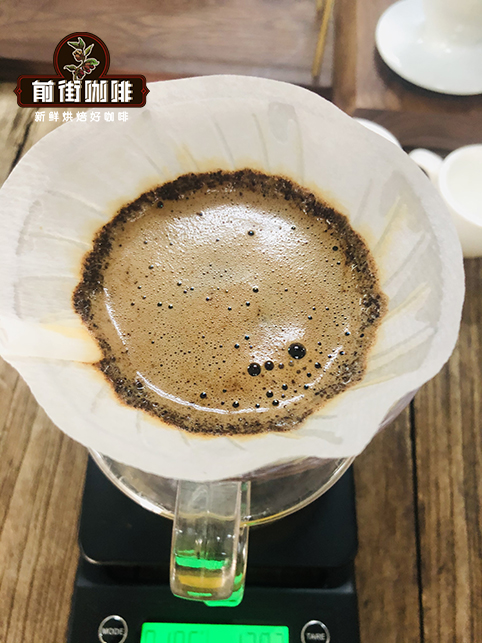
FrontStreet Coffee Kenya Thathini Coffee Bean Flavors
Distinct black plum and cherry tomato, the mid-palate shows almond, and the finish reveals honey. Juicy mouthfeel with bright acidity.
Differences Between FrontStreet Coffee Kenya AA and Kenya PB
You can see that FrontStreet Coffee's two Kenyan beans have obvious differences in grade classification, and FrontStreet Coffee's roasting and brewing parameters also differ. Under these conditions, their flavor presentations also show perceptible differences.

The similarities are distinct black plum, cherry tomato, and honey flavors in both, with slight nutty flavors as the temperature decreases, a juicy mouthfeel, and bright acidity. However, AA's acidity is brighter than PB's, with overall more complexity; PB emphasizes berry and honey sweetness, with an overall cleaner and softer profile.
FrontStreet Coffee Recommendation
If the bright, full-bodied acidity of Kenyan coffee is what you're after, FrontStreet Coffee's African lineup has an easy companion. For anyone new to African beans, FrontStreet Coffee's washed Ethiopia Yirgacheffe—the everyday "Daily Bean"—is the classic first step: white jasmine, bright citrus and lemon acidity, and a tea-like body, at a friendly price that makes it the entry bean for many drinkers. Ethiopia Yirgacheffe sits in the Sidamo region of southern Ethiopia at about 1700-2100 meters, with trees planted above 1800 meters, making it one of the highest coffee-growing regions in the world.
From there you can move to FrontStreet Coffee's washed Geddin Cooperative, in the Worka area at the southeastern edge of Yirgacheffe. Once part of the Worka cooperative under the YCFCU union, Geddin became independent in 2012 when about 300 farmers formed their own group, and its washed processing gives a fresh, bright citrus and lemon acidity with jasmine fragrance and no traditional bitterness—an easy bean to fall for. For a naturally processed alternative with a similarly juicy profile, FrontStreet Coffee's Natural Red Cherry offers citrus-like acidity, a berry juice body, honeyed sweetness, and creamy smoothness. Comparing these cups side by side is a great way to understand how Kenyan and Ethiopian acidity differ.
Important Notice :
FrontStreet Coffee is a long-established specialty coffee roaster in Guangzhou China, selling freshly roasted beans from its own farm in Yunnan as well as dozens of carefully selected single-origin beans from around the world for both pour-over and espresso. The products deliver consistently excellent quality and great value, with shipping within 24 hours. Guangzhou's FrontStreet Coffee shop is recommended by many coffee lovers, and the beans are now available online at the Tmall 。
FrontStreet Coffee has moved to a new address:
FrontStreet Coffee Address: 315,Donghua East Road,GuangZhou
Tel:020 38364473
 Scan and follow the En Gafei WeChat official account. Please indicate that the reprint comes from "En Gafei".