Kenya Coffee Bean Growing Regions Introduction African Kenya Coffee Flavor Characteristics and Brewing Recommendations
If you had to name one coffee bean that appears on virtually every specialty coffee shop's list, it would undoubtedly be Kenyan coffee. At FrontStreet Coffee's shop, there is a Kenyan bean called Asalia whose flavor characteristics include Kenya's signature bright acidity along with tomato and berry notes. Kenyan beans have secured their extraordinary standing in the specialty coffee world with their rich, splendid flavors — familiar to everyday consumers and frequently cupping above 90 points in competitions. And yet, in the coffee community, have you ever heard a dramatic estate story from Kenya? The answer is no!
Producers and importers usually work together to promote production backgrounds and estate stories to consumers — the seed-to-cup details that create the narrative context of a region. The pricier the beans, the more they need stories to support them; consumers love hearing them and suppliers are happy to oblige. But Kenyan estates with such stories are few. Think about it: Kenya is a major coffee-producing country, yet it really is "the most familiar stranger" of the coffee world.

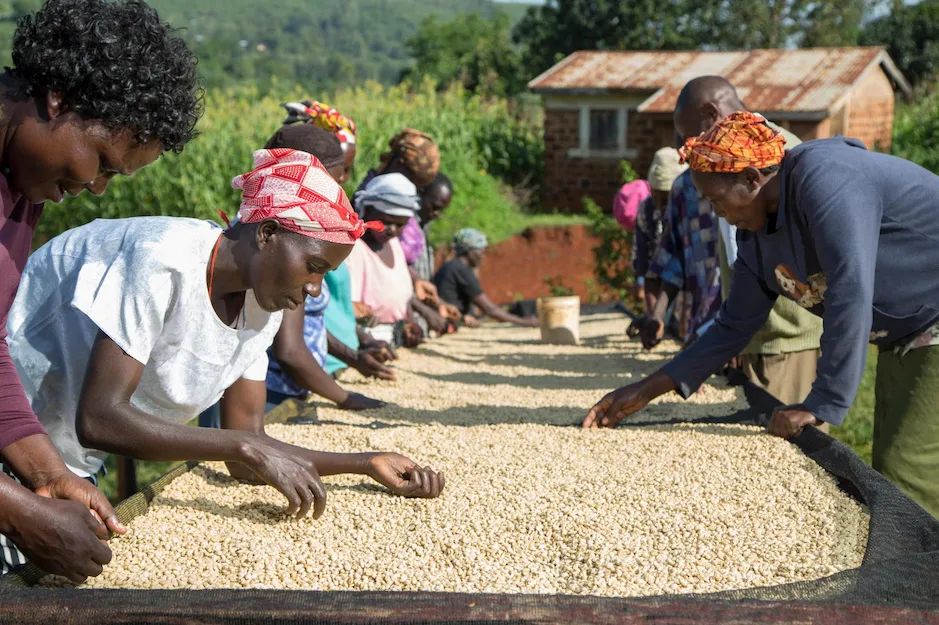
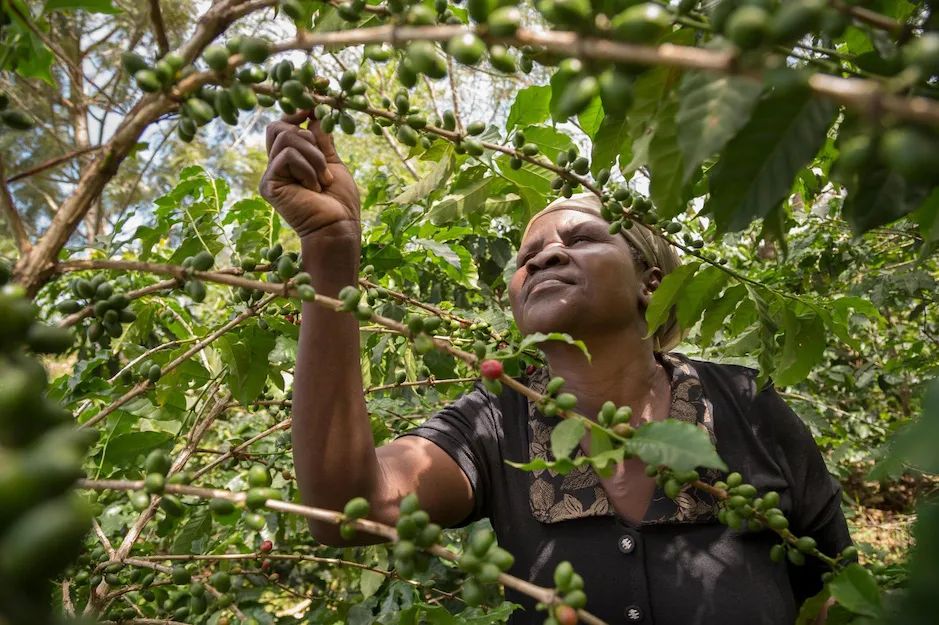
Most Kenyan coffee grows at altitudes between 1,500 and 2,100 meters, with two harvests per year. To ensure only ripe cherries are picked, workers must patrol the fields roughly seven times. Kenyan coffee is grown by smallholder farmers who, after harvesting, deliver fresh cherries to cooperative washing stations. The stations then send the washed and dried coffee in "parchment" state (beans with the inner husk still attached) to the cooperatives. Parchment coffee is the final state before milling. All the coffee is pooled together, and growers are paid average prices based on actual quality. This trading system generally works well and is fair to both growers and consumers.
Kenyan Coffee Regions
NYERI
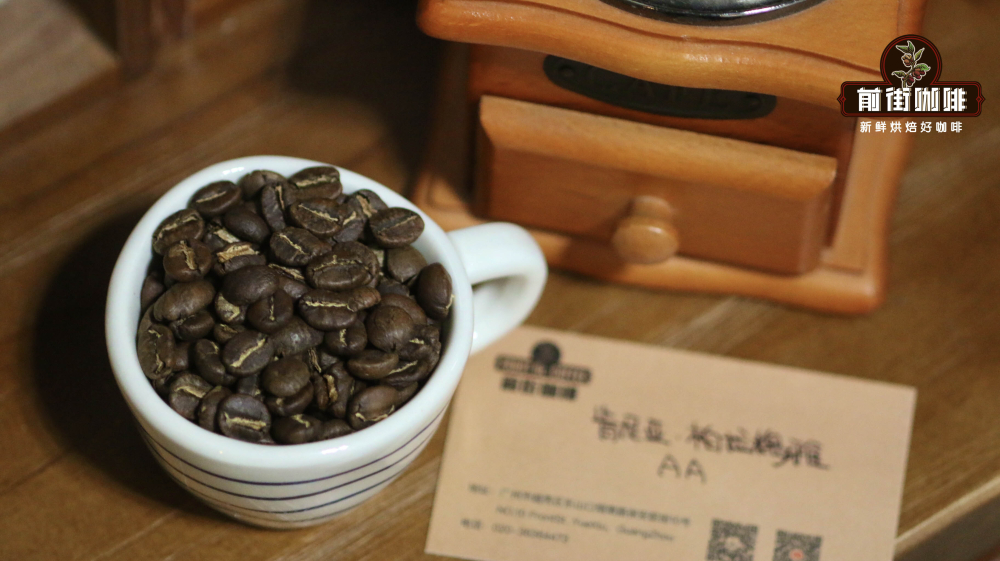
Located in central Kenya, Nyeri is home to the extinct volcano Mount Kenya, whose red soil nurtures the country's best coffee. Agriculture dominates here, with coffee the main crop. Cooperatives of smallholder farmers are more common than large estates. The region has two harvest seasons, but the main-season crop is usually of higher quality.
Altitude: 1,200-2,300 meters
Harvest Period: October-December (main season), June-August (secondary season)
Varieties: SL-28, SL-34, Ruiru 11, Batian
MURANG'A
This inland region is home to about 100,000 coffee farmers. It was chosen as a settlement by early missionaries because the Portuguese barred them from the coastal areas. Like Nyeri it benefits from volcanic soil, and smallholder farmers outnumber estates.
Altitude: 1,350-1,950 meters
Harvest Period: October-December (main season), June-August (secondary season)
Varieties: SL-28, SL-34, Ruiru 11, Batian
KIRINYAGA
Lying east of Nyeri, this area also benefits from volcanic soil. Coffee is usually produced by smallholder farmers, and its wet mills turn out many high-quality coffees well worth seeking out.
Altitude: 1,300-1,900 meters
Harvest Period: October-December (main season), June-August (secondary season)
Varieties: SL-28, SL-34, Ruiru 11, Batian
EMBU
This region near Mount Kenya takes its name from Embu town. About 70% of the local population engages in small-scale farming, with tea and coffee the most popular cash crops. Almost all coffee here comes from smallholder farmers, and production is relatively small.
Altitude: 1,300 meters
MERU
Most coffee in Meru is grown by smallholder farmers on the foothills of Mount Kenya and the Nyambene Hills. The name refers both to the area and to the Meru people who live there. In the 1930s they were among the first Kenyans to start producing coffee, thanks to the Devonshire White Paper of 1923, which affirmed African rights in Kenya.
Altitude: 1,300-1,950 meters
Harvest Period: October-December (main season), June-August (secondary season)
Varieties: SL-28, SL-34, Ruiru 11, Batian, K7
KIAMBU
This central region has the highest-altitude coffee growing areas, though some trees at those heights suffer from dieback disease and stop growing. The region is named after Nakuru town. Both estates and smallholders grow coffee here, though production is relatively small.
Altitude: 1,850-2,200 meters
Harvest Period: October-December (main season), June-August (secondary season)
Varieties: SL-28, SL-34, Ruiru 11, Batian
KISII
Located in southwestern Kenya, not far from Lake Victoria, this is a relatively small producing region where most beans come from cooperatives of small producers.
Altitude: 1,450-1,800 meters
Harvest Period: October-December (main season), June-August (secondary season)
Varieties: SL-28, SL-34, Blue Mountain, K7
TRANS-NZOIA, KEIYO & MARAKWET
This small region in western Kenya has begun to develop in recent years. Mount Elgon provides some altitude advantages, and most coffee comes from estates, often planted to diversify farms that previously grew only corn or ran dairy operations.
Altitude: 1,500-1,900 meters
Harvest Period: October-December (main season), June-August (secondary season)
Varieties: Ruiru 11, Batian, SL-28, SL-34

Kenyan Coffee Varieties
Common varieties in Kenya include SL28, SL34, French Mission Bourbon, and Ruiru 11. Two of these particularly catch the eye of specialty professionals: SL-28 and SL-34. They are two of 40 experimental varieties from a research program led by Guy Gibson of Scott Laboratories, though both are susceptible to leaf rust. These Bourbon derivatives (SL-28) and (SL-34) have been consistent winners in expert cuppings at the Nairobi auction, and it is expert consensus that Kenya's berry aroma comes from these two beans — SL-28 above all. But for all their flavor, their yield and disease resistance are poor.
Kenya has spared no effort developing leaf-rust-resistant varieties. Ruiru 11 was the first to win approval from the Kenya Coffee Committee, even though specialty buyers were lukewarm about it. In recent years the Coffee Committee has introduced another variety, Batian. Quality seems to have improved, and expectations for its future cupping performance are optimistic.
Kenyan Coffee Bean Grading
Kenyan beans are strictly graded, mainly by size, shape, and hardness. From highest to lowest: AA or AA+, AB, PB, C, E, TT, T. You can select on these standards, with flavor as a further reference.
Coffee Size Grading
AA Plus (AA+): AA grade with particularly excellent cup quality (flavor, mouthfeel)
AA: Screen size 17-18
AB: Screen size 15-16, accounting for the majority of production
C: Smaller than AB screen size
TT: Lighter-weight beans sifted from AA and AB lots with air classifiers
T: Lighter-weight beans sifted from C grade with air classifiers
E: Elephant Bean — large mutation beans where two beans fuse, also called elephant ears
UG: Beans that meet none of the above standards
PB: Peaberry, classified by shape, unrelated to flavor or weight
Kenyan Coffee Bean Flavor
The hallmark of Kenyan beans is clean, beautiful acidity! Their power comes from that gorgeous, rich acidity. If high-quality acidity is the soul of good coffee, then Kenyan beans are that soul's finest representatives.
Kenya's acidity is bright, vibrant, and full-bodied — unforgettable once tasted. The flavors of top Kenyan beans cover almost 29 of the categories on the SCA Flavor Wheel. The acidic notes include blackcurrant, familiar dark plum, lime, grapefruit or pineapple, green apple, passion fruit, and countless berries; the sweet notes include honey, brown sugar, and fresh sweet orange juice.
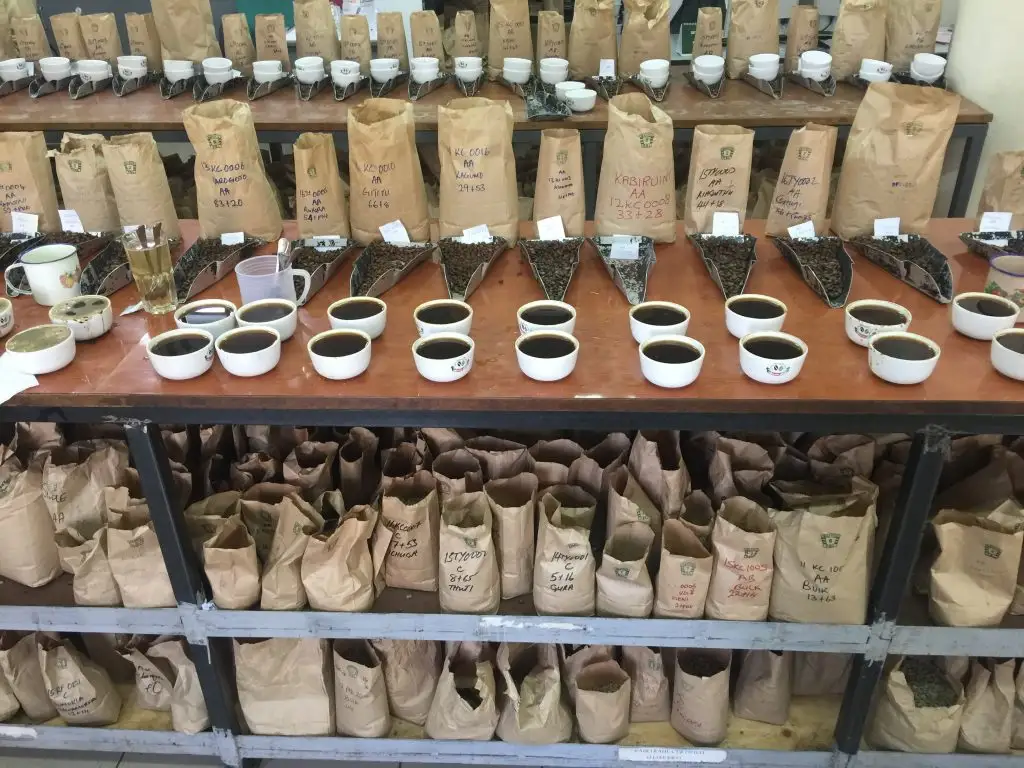
The mouthfeel of Kenyan coffee is unique in the world — coffees with bright acidity rarely also have a rich, oily texture, but Kenyan beans deliver both a full oily sensation and a mouth-coating feel. That is why local quality inspectors select the top lots by evaluating three aspects — acidity, body, and flavor — and pick the batches that can command high prices.
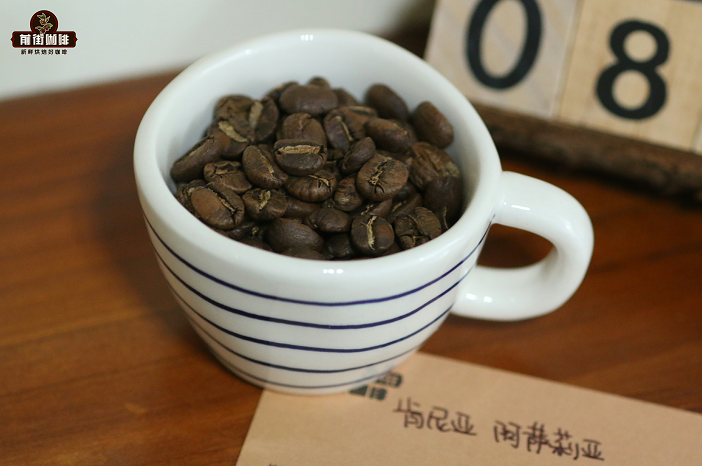
Now that you understand Kenyan beans' flavor profile, FrontStreet Coffee can help you build a brewing plan around their characteristics. Kenya's high altitude, volcanic soil, good varieties, and fine processing produce full, large, relatively hard, handsome beans. The most common brewing problem is water flow blockage.
For grinding, therefore, FrontStreet Coffee does not recommend excessive fines. Use a quality grinder or a sifter to remove fine particles. Calibrate the grind so that 75% passes through a standard #20 sieve.
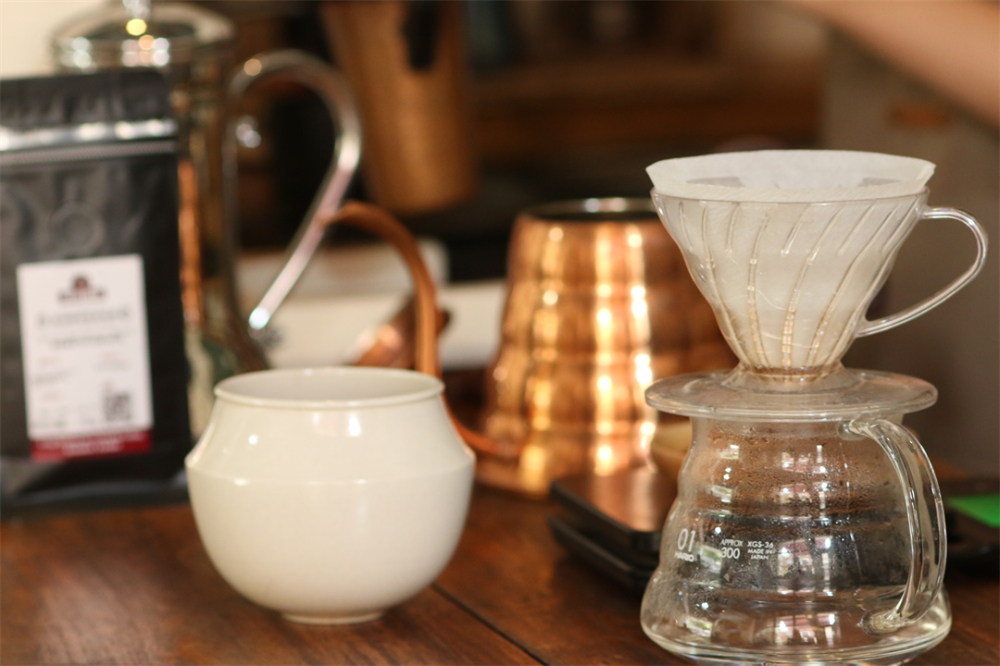
FrontStreet Coffee's grind-size recommendations are based on standard sieves — 80% pass rate for light-medium roasts, 75% for medium-dark roasts. The reason: every grinder differs in installation, use, and maintenance, and even the same setting can yield different grounds. Benchmarking against standard sieves — or calibrating the grinder with one before setting the grind — is far more accurate.
As for water temperature, this Kenyan coffee suits relatively high brewing temperatures, which draw out its fruity sweetness (tomato). FrontStreet Coffee recommends 93°C water.
FrontStreet Coffee suggests a 1:16 coffee-to-water ratio. This coffee's mouthfeel is so solid that even brewed at sixteen times the water it barely diminishes; the concentration at 1:16 is very gentle, with bright plum acidity paired with the sweet-tart aroma of tomatoes — wonderfully comfortable.
FrontStreet Coffee uses a small V60 dripper and recommends at least 15 grams of ground coffee; with a large V60, at least 25 grams.

When pouring, raise the coffee bed and pour in fewer, larger circles — this thins the bed, ensures even extraction, and prevents channeling along the edges and clogging at the bottom.
First pour 30ml of water and bloom for 30 seconds. For the second pour, add 120ml, pouring from the center outward in circles until the surface is fully covered with golden foam, then circle back to the center, with the coffee bed rising to half the height of the dripper's short ribs. For the third pour, add 90ml in coin-sized circles. Once all the coffee has dripped into the server, end the extraction. Total time should be 2 minutes (within 10 seconds of variance). This method highlights the tomato aroma and sweetness of Kenyan coffee while preserving its solid, bright plum acidity.
For professional coffee knowledge exchange and more coffee bean information, please follow Coffee Workshop (WeChat official account: cafe_style)
For more specialty coffee beans, please add FrontStreet Coffee on private WeChat, WeChat ID: qjcoffeex
FrontStreet Coffee Recommendation: Kenya's Signature Washed Cup — the Cherry Tomato Lot
Washing is precisely where Kenya excels — the country is famous for double-washing its green beans, running the beans through an extra washing cycle: flotation, soaking, washing off the residual mucilage, soaking again, drying, hulling, storage. That repeated rinsing and soaking presents the juice-like quality in its most extreme form. FrontStreet Coffee's washed Kenya Cherry Tomato is one of the best-known examples: expect cherry tomato, dark plum, snow pear, black plum, and raw sugar aromas, with a sweet-tart, juicy mouthfeel that has made it a favorite among coffee enthusiasts — a perfect companion to the bright acidity described above.
Important Notice :
FrontStreet Coffee is a long-established specialty coffee roaster in Guangzhou China, selling freshly roasted beans from its own farm in Yunnan as well as dozens of carefully selected single-origin beans from around the world for both pour-over and espresso. The products deliver consistently excellent quality and great value, with shipping within 24 hours. Guangzhou's FrontStreet Coffee shop is recommended by many coffee lovers, and the beans are now available online at the Tmall 。
FrontStreet Coffee has moved to a new address:
FrontStreet Coffee Address: 315,Donghua East Road,GuangZhou
Tel:020 38364473
 Scan and follow the En Gafei WeChat official account. Please indicate that the reprint comes from "En Gafei".