Characteristics and Flavor Profile of Yunnan Catimor Coffee Beans for Pour-Over Brewing: The Story of Yunnan Catimor Coffee
The first coffee variety actually planted in Yunnan was Typica, but Typica has poor disease resistance and low yields. As China opened its economy, major international brands entered the Chinese market, and since they prioritized yield over flavor, they brought in Catimor, a variety resistant to coffee leaf rust and far more productive. Visit the FrontStreet Coffee shop today and you'll find two Yunnan coffees on the bean menu: the Huaguoshan, a Typica, and the Yunnan Xiaoli, a Catimor.
Strictly speaking, "Yunnan Xiaoli" originally referred to Typica. But as Catimor spread across Yunnan and took over, the name gradually shifted from the original Typica to what is now Catimor.
Catimor
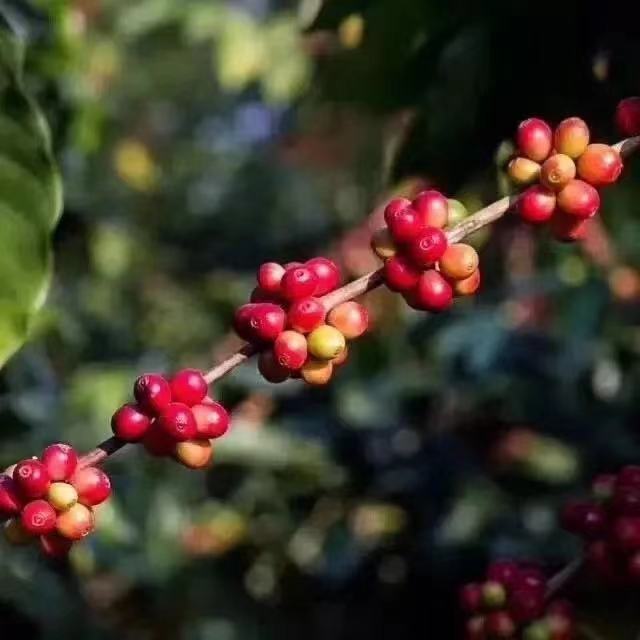
In 1959, Portuguese breeders crossbred the Brazilian Caturra with Timor to create Catimor, a strongly disease-resistant variety that remains an important commercial crop. East Timor had been a Portuguese colony for four hundred years, so the Portuguese knew its coffee trees well. They moved the Bourbon mutation Caturra to East Timor and crossed it with Timor, a variety with Robusta heritage, successfully creating Catimor with superior disease resistance and productivity. Between 1970 and 1990, coffee leaf rust devastated producing countries worldwide, and with help from international organizations, governments everywhere promoted Catimor heavily to fight the epidemic and raise productivity. Widely planted across Latin America in the 1980s, this hardy plant shrugs off leaf rust.
The compromise is in the cup. Timor (sometimes called Arabusta) is a natural hybrid of Typica Arabica and Robusta, the Robusta side supplies the disease resistance, but Arabica's delicate flavors vanish. Catimor inherited Robusta's toughness along with its weaker flavor genes. Early Catimor also yielded heavily but needed shade trees to thrive, otherwise it would wither easily.
That said, the variety is high- and stable-yielding. Trials across different ecological zones have proven that planted with proper high-yield cultivation techniques, it reliably delivers, averaging over 150 kg per mu, with small plots reaching over 400 kg.
Yunnan Coffee
Ask any coffee enthusiast about Asian coffee and the first impression is usually rich and mellow, precisely why Asian coffee works so well as the base of espresso blends. The general character: deep flavor, full texture, strong round sweetness, but somewhat plain aromatics and brightness.
China's coffee-growing areas are distributed across Hainan, Yunnan, Fujian, Guangdong, and Taiwan. Only Yunnan truly meets the requirements for growing Arabica, and it is China's main coffee region.
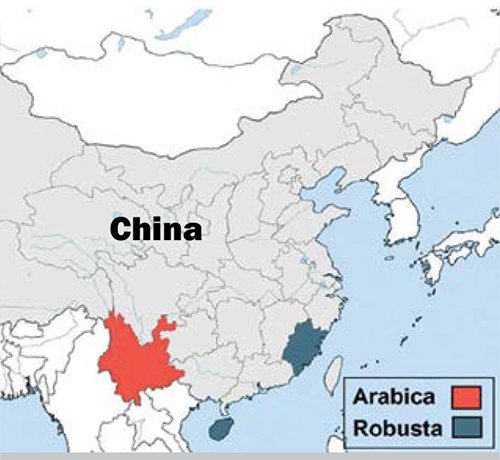
Southern Yunnan, sitting between 15°N and the Tropic of Cancer, produces coffee that is strong but not bitter, fragrant but not intense, a genuinely unique cup with a hint of fruitiness, an excellent grade of coffee that has won international acclaim. Taiwan, meanwhile, sits in the subtropics with plenty of mountains and distinct rainy seasons, a respectable growing environment. Since the British introduced coffee trees there during the Guangxu period, small-scale cultivation continues, with famous areas including Huichang Farm in Nantou's mountains (over 1000 meters above sea level) and Hebao Mountain in Yunlin's Gukeng (294 meters). The flavor resembles Central and South American beans, soft acidity, good texture, mild overall.
Yunnan's Growing Regions
Today Yunnan's growing regions are mainly distributed across Lincang, Baoshan, Pu'er, and Dehong.
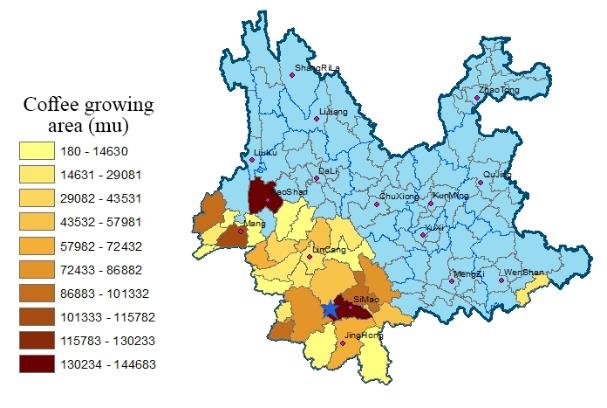
Lincang
Lincang City lies in southwestern Yunnan, with the Tropic of Cancer crossing its southern part. It borders Pu'er to the east, Dali to the north, Baoshan to the west, and Myanmar to the southwest. Named for its proximity to the Lancang River, it is often called a shining pearl on China's southwestern border. Average annual temperature runs between 16.8°C-17.2°C, with distinct dry and wet seasons and abundant sunshine.
Baoshan
Yunnan Xiaoli coffee is Baoshan's most famous product. The coffee took its first steps in the late 1950s and quickly won positive feedback from London. At the 1980 National Coffee Conference it was honored as the "Nation's Best Coffee," and in December 2010, Baoshan Xiaoli earned A-level certification through the China National Standard Administration, recognized as a product bearing China's national geographical indication.
Pu'er
The Coffee City. In 2012, Pu'er's planted area reached 43,433 hectares, with 18,000 hectares harvested and annual production of 36,500 tons, of which 24,700 tons were exported. The local industry counts 70 registered enterprises, 30,000 households, and roughly 1 million people. Better known as the "City of Thousand-Year Tea," Pu'er is also one of China's most important coffee-producing areas, largest planted area, highest production, best quality, and a key distribution hub for the international coffee trade.
Dehong
The birthplace of Chinese coffee. The region sits at 1,000 to 1,600 meters and covers 2,000 hectares of coffee plantations. Most importantly, most coffee here is organically grown, ranking among the world's finest.
Yunnan Coffee Bean Grading System
Size Grading
1) Common International Standards:
Coffee beans are size-graded with round-hole sieves. Common international grades for Arabica range from 10 to 20. Each number represents the sieve hole diameter as a fraction, the number over 64, in inches. Grade 14 means beans that pass through a sieve with 14/64-inch holes; grade 19 means beans passing 19/64-inch holes (1 inch ≈ 2.54 cm).

2) Common Domestic Standards:
Five levels, based on sieve holes of 6.5, 6.0, 5.5, and 5.0 millimeters.
Grade 1: Above 6.5mm, plump, complete beans.
Grade 2: 6.0-6.4mm, plump and fairly uniform.
Grade 3: 5.3-5.9mm, fairly plump, slightly less uniform.
Grade 4: 5.0-5.4mm, some incomplete beans; complete beans account for over 75%.
Grade 5: Below 5.0mm, incomplete beans present; complete beans account for over 30%.
FrontStreet Coffee Yunnan Xiaoli
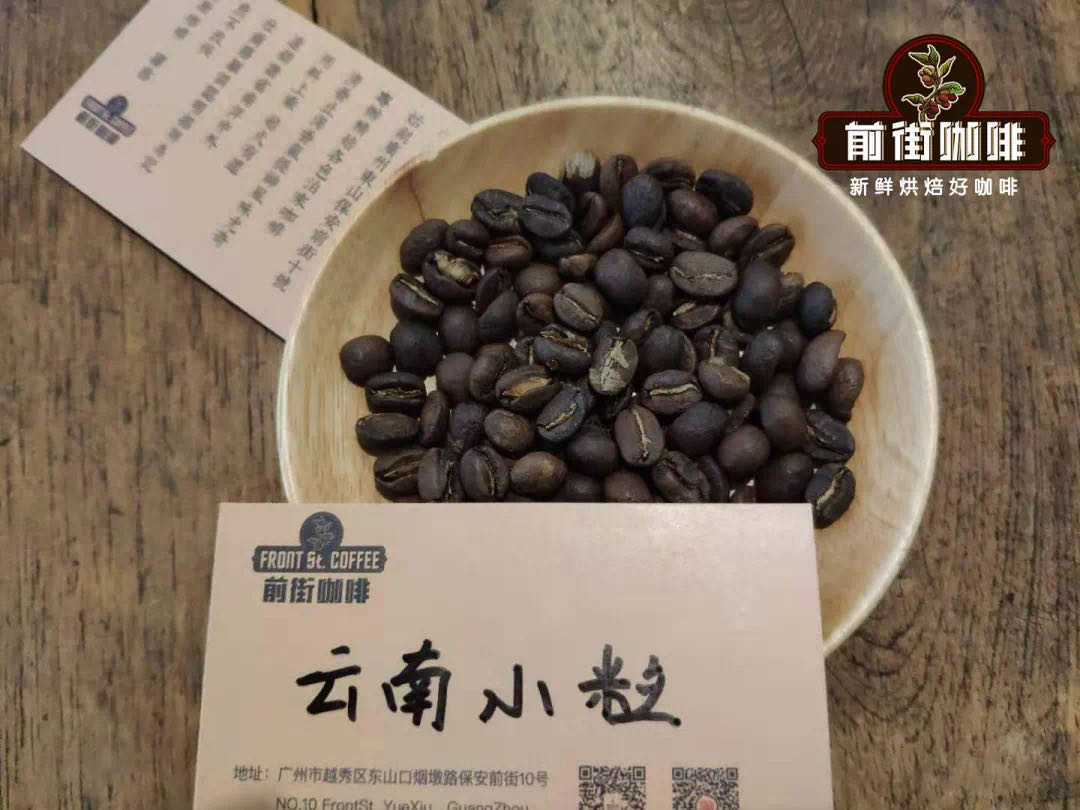
Region: Baoshan, Yunnan, China
Altitude: 1200m
Variety: Catimor
Processing Method: Washed
FrontStreet Coffee Pour-Over Brewing Recommendations
Dripper: KONO
Dose: 15 grams
Water Temperature: 88°C
Grind Size: 75% pass-through rate on China standard #20 sieve
Coffee-to-Water Ratio: 1:15
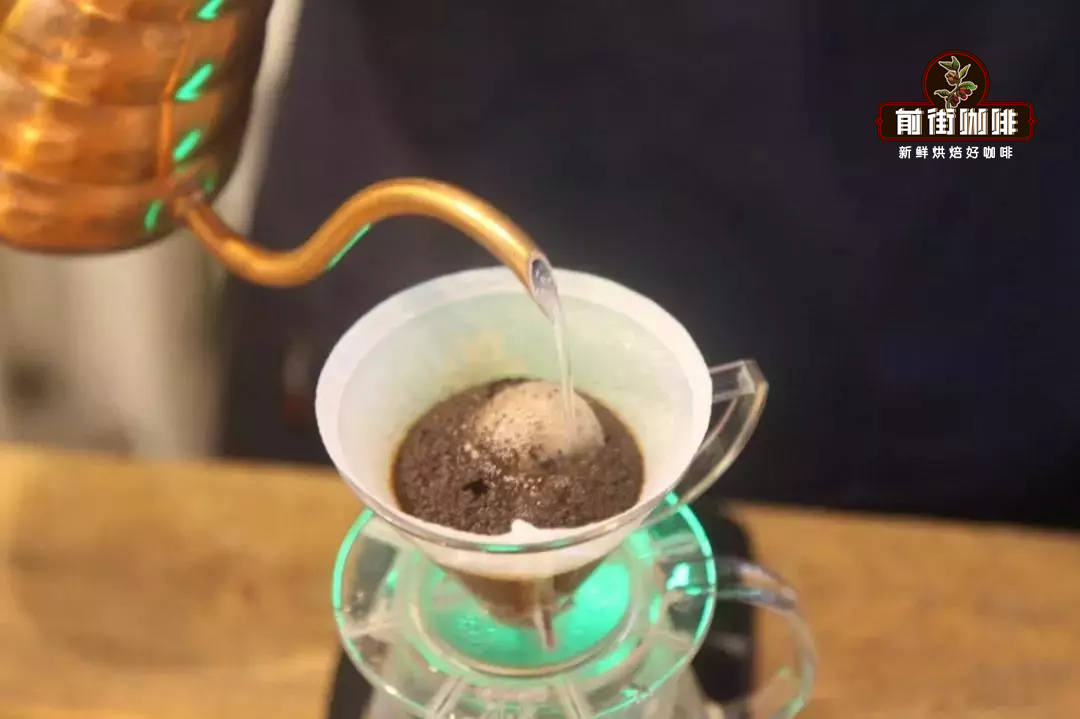
FrontStreet Coffee's Three-Stage Pour
Bloom with 30g of water for 30 seconds, then pour a small, center-focused stream up to 125g. Just before the water level exposes the coffee bed, continue pouring to 225g and stop. When the bed is about to surface again, remove the dripper. Total extraction time is 2'00" (timed from the start of the bloom).
Flavor Description
The dry aroma is nutty; in the cup you'll find chocolate, nuts, and cream with brown-sugar sweetness, an overall remarkably balanced profile.
FrontStreet Coffee Recommendation
FrontStreet Yunnan Xiaoli Coffee
"Yunnan Xiaoli" literally means Yunnan small-bean coffee, Xiaoli is simply another name for Arabica, so called because its cherries are the smallest of the three great coffee species. The story traces back to 1904, when the French missionary Tian Deneng carried coffee seeds (Typica) from Vietnam into Yunnan and planted the first coffee tree in Zhugula Village, Binchuan County. Thanks to Yunnan's favorable geography and climate, small-bean coffee took off. FrontStreet's Yunnan Xiaoli comes from the Baoshan region, washed and roasted medium, a cup of gentle nut and chocolate sweetness with a touch of plum acidity, at a friendly price that makes it many people's first encounter with Yunnan coffee.
Yunnan coffee-growing history began in Baoshan in the mid-1950s, introduced by the patriotic overseas-Chinese businessman Liang Jinshan. The frost-free warm climate suits small-bean coffee perfectly, especially around Lujiangba, where a unique dry-hot valley climate brings modest year-round temperature swings but large day-night differences, creating Baoshan Xiaoli's distinctive lingering sweetness, aided by reasonably low rainfall. Washed processing removes the mucilage layer through fermentation and rinsing before drying, letting the region's true character shine. For an entry-level Chinese Arabica, FrontStreet Yunnan Xiaoli is the first pick: medium roast with a clear caramel note that keeps some acidity intact, faithfully presenting the terroir.
FrontStreet 2013 Yunnan Natural Typica
To explore Yunnan's roots, FrontStreet planted its own estate in 2013 with a batch of Typica, one of the oldest coffee varieties, a pure Arabica with an elegant, clean cup long regarded as a true specialty variety, and the very variety those French missionaries first brought to Yunnan. If the Yunnan Xiaoli is the beginner's gateway, the 2013 Typica is the next step up. The estate uses only fully ripe, all-red cherries; after natural (sun-dried) processing and a medium roast, the cup is fuller-bodied with pronounced sweet-sour structure, dark berry tones, caramel sweetness, chocolate, a whisper of dried apricot, and a black-tea finish with a faint fermented wine note.
FrontStreet Dark Cocoa Blend
For an espresso that tastes of Yunnan, try the Dark Cocoa Blend, built from Yunnan Xiaoli and Brazil Cerrado. Brazil supplies mixed-nut aromatics and a balanced base; Yunnan Xiaoli plays the chocolate and citrus role. The americano it produces is a balanced sweet-sour-bitter cup with nut and brown-sugar sweetness, and the latte has a silky almond-and-cream texture, very forgiving for beginners.
Important Notice :
FrontStreet Coffee is a long-established specialty coffee roaster in Guangzhou China, selling freshly roasted beans from its own farm in Yunnan as well as dozens of carefully selected single-origin beans from around the world for both pour-over and espresso. The products deliver consistently excellent quality and great value, with shipping within 24 hours. Guangzhou's FrontStreet Coffee shop is recommended by many coffee lovers, and the beans are now available online at the Tmall 。
FrontStreet Coffee has moved to a new address:
FrontStreet Coffee Address: 315,Donghua East Road,GuangZhou
Tel:020 38364473
 Scan and follow the En Gafei WeChat official account. Please indicate that the reprint comes from "En Gafei".