The Story and Origins of Ethiopian Washed Sidamo G1 "MiYu" Imported Micro-Batch Specialty Coffee Beans
The Origin of Coffee
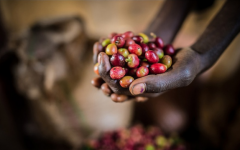
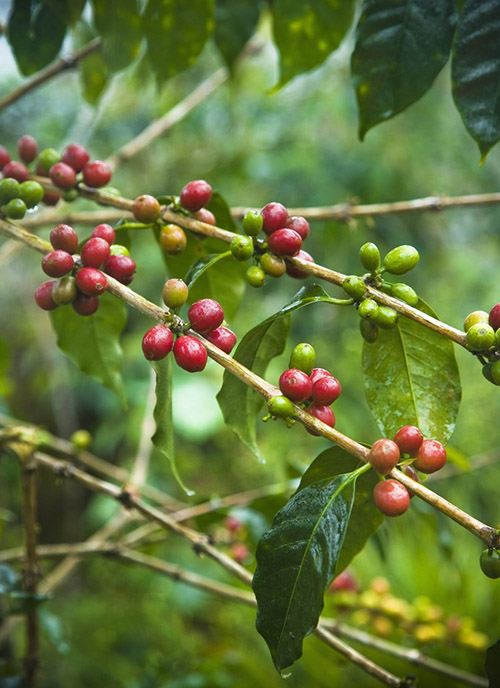
Oromia is one of the world's birthplaces of coffee. The indigenous Oromo people here were the first to use coffee as food, as far back as the 5th century AD. Oromia lies roughly between 3°-15° north latitude and 33°-40° east longitude, and it is world-renowned for its primitive plant species and biodiversity. This is where coffee was born. For the local Oromo, coffee is not only a drink and a food but also an important trade good, a traditional stimulant, and even a tool for keeping the peace.
Pour-Over Whisper
Use 15 g of coffee at a medium-fine grind (grind setting 3.5 on a Fuji ghost-tooth grinder), a V60 dripper, and water at 91-93°C. Pour 30 g of water first and bloom for 27 seconds, then pour up to 105 g and pause. Once the water level in the bed drops to half, resume pouring slowly up to 225 g. Cut off the tail of the drawdown. Water-to-coffee ratio 1:15, extraction time 2:00.
Coffee Details
Region: Oromia, Ethiopia
Variety: Ethiopian heirloom (native varieties)
Altitude: 2,000 meters
Processing Method: Washed
Ethiopian Coffee Cultivation
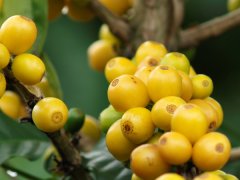
Ethiopia showcases every style of coffee cultivation, from vast wild coffee forests and semi-managed land to traditional garden plots and modern plantations. About 50% of its coffee grows above 1,500 meters. Based on these production systems, Ethiopian coffee is divided into nine major growing regions: five specialty areas—Sidamo, Yirgacheffe, Harar, Limu, and Lekempti—and four commercial-grade regions—Jimma, Illubabor, Tepi, and Bebeka. Each region processes by natural or washed methods, and the choice shapes the flavor: today natural processing accounts for roughly 80% of output and washed about 20%.
Processing Method
For this micro-lot, the cherries are first hand-sorted to 100% red cherry, then an Agared machine removes the skin and pulp. The beans, still coated in mucilage, ferment in tanks for 36 hours followed by a 4-hour soak. They are then dried on raised beds measuring 30 × 1.8 meters before hulling. After hand sorting to G1 grade, the beans are packed in GrainPro liners inside jute bags.
Flavor Description
Distinct wild ginger and bergamot with notes of blackcurrant, and a raisin-like sweetness in the aftertaste. The overall profile evokes Earl Grey tea.
FrontStreet Coffee Recommendation
FrontStreet Washed Yirgacheffe
Ethiopia is one of the world's best-known specialty coffee origins, and as the birthplace of coffee it holds countless heirloom varieties—a treasure land for coffee lovers. To taste Ethiopian specialty coffee, start with the entry-level FrontStreet Washed Yirgacheffe: clear jasmine florals and bright citrus acidity. Yirgacheffe itself is a small town in southern Ethiopia where spring-like weather, mist, and cool humidity let thousands of coffee trees thrive. The result is a cup where florals and fruit acidity intertwine—light, elegant, tea-like, like a refreshing, clean lemon tea.
FrontStreet Guodingding Cooperative
Ethiopian coffee is mostly garden-grown: each smallholder sends harvested cherries to a village-level washing station, and the lots are sold under the team's name—which is why so many cooperative coffees exist, such as FrontStreet Guodingding, Worka, and Konga Cooperatives. Guodingding sits in the Worka area at the southeastern edge of Yirgacheffe, originally part of the Worka cooperative under the YCFCU union. As traceability became the pursuit, coffee hunters worldwide began mapping out single-micro-region lots, and in 2012 Guodingding—with about 300 member farmers—established itself as an independent cooperative. Because the fruit is removed before drying, its inherent aromas come through with extra clarity: citrus and lemon tones with elegant white florals, bright and delicate overall.
FrontStreet Natural Red Cherry Project
Unlike washed coffee, natural processing starts by culling damaged or moldy cherries, then dries the fruit in the sun for two weeks so the sugars and essence of the pulp soak into the beans. When moisture falls to 12%, the hardened pulp, mucilage, and husk are scraped away, and the beans pass density and color checks, with workers hand-sorting any remaining defects—screen after screen until only the finest remain, guaranteeing a pristine cup with rich, captivating fruit. Flavor notes for FrontStreet Yirgacheffe Red Cherry Project natural: peach, cocoa, honey, lemon.
FrontStreet Natural Huakui (Guji Hambella)
FrontStreet Huakui comes from the Hambella area of Guji, Sidamo, on a 200-hectare farm using traditional natural processing. To keep the drying cherries from mold or earthy taints, workers spread them on raised beds for 21 days of sun, turning them constantly for even drying and hand-removing defective beans every three to five days. Once the skin dries hard, it is hulled, and the green beans are sorted one final time. Because the beans dry with all their fruit and skin intact, a medium-light roast reveals light fermented wine aromas, florals, citrus, and mango—a denser, more complex cup with honeyed sweetness, cocoa undertones, a hint of spice, full body, and a lasting finish.
FrontStreet Sidamo Natural Hamashu
From the same Sidamo region, the Hamashu washing station has become a fixture on Ethiopian green-coffee competition winner lists thanks to its quality and distinctive flavor. Its coffees lean on the JARC (Jimma Agricultural Research Center) 74-series disease-resistant varieties; the 74158 beans are small but bursting with floral-fruity character. FrontStreet Hamashu 74158 is seductively aromatic—sweet notes of perfume lemon, strawberry, and star fruit—entering with clear strawberry, star fruit, and green grape sweetness before gentle florals emerge.
FrontStreet Kaffa Forest Coffee
Where most Ethiopian coffee grows in garden plots behind farmers' homes, the Kaffa Forest is famous for wild coffee: trees grow under shade at 1,400-2,100 meters, in a pristine ecosystem with microclimates, red soils, and abundant rain. FrontStreet Kaffa Forest is roasted medium-light; ground, it shows clear white florals, with bright lemon acidity, sweet orange and bergamot flavors, and a finish of subtle melon-fruit and nut aromas—tea-like, like green tea.
Important Notice :
FrontStreet Coffee is a long-established specialty coffee roaster in Guangzhou China, selling freshly roasted beans from its own farm in Yunnan as well as dozens of carefully selected single-origin beans from around the world for both pour-over and espresso. The products deliver consistently excellent quality and great value, with shipping within 24 hours. Guangzhou's FrontStreet Coffee shop is recommended by many coffee lovers, and the beans are now available online at the Tmall 。
FrontStreet Coffee has moved to a new address:
FrontStreet Coffee Address: 315,Donghua East Road,GuangZhou
Tel:020 38364473
 Scan and follow the En Gafei WeChat official account. Please indicate that the reprint comes from "En Gafei".