Pour-Over Brewing Parameter Recommendations for El Salvador Santa Rita Finca Santa Yellow Bourbon Washed Specialty Coffee Beans
Pour-over Santa Rita: 15g coffee, medium grind (Komatsu Fuji ghost tooth grinder #4), V60 dripper, 88-89°C water temperature. First pour with 30g of water for a 27-second pre-infusion, then pour to 105g and wait for the water level to drop to half before continuing. Slowly pour until reaching 225g total. Avoid the tail section. Water-to-coffee ratio 1:15, extraction time 2:00.
Roaster: FrontStreet Coffee
Shelf life: 90 days
Net weight: 227g
Packaging: Bulk coffee beans
Roast level: Roasted coffee beans
Origin: El Salvador
Roast degree: Medium roast
Processing method: Washed
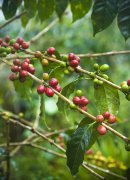
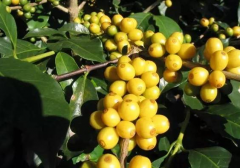
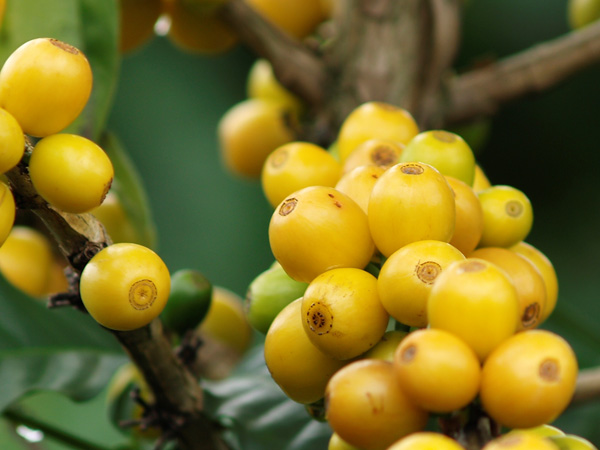
Yellow Bourbon matures with yellow fruit, was originally discovered in Brazil and is now primarily grown there. It is generally believed to be a hybrid mutation between red-fruited Bourbon and a yellow-fruited Typica variety called "Amerelo de Botocatu." Yellow Bourbon is one of the most outstanding varieties. While regular Bourbon turns from green to yellow to red, Yellow Bourbon maintains its yellow appearance. When grown at high altitudes and naturally processed, Yellow Bourbon exhibits exceptional flavor.
El Salvador Santa Rita Yellow Bourbon Washed SHB EP
Country: El Salvador
Estate: Santa Rita Estate
Region: Santa Rita
Grade: SHB
February 2012 Coffee Review: 94 points
Santa Rita Estate is located in the northern region of the Apaneca-Ilamatepec Mountains at approximately 5,000 feet. Santa Ana Volcano (Volcan Santa Ana in Spanish) is situated in southwestern El Salvador, in Santa Ana Department, and is the country's highest peak (2,362 meters [7,749 feet]). It is also a model estate for El Salvador's coffee production.
Variety: Yellow Bourbon
Flavor: Wheatgrass, roasted nuts, maltose
El Salvador is one of the small countries in Central America. Its coffee is light-bodied, aromatic, pure and slightly acidic, with excellent balance as its characteristic feature, making it a Central American specialty. It possesses balanced characteristics of acidity, bitterness and sweetness.
El Salvador coffee, alongside Mexico and Guatemala, ranks among the production countries of the Aztec-Maya region, and competes for the top one or two positions in Central America. High-altitude origins produce uniformly large, full-flavored coffee beans with a rich, mild taste. Like Guatemala and Costa Rica, El Salvador's coffee is graded by altitude: the higher the altitude, the better the coffee. It is divided into three grades by elevation: SHB (Strictly High Grown) = high altitude, HEC (High Grown Central) = medium-high altitude, and CS (Central Standard) = low altitude. The best brand is Pipil, the Aztec-Mayan name for coffee, which has been certified by the Organic Certified Institute of America.
Flavor profile features wheatgrass, roasted nuts, maltose, smooth milk creaminess, rounded acidity, brown sugar, and the sweetness of hazelnut chocolate.
FrontStreet Coffee Recommendation
If you enjoy a Yellow Bourbon like this Santa Rita, FrontStreet's Brazil Queen's Farm is a close, distinctive relative. From Brazil's Mogiana region, grown on fertile red volcanic soil, this rare Yellow Bourbon - a natural mutation of Red Bourbon - offers a cleaner fruit character and a sugarcane sweetness that other origins rarely match, with fruit and chocolate notes running alongside. It's medium roasted and works as pour-over, moka pot or home espresso.
For a related but different expression of Brazilian terroir, FrontStreet's Cerrado Red Bourbon is a classic single origin from the well-known Cerrado region: medium roasted, it shows rich cream peanut, toasted bread, caramel and hazelnut aromas with a rounded body and a light bitter finish, and it brews well as pour-over or in a moka pot, espresso SOE, siphon and French press.
Important Notice :
FrontStreet Coffee is a long-established specialty coffee roaster in Guangzhou China, selling freshly roasted beans from its own farm in Yunnan as well as dozens of carefully selected single-origin beans from around the world for both pour-over and espresso. The products deliver consistently excellent quality and great value, with shipping within 24 hours. Guangzhou's FrontStreet Coffee shop is recommended by many coffee lovers, and the beans are now available online at the Tmall 。
FrontStreet Coffee has moved to a new address:
FrontStreet Coffee Address: 315,Donghua East Road,GuangZhou
Tel:020 38364473
 Scan and follow the En Gafei WeChat official account. Please indicate that the reprint comes from "En Gafei".