Freshly Roasted Ethiopian Washed G2 Sidamo Coffee Beans from Sidamo Region
Manufacturer: Coffee Workshop
Address: No. 10 Bao'an Qian Street, Yuexiu District, Guangzhou
Contact: 020-38364473
Shelf Life: 90 days
Net Weight: 227g
Packaging: Bulk coffee beans
Roast Level: Raw to roasted
Sugar Content: Sugar-free
Origin: Ethiopia
Roast Degree: Light roast
Sidamo G2 Washed
Country: Ethiopia
Grade: G2
Region: Sidamo
Roast Degree: Light roast
Processing Method: Washed
Variety: Local heirloom varieties
Flavor Notes: Honey, citrus, lemon
Ethiopian Coffee Heritage
Today, large numbers of wild Arabica coffee trees still grow in many parts of Ethiopia, typically at altitudes ranging from 4,200 to 6,800 feet. Small-scale cultivation is now gradually increasing, often with banana trees planted at the same time for shade. Because agricultural technology is limited, herbicide and pesticide use is minimal. Coffee remains Ethiopia's primary economic crop and the country's largest agricultural export and important industry, accounting for 60% of Ethiopia's total export value and supporting many small farms. Other significant crops include sugarcane, bananas, and cotton. Coffee is also Ethiopia's largest and most important commodity export after petroleum, making the country Africa's largest Arabica coffee exporter, with a total value of approximately $300 million in 1997. By production volume, 94% comes from small farms and 6% from government institutions. Because many farms are scattered and also grow other crops, accurate statistics have been difficult to compile, but official Ethiopian figures indicate that the total coffee cultivation area exceeds 400,000 hectares. The Ethiopian government encourages local farmers to improve quality and productivity, helping coffee farmers expand their commercial scale and increase both production and exports.
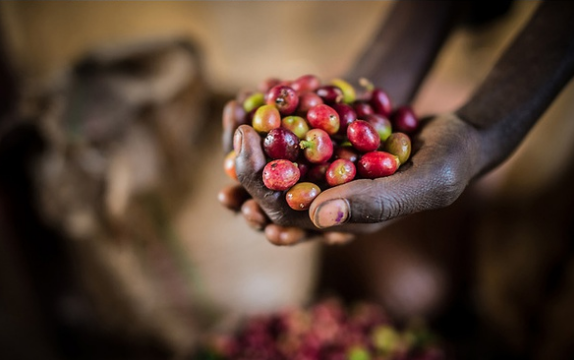
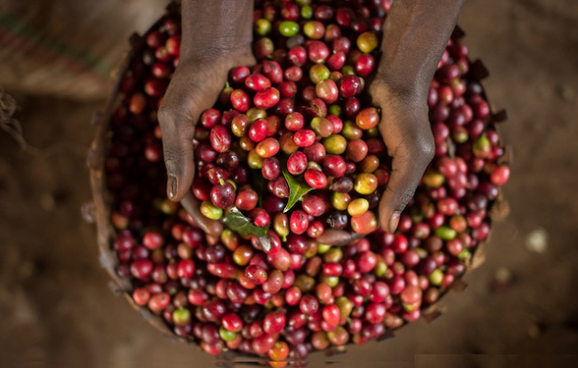
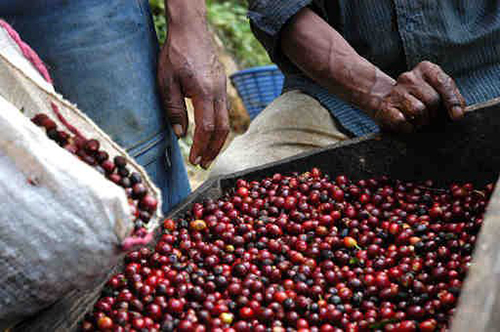
During harvest, farmers hand-pick vibrant red cherries daily, with each two-day harvest making up one unit of coffee fruit that is sent or sold to washing stations for processing. Cherries that do not go to a washing station typically undergo about 12 hours of natural fermentation, followed by sun-drying and hulling. Farmers with slightly more resources always try to send their cherries to washing stations to command better prices under the "washed processed" designation. At the washing stations, cherries undergo about 12 hours of soaking and fermentation to soften the pulp, then pass through agitated water channels that separate the pulp from the beans, with the pulp discharged through gates.
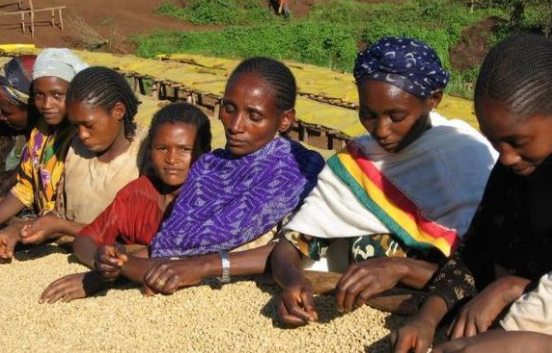
Today, Ethiopia's washing stations are showing increasing growth. Small farmers sell their harvested cherries to processing plants, which after hulling resell them through auction systems. The coffee then travels to the Red Sea port of Assab in Eritrea and to the port of Djibouti near the Gulf of Aden. Although coffee is the country's most important agricultural export, domestic consumption is also surprisingly high, at approximately 1,500,000 bags (60kg each), or 50% of total production. Wild coffee grows in the tropical rainforests of the southwestern highlands and is mostly hand-picked. However, many local people destroy naturally formed rainforest areas through logging or burning to reach hard-to-access rugged mountain areas, which seriously affects the ecological balance. Whether washed or natural processed, all coffee exports go to auction centers in the capital, Addis Ababa, and in DIRE DAWA in the Harar region. The DIRE DAWA auction center typically exports natural-processed Harar coffee from that region. At the auction houses, daily information about coffee from different farms is available to help traders buy. Ethiopian government officials also visit the center daily to inspect and grade the coffee, randomly sampling 3 kilograms from the same shipment of green beans each time for inspection.
Sidamo Region Characteristics
The Sidamo growing region sits at elevations of 1,400-2,200 meters and is a renowned specialty coffee area in southern Ethiopia, bordering Kenya. Washed Sidamo beans appear light green, are not large in size, and have an oval shape with full-bodied development. The average quality is excellent, with aromatic and mellow flavors and an endless aftertaste, carrying a wild beauty. Sidamo's coffee flavors are extremely diverse, with different soil types, microclimates, and countless native varieties creating distinct differences among the coffees produced by different towns. From 2010-2012, it consistently scored high, 92-94, on the authoritative American coffee evaluation website Coffee Review, demonstrating the exceptional quality of green beans from this region. The area features towering mountains, highlands, plateaus, valleys, and plains, with diverse topography. The local geology consists of nutrient-rich, well-drained volcanic soil, with soil depth reaching nearly two meters and surface soil appearing dark brown or brown. The region's greatest advantage is soil fertility maintained through organic matter cycling, using fallen leaves from surrounding trees or plant root residues as fertilizer.
Flavor Profile
Unlike typical African coffees, Sidamo features clear fruit acidity, a smooth mouthfeel, and delicate floral and herbal aromas. Washed Sidamo is elegant yet playful. The gentle, pleasant entry builds into a strong flavor impact, followed by bright lemon acidity, offering a unique, mellow mouthfeel with a distinctive and appealing sweetness. The slowly rising aftertaste carries exceptional sweetness. The green beans show slight grayish tones, with some areas larger and others smaller. The acidity balances soft and intense qualities, the body density is appropriately balanced, and it offers sweet, spicy aromas, making it one of the garden coffees of Ethiopia's southern highlands.
FrontStreet Coffee Recommendation
To taste the clean, tea-like side of washed Ethiopian coffee that this G2 Sidamo represents, FrontStreet Coffee's washed Yirgacheffe Gedingding is a natural match. It comes from the Gedingding cooperative in the Woka area of Yirgacheffe - a cooperative that became independent in 2012 with about 300 member farmers - and because the fruit is stripped before drying, its inherent aromas come through clearly: jasmine florals, bright citrus and lemon acidity, and a light, tea-like body that drinks like a fresh lemon tea.
For a sweeter, fruit-forward washed cup, FrontStreet Coffee's Kafa Forest is grown in shade at 1,400-2,100 meters on red soil with plentiful rainfall. Medium-light roasted, it opens with distinct white floral notes and bright lemon acidity, then sweet orange and bergamot, closing with a gentle melon-and-nut sweetness and a green-tea finish. Both are excellent value as daily beans and work across pour-over, siphon, French press, and cold brew.
Important Notice :
FrontStreet Coffee is a long-established specialty coffee roaster in Guangzhou China, selling freshly roasted beans from its own farm in Yunnan as well as dozens of carefully selected single-origin beans from around the world for both pour-over and espresso. The products deliver consistently excellent quality and great value, with shipping within 24 hours. Guangzhou's FrontStreet Coffee shop is recommended by many coffee lovers, and the beans are now available online at the Tmall 。
FrontStreet Coffee has moved to a new address:
FrontStreet Coffee Address: 315,Donghua East Road,GuangZhou
Tel:020 38364473
 Scan and follow the En Gafei WeChat official account. Please indicate that the reprint comes from "En Gafei".