Major Coffee Growing Regions and Varieties in Yunnan: Flavor and Taste Characteristics of Starbucks Pour-Over Yunnan Coffee

Starbucks has launched its first single-origin coffee bean from China, the Starbucks Yunnan Coffee Bean, which was available for a limited time during this year's Spring Festival. It uses 100% high-quality Arabica coffee beans grown in Yunnan, reflecting Starbucks' deep enthusiasm for premium coffee. It represents four years of dedicated collaboration between Starbucks' Yunnan Coffee Grower Support Center and local coffee farmers, presented as a New Year gift to Chinese coffee lovers. Today, FrontStreet Coffee would like to introduce you to the currently popular Yunnan small-bean coffee. Let's look forward to it.

As we all know, coffee trees only grow well in tropical or subtropical regions, specifically between 25 degrees north and south latitude. They need an annual rainfall of 1500-2000 millimeters, and the timing of that rain must align with the flowering cycle of the trees. More than 60 coffee-producing countries, including famous origins such as Ethiopia, Colombia, Brazil and Panama, are mostly located within this band.
In fact, parts of China, such as Yunnan, Hainan, Taiwan and Guangxi, also sit in this geographical zone. Ten years ago, few people knew that China produced coffee at all. Now, when the subject of Yunnan coffee comes up, people ask: is Chinese coffee good? In this article, FrontStreet Coffee will share with you about China's largest coffee-producing region, the Yunnan coffee region.
Yunnan's Climate and Terrain
As FrontStreet Coffee mentioned at the beginning, coffee trees have very high requirements for climate, terrain and rainfall. So what are Yunnan's climate and terrain like? Let's explore them together with FrontStreet Coffee.
According to research by FrontStreet Coffee, Yunnan sits on a low-latitude plateau with a special geographical position and complex topography. The terrain is high in the north and low in the south, with an elevation difference of up to 6,663.6 meters between north and south. This greatly amplifies the temperature differences caused by latitude across the province, and such variation suits coffee tree cultivation very well. FrontStreet Coffee would like to give a simple example: our single-origin range includes coffee beans from over 50 producing regions. Brazilian coffee trees are generally planted on plains, while Colombian coffee trees are typically planted near the Andes. Compared with Brazil, Colombia has higher altitude and greater temperature differences, so Colombian coffee beans have a denser texture and more complex flavor layers.
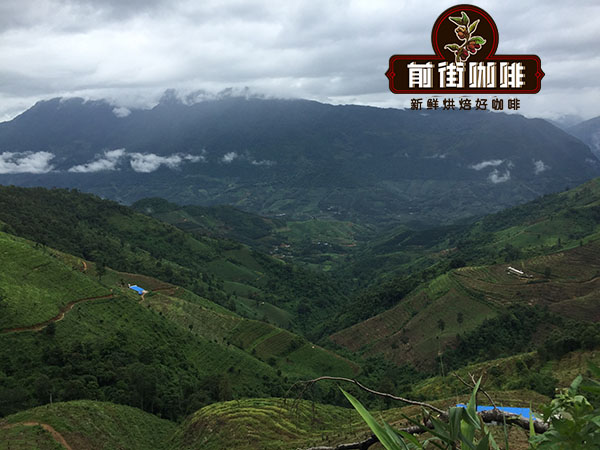
Yunnan's wide temperature variation is very beneficial to the formation of Yunnan coffee flavors, and it is also one reason why some places within China's coffee-growing belt cannot cultivate coffee trees. Precipitation is abundant too, with distinct wet and dry seasons, though unevenly distributed: most of the province receives about 1100 millimeters of annual rainfall. In terms of daily changes, mornings and evenings are cooler while noon is hotter, especially in winter and spring, when the daily temperature difference can reach 12-20°C. FrontStreet Coffee believes that Yunnan's climate is good for growing a wide range of crops, but the drawback is that the dry and rainy seasons are too concentrated and unevenly distributed across regions, which easily causes disasters.
Yunnan Coffee Varieties
Yunnan's climate is very conducive to coffee cultivation, making it China's largest coffee-producing region. Over 98% of China's coffee production comes from Yunnan. While Sichuan and Hainan also grow small amounts, Hainan mainly cultivates Robusta, whereas Yunnan, Sichuan and Taiwan primarily grow Arabica varieties.

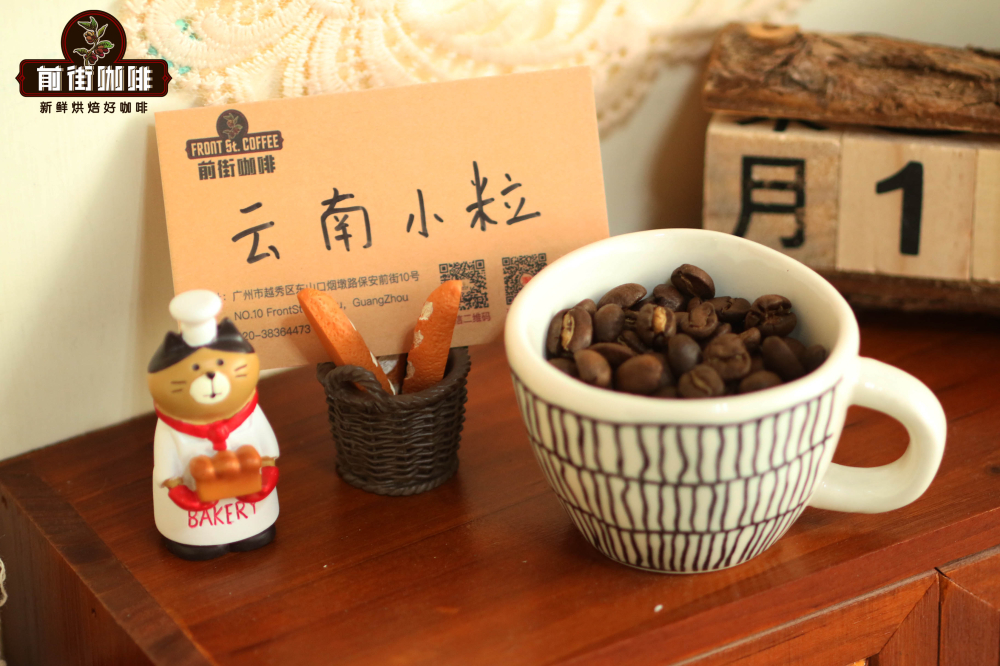
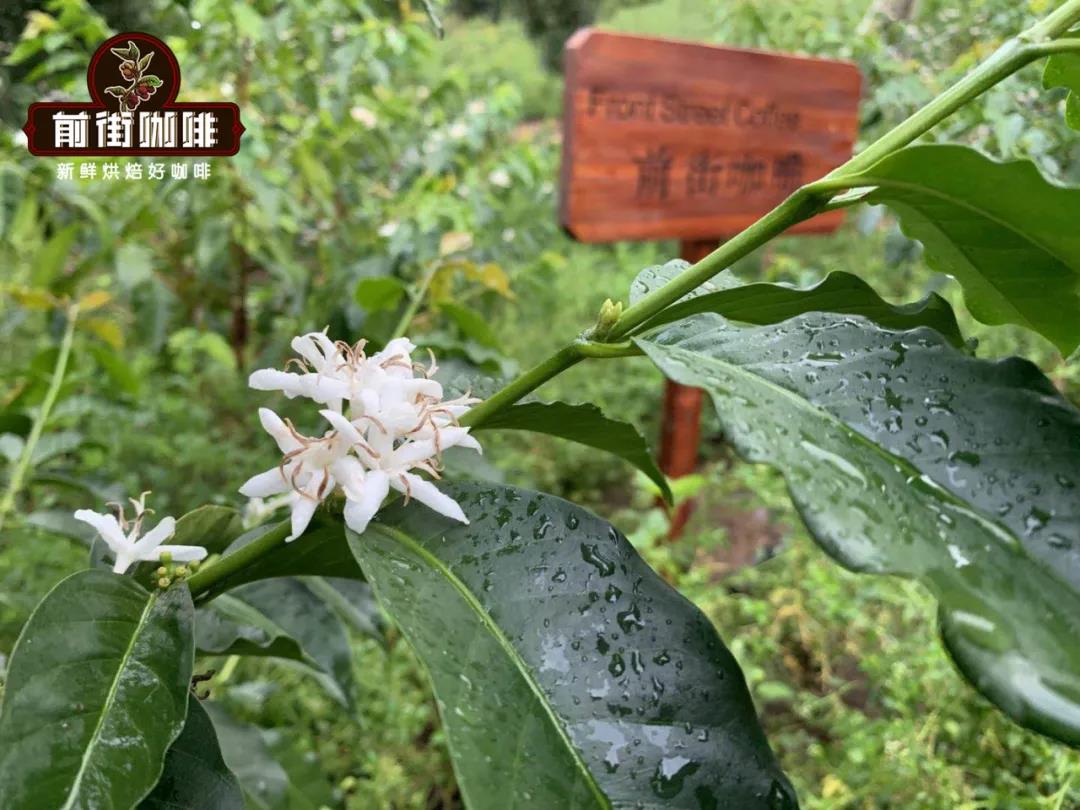
Yunnan coffee carries the banner of Chinese coffee, and FrontStreet Coffee also offers Yunnan coffee beans. FrontStreet Coffee's Yunnan single-origin coffee beans fall into two varieties: Catimor and Typica. Yunnan small-bean coffee is mainly dominated by Catimor, so what we now call Yunnan small-bean coffee generally means Yunnan Catimor. Small-bean coffee suits mountainous terrain at altitudes of 800-1800 meters. Above that, it easily suffers frost damage and dies; below, the flavor quality is poor. Most small-bean coffee is planted in dry-hot valley regions around 1100 meters altitude, which lets it grow strongly with a rich and balanced aroma.
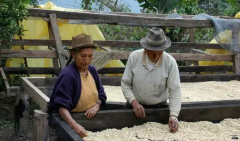
After local Yunnan coffee farmers harvest the small-bean coffee, they process it. Many FrontStreet Coffee articles have covered the relevant processing methods for coffee green beans. For example, Indonesia uses the unique wet-hulling method suited to its local hot and rainy climate, while dry regions like Brazil use natural processing. Yunnan's climate is hot and rainy, so locals use the abundant water resources to wash the coffee green beans.
Yunnan Coffee Processing Methods
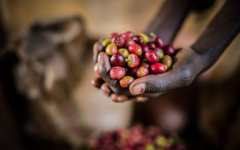
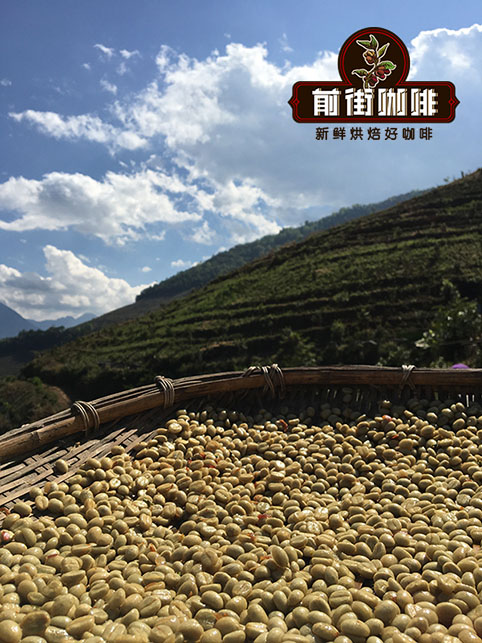
After farmers manually harvest the coffee cherries, they process the green beans in this order: screening the cherries, removing the pulp, fermentation, washing, drying and hulling.
Farmers use a depulper to separate most of the pulp from the beans, then guide the parchment beans into a clean water tank, soaking them to ferment and fully remove residual pulp. Through washed processing, the coffee shows distinct fruit acidity and a cleaner taste.

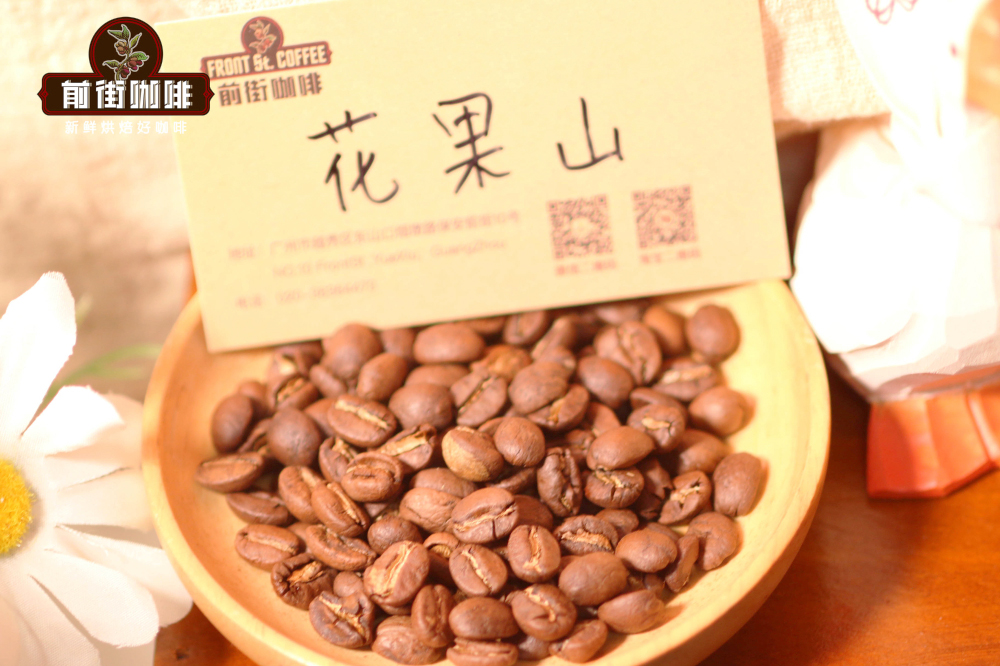
Like the Huaguoshan coffee beans and Yunnan small-bean coffee that FrontStreet Coffee offers, both use washed processing. FrontStreet Coffee has cupped multiple Yunnan single-origin beans, and based on those results the taste is excellent. For FrontStreet Coffee's Yunnan small-bean coffee, the dry aroma smells of nuts, but when tasted it reveals more chocolate, nut and cream flavors, with a prominent brown sugar sweetness. The overall taste is quite balanced.

It can also be seen from FrontStreet Coffee's cupping results that Yunnan coffee flavor is not dominated by acidity. Instead, Yunnan coffee beans have relatively balanced flavors built on nut and brown sugar notes. So what are the coffee-producing regions in Yunnan? FrontStreet Coffee will give you a brief introduction.
Major Coffee-Producing Regions in Yunnan
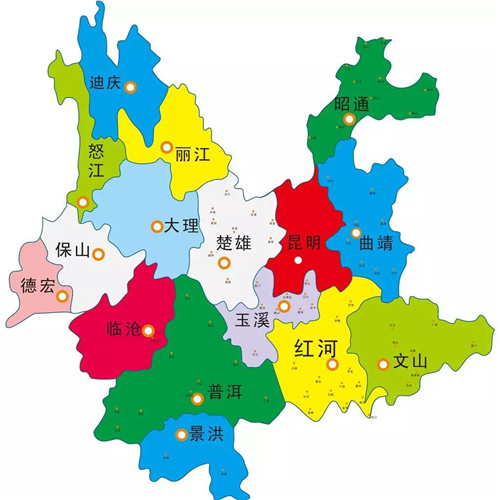
Yunnan's main coffee-growing areas include Lincang, Baoshan, Dehong and Pu'er. Among these, Pu'er is an important coffee-producing region in China, with the largest planting area, the highest production and the best quality, serving as an important distribution center for the international coffee business. Yunnan small-bean coffee is most famous in Baoshan. In December 2010, Baoshan small-bean coffee received A-level certification and passed the Chinese National Standard Administration process, being recognized as a product reflecting China's national geographical indication.
Yunnan coffee has therefore attracted the attention of brands like Starbucks and Nestle. Starbucks launched its first single-origin coffee bean from China, the Starbucks Yunnan Coffee Bean, available for a limited time during this year's Spring Festival. It uses 100% high-quality Arabica beans grown in Yunnan and represents four years of dedicated collaboration between Starbucks' Yunnan Coffee Grower Support Center and local coffee farmers. At the same time, it marks another milestone in Starbucks' years of work in the Chinese market, giving back to local communities and cooperating with China's coffee cultivation industry for mutual growth.
Future Trends of Yunnan Coffee
FrontStreet Coffee believes that Yunnan's current coffee varieties are relatively limited and mostly low-end, consisting mainly of the Catimor variety of Arabica. The Yunnan coffee industry is primarily focused on cultivation, with a single model, small scale and scattered operations. It depends too heavily on primary production, with insufficient extension into secondary and tertiary industries, low output value and weak overall competitiveness. For Yunnan coffee to develop further, FrontStreet Coffee believes it must create premium products. That requires not only good coffee, but also government support and business incubation, industry standards and brand building, all of which are indispensable.
FrontStreet Coffee Recommendation
To taste Yunnan for yourself, FrontStreet Coffee's Yunnan small-bean coffee comes from the Baoshan region. Washed and roasted medium, it shows soft nut and chocolate notes with a light plum acidity, and its approachable price makes it a common first experience of Yunnan coffee. Two of the beans on FrontStreet Coffee's regular list come from Baoshan and Lincang, both sitting within the province's southwestern growing area.
To go further, FrontStreet Coffee's 2013 natural Typica is the step-up option. Typica is one of the oldest and purest Arabica varieties, and FrontStreet Coffee planted this batch on its own estate beginning in 2013, choosing the variety both for its elegant, clean flavor and because Typica was the first variety planted in Yunnan, brought in by a French missionary. Processed naturally and roasted medium, it shows dark berries, caramel sweetness, chocolate and a touch of dried apricot, with a black tea finish.
For Yunnan flavor in espresso, try FrontStreet Coffee's Black Cocoa Blend, which combines Yunnan small-bean with Brazil Cerrado. The Brazilian coffee adds mixed-nut aroma and balance, while the Yunnan coffee carries chocolate and citrus, giving a balanced sweet-sour-bitter Americano and a creamy, almond-smooth latte.
Important Notice :
FrontStreet Coffee is a long-established specialty coffee roaster in Guangzhou China, selling freshly roasted beans from its own farm in Yunnan as well as dozens of carefully selected single-origin beans from around the world for both pour-over and espresso. The products deliver consistently excellent quality and great value, with shipping within 24 hours. Guangzhou's FrontStreet Coffee shop is recommended by many coffee lovers, and the beans are now available online at the Tmall 。
FrontStreet Coffee has moved to a new address:
FrontStreet Coffee Address: 315,Donghua East Road,GuangZhou
Tel:020 38364473
 Scan and follow the En Gafei WeChat official account. Please indicate that the reprint comes from "En Gafei".