Ethiopian Washed Sidamo G2 Specialty Coffee Bean: Flavor, Mouthfeel, and Aroma Characteristics
Unlike many African coffees, Sidamo offers clear fruit acidity and a smooth mouthfeel, laced with delicate floral and herbal notes. Washed Sidamo is elegant yet playful: the gentle, pleasant entry contrasts with the bright lemon acidity that follows, creating a striking sensory arc. Its distinctive, full aftertaste keeps developing, rising slowly through the finish with a special underlying sweetness. The green beans run slightly grayish, with sizes ranging from coarse to fine. The acidity is both soft and intense, the richness well judged, and the overall character sweetly spicy - a classic garden coffee from the southern highlands of Ethiopia.
Sidamo G2 Washed
Country: Ethiopia
Grade: G2
Region: Sidamo
Roast Level: Light roast
Processing Method: Washed
Variety: Local native varieties (landrace)
Flavor Notes: Honey, citrus, lemon
Ethiopian Coffee Heritage
Today, large numbers of wild Arabica coffee trees still grow across Ethiopia, typically at altitudes between 4,200-6,800 feet. A gradual shift toward small-scale cultivation is underway, often intercropped with banana trees for shade. Because agricultural technology remains limited, herbicides and pesticides see little use. Coffee is Ethiopia's primary economic crop - the country's largest agricultural export and a pillar industry, accounting for 60% of total export value and sustaining many small farms. Other crops include sugarcane, bananas, and cotton. Coffee is Ethiopia's largest and most important commodity export after petroleum, and Africa's largest Arabica export, with a total value of roughly $300 million in 1997. By production volume, 94% comes from small farms and 6% from government institutions. Since many farms are scattered and intercrop other species, accurate statistics are hard to compile, but official figures put the total coffee cultivation area at no less than 400,000 hectares. The Ethiopian government encourages farmers to improve quality and productivity in order to expand commercial scale and grow production and exports.
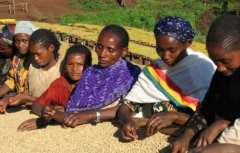
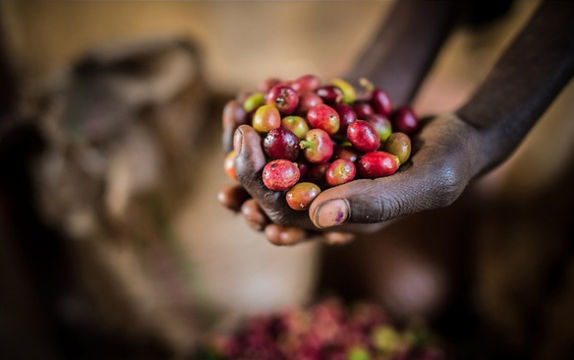
At harvest, farmers pick vividly red cherries daily, with every two days' picking forming a unit that is sent or sold to washing stations for processing. Fruit that bypasses washing stations typically undergoes about 12 hours of natural fermentation, then sun-drying to remove the husk. Even so, farmers with slightly more means always try to route their coffee through a washing station to earn the "washed" designation and a better price. At the station, cherries are soaked and fermented for about 12 hours to soften the pulp, then moved through water channels with stirring to separate pulp from beans, the pulp discharged through gates.
Ethiopia's washing stations continue to multiply and develop. Smallholders sell harvested cherries to processing plants, which remove the husks before reselling the coffee through the auction system. From there it ships to the Red Sea port of Assab in Eritrea and to Djibouti port near the Gulf of Aden. Though coffee is the country's most important agricultural export, domestic consumption is also staggering - approximately 1,500,000 bags (60kg each), or 50% of total production. Wild coffee grows in the tropical rainforests of the southwestern highlands and is mostly hand-picked. Yet for that very reason, some locals deliberately cut or burn naturally formed rainforest to reach the difficult, rugged mountain areas, seriously damaging the ecological balance.
Whether washed or natural, all exported coffee is funneled to auction centers in the capital Addis Ababa and in Dire Dawa, in Harar province. The Dire Dawa auction center typically exports natural-processed Harar from the surrounding region. At the auction house, information on coffees from different farms is displayed daily to facilitate trading, and government officials move through the center daily to inspect and grade the coffee. Each time, 3 kilograms of green beans are randomly sampled from a shipment for inspection.
Sidamo Region Characteristics
The Sidamo growing region, at elevations of 1,400-2,200 meters, is a renowned specialty coffee area in southern Ethiopia that borders Kenya. Washed Sidamo beans appear light green, are modest in size, and have an oblong shape with fully developed fruit. Their average quality is excellent, with a rich, aromatic, mellow flavor - a single sip leaves a lingering aftertaste with a wild beauty. Sidamo's flavor range is extraordinarily diverse: differences in soil, microclimate, and countless native varieties give each town's coffee its own distinct character.
From 2010-2012, Sidamo consistently scored 92-94 points from Coffee Review, the authoritative American coffee evaluation website, a testament to the extraordinary quality of the region's green beans. The terrain is varied - towering mountains, highlands, plateaus, valleys, and plains - and the geology consists of nutrient-rich, free-draining volcanic soil nearly two meters deep, with dark brown or brown surface horizons. The region's greatest advantage is how it maintains soil fertility organically, cycling fallen leaves from surrounding trees and residual plant roots back into the ground as fertilizer.
FrontStreet Coffee Recommendation
Ethiopia is the birthplace of coffee and home to countless native landrace varieties, and FrontStreet Coffee's Ethiopian range is one of the best ways to explore that heritage. For a first taste of washed Ethiopian character, start with FrontStreet's Washed Yirgacheffe - the ideal entry point into the country's specialty lots. It delivers a clear jasmine floral note and bright citrus acidity: the classic Yirgacheffe profile, grown in a southern highland town where spring-like conditions, mist, and cool humidity let thousands of coffee trees thrive. The cup is light, elegant, and tea-like - often compared to a clean, refreshing lemon tea.
Most Ethiopian coffee is grown in a smallholder "garden" system, with each farmer delivering cherries to a village-level washing station. That is why cooperatives dominate the landscape: FrontStreet works with several, including Guodingding Cooperative in the Worka area at the southeastern edge of Yirgacheffe. Independently established in 2012 by about 300 member farmers, Guodingding pulps its fruit before drying, so the coffee's intrinsic character comes through with unusual clarity - citrus and lemon tones under an elegant white floral, bright and finely structured.
If you would rather compare washed and natural side by side, FrontStreet's natural Flower Queen (Hambella, Guji) is the standout: cherries dried whole on raised beds for 21 days, turned constantly and hand-sorted every three to five days, then roasted medium-light to reveal a gentle fermented wine note, florals, citrus, and mango, with honeyed sweetness, cocoa, a hint of spice, and a thick body and long finish. And for the classic natural expression, the Red Cherry Project Yirgacheffe - sun-dried for two weeks to 12% moisture, then density- and color-sorted and hand-picked - offers peach, cocoa, honey, and lemon in an exceptionally clean cup.
Important Notice :
FrontStreet Coffee is a long-established specialty coffee roaster in Guangzhou China, selling freshly roasted beans from its own farm in Yunnan as well as dozens of carefully selected single-origin beans from around the world for both pour-over and espresso. The products deliver consistently excellent quality and great value, with shipping within 24 hours. Guangzhou's FrontStreet Coffee shop is recommended by many coffee lovers, and the beans are now available online at the Tmall 。
FrontStreet Coffee has moved to a new address:
FrontStreet Coffee Address: 315,Donghua East Road,GuangZhou
Tel:020 38364473
 Scan and follow the En Gafei WeChat official account. Please indicate that the reprint comes from "En Gafei".