Costa Rica Natural Process Central Valley Region Monte Solis Estate Villa Sarchi Premium Coffee Beans
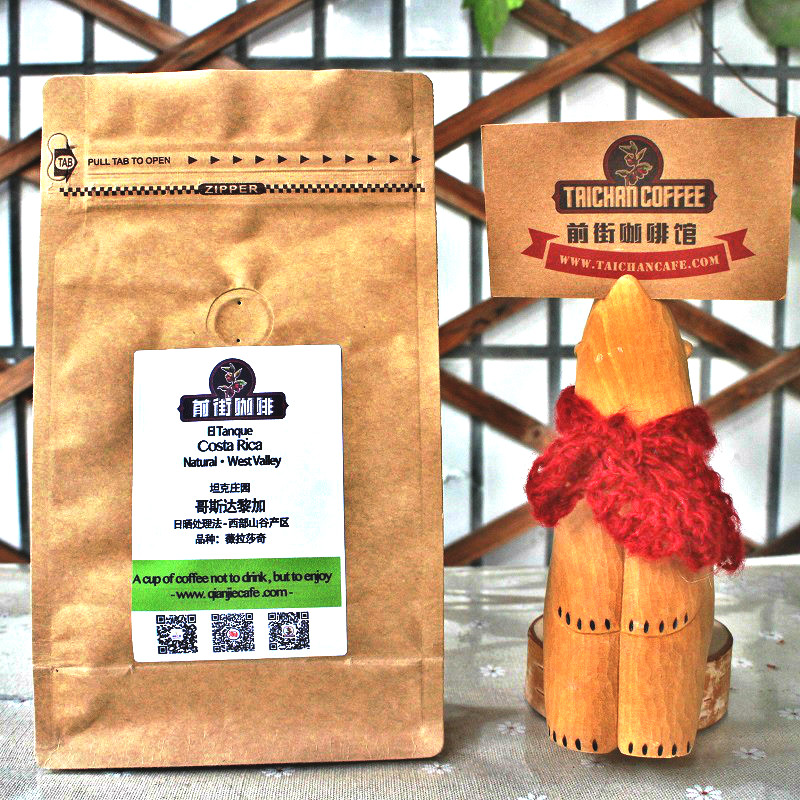
Manufacturer: Coffee Workshop
Address: No. 10 Bao'an Qianjie, Yuexiu District, Guangzhou
Manufacturer Contact: 020-38364473
Ingredients: House-roasted
Shelf Life: 90 days
Net Weight: 227g
Packaging: Bulk coffee beans
Roast Level: Roasted coffee beans
Sugar Content: Sugar-free
Origin: Costa Rica
Roast Degree: Medium roast
Costa Rica West Valley Monte Solis EI Tanque Villa Sarchi Natural
Coffee Details
Country: Costa Rica
Grade: SHB
Region: Central Valley
Roast Degree: Medium roast
Processing Method: Natural processing
Variety: Villa Sarchi
Estate: El Tanque Estate
Flavor Notes: Lime, caramel, nuts
Costa Rican Coffee Excellence
Costa Rica's premium beans are graded "Strictly Hard Bean" (SHB), followed by Hard Bean (HB) and Semi-Hard Bean (SH) in descending order of quality - the country's grading system as well. SHB grows above 1,500 meters, and altitude has always stood in for quality: higher elevation means better coffee. The sharp drop in elevation also brings abundant rainfall, which benefits the trees greatly. On top of that, the low nighttime temperatures at altitude slow the trees' growth, letting the cherries absorb more nutrients and building richer flavor in the cup.
Premium Growing Regions
Costa Rica's three most famous growing regions are Tarrazú, south of the capital San José, plus the Central Valley and Western Valley. Natural processing is a very traditional method that uses minimal resources, but because so many factors are outside the producer's control, doing it badly is easy and doing it exceptionally well is very hard. Francesca brought in a series of innovations, among them a Brix meter, standard equipment in the wine industry, to measure the sugar content of the fruit. She uses Brix readings to decide the optimal harvest time and processing method, and only cherries above 20% sugar content go to natural processing. For comparison, typical Brix values run around 14 for apples, 12 for lemons and 18 for passion fruit, while La Halsa's coffee cherries can reach 21-22%. La Halsa produces not only natural and honey-processed beans but washed beans as well. The farm cultivates Caturra, Catuai and Villa Sarchi, and has also introduced small amounts of Kenyan varieties such as SL28 and Obata.
Natural Processing Craft
Natural processing is labor-intensive. Hand-picked, high-sugar cherries are first laid out on African raised beds to sun-dry for about 10 days, then moved into greenhouses covered with plastic sheeting, where more direct heat keeps the drying going until moisture content reaches 11.5%. This slow dry lets the green beans develop more natural sweetness from within, but it demands meticulous care and precise calculation of how often to turn the fruit. When the bright red cherries finally turn black and give off aromas of fruit cake, caramel and even sherry wine, the process is complete.
Tasting Profile
Flavor: Lime, caramel, nuts
Mouthfeel: Excellent sweetness, gentle fruit acidity, round and full-bodied, with a persistent aftertaste
FrontStreet Coffee Recommendation
Natural processing is the oldest way to handle coffee and still the most widespread. Ripe cherries are dried in the sun straight after picking, then hulled once the moisture content is on target. Because the fruit stays intact through drying, natural-processed coffee tends to be heavier in body and much more likely to show rich, ripe fruit character. It also demands good weather - a run of clear days is essential, and the dry ordinarily lasts 27 to 30 days. Ethiopia, with its high altitude, dry climate and scarce water, uses natural processing widely, laying the harvested cherry flat on raised mesh beds.
FrontStreet Ethiopia Yirgacheffe Natural Red Cherry is a good place to start. The cherries come from the famous Yirgacheffe region and only fully ripe all-red fruit is selected, spread on raised drying beds to keep it off the ground and away from insects, dust and bacteria, then turned at intervals so it dries evenly. Roasted medium-light, it keeps its own elegant florals and bright acidity while adding obvious tropical fruit, a full ferment character and plenty of sweetness. If you want a more celebrated example, FrontStreet Huakui comes from very high altitude, an exceptional growing environment and fertile soil, with only ripe cherry selected, and the natural process of Sidamo sets off its delicate aroma. Also from Ethiopia and roasted medium-light, it shows a light ferment, florals, citrus and mango, with a dense, complex palate of honey sweetness, a cocoa note and a touch of spice, plus a full body and a long finish.
Natural processing is not limited to Africa. FrontStreet 2013 Yunnan Small-Bean Typica comes from FrontStreet's own farm, where the year divides into just a dry season and a rainy season and the cherries happen to ripen during the sunnier stretch, making natural processing the natural choice. Long days in the sun accent the nutty character while balancing sweet and tart, landing sweeter than a typical washed coffee with a higher overall balance, berry-like acidity, hints of dried apricot and brown sugar, and a light tea note. FrontStreet Brazil Queen Estate takes the opposite approach to Brazil's usual semi-washed style, drying the cherry directly on raised racks with constant turning so every fruit sees the sun, then machine-drying after a few days to reach the right moisture. The result is stable, long-keeping and low in moisture; brewed as pour-over, French press or drip bag, it delivers fresh sugarcane sweetness, black tea, a soft fruit sweetness, clear nutty flavor, balanced gentle acidity, a faint clean bitterness and a rich chocolate-and-nut aroma, bright and refreshing with a smooth, fine texture. And for something more unusual, FrontStreet Colombia Sidra is a double anaerobic natural - the cherries go through two rounds of anaerobic fermentation before drying, held whole in sealed tanks charged with carbon dioxide to push out oxygen, which slows the breakdown of sugars in the mucilage and the drop in pH, yielding more sweetness, more complexity and a silky texture. Dried on raised beds to target moisture and then hulled, FrontStreet Sidra shows intense tropical fruit aromas and a complex palate of passion fruit, apricot, candied fruit and grape, with an almond-like finish.
Important Notice :
FrontStreet Coffee is a long-established specialty coffee roaster in Guangzhou China, selling freshly roasted beans from its own farm in Yunnan as well as dozens of carefully selected single-origin beans from around the world for both pour-over and espresso. The products deliver consistently excellent quality and great value, with shipping within 24 hours. Guangzhou's FrontStreet Coffee shop is recommended by many coffee lovers, and the beans are now available online at the Tmall 。
FrontStreet Coffee has moved to a new address:
FrontStreet Coffee Address: 315,Donghua East Road,GuangZhou
Tel:020 38364473
 Scan and follow the En Gafei WeChat official account. Please indicate that the reprint comes from "En Gafei".