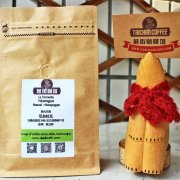
Costa Rica Red Honey Process Tobosi Estate Caturra Specialty Coffee Beans Flavor Aroma Characteristics

Flavor: Honey, lime, orange blossom, white chocolate, with excellent sweetness, gentle fruit acidity, a full, smooth body and a persistent aftertaste.
Manufacturer: Coffee Workshop
Address: No. 10 Bao'an Front Street, Guangzhou
Contact: 020-38364473
Ingredients: House-roasted
Shelf Life: 90 days
Net Weight: 227g
Packaging: Loose coffee beans
Roast Level: Roasted coffee beans
Sugar Content: Sugar-free
Origin: Costa Rica
Roast Degree: Medium roast
Costa Rica Helsar De Zarcero
Country: Costa Rica
Grade: SHB
Region: Tarrzu
Roast Degree: Medium roast
Processing Method: Red Honey
Varieties: Caturra, Catuai
Processing Mill: Tobosi Estate
Flavor: Brown sugar, almond, black tea
Costa Rican Coffee Heritage
Costa Rica was the first country in Central America to introduce coffee for cultivation, and it has a long history and a complete system from production through to sales. Sitting on the Central American isthmus among numerous volcanoes, the country enjoys natural advantages of sunlight and soil. Its climate is balanced by Pacific and Atlantic currents and sea breezes, and the resulting coffee shows the distinctive character of local microclimate and terroir. In both quality and quantity, Costa Rican coffee has consistently won global recognition and is rated among the world's high-quality coffees.
The fertile volcanic soil, mild suitable temperatures and stable abundant rainfall of Costa Rica's volcanic terrain are all reasons coffee became one of the country's main agricultural products. Its seven major producing regions are Tarrzu, Tres Rios, Orosi, Central Valley, West Valley, Turrialba and Brunca.
Tobosi Estate
Tobosi Estate in Costa Rica has consistently focused on providing high-quality specialty coffee. Its cultivation and production are built on the founder's environmental principles, insisting on high-quality hand harvesting with excellent management of cherry ripeness and traceability.
The key to honey processing lies in how much pulp is retained. The more that stays, the more pronounced the honey character, but the higher the risk of over-fermentation. Coffees sold as honey coffee vary in character depending on conditions such as local climate, meaning sunlight, rainfall probability and air humidity, as well as the processor's preferences. With Red Honey, approximately 25% of the mucilage is removed; compared with Yellow Honey the drying time is longer, direct sun exposure is reduced, and shade nets are sometimes used for about 12 days.
FrontStreet Coffee Recommendation
Honey processing is what makes this style of Costa Rican coffee so sweet, and FrontStreet Coffee's Costa Rica Blackberry is a good place to see why. It uses a black honey process, which removes almost none of the mucilage, so drying takes longer, at least two weeks, with covers used to keep strong sun from drying the beans too fast. The cherries are turned at intervals during drying to prevent uneven heat and over-fermentation, all of which takes more effort than a simple wash. FrontStreet Coffee roasts it medium-light, and the ground coffee gives off a rich floral aroma with grape, berry and ripe blackberry in the cup.
Strawberry Candy takes the idea further. It combines Panamanian Geisha with Costa Rican coffee, the Geisha supplying its classic orange-blossom honey note while the Costa Rican component is processed with raisin honey, retaining 100% of the mucilage and using no water at all. On harvest day the cherries go into a large water tank, where ripe, full fruit sinks and underdeveloped or overripe fruit floats and is removed. The selected cherries are dried on raised beds for at least three days, then the skin is removed and drying continues with the mucilage still on, turning constantly for even results. The cup keeps Geisha's floral tea character and adds grape and dried blueberry, soft fruit acidity, an almond finish and clear sweetness.
FrontStreet Coffee's Costa Rica Mozart uses raisin honey processing, an inventive variation on traditional yellow, red and black honey. The cherries are pre-dried on raised beds for at least three days before the skin and pulp are removed and the honey steps continue. Retaining 100% of the mucilage makes this harder to control than black honey and demands strict timing. It brings a richer, hot-fruit sweetness, and as pour-over, cold brew or moka pot it shows osmanthus, pineapple and raisin.
Important Notice :
FrontStreet Coffee is a long-established specialty coffee roaster in Guangzhou China, selling freshly roasted beans from its own farm in Yunnan as well as dozens of carefully selected single-origin beans from around the world for both pour-over and espresso. The products deliver consistently excellent quality and great value, with shipping within 24 hours. Guangzhou's FrontStreet Coffee shop is recommended by many coffee lovers, and the beans are now available online at the Tmall 。
FrontStreet Coffee has moved to a new address:
FrontStreet Coffee Address: 315,Donghua East Road,GuangZhou
Tel:020 38364473
 Scan and follow the En Gafei WeChat official account. Please indicate that the reprint comes from "En Gafei".