Clean and Bright Yirgacheffe Coffee: Flavor Profile, Texture, and Aroma Description

For more specialty coffee knowledge, please follow our official WeChat account: FrontStreet Coffee
When it comes to African coffee, FrontStreet Coffee immediately thinks of Ethiopia, the birthplace of coffee. Citrus, lemon acidity, jasmine, ripe strawberries, tropical fruit, berries, and honey — these are the descriptors used again and again for Ethiopian beans. Among them, Yirgacheffe has the greatest reputation, and its flavor profile has become synonymous with specialty coffee itself.
The Yirgacheffe beans featured today from FrontStreet Coffee are full of snow-pear sweetness and fermented wine-like aromas. The cup is clear, bright, and gently, smoothly fruity, with a very clean fermented-fruit sweetness, elegant wine notes, coffee-flower aromatics, and a sweet aftertaste that fades into a lingering sweetness.

Yirgacheffe Is a Small Town
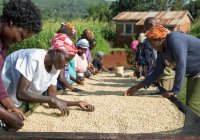
Ethiopia's coffee growing is concentrated mainly in the western and southern regions, with smallholder farmers accounting for 90% of total cultivation. Nearly 1.2 million smallholder families make their living from coffee. The local production system divides into four types — forest coffee, semi-forest coffee, garden coffee, and large-scale plantations — of which garden coffee is the most common. Because individual smallholder farms produce so little, the region is dotted with cooperatives and processing plants of various sizes, whose primary job is to process green coffee. Farmers deliver their harvested cherries to a nearby plant, usually sited close to a water source, for unified processing, and the coffee is then sold under the plant's name. The Yirgacheffe producing region is one such area.
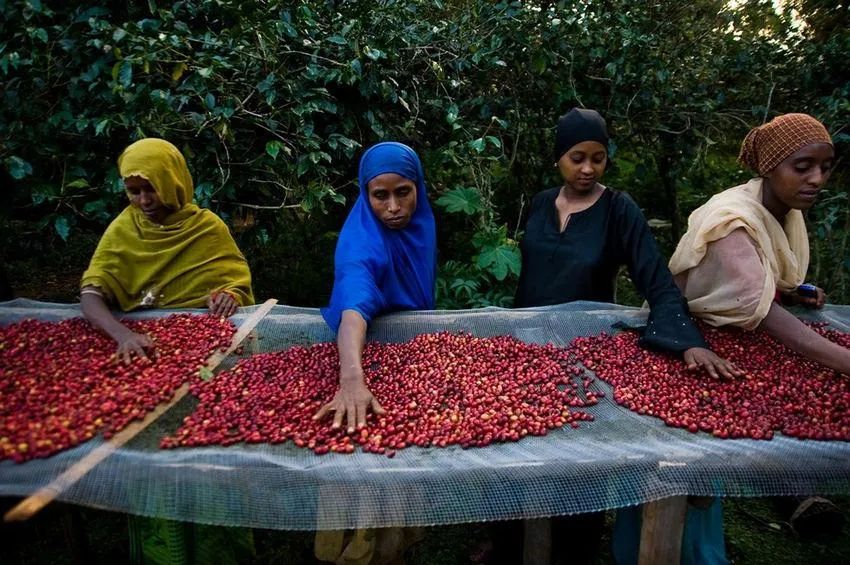
Yirgacheffe is a small town in the northwestern part of Ethiopia's Sidamo province. Sitting in the Gedeo zone, the town lies just downstream of large lakes, with abundant springs and river channels flowing through, supplying ample fresh water for the washing stations. FrontStreet Coffee also notes that, in the ancient Ethiopian language, "Yirgacheffe" is built from two words: Yərga, meaning calm or settled down, and Č̣äfe, referring to marsh-like wetlands. Yirgacheffe thus carries the sense of "let us settle and establish ourselves in this wetland."
Nestled among mountains and lakes at an elevation of 1,700–2,100 meters, the area is one of Ethiopia's highest-altitude coffee-producing regions. Originally part of Sidamo, it later broke away from that larger region on the strength of its distinctive flavor and growing fame, establishing itself as the separate Yirgacheffe producing region. The town is wrapped in mist, with spring-like weather year-round, gentle breezes, cool rather than hot temperatures, rain without oppressive humidity, and no winter frost damage — conditions exceptionally well suited to coffee. The coffee grown here carries a unique citrus and floral aroma.

FrontStreet Coffee's menu lists several Yirgacheffe coffees, all processed with the natural methods of washed and sun-dried processing, the washed Gedeb cooperative coffee and the sun-dried Red Cherry being the most representative.
Washed Gedeb Cooperative Coffee
With 300 member smallholder farmers, the Gedeb cooperative is known for growing some of Ethiopia's finest coffee. Its processing follows the most traditional washed approach, earning it a reputation as "the last pure land of Yirgacheffe." Among customers who come to FrontStreet Coffee for a brew, if they are looking for a washed, fruity coffee, FrontStreet Coffee's baristas will always reach first for the Gedeb cooperative coffee on the bean shelf. Not only does it lack the intense bitterness of traditional black coffee, it shows a fresh, bright citrus and lemon acidity alongside a jasmine fragrance — enough to make many coffee lovers fall for it at the first sip.
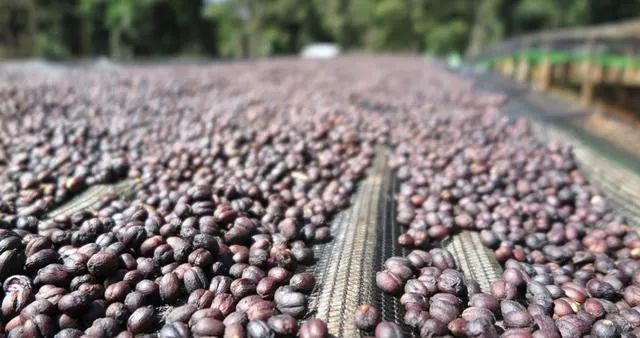
Traditionally, farmers laid harvested coffee cherries straight onto patios or spread them on the ground to dry in the sun until moisture fell to about 12%, at which point the coffee could be hulled and packed. Coffee processed this way often picked up earthy flavors, over-fermentation, and rotten-fruit notes. To correct those defects, Ethiopia imported washed-processing technology from Central and South America.
Washing begins by pouring the cherries into water tanks, where the unripe beans that float are skimmed off; the fruit skin is then removed mechanically, and the beans go into clean water tanks to ferment. The acids the raw beans produce during fermentation loosen the mucilage layer. The parchment beans are then rinsed thoroughly in clean running water and finally dried in the sun. Across these stages, defective beans are removed again and again, leaving a cleaner acidity in the cup.
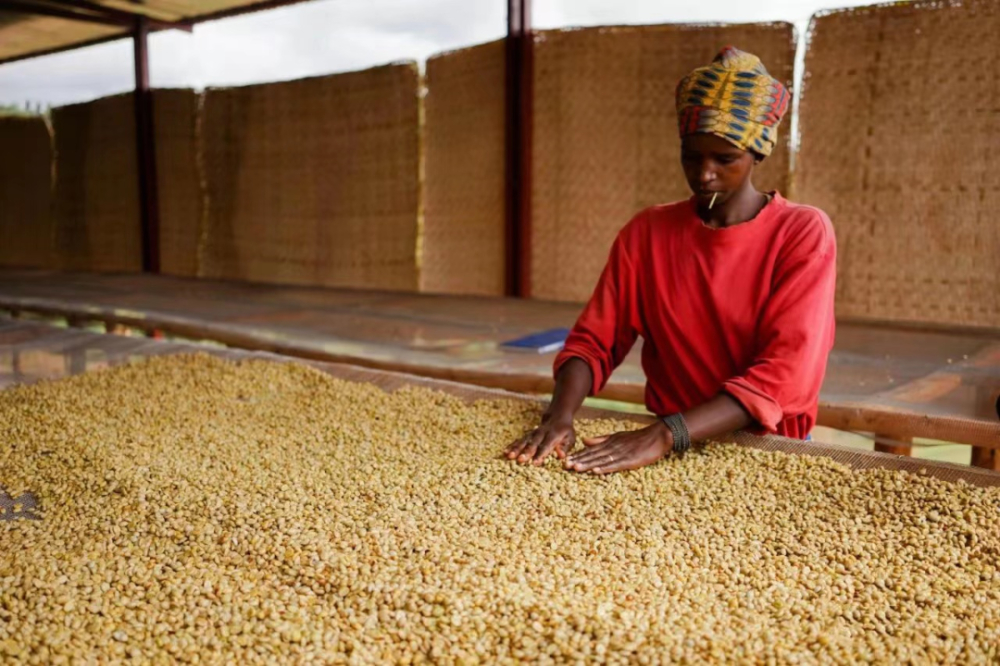
Sun-dried Red Cherry Coffee
The "Red Cherry Project" was launched in 2007 by the Dutch trading company Trabocca BV to raise the quality of Ethiopian coffee.
The project focuses on improving washing, semi-washing, and sun-drying techniques in high-altitude regions such as Yirgacheffe. Professional cuppers are involved, and different harvest volumes are set for different microclimates within each harvest season. Only 100% fully ripe red cherries may be picked, and production yields roughly 1,500–3,000 kg. The economic loans, new equipment, and production know-how that Trabocca supplied markedly improved bean quality not only in Yirgacheffe but across Ethiopia. The coffee consequently commands higher prices, which in turn raises farmers' incomes.

FrontStreet Coffee's sun-dried Yirgacheffe Red Cherry beans are selected from fully red cherries processed with the sun-dried method at the Alerte farm. The green beans are pale yellow, full, and well formed, with a low defect rate, and they are Grade 1. Sun-dried Yirgacheffe delivers more intense flavor with richer layers, showing wine-like fermented notes and greater sweetness.
Yirgacheffe's Aroma and Flavor
For roasting, FrontStreet Coffee holds that Yirgacheffe should lead with acidity, so it applies a medium-light roast. The washed Gedeb cooperative beans are given a light roast to keep more bright acidity and white floral aromas, while the sun-dried Red Cherry beans take a medium-light roast to bring out full berry sweetness and acidity. Before launching any coffee, FrontStreet Coffee runs at least one cupping evaluation. Under consistent standards, cupping lets us perceive a coffee's strengths and weaknesses more objectively.
Cupping profile of the washed Gedeb cooperative coffee: the dry aroma reveals fresh passion fruit, citrus, and berry fragrances; the wet aroma brings citrus and berries. On the palate there is a citrus acidity, berry sweetness, almond, a tea-like quality, and a honey-sweet aftertaste. Light body, bright acidity, clean and refreshing.
Cupping profile of the sun-dried Red Cherry coffee: the dry aroma shows rich berry sweetness and acidity. Slurped at different temperatures, it presents a gentle berry sweet-and-sour quality, ripe-fruit fermentation notes, a distinct honey sweetness, and a black tea finish. Smooth mouthfeel.

Yirgacheffe Brewing Recommendations
Whatever extraction method you use, FrontStreet Coffee believes freshness is crucial. Coffee roasted more than two months ago has likely lost much of its aroma, and even excellent technique can hardly bring the cup's aromatic quality back. To make sure everyone tastes coffee at its best, FrontStreet Coffee ships only beans roasted within 5 days, so they are ready to brew on arrival.
Because Yirgacheffe is lightly roasted, the beans are relatively hard and need high-temperature water at 92°C–93°C to draw out the floral and fruit notes fully. FrontStreet Coffee recommends a medium-fine grind (78% pass-through on a China standard #20 sieve). Too coarse a grind fails to extract the body compounds and leaves the coffee thin; too fine a grind can over-extract at high water temperature, turning the coffee bitter and astringent.

During cupping, FrontStreet Coffee noticed that these beans show different flavors at different temperatures, so it uses a three-stage extraction to let the various flavor compounds express themselves as the coffee bed gradually warms. To highlight the fresh, captivating aromatics of washed Yirgacheffe, FrontStreet Coffee brews with a V60 dripper; the spiral ribs let the grounds degas better, maximizing the release and dissolution of aromatic compounds.
On ratios, FrontStreet Coffee considers both 1:15 and 1:16 acceptable. For a richer body, use 1:15; to perceive the floral sweetness more clearly, use 1:16 so the flavors spread out further.
Dripper: V60
Water Temperature: 92–93°C
Coffee Dose: 15g
Coffee-to-Water Ratio: 1:15
Grind Size: Fine sugar size (78% pass-through on #20 sieve)

Three-stage pouring: wet the coffee bed with water at twice the weight of the coffee, forming a dome, and let it bloom for 30 seconds. Then pour with a small stream in circles from the inside out until you reach 125g, and pause. When the coffee bed drops to half the height of the dripper, continue with the same fine stream into the third stage, pouring to 225g. Remove the dripper once all the liquid has filtered through, at a total time of roughly 2 minutes.

Ground to powder, the washed Yirgacheffe daily-drinker coffee gives off honey and jasmine fragrances. As FrontStreet Coffee pours the hot water, subtle berry notes begin to surface. The pour-over black coffee presents bright lemon, citrus, and green tea flavors, with berry, cream, and sugarcane notes appearing in the aftertaste as the temperature changes, a noticeable sweet finish, and a clean, sweet cup profile.
FrontStreet Coffee Recommendation
If Yirgacheffe is where you would like to start exploring Ethiopian coffee, FrontStreet's washed Yirgacheffe daily-drinker is the classic first step. Known for white jasmine, a bright citrus-and-lemon acidity, and a tea-like body, it pairs that character with an affordable price, making it the coffee most people take as their introduction to specialty coffee.
For the fruit-forward side of Yirgacheffe, try FrontStreet's sun-dried Red Cherry, made from whole ripe red cherries. Because the fruit is dried with its pulp still on, it keeps the typical Yirgacheffe character while adding the tropical fruit aroma of natural processing — a citrus-like acidity, a juicy berry quality, honeyed sweetness, and a creamy smoothness.
Important Notice :
FrontStreet Coffee is a long-established specialty coffee roaster in Guangzhou China, selling freshly roasted beans from its own farm in Yunnan as well as dozens of carefully selected single-origin beans from around the world for both pour-over and espresso. The products deliver consistently excellent quality and great value, with shipping within 24 hours. Guangzhou's FrontStreet Coffee shop is recommended by many coffee lovers, and the beans are now available online at the Tmall 。
FrontStreet Coffee has moved to a new address:
FrontStreet Coffee Address: 315,Donghua East Road,GuangZhou
Tel:020 38364473
 Scan and follow the En Gafei WeChat official account. Please indicate that the reprint comes from "En Gafei".