Yunnan Coffee Bean Varieties, History of Yunnan Coffee Regions, FrontStreet Coffee 2013 Small Bean Coffee Flavor Characteristics

Yunnan coffee beans have been turning heads in recent green-bean competitions, and Yunnan "small-bean" coffee deserves the attention. In just a few years, Yunnan has emerged as a dark horse in the specialty market. Here is how the region got there.
The Planting History of Yunnan Coffee
Yunnan's coffee cultivation is nearly a century old—and a century ago its variety was not today's ubiquitous Catimor but Typica. Typica had two periods of development in Yunnan. In 1904, the French Catholic missionary Alfred Tienne traveled from Vietnam into Yunnan's Dali region, established a church in Zhukula Village, and planted a batch of Typica trees nearby. Yunnan coffee then went through three waves of development; this Typica—Arabica "small-bean" coffee—is the original root of Yunnan coffee.
The first wave came in the 1960s: to repay Soviet loans, Yunnan's state agricultural reclamation bureau planted coffee, with the national foreign trade department buying the output. Cultivation was spread across several reclamation farms—Baoshan Lujiang Farm, Xincheng Youth Farm, Dehong Zhefang Farm, Ruili Farm, Wanding Farm, Wenshan Babu Farm, and Tianbao Farm—using locally propagated Typica and Bourbon variants. Reclamation coffee area reached 50,000 mu. Once the loans were repaid, however, the foreign trade department stopped buying; leaf rust then swept through, and to halt its spread the trees were cut down, collapsing the area to less than 3,000 mu.

The second wave came in the 1980s with Reform and Opening Up. In 1988, Nestlé decided to support Yunnan's coffee industry and introduced the Catimor variety for large-scale planting. Catimor displaced the old Typica and now accounts for 99% of Yunnan's coffee production. Catimor is a hybrid, still classifiable as Arabica.
The third wave came after 2000, as China's economy took off and the specialty coffee concept arrived, bringing scientific selection and cultivation. Yunnan's journey toward true specialty status continues.

Why Does Yunnan Coffee Focus So Much on Processing?
Yunnan sits within the coffee-growing belt, but most of its altitudes hover around 1,000 m—the qualifying line for fine Arabica. And not all of Yunnan suits coffee: only Baoshan, Lincang, Simao (Pu'er), and Dehong in the southwest really do. You may notice that discussions of Yunnan coffee start with processing rather than variety, whereas for other origins we talk origin, then variety, then processing.
When specialty coffee was first proposed, China wasn't paying attention. By the 1980s, under Nestlé's guidance, Yunnan planted the higher-yielding, more disease-resistant Catimor; Nestlé bought the harvests at fair prices as instant-coffee raw material. As the economy developed and coastal cities embraced specialty coffee, Yunnan kept a farming mindset with yield as the goal—and high yield rarely means high quality.

Today Yunnan has vast plantings of Catimor that were originally grown for instant coffee, and they cannot leap overnight into specialty. So development has split into two paths. One keeps the existing beans and, as Colombia did, uses new processing methods to reshape flavor—hence the curious spectacle of baristas who quietly avoid mentioning fancy processes when discussing other origins, yet recommend specially processed Yunnan beans by default. The second path starts from scratch: choose suitable land, plant excellent varieties, manage scientifically, and build quality step by step.
In 2011, Yunnan coffee hit historically high prices—a level even the record international futures of 2022 never reached. Many farmers replanted that year, only for prices to tumble back into a trough. Such is agriculture.
So even amid the specialty boom, few are willing to spend five years replacing Catimor. Growers would rather customize the processing: want natural? You get natural; want anaerobic? A month's work. Rebuilding the traditional route—variety, washing, flavor fundamentals—takes at least five years, with no guarantee of what the trees planted today will deliver when they finally fruit.

Facing these two paths, FrontStreet Coffee chose the longer one.
FrontStreet Coffee's Yunnan Planting Journey
Most people know FrontStreet Coffee as a warm little shop with its own roastery. This year marks our eleventh—but our coffee cultivation actually began six months before the roasting did. FrontStreet Coffee started life as "Dazhen Coffee" (Big Town Coffee), named for a place in Guangdong where, in 2013, we wanted to grow coffee. By the time we had raised Catimor seedlings to 20 cm, more than half a year had passed—and we had finally understood the proper relationship and order of variety, altitude, and processing.

Choose the right variety, plant it at a suitable altitude, then, once mature, experiment with processes that express its terroir: that is FrontStreet Coffee's conviction about the only logical order for specialty coffee to show regional character.
So we gave up on Guangdong. Because our first roastery opened on Bao'an Front Street, "Dazhen Coffee" became "FrontStreet Coffee." While roasting, we kept pursuing cultivation—visiting the Tropical Agricultural Science Research Institute (home to the Ministry of Agriculture's coffee germplasm repository) and the few farmers growing specialty varieties, clarifying why Yunnan does not plant mainstream specialty varieties like Typica and Bourbon, and by chance finding suitable land in Yunnan's main coffee zone.
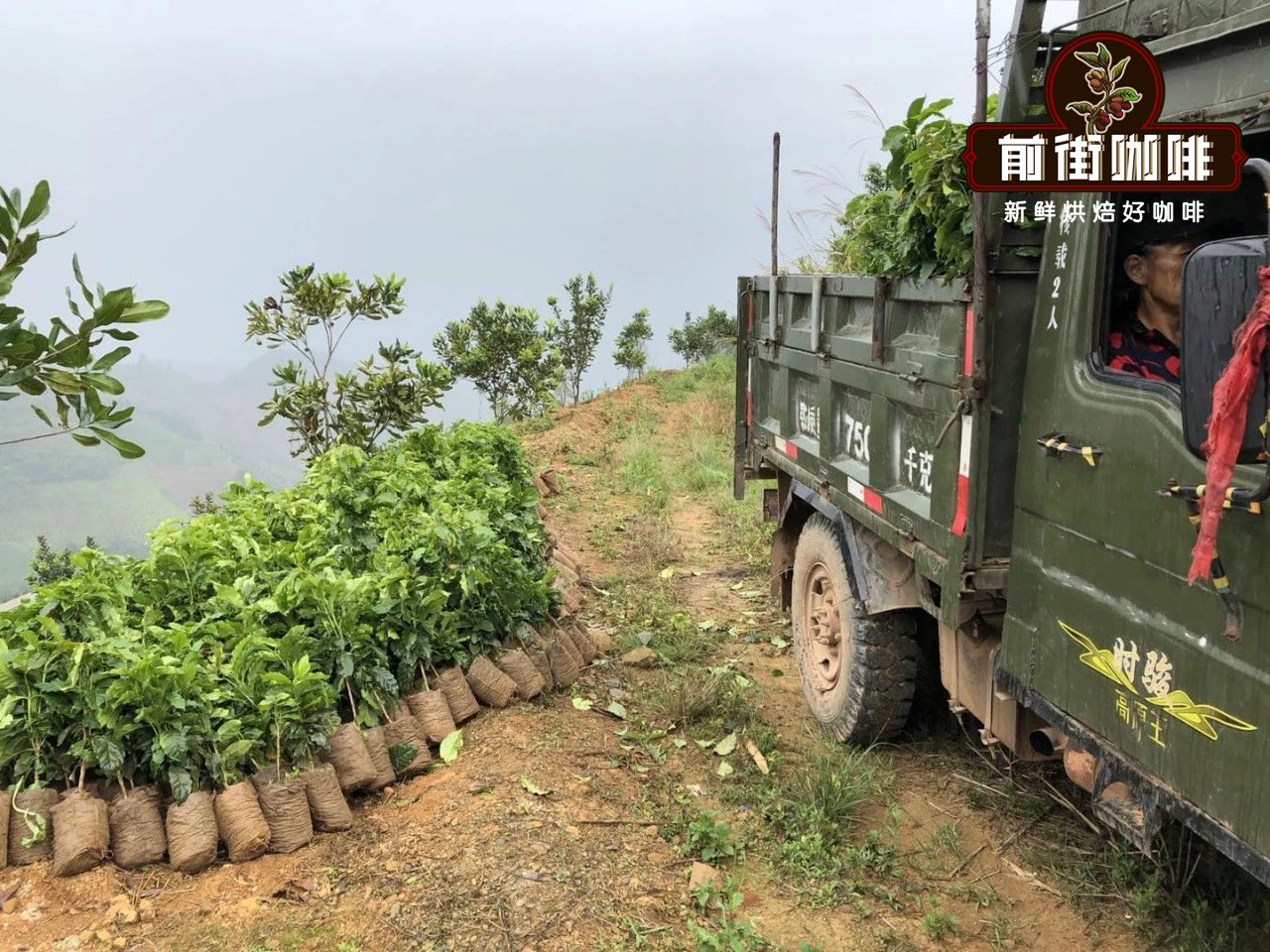
Arabica needs altitude above 1,000 m, and higher still for better flavor. Yunnan's mountains average right at that qualifying line—a genuine disadvantage that must be offset, given good varieties, with superior agronomic management.
FrontStreet Coffee did not buy an existing Catimor plantation and start harvesting. Instead we purchased a mountain suited to coffee and began from the varieties. Good land alone is not enough: if the foundation of specialty is origin, variety, altitude, and processing, ignoring those while claiming specialty flavors is a hard sell. Growing from scratch was in truth the only honest choice—we could not know the outcome years ahead, but at least we honored the fundamentals. History has already rendered its verdict on Arabica's Typica, Bourbon, and Geisha.

FrontStreet Coffee's main Yunnan variety is Typica, the Arabica with superb flavor—a living record of this long experiment. Typica yields only one-third of Catimor's, hence the higher price; and both Typica and Bourbon are highly susceptible to leaf rust, the biggest reason farmers abandon these "old varieties."
Yunnan has no four seasons, only wet and dry, as in most coffee lands—and that is why natural processing is common here. The rainy season begins in June; the following three to four months of rain are the best window for planting, giving seedlings the months of moisture they need to root deeply and survive the first half-year dry season.

Starting from scratch also means paying in time: coffee takes three to four years from seedling to first fruit, then comes process experimentation and reproduction—at least five years for the first batch, with no guarantee of immediate quality. FrontStreet Coffee believes nothing worthwhile comes that easily. After multiple variety selections and post-harvest processing trials, several more years slipped by.
After 7 years, FrontStreet Coffee finally had a report card worth showing: a small 200 kilograms of Typica, naturally processed, named "FrontStreet Coffee 2013" for the year the journey began and sold in the shop. This cup took us 8 years.

How Does FrontStreet Coffee's Own Harvest Taste?
Dripper: V60
Water Temperature: 88°C
Dose: 15 g
Ratio: 1:15
Grind Size: fine-sugar texture (80% pass-through on the Chinese #20 sieve)
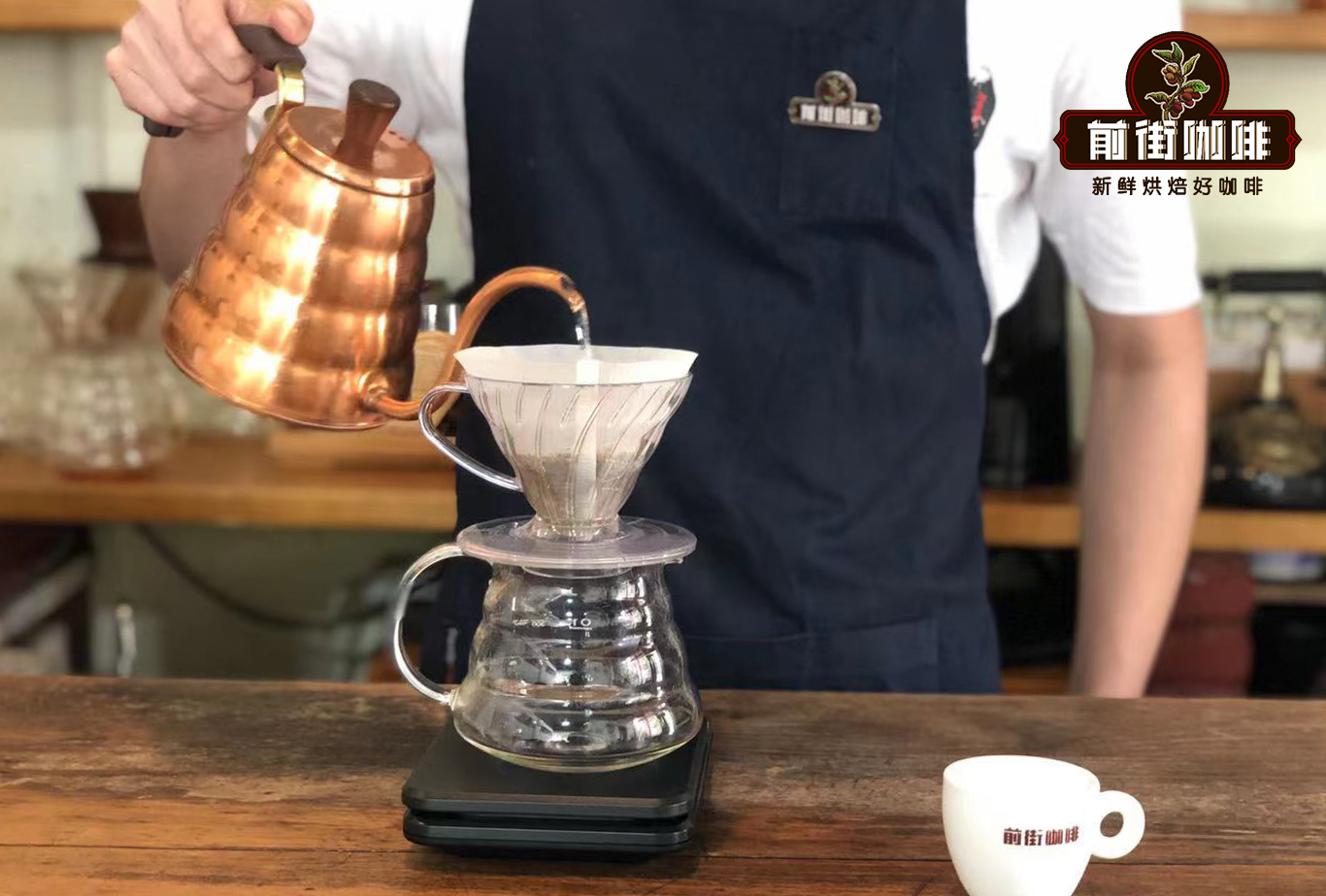
FrontStreet Coffee brewing method: segmented extraction. Bloom with 30 g of water for 30 seconds. Pour in small circles to 124 g, then pause. When the bed is about to expose, pour on to 227 g and stop. When the bed is about to expose again, remove the dripper (timing from the start of the bloom). Total extraction time: 2 minutes.
Taste: FrontStreet Coffee 2013 Yunnan Natural Typica shows nutty notes with a firmer texture than our washed Yunnan coffee, slightly lower acidity but higher sweetness and better balance—berry-like acidity laced with brown sugar and a gentle tea-like sensation.
FrontStreet Coffee Recommendation
Yunnan Beans Worth Buying
"Yunnan small-bean" coffee is simply Arabica—so called because its cherries are the smallest of the three coffee species. The story began in 1904, when the French missionary Tian Deneng (Alfred Tienne) carried Typica seeds from Vietnam into Yunnan and planted the first tree in Zhukula Village, Binchuan County. Yunnan's geography and climate made it a success, and today the province's plantings—mostly at 1,000 m and above on the world's golden coffee belt around the Tropic of Cancer—concentrate in Baoshan, Dehong, Pu'er, and Lincang, with warm frost-free weather, fertile slopes, ample sun, and big day-night temperature swings.
FrontStreet Yunnan Small-Bean (Baoshan): the beginner's Yunnan, washed and medium roasted—soft nut and chocolate sweetness with a touch of plum acidity and a whisper of caramel, at an approachable price. Baoshan's coffee history dates to the mid-1950s, when the patriotic overseas Chinese Liang Jinshan introduced planting; the dry-hot valley climate of the Lujiang dam area, with mild year-round temperatures but sharp day-night swings, gives the coffee its distinctive sweet finish.
FrontStreet 2013 Yunnan Natural Typica (Lincang): the next step for those who want clearer regional character. Our estate uses only fully ripe red cherries, dried whole in the sun in the oldest, most traditional way, then medium roasted for balance: dark berry and citrus tones, a trace of vinous fermentation, caramel sweetness, chocolate, a hint of dried apricot, and a black-tea aftertaste.
FrontStreet Dark Cocoa Blend: for Yunnan flavor in espresso. This barista favorite pairs Yunnan small-bean with Brazil Cerrado—Brazil supplies mixed-nut aroma and balance, Yunnan brings chocolate and citrus. Its Americano balances sweet, sour, and bitter with nut and brown-sugar notes; its latte is smooth with almond and cream. Perfect for beginners.
Important Notice :
FrontStreet Coffee is a long-established specialty coffee roaster in Guangzhou China, selling freshly roasted beans from its own farm in Yunnan as well as dozens of carefully selected single-origin beans from around the world for both pour-over and espresso. The products deliver consistently excellent quality and great value, with shipping within 24 hours. Guangzhou's FrontStreet Coffee shop is recommended by many coffee lovers, and the beans are now available online at the Tmall 。
FrontStreet Coffee has moved to a new address:
FrontStreet Coffee Address: 315,Donghua East Road,GuangZhou
Tel:020 38364473
 Scan and follow the En Gafei WeChat official account. Please indicate that the reprint comes from "En Gafei".