The Origin Story of Arabica Coffee Beans: Variety, Flavor, Taste Characteristics, and Aroma Description
Regulars at FrontStreet Coffee know that single-origin coffees are built primarily on Arabica varieties or Arabica-Robusta hybrids, while pure Robusta beans are generally reserved for espresso blends. So what exactly makes Arabica beans taste better? Here is FrontStreet Coffee's introduction to the world's favorite coffee species.
What Are Arabica Coffee Beans?
Three main coffee species dominate the world today: Arabica, Robusta, and Liberica. Of the three, Arabica offers the finest flavor and is the foundation of specialty coffee. Its caffeine content ranges from 0.8% to 1.5%, and it is the world's workhorse species, grown across Central and South America, Africa, and Asia.
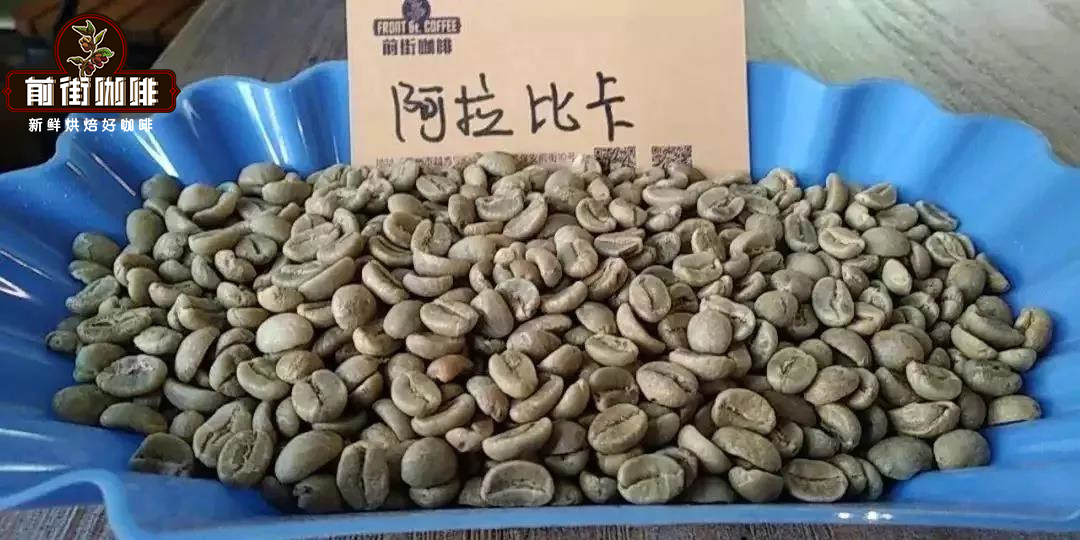
By FrontStreet Coffee's reckoning, Arabica's flavor advantage shows in the numbers: it accounts for 75% of world coffee production, Robusta roughly 20%, and Liberica only about 2%.
For all its virtues, Arabica is a delicate plant. It grows only at high altitudes; it tolerates cool temperatures but not frost, copes poorly with drought, and is highly susceptible to pests and diseases — coffee leaf rust has devastated entire harvests. That fragility is why Arabica-Robusta hybrids were later developed. Note also that "Arabica" is an umbrella term: the varieties you meet every day at FrontStreet Coffee — Typica, Bourbon, Caturra, and many more — are all sub-varieties of pure Arabica.

Arabica vs. Robusta
So how do the two differ? Robusta trees are far easier to cultivate with no real altitude requirements — they grow happily below 1,000 m — and they resist disease and pests while yielding heavily. But their caffeine content runs from 2.7% to 4%, double Arabica's. Caffeine is a natural pesticide, after all, protecting the plant from most insects.

That toughness comes at a cost to the cup. Robusta carries more caffeine, amino acids, and chlorogenic acid — and chlorogenic acid is the source of bitterness — so Robusta naturally lacks Arabica's elegant aromatics.
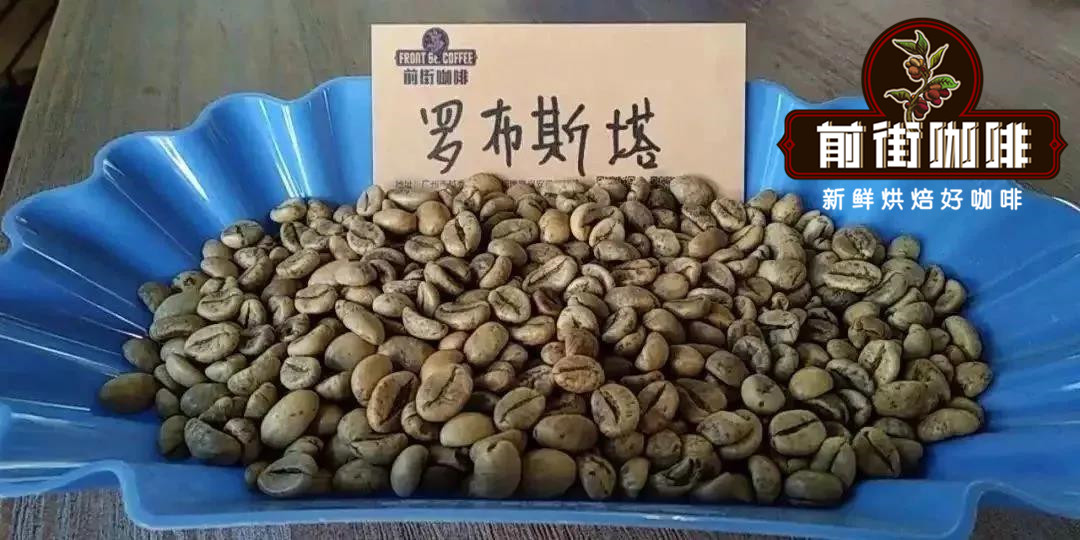
In FrontStreet Coffee's cuppings, Robusta tastes heavier and deeper than Arabica, with notes of walnut, peanut, hazelnut, wheat, and grain — sometimes even pungent earthy and rubbery tones. That makes Robusta unsuitable as a single origin, though it can bolster the body and crema of an espresso blend, which is why many growing regions still cultivate it.
With the species explained, let's tour the major Arabica sub-varieties — and the Arabica-Robusta hybrids.
Common Arabica Sub-varieties
Ethiopian Heirloom Native Varieties
"Heirloom" refers to the native varieties of Ethiopia, the birthplace of coffee. The country has nearly 2,000 documented coffee varieties, with tens of thousands more believed undiscovered. Given those numbers, classification is difficult — and the Ethiopian government, out of conservation concerns, has been reluctant to release detailed variety information. Hence the collective label "Heirloom."

FrontStreet Coffee's most famous Yirgacheffe beans use Heirloom native varieties.

FrontStreet Coffee: Ethiopia · Guodingding (Worka) Cooperative
Country: Ethiopia
Region: Yirgacheffe
Altitude: 1,900–2,300 m
Variety: Local native varieties
Processing: Washed
Flavor: Tropical fruits, cream, honey, berries, citrus
Geisha
Everyone assumes the best Geisha comes from Panama, but the variety was discovered as early as 1931 in the forests around the town of Geisha (Gesha) in Ethiopia, then sent to the Coffee Research Institute in Kenya and introduced to Uganda and Tanzania around 1936. In 1953 it reached Costa Rica. Panama only began growing Geisha in the 1970s.
Coffee lovers need no introduction to Geisha — especially the Panama La Esmeralda Geisha at FrontStreet Coffee, a perennial customer favorite.

FrontStreet Coffee: Panama · La Esmeralda Red Label Geisha
Country: Panama
Region: Boquete (La Esmeralda Estate)
Altitude: 1,700 m
Variety: Geisha
Processing: Natural
Flavor: Citrus, complex fruits, rose tea, honey
Typica
Typica is the oldest of Ethiopia's native varieties, and nearly every Arabica variety in cultivation descends from it. Its flavor is elegant, but the plant is weak: low disease resistance, prone to leaf rust, and low-yielding enough to fall short of economic requirements. In Central and South America, Typica has steadily been replaced by Caturra and Catuai, making it ever rarer — refined as it is, it has never spread as widely as Bourbon. FrontStreet Coffee operates a plantation in Baoshan, Yunnan, that grows Typica exclusively.
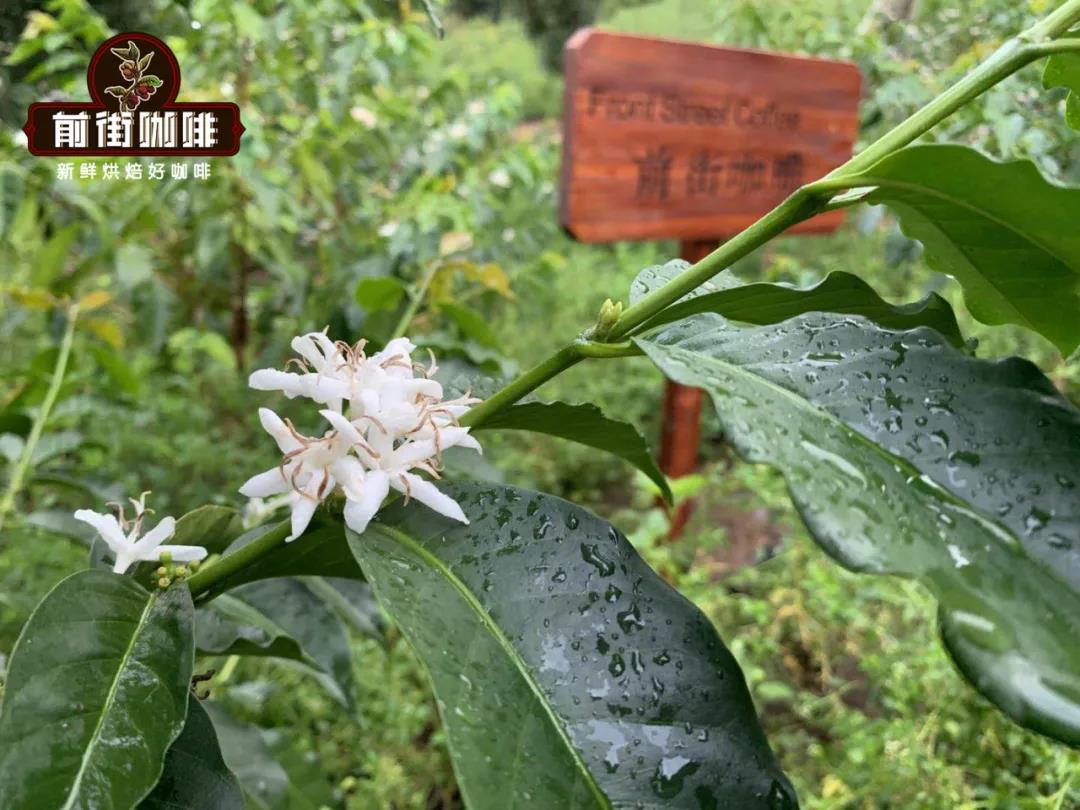
Typica beans appear all over FrontStreet Coffee's menu — the ever-popular Indonesian Mandheling and Jamaica Blue Mountain, for instance, are both Typica-based.

FrontStreet Coffee: Indonesia · Lintong Mandheling
Country: Indonesia
Region: Sumatra (Lintong)
Altitude: 1,100–1,600 m
Variety: Typica, Caturra
Processing: Wet-hulled
Flavor: Toasted bread, nuts, caramel, pine, herbs

FrontStreet Coffee: Jamaica · Washed Blue Mountain No. 1
Country: Jamaica
Region: Blue Mountains (Clifton Mountain Estate)
Altitude: 1,310 m
Variety: Typica
Processing: Washed
Flavor: Brown-sugar sweetness and berry acidity up front, nut and cocoa through the mid and late palate; creamy mouthfeel with rich, distinct layers and a walnut-scented finish.
Bourbon
Bourbon is a sub-variety mutated from Typica, and together the two are the oldest coffee varieties in existence. Ripe cherries turn a bright red. Bourbon has broader leaves and grows more densely than Typica; yields are higher, though the harvest still takes its two-year cycle, keeping it a low-yield variety. In return it offers excellent cup quality — wine-like acidity and a sweet aftertaste.

The variety is grown mainly in Brazil — FrontStreet Coffee's Brazil Queen Estate beans are a case in point.

FrontStreet Coffee: Brazil · Queen Estate (Rainha)
Country: Brazil
Region: São Paulo (Queen Estate)
Altitude: 1,400–1,950 m
Variety: Yellow Bourbon
Processing: Pulped natural / Natural
Flavor: Nuts, cream, peanut, fermented fruits, cane sugar
Caturra
Caturra is a single-gene mutation of Bourbon, discovered in Brazil in 1937. It out-produces Bourbon with better disease resistance and shorter plants that are easier to harvest. Like Bourbon it suffers biennial bearing cycles, and its flavor matches — or slightly trails — Bourbon's. Its great virtue is adaptability: no shade trees required, thriving in full sun ("sun coffee") and tolerating high-density planting, though it demands heavier fertilization, which raised costs and slowed farmer adoption at first.

Caturra is grown mainly in Latin America — most of FrontStreet Coffee's Costa Rican coffees use the variety.

FrontStreet Coffee: Costa Rica · Musician Series "Baha"
Country: Costa Rica
Region: Tarrazú
Altitude: 1,950 m
Variety: Caturra
Processing: Raisin honey
Flavor: Fermented wine aroma, berries, fruit tea
Catuai
Catuai is an Arabica hybrid — a cross of Mundo Novo (a Typica-derived line) and Caturra — bred for better resistance to the elements, especially wind and rain. It inherits Caturra's compact stature, fixing Mundo Novo's biggest flaw, and holds its firm fruit through strong winds, offsetting Arabica's fragile cherries. The trade-offs: a more one-dimensional flavor than Caturra, less richness than Mundo Novo, and a productive life of only about ten years.

Catuai is also grown mainly in Latin America; FrontStreet Coffee's Costa Rican lineup includes it as well.

FrontStreet Coffee: Costa Rica · Musician Series "Beethoven"
Country: Costa Rica
Region: Tarrazú
Altitude: 1,800–1,950 m
Variety: Caturra, Catuai
Processing: Washed
Flavor: Citrus, berries, floral notes, subtle fermented wine aroma
Beethoven is the only washed coffee in the Musician Series, which keeps its flavor cleaner and brighter, led by citrus-toned aromatics.
Pacas
Pacas is a natural Bourbon mutation first spotted in 1949 on the Pacas family estate. In 1956, growers noticed plants with unusual morphology in Bourbon fields and collected them for selection research, inviting Professor William Cogwill of the University of Florida to verify. A single-gene Bourbon mutation, it turned out, produced much smaller plants — a new variety, named "Pacas" for the farm owner. Its compact form allows denser planting and higher yields than the original Bourbon, with superior flavor to boot.

Pacas is grown mainly in Latin America; it is one of the three varieties in FrontStreet Coffee's Honduras Sherry.

FrontStreet Coffee: Honduras · Sherry
Country: Honduras
Region: Marcala (Moca Estate)
Altitude: 1,500–1,700 m
Variety: Caturra, Catuai, Pacas
Processing: Washed + whiskey barrel fermentation
Flavor: Vanilla, cream, fermented wine aroma, dark chocolate
SL34, SL28
SL28 was selected in 1935 from drought-resistant populations of Tanganyika varieties. Suited to medium and high altitudes, it is drought resistant but sensitive to the major coffee diseases. Its beans resemble Bourbon's — round and thick — and recent genetic testing confirms SL28 belongs to the Bourbon genetic group.
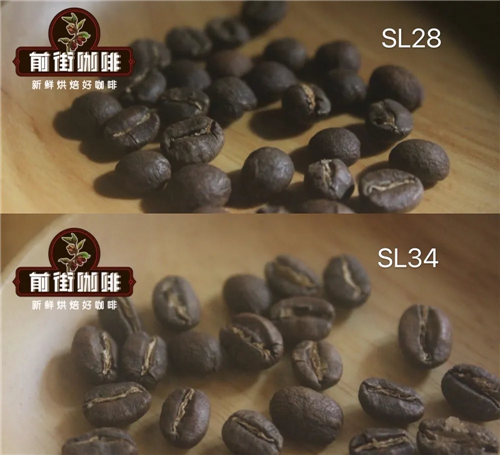
SL34 was initially selected in the late 1930s at the Scott Agricultural Laboratories in Kenya, drawn from a tree on the Kabete Loresho property known as "French Mission." Its beans resemble Typica's, and FrontStreet Coffee picks out those Typica-like Kenyan beans — elongated, oval, and relatively flat from the side. Genetic testing links SL34 to the Typica genome.
Both varieties are grown almost exclusively in Kenya; FrontStreet Coffee's Kenya Asalia uses them.

FrontStreet Coffee: Kenya · Asalia
Country: Kenya
Region: Asali (honey processing station)
Altitude: 1,550–1,750 m
Variety: SL28, SL34
Processing: 72-hour washed
Flavor: Pear, black plum, brown sugar, cherry tomato, plum
Arabica-Robusta Hybrid Varieties
Catimor
Catimor is a hybrid of Timor (a natural Arabica-Robusta hybrid) and Caturra, first developed in 1959 and promoted in Brazil from the 1970s and 1980s onward. Its disease resistance and high yields earned it a firm place among Central and South American varieties — and the recurring coffee leaf rust crises there have only deepened its adoption.

Its traits: high yields, short plants suited to dense planting, and reddish-brown new leaves. Fast maturation and heavy production demand ample fertilization and shade, and its lifespan is short — averaging only about ten years.
As noted above, the Golden Mandheling produced by Indonesia's PWN company is made from this hybrid family — and China's famous Yunnan small-bean coffee is Catimor as well.

FrontStreet Coffee: Indonesia · Golden Mandheling
Country: Indonesia
Region: Sumatra, Aceh, Gayo Mountain
Altitude: 1,100–1,600 m
Variety: Ateng
Processing: Wet-hulled
Flavor: Toasted bread, nuts, pine, caramel, herbs

FrontStreet Coffee: China · Yunnan Small-Bean Coffee (Daily Bean)
Country: China
Region: Baoshan, Yunnan
Altitude: 1,200 m
Variety: Catimor
Processing: Washed
Flavor: Herbal, nutty aroma, chocolate, caramel
Castillo
Castillo is a variety developed in 2005 by Colombia's coffee research institution (Cenicafé) specifically to bolster disease resistance, and it is now Colombia's main cultivated variety.

Castillo is the product of five generations of hybridization and selection between Timor (a Robusta-descended line) and Caturra. Timor — a natural Arabica-Robusta hybrid — is tall and resists leaf rust; Caturra, a Bourbon mutation, is short, out-yields Typica and Bourbon, and inherits much of Bourbon's fine flavor. The tight plant spacing allows dense planting per hectare, though it leaves the trees vulnerable to leaf rust.
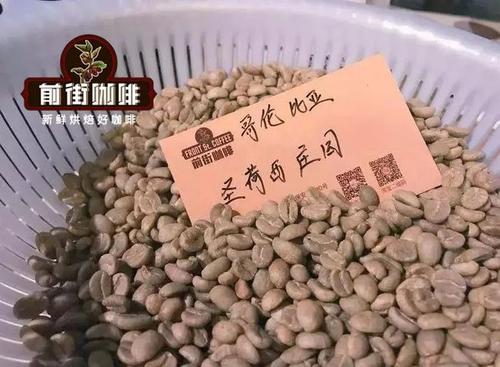
FrontStreet Coffee's Colombia San José Estate beans are Castillo, with a noticeable tea-like character.
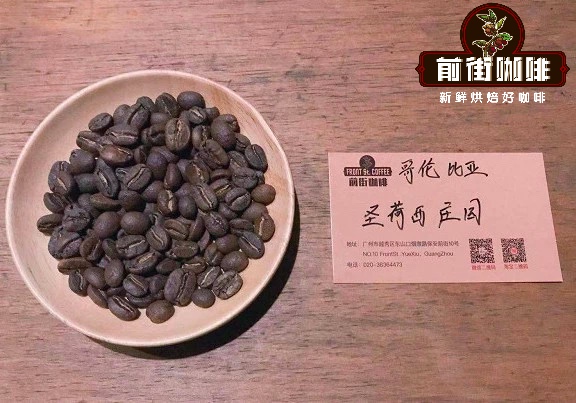
FrontStreet Coffee: Colombia · San José Estate
Country: Colombia
Region: Caldas
Altitude: 1,750 m
Variety: Castillo
Processing: Washed + rum barrel fermentation
Flavor: Rum, liqueur-filled chocolate, tropical fruits, maple syrup
That's FrontStreet Coffee's tour of Arabica coffee — the varieties, the flavors, and the aromas. We hope it helps you choose beans that match your palate.
FrontStreet Coffee Recommendation
Espresso beans come in two flavors of choice: blends, which most cafés default to, and single-origin espresso (SOE), chosen for a specific taste. A blend is the roaster's craft — combining beans from different origins so that one bean's aroma covers another's gaps, producing a more balanced cup than either could alone. For a traditional-style Americano or latte, FrontStreet Coffee's Classic Blend and Commercial Blend add a touch of Robusta to a heritage Italian recipe, delivering buttery, nutty, spiced, dark-chocolate, and toast aromatics with a wild, thick body and a head of golden crema that makes latte art almost easy.
If nut-driven espresso is your thing — almond, walnut, hazelnut — go for FrontStreet Coffee's Premium Blend or FrontStreet Coffee's Black Cocoa Blend, both built on a large share of Brazilian beans for a comfortable sweet-bitter balance and creamy peanut smoothness. FrontStreet Coffee's Premium Blend carries Colombia's nut, chocolate, and caramel notes with gentle acidity, while FrontStreet Coffee's Black Cocoa Blend pairs Yunnan small-bean's ripe-plum acidity with a cream-chocolate aroma — balanced, versatile, and equally at home in lattes, Americanos, or signature specialty drinks.
For SOE, traceability is the point: the more precisely a coffee can be traced — farm, even farmer — the clearer its quality shows. Try the natural-process Huakui (Flower Queen) SOE from Ethiopia's Guji Hambela, grown at up to 2,300 m and roasted medium to keep its elegant florals while caramelizing just enough — cream, cocoa, berries, light florals, and black tea in the cup. Or the Costa Rica Blackberry SOE, a honey process lot whose retained mucilage brings blackberry sweetness: bright and refreshing as an Americano, with cranberry-cookie, raisin, and nut flavors in milk. For a low-acid, budget-friendly classic, the Brazil Queen Estate SOE — Yellow Bourbon, medium-dark roast — pours butter-cookie, macadamia, and toasted-bread sweetness through the espresso machine.
Important Notice :
FrontStreet Coffee is a long-established specialty coffee roaster in Guangzhou China, selling freshly roasted beans from its own farm in Yunnan as well as dozens of carefully selected single-origin beans from around the world for both pour-over and espresso. The products deliver consistently excellent quality and great value, with shipping within 24 hours. Guangzhou's FrontStreet Coffee shop is recommended by many coffee lovers, and the beans are now available online at the Tmall 。
FrontStreet Coffee has moved to a new address:
FrontStreet Coffee Address: 315,Donghua East Road,GuangZhou
Tel:020 38364473
 Scan and follow the En Gafei WeChat official account. Please indicate that the reprint comes from "En Gafei".