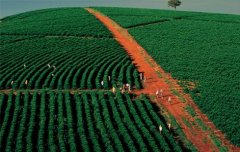
Introduction to Colombian Premium Coffee Flavor, Taste, and Aroma Characteristics
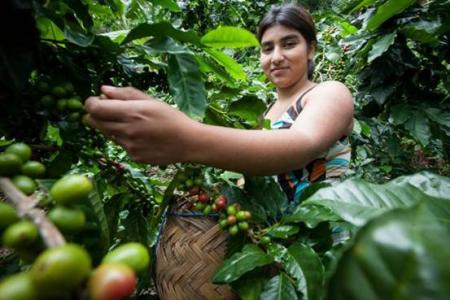
Colombian Coffee Varieties
Most coffee estates in Colombia currently follow a 70% Caturra and 30% Colombia mixed cultivation model, with the delicious Typica variety no longer found on those farms.
Across the country as a whole, the variety distribution works out to roughly 50% Caturra, 30% Colombia, and 20% Typica.
Geographical Advantages
Colombia's rich topography, low latitude, and high altitude provide excellent conditions for growing specialty coffee.
The coffee regions sit between 3° and 8° north latitude—deep in the low-latitude coffee belt—which allows two harvests a year. From south to north, mature coffee can be picked almost every month of the year.
Commercial Coffee Regions
Large-scale, corporate plantations are concentrated in the central and northern regions, the heartland of commercial beans. These include the historically significant central zone of Medellín, Armenia, and Manizales—known collectively as the [MAM] three major producing areas. Beans from there show pronounced fruit acidity and a typical Central American flavor profile.
By contrast, Bucaramanga in the northeastern Santander province is known for low acidity and a prominent bitter aroma, resembling FrontStreet Coffee's Indonesian Mandheling in style. The trait is likely tied to its modest 960-meter altitude (low altitude consistently means low acidity). Bucaramanga beans are interesting: unlike the familiar Colombian profile, they are considered soft beans yet show excellent body depth—more nuanced than the [MAM] beans, which can offer sharp acidity without much complexity.
Specialty Coffee Regions
FrontStreet Coffee's specialty beans come mainly from southern Colombia, at altitudes above 1,500 meters—San Augustin in Huila province, Popayan in Cauca province, Narino province, and Tolima province. These regions all produce exquisite acidity, berry notes, caramel aromas, and abundant sweetness.
Purchase Guidelines
When buying Colombian beans, don't assume that the highest grade 17-18 mesh [Supermo] beans will automatically taste good. What matters is the specific region of origin. If no region is named, they are most likely commercial [MAM] beans—southern specialty regions always state the province and specific origin to set their premium quality apart.
Coffee Varieties Introduction
Representatives from the Federacion Nacional de Cafeteros de Colombia (FNC), as the industry abbreviates it, point to Colombia's two main varieties: Caturra and Colombia.
Caturra arrived from Brazil in the 1960s and now accounts for 45-50% of Colombia's production, having replaced the earliest Typica plantings.
The variety named "Colombia," sharing the country's name, is a hybrid developed in the 1980s from Caturra and Timor lineage—part of the notorious Catimor family. The FNC insists, however, that although Colombia is a direct Catimor descendant, its flavor is far more elegant than typical Catimor. Through multiple generations of "backcrossing" with Arabica, the musty taste of Robusta has been bred out: the flavor now leans toward Arabica while keeping Robusta's disease resistance and high yield—a powerful tool for boosting Colombia's production.
FrontStreet Coffee Recommendation
Colombian coffee spans everything from espresso blends to pour-over single origins, from bright and fruity to rich and full-bodied. To get to know the origin, the FrontStreet washed Colombia Huila is the classic starting point: Huila, in the southern central cordillera, is the country's most famous specialty region, with hillside plantings above 1500 meters washed by the waters of Colombia's major rivers. Roasted medium-dark, it highlights black chocolate and nutty sweetness with moderate crema and a full body—equally at home in a pour-over, a French press, a moka pot, or an espresso machine pulling Americanos and lattes. For a modern twist, the FrontStreet "Boundary Line" estate Sidra is an anaerobic natural lot: fermented in sealed, pressure-capable stainless tanks with controlled temperature, time, and pH, it converts into intense tropical fruit aromas, showing passion fruit, grape, apricot, and dried fruit after a medium-light roast—whether brewed as pour-over, cold brew, drip bags, or moka pot coffee.
Important Notice :
FrontStreet Coffee is a long-established specialty coffee roaster in Guangzhou China, selling freshly roasted beans from its own farm in Yunnan as well as dozens of carefully selected single-origin beans from around the world for both pour-over and espresso. The products deliver consistently excellent quality and great value, with shipping within 24 hours. Guangzhou's FrontStreet Coffee shop is recommended by many coffee lovers, and the beans are now available online at the Tmall 。
FrontStreet Coffee has moved to a new address:
FrontStreet Coffee Address: 315,Donghua East Road,GuangZhou
Tel:020 38364473
 Scan and follow the En Gafei WeChat official account. Please indicate that the reprint comes from "En Gafei".