Introduction to Rwandan Coffee Beans: Flavor Profile and Taste Characteristics
Introduction to Rwandan Coffee
Today, FrontStreet Coffee would like to introduce Rwandan coffee. Rwanda lies in central Africa and is a landlocked country close to coffee-producing giants such as Ethiopia. Logically, Rwanda's coffee industry should have been influenced by the surrounding coffee powerhouses and should not be far behind. FrontStreet Coffee will now briefly explain why it is.
According to FrontStreet Coffee's research, Rwanda experienced a major event in 1994. A genocide occurred between the Hutu and Tutsi ethnic groups, causing nearly 1 million people to lose their lives. Combined with the sharp drop in global coffee prices at the time, this had a huge impact on Rwanda's coffee industry.
After the genocide, Rwanda lost a large amount of labor, leaving mostly women and children. Rwanda's economy was very weak. To build economic strength, and given the country's conditions at the time, the only path was to rely on coffee cultivation to improve living standards. According to FrontStreet Coffee's understanding, coffee production did indeed have a positive impact on Rwanda's overall economic recovery.
Rwanda's Coffee History and Production
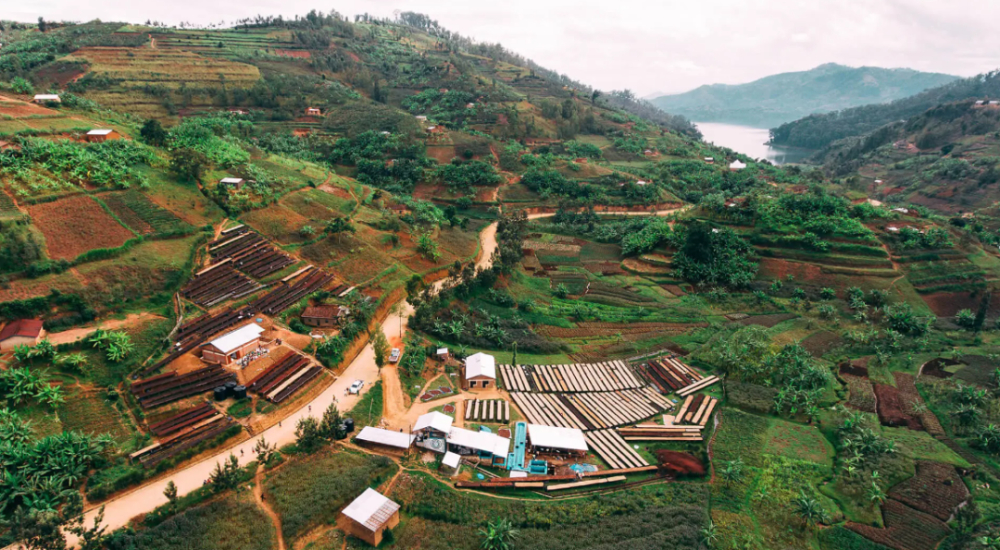
Although Rwanda is a famous coffee-producing region on the African continent, we rarely find coffee from Rwanda on the market. As for Rwandan coffee, FrontStreet Coffee has listed only one, Gisheke, and the reasons are very complex. In the early 20th century, Rwanda successively became a colony of Germany and Belgium. German missionaries first introduced coffee to this African heartland. The cultivation area gradually extended from the earliest Kivu region to the whole country. Most Rwandan coffee is a Bourbon variety. At the time, the Belgian government strictly suppressed the quality of Rwanda's exported coffee, forcing its coffee industry into a "high production, low quality" situation of cheap coffee. There were almost no real washing stations for processing coffee within the country.
It was not until after Rwanda gained independence and established its first official coffee organization, OCIR, that attention was gradually paid to coffee-bean production. Rwanda has a temperate, tropical highland climate, with good growing conditions such as high altitude, volcanic soil, and abundant sunlight. Many of its coffee trees are planted on mountains between 1,700 and 2,000 meters, so Rwanda is also known as the "Land of a Thousand Hills."
Rwanda's Coffee Growing Regions
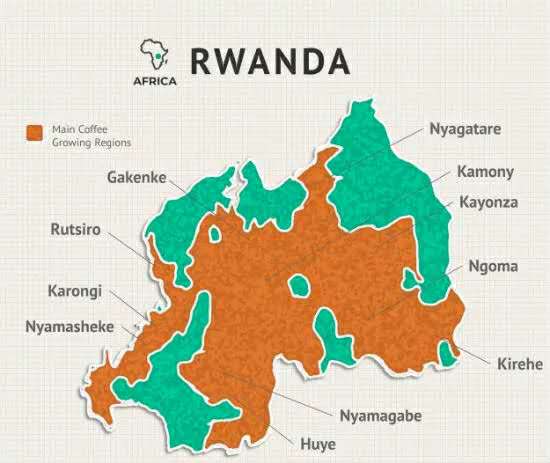
Rwanda's Arabica growing areas are distributed mainly across the southern and western regions. The Huye mountainous area and the Nyamagabe region in the south, being higher in altitude, give beans with floral and citrus flavors, while the Nyamasheke region on the shores of Lake Kivu in the west produces high-quality coffee with rich, aromatic, juicy character. The main growing regions include:
Southern Region: Huye, high altitude; the coffee has floral notes and citrus acidity.
Western Region: Lake Kivu; the coffee has a richer taste with fruity, juicy character.
Eastern Region: Ngoma Lakes, with chocolate and fruity flavors.
Northern Region: Features citrus, nut, and caramel flavors.
The Gisheke coffee listed by FrontStreet Coffee belongs to the Nyamasheke region on the western shores of Lake Kivu, consisting mainly of Bourbon mixed varieties.
Coffee Varieties and Processing
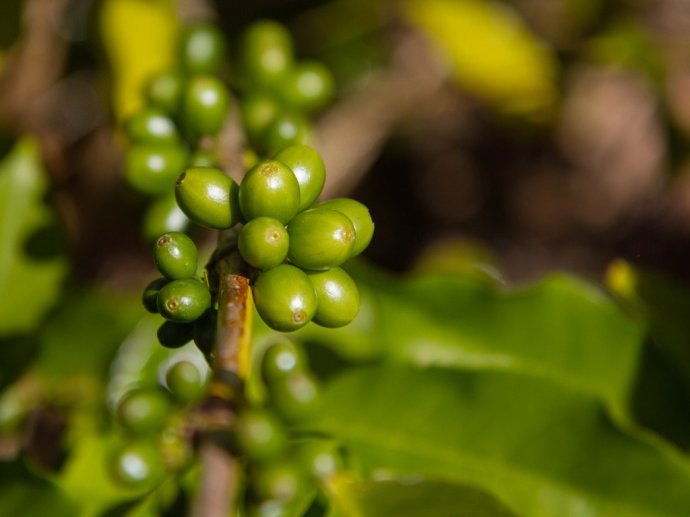
Over 90% of Rwanda's coffee varieties are Bourbon varieties introduced early on, along with mixed varieties of the Bourbon family. These coffee trees therefore have good disease resistance and can withstand general natural disasters. Bourbon coffee was initially popular throughout Latin America, but because of poor disease resistance, fewer countries grow it today. FrontStreet Coffee currently purchases several Latin American Bourbon coffees, including Brazilian Red Bourbon, Brazilian Yellow Bourbon, and Colombian Pink Bourbon. By comparison, Rwandan Bourbon still holds an advantage, which is one reason FrontStreet Coffee lists Rwandan beans.
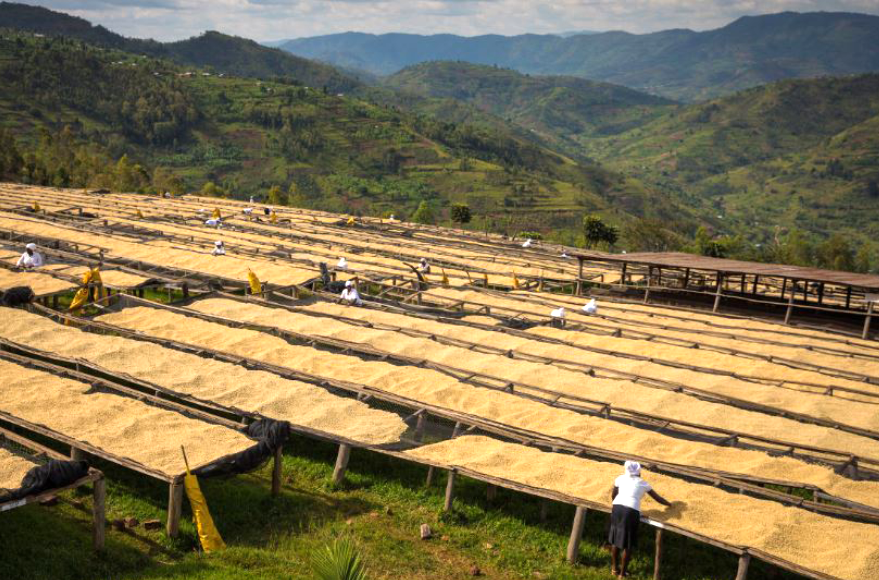
FrontStreet Coffee believes the processing method used for coffee beans is very important. Rwandan coffee is mainly washed. The general process runs as follows: the harvested cherries undergo flotation to remove insufficiently dense fruit, then the pulp is removed. Next, the beans with mucilage are left to ferment in water tanks. The purpose of fermentation is to avoid damaging the coffee flavor. After fermentation, the mucilage layer is washed away with clean water, and finally the clean beans, still in parchment, are sent for drying. Some beans are dried on net beds for 15-22 days, allowing the moisture content of the green beans to drop to around 11% to 13%.
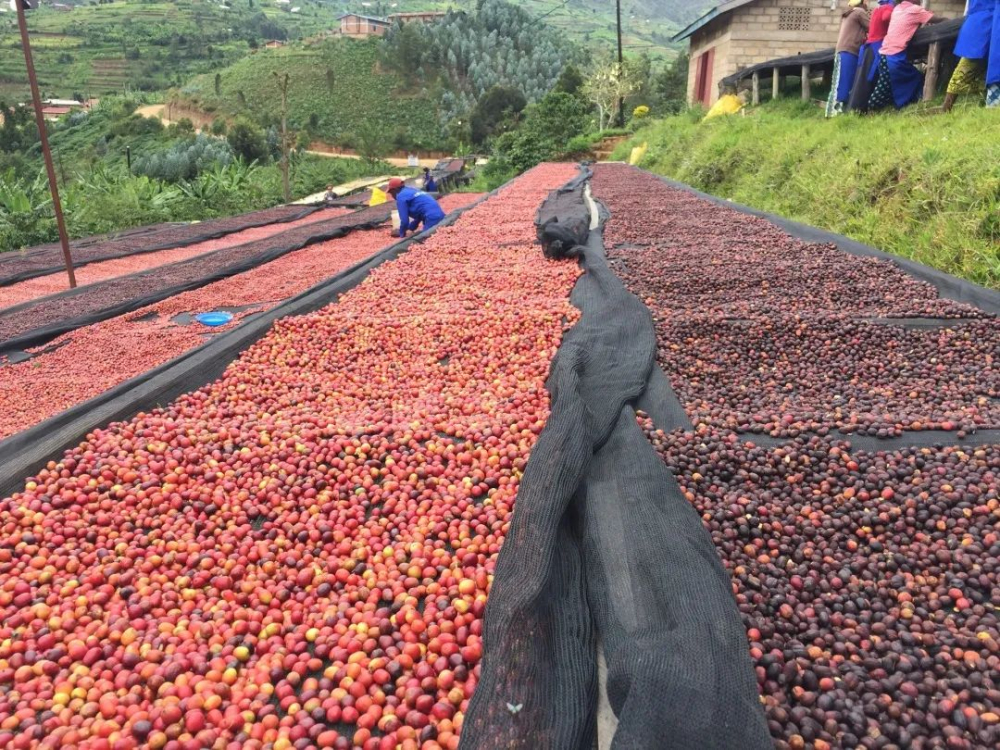
Rwanda pays great attention to detail during washing. Their coffee farmers remove unripe cherries after harvest, and only red cherries are sent to the pulping machine. FrontStreet Coffee also believes that washed coffee has higher acidity, good cleanliness, and stable overall performance.
Therefore, when FrontStreet Coffee recommends beans from a specific region, it always recommends washed beans first, because washing is the processing method that best reflects a coffee's essential flavors, letting us understand the flavor characteristics of a region through its washed beans. FrontStreet Coffee greatly appreciates Rwanda's adoption of the washed process as its main method and considers it a wise choice.
Rwanda's Coffee Development
Rwanda's coffee development has since been relatively rapid. In 2010, it hosted the Cup of Excellence competition, becoming the only African country to have held it. Through the Cup of Excellence's online bidding system, buyers were able to find the highest-quality coffee lots, thereby bringing Rwandan coffee to the market. Recently, Viya helped Rwanda, a friendly country, by promoting local coffee beans in her livestream, which had a very positive impact on Rwandan coffee.

Potato Defect and Quality
Rwanda has performed well in the Cup of Excellence, but was disqualified from two competitions because of potato flavor. Perhaps FrontStreet Coffee's readers don't understand what it means for coffee beans to have potato flavor, so FrontStreet Coffee will explain. Potato flavor is a manifestation of quality defects in green coffee beans. It can be smelled when the beans are green, and can also be detected when roasting or grinding roasted beans. There are differing opinions about what causes it. FrontStreet Coffee agrees with one theory—that the flavor may be caused by bacteria left by insects in the coffee fruit, which has a very destructive effect on coffee production. Fortunately, the Rwandan beans sourced by FrontStreet Coffee do not have potato flavor, so everyone can buy this bean from FrontStreet Coffee with confidence.
FrontStreet Coffee has also undergone extensive flavor-recognition training to distinguish the coffee flavors of the Rwandan region. When roasting this Rwandan coffee, to highlight Rwanda's fresh acidity, rich mouthfeel, and floral and citrus flavors, FrontStreet Coffee uses a medium-light roast, because the deeper the roast, the more fruit acidity is lost.
Rwanda Gisheke Coffee Details
Here, FrontStreet Coffee provides specific information about this Rwandan coffee.
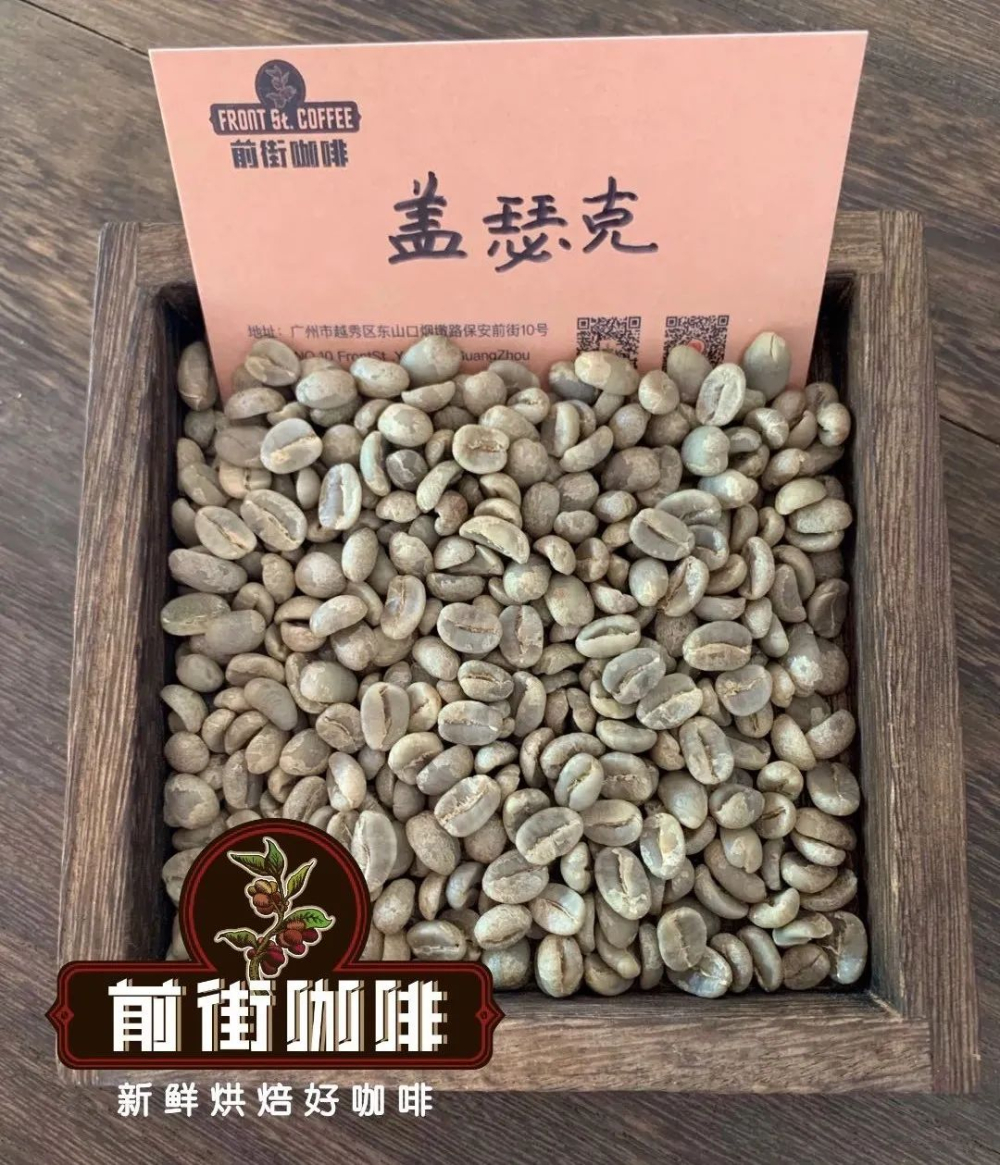
FrontStreet Coffee: Rwanda Gisheke Coffee Beans
Coffee Region: Nyamasheke
Processing Station: Gisheke Processing Station
Growing Altitude: 1700 to 2000 meters
Processing Method: Washed Process
Coffee Varieties: Bourbon, Caturra, Catuai
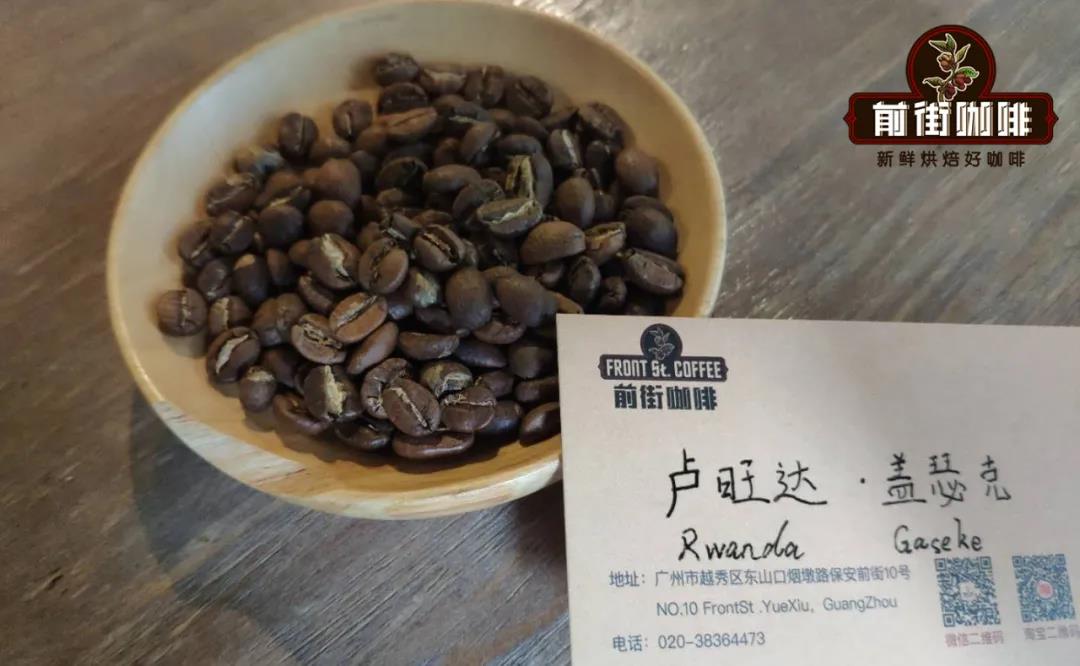
Flavor Notes: Citrus sweetness, bright acidity, berries, apple, honey sweetness in the middle section, excellent sweetness and balance, almond and chocolate finish
FrontStreet Coffee Recommendation
Rwanda and Ethiopia are both East African origins known for washed, aromatic coffee, so if Rwanda's washed, citrus-and-floral profile appeals to you, FrontStreet Coffee's African offerings are a natural next step. FrontStreet Coffee's washed Yirgacheffe daily bean is the most classic starting point, with white jasmine blossom, bright citrus and lemon acidity, and a tea-like clarity at a friendly price. If you want a cooperative coffee, FrontStreet Coffee's Gotiti Cooperative lot comes from a village in the Woka area at Yirgacheffe's southeastern edge and is washed in the traditional way, keeping clean citrus and lemon acidity with jasmine fragrance. For a natural-process contrast, FrontStreet Coffee's sun-dried Red Cherry uses only fully ripe red cherries and raised-bed drying to give citrus acidity, berry-juice body, honeyed sweetness, and a creamy texture. For a more intense, contemporary profile, FrontStreet Coffee's Ethiopia Flower Queen is prized for its tropical fruit aroma and very low bitterness, and FrontStreet Coffee's Kaffa Forest coffee, medium-light roasted, shows white florals, bright lemon acidity, sweet orange, and bergamot with a green-tea finish.
Important Notice :
FrontStreet Coffee is a long-established specialty coffee roaster in Guangzhou China, selling freshly roasted beans from its own farm in Yunnan as well as dozens of carefully selected single-origin beans from around the world for both pour-over and espresso. The products deliver consistently excellent quality and great value, with shipping within 24 hours. Guangzhou's FrontStreet Coffee shop is recommended by many coffee lovers, and the beans are now available online at the Tmall 。
FrontStreet Coffee has moved to a new address:
FrontStreet Coffee Address: 315,Donghua East Road,GuangZhou
Tel:020 38364473
 Scan and follow the En Gafei WeChat official account. Please indicate that the reprint comes from "En Gafei".