Coffee Varieties Explained: Yellow Bourbon
Bourbon Variety
Bourbon descends from the ancient Typica variety and has round-shaped beans. It was introduced to Brazil in 1927 and then spread across Central and South America. Although its yield is not especially high, Bourbon resists leaf rust better than the delicate Typica. Grown at altitude, Bourbon offers rich, delicate flavours, an aromatic fragrance and a smooth acidity. The Bourbon cherries we usually see change from green to light yellow, orange-yellow, red and finally to fully ripe dark red — what we call Red Bourbon. But Brazil also has another Bourbon whose cherries ripen yellow-orange: Yellow Bourbon, a distinctive Bourbon variant from São Paulo state.
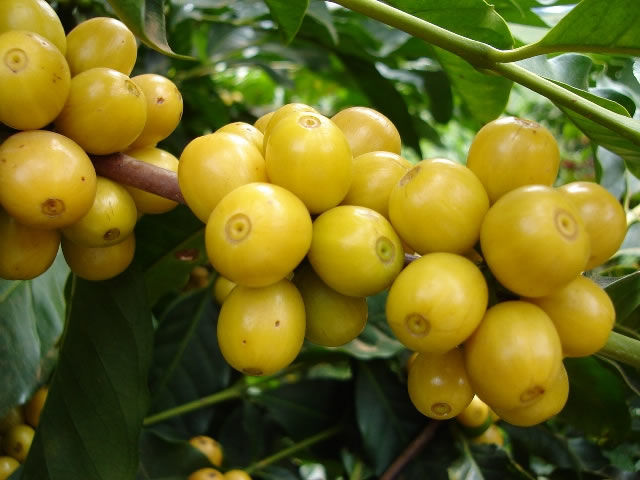
Yellow Bourbon (Bourbon Amarello) is a specific yellow-skinned Bourbon variety unique to São Paulo state, Brazil. Coffee cherries normally turn red when ripe, but Yellow Bourbon stays orange-yellow, which is where the name comes from. In the cup, the flavour of FrontStreet Coffee's Brazil Yellow Bourbon is quite elegant, with prominent sweetness, aroma and acidity. The FrontStreet Coffee Brazil Queen Estate Coffee Beans on FrontStreet Coffee's menu are selected from this rare Yellow Bourbon.
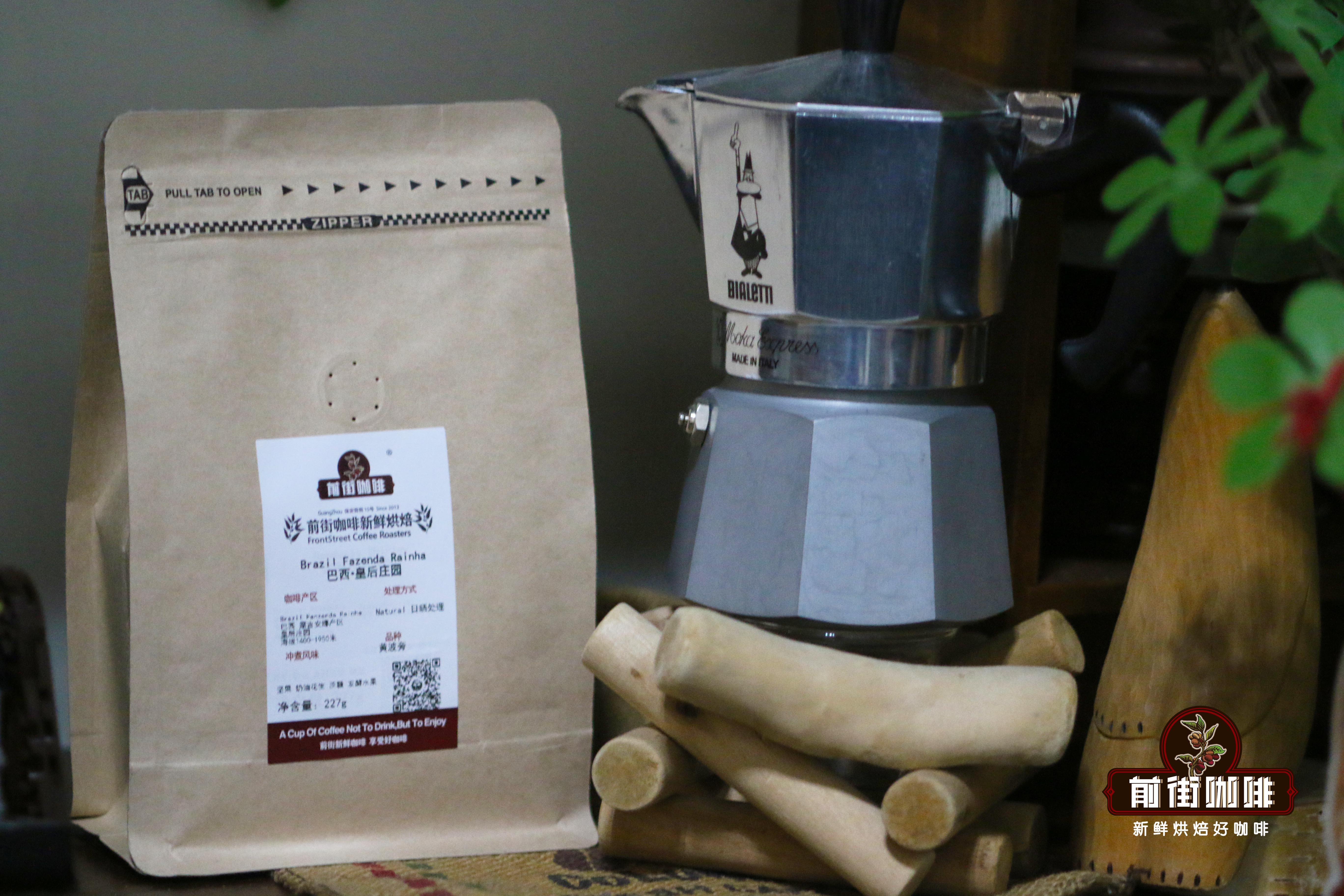
FrontStreet Coffee: Brazil Queen Estate Yellow Bourbon Coffee Beans
Region: Mogiana Region
Estate: Fazenda Rainha (Queen Estate)
Altitude: 1400-1950m
Variety: Yellow Bourbon
Processing: Natural Processing
Flavor: Nuts, Chocolate, Cream, Peanut, Sugarcane
Through research, FrontStreet Coffee learned that the world's Arabica varieties are made up of Typica and Bourbon and their descendants. Among these, Bourbon is mainly popular in Central and South America and is one of Brazil's main varieties. The name Bourbon comes from Bourbon Island, which is Réunion Island off the east coast of Africa. In the seventeenth century, as a French territory, it was named Bourbon Island until the late eighteenth century, when it was renamed. In the eighteenth century the French introduced round coffee beans from Yemen to Bourbon Island, where they took root and grew. Only in 1860 did Brazil bring round Bourbon back to the country for cultivation, and it subsequently spread across Central and South America, becoming the most ancient parent variety of Latin American coffee.
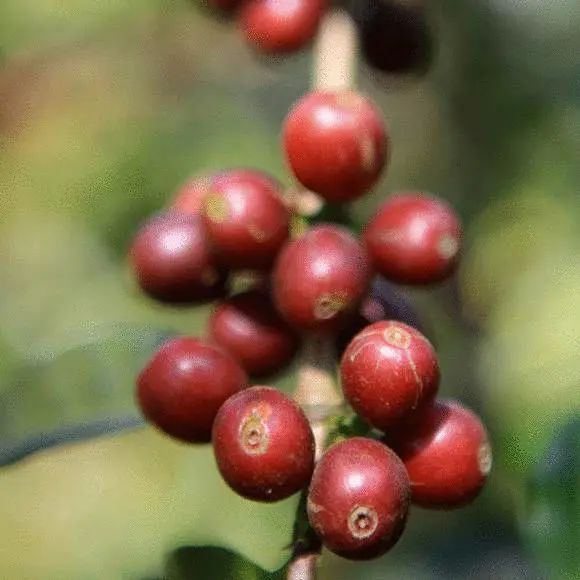
Bourbon cherries are small and round, with high bean density. Bourbon grown at altitude has high sweetness and bright acidity. Like Typica, these are both ancient, excellent varieties. Bourbon resists leaf rust better than Typica, and its flavour is no less impressive. Common Bourbon cherries gradually change colour from green to light yellow to red and finally to fully mature dark red during flowering and fruiting, hence Red Bourbon. There are also Bourbon varieties that do not turn red when mature but instead become the rarer yellow or pink — Yellow Bourbon and Pink Bourbon.
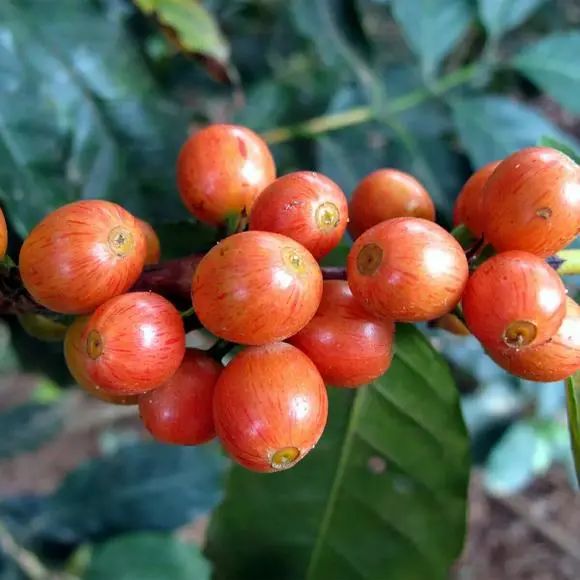
The "yellow" characteristic of Yellow Bourbon is determined by genetic colour selection. Grown at high altitude, Yellow Bourbon contains high amounts of fructose, giving it sweet, juicy, delicate flavours, and it has placed consistently well in Brazil's Cup of Excellence (COE) competitions.
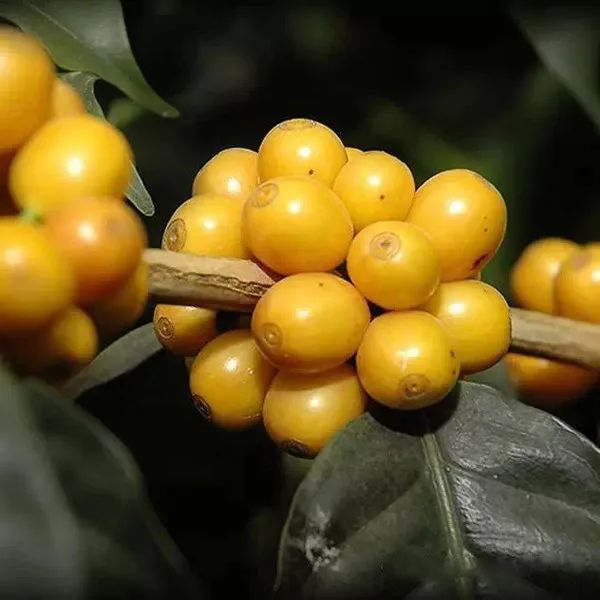
Processing and Roasting
After harvesting mature Yellow Bourbon cherries, Queen Estate uses natural processing, letting the cherries absorb more fruit-pulp sweetness during drying. Brazil sits near the equator, and because the harvest season coincides with the dry season, cherries are very well suited to direct dehydration and sun-drying. Traditional "sun-drying methods," however, are quite crude: harvested cherries are spread directly on mud ground, and the resulting coffee easily picks up earthy flavours, while uneven heating produces unwanted over-fermentation aromas. Queen Estate first pours the cherries into water tanks, removing insufficiently ripe fruit by flotation, then processes the coffee in small batches on more breathable African raised beds, turning them irregularly, which avoids earthy flavours and over-fermentation. Sweetness is also elevated compared with traditional natural methods.
Because Yellow Bourbon from high altitudes has high density and high glucose content, FrontStreet Coffee's roasting approach aims to highlight the classic mellow aroma of FrontStreet Coffee's Brazil coffee while showing Bourbon's inherent sweetness. After multiple experiments and cupping comparisons, FrontStreet Coffee's Brazil Queen Estate Yellow Bourbon is roasted to a medium-dark level. Darker roasting significantly changes the bean's internal structure, making it more porous, so the ground coffee absorbs water more strongly. If the brewing parameters are not adjusted properly, the coffee easily becomes over-extracted and bitter. To achieve sufficient aroma without over-extraction, the extraction rate needs to be reduced. FrontStreet Coffee uses a slightly lower water temperature and a coarser grind size to reduce the release of bitter macromolecules, and pairs the coffee with a KONO filter to enhance body and roundness.
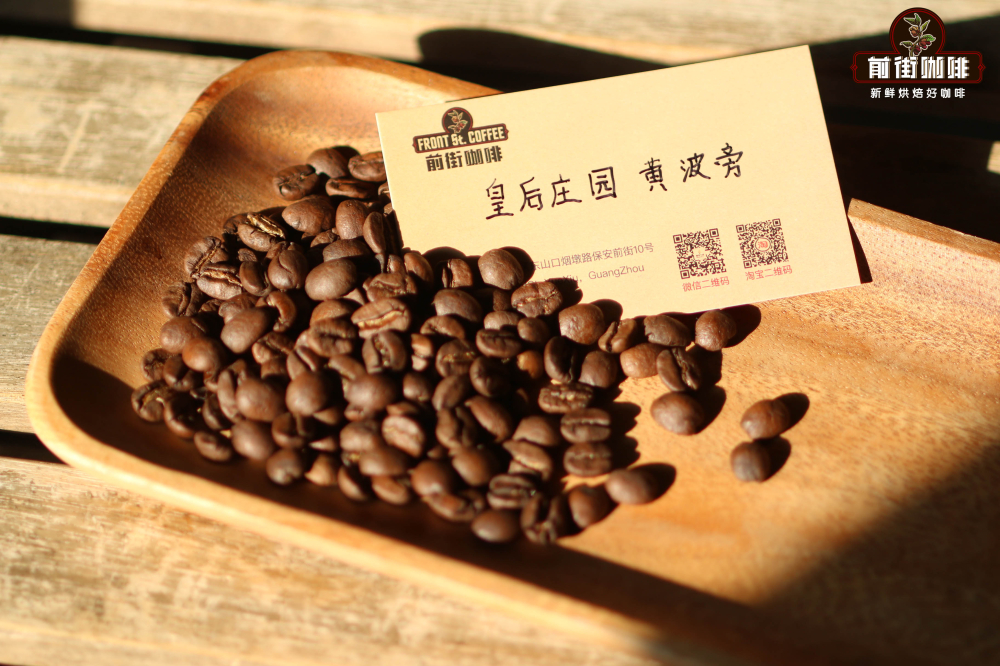
Brewing Parameters
Pour-over Parameters: 87-88°C water temperature, KONO filter, medium grind (70% pass-through rate with a China standard #20 sieve), 15g coffee powder, 1:15 coffee-to-water ratio, three-stage pouring
Wet the coffee bed with twice the amount of water as the coffee powder, forming a dome for a 30s bloom. Then use a small stream to pour from inside to outside in circles until reaching 125g for the first stage. Wait until the coffee bed drops to half the filter cup's height, then continue with the same fine stream for the third stage to 225g. Remove the filter cup once all the coffee liquid has filtered through, taking about 2 minutes. Finally, shake the coffee in the pot evenly and enjoy.
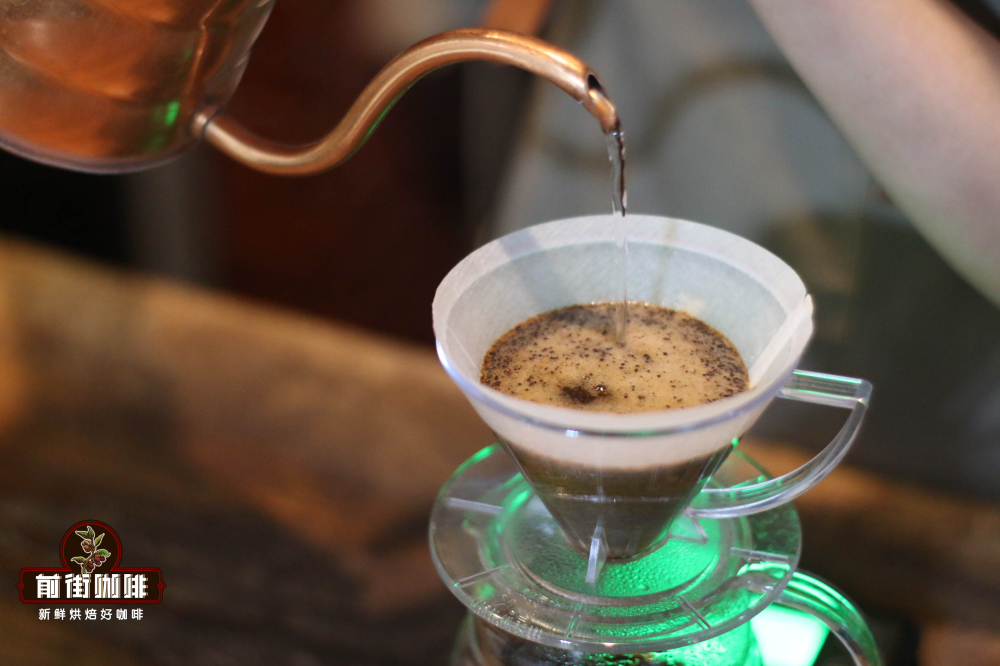
The pour-over FrontStreet Coffee Brazil Queen Estate Yellow Bourbon expresses aromas of dark chocolate, cream, peanuts and nuts. The entry is as sweet as sugarcane, with a balanced mouthfeel and bright flavours, leaving a long-lasting aftertaste.
FrontStreet Coffee Recommendation
Yellow Bourbon is only part of what Brazil does well. If you want the classic taste of the country, FrontStreet Coffee's Brazil Cerrado Red Bourbon is a benchmark single-origin lot: processed semi-naturally and medium roasted, it gives cream peanut, toasted bread, caramel and hazelnut, round and low in acidity with a light bittersweet edge, and it brews as pour-over, moka pot, espresso SOE, siphon or French press. For a sweeter, more fruit-forward cup, FrontStreet Coffee's Brazil Queen Estate Yellow Bourbon brings that rare sugarcane sweetness alongside fruit and chocolate, and pulls beautifully as a filter coffee.
Important Notice :
FrontStreet Coffee is a long-established specialty coffee roaster in Guangzhou China, selling freshly roasted beans from its own farm in Yunnan as well as dozens of carefully selected single-origin beans from around the world for both pour-over and espresso. The products deliver consistently excellent quality and great value, with shipping within 24 hours. Guangzhou's FrontStreet Coffee shop is recommended by many coffee lovers, and the beans are now available online at the Tmall 。
FrontStreet Coffee has moved to a new address:
FrontStreet Coffee Address: 315,Donghua East Road,GuangZhou
Tel:020 38364473
 Scan and follow the En Gafei WeChat official account. Please indicate that the reprint comes from "En Gafei".