Moka Pot Usage Tutorial with Illustrated Guide: How to Brew Crema with Moka Pot and Which Coffee Beans to Use
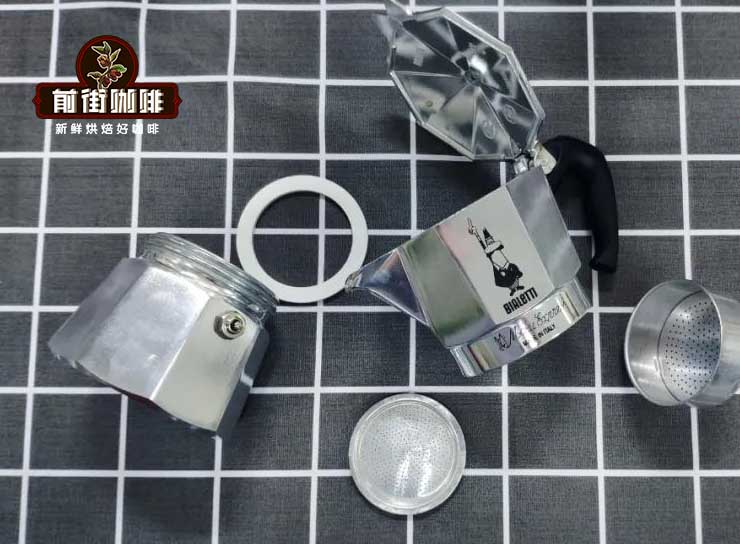
The Moka pot is a coffee maker that closely resembles an espresso machine, capable of producing rich coffee with crema. It is deeply loved by Italian households. For many of us, though, the Moka pot is rarely encountered in daily life, so FrontStreet Coffee would like to share some knowledge about this traditional brewing device.
The Moka pot was invented in 1933 by the Italian Alfonso Bialetti. It brews coffee by heating from the base, a kind of distillation process. As the most accessible machine for making espresso-style coffee, it is widely used in Italian homes.
How to Use a Moka Pot to Brew Coffee?
A Moka pot consists of three parts: the upper chamber, the coffee basket, and the lower chamber. The lower chamber holds water, the basket holds finely ground coffee, and the upper chamber collects the brewed coffee. The extraction principle is simple - it uses steam pressure generated in the lower chamber. When the pressure becomes strong enough to penetrate the coffee grounds, it pushes hot water up to the upper chamber, brewing rich, aromatic coffee.
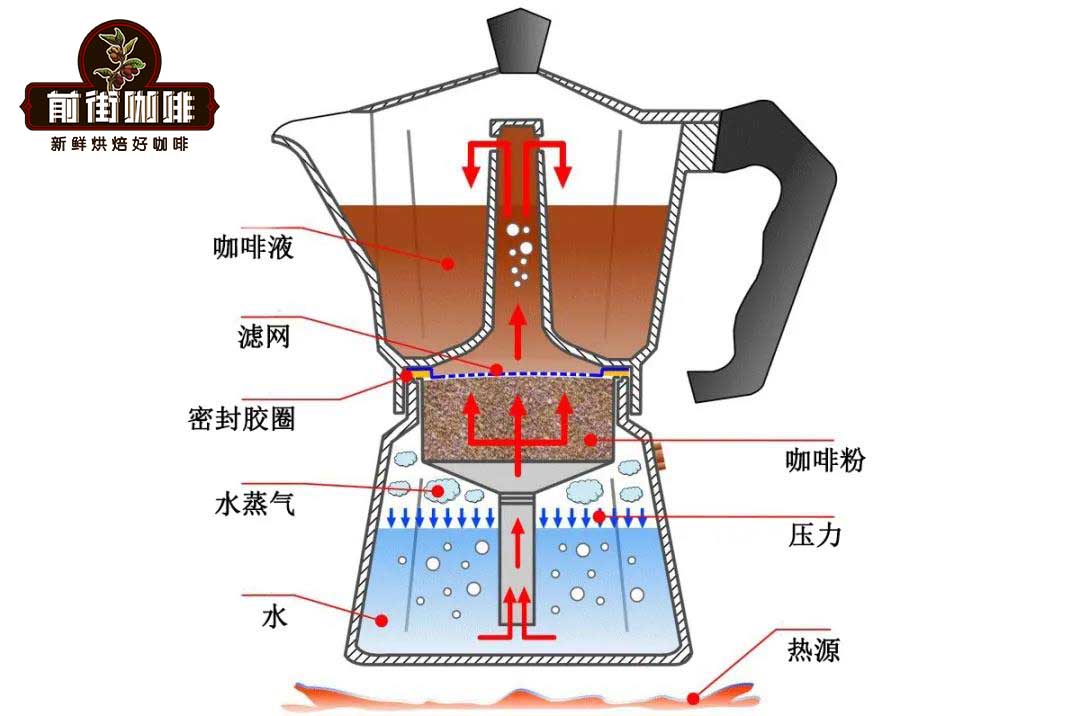
The equipment needed includes: a Moka pot, a gas stove with a rack or an induction cooker, coffee beans, a grinder, and water.
Step-by-Step Brewing Guide
1. Add Water
Pour purified water into the lower chamber, filling to approximately 0.5cm below the pressure relief valve.

2. Add Coffee Grounds
Choose a grind slightly coarser than espresso. You can reference the size of the filter basket's screen gaps to ensure coffee particles don't fall through to the lower chamber. Slowly pour the grounds into the basket, tap gently to distribute evenly, and level the surface, creating a mound shape.

Filling the basket completely helps avoid extracting undesirable flavors and defects. When the density of grounds in the basket is uniform, some grounds won't be over-extracted while others are under-extracted, which would otherwise result in uneven flavors or bitterness.

3. Assemble and Heat
Place the basket into the lower chamber, then screw the upper and lower parts together tightly. Wipe the base with a dry cloth, then place it on an electric ceramic stove and heat on high.

4. Monitor the Brewing Process
When the Moka pot reaches a certain temperature and begins to make a distinct "whistling" sound, reduce the electric ceramic stove to low heat and open the lid of the upper chamber.

5. Finish Brewing
When the coffee in the upper chamber reaches halfway, turn off the electric ceramic stove. The residual heat and pressure in the Moka pot will "push" the remaining coffee into the upper chamber.

6. Serve and Enjoy
Once all the coffee has extracted into the upper chamber, you can pour it into a cup and enjoy. Coffee extracted with a Moka pot is very rich and can produce crema, with a flavor closest to espresso. It can also be enjoyed like espresso by mixing with appropriate amounts of water or milk.
Important Considerations When Using a Moka Pot
- When filling the lower chamber with water, take special care that the water level does not exceed the pressure relief valve.
- After heating, do not touch the pot body directly, to avoid burns.
- If the coffee liquid erupts explosively, the water temperature is too high. Conversely, if it flows too slowly, the water temperature is too low and you need to increase the heat.
- Safety: because of the pressure, pay attention to heat control during brewing.

Recommended Coffee Beans for Moka Pot
Because the Moka pot extracts under pressure, use darker-roasted coffee if you want richer crema. FrontStreet Coffee's Brazil Queen Estate Yellow Bourbon, for example, is an outstanding Brazilian coffee. FrontStreet Coffee uses a medium roast to highlight its sugarcane sweetness while maintaining the balanced character typical of Brazilian beans. In a Moka pot it produces rich crema, fragrant peanut and almond aromas, and flavors of chocolate, nuts, and sugarcane.

FrontStreet Coffee: Brazil · Queen Estate Coffee Beans
- Region: Brazil, Mogiana
- Estate: Queen Estate
- Altitude: 1400-1950m
- Variety: Yellow Bourbon
- Processing: Natural processing
- Flavor Notes: Nuts, creamy peanuts, sugarcane, soft fruit acidity
New Pressurized Moka Pot
Recently, Bialetti released a new generation of pressurized Moka pots. Since January 22nd, many review videos of the new Moka pot have circulated widely. Including the new model, there are currently three versions available: the regular single-valve model, the gravity-pressurized double-valve model, and the new pressurized double-valve model.
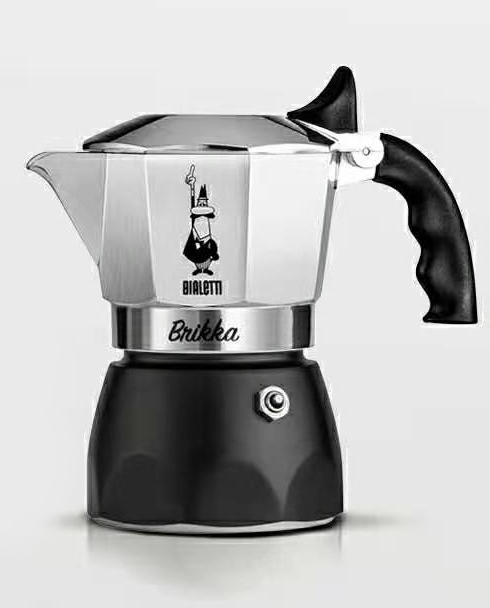
The biggest design difference among the three is that the regular single-valve model has no pressurization design, while the older double-valve Moka pot uses a gravity pressurization design. The new model eliminates gravity pressurization and instead uses a built-in hydraulic layer for pressurization.
These changes improve the user experience in two ways: easier cleaning and better coffee quality. Numerous comparison videos show that coffee brewed with the single-valve Moka pot has less crema, which dissipates quickly. Both the new and old pressurized Moka pots produce more crema than the single-valve version, with the new model producing thicker, denser crema that dissipates more slowly than the older one.
FrontStreet Coffee Recommendation
For the richest crema from a Moka pot, FrontStreet Coffee recommends its Classic Blend, a traditional Mamba-style recipe (Mandheling and Brazil) with a small portion of Robusta for extra body and a smooth, buttery crema that makes latte, cappuccino, and Dirty easy. FrontStreet Coffee's Brazil Queen Estate Yellow Bourbon is another excellent choice, delivering peanut, almond, chocolate, and sugarcane notes with generous crema under pressure.
Important Notice :
FrontStreet Coffee is a long-established specialty coffee roaster in Guangzhou China, selling freshly roasted beans from its own farm in Yunnan as well as dozens of carefully selected single-origin beans from around the world for both pour-over and espresso. The products deliver consistently excellent quality and great value, with shipping within 24 hours. Guangzhou's FrontStreet Coffee shop is recommended by many coffee lovers, and the beans are now available online at the Tmall 。
FrontStreet Coffee has moved to a new address:
FrontStreet Coffee Address: 315,Donghua East Road,GuangZhou
Tel:020 38364473
 Scan and follow the En Gafei WeChat official account. Please indicate that the reprint comes from "En Gafei".