The Origin and Flavor Characteristics of Aged Mandheling: Taste, Aroma, and Brewing Suggestions

FrontStreet Coffee has written a lot about Mandheling before, but this particular version is so special that FrontStreet Coffee believes it is essential to share the story behind it. This Mandheling has a remarkable similarity to Indian monsooned coffee, as it must be aged for many years to develop its special characteristics. It is called Aged Mandheling. While it is said that wine gets better with age, Aged Mandheling must undergo technical processing to achieve those pleasant flavors, which is also why people find Mandheling coffee delicious. Some do not enjoy Mandheling coffee precisely because its flavors can be challenging to appreciate. The storage environment must be well-ventilated and cool, and the process requires extreme care and precision. Otherwise, improper handling can cause the coffee beans to rot or even develop insect infestations.
Aging Process
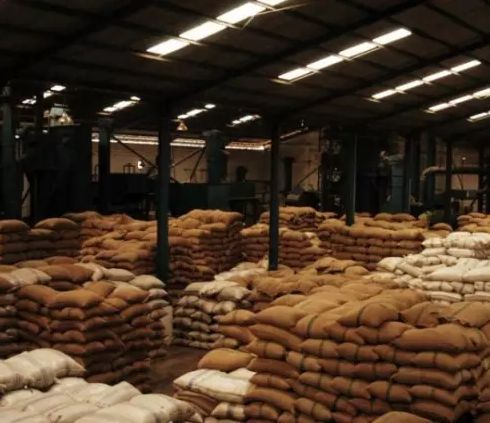
The aging process is a special treatment method that involves storing green coffee beans in a specific storage environment to reduce the acidity in the beans and add a certain degree of aged character. Just like aged wines, green beans must undergo proper processing and long-term storage before they can be called true "Aged Coffee." The fruity acidity of Mandheling becomes gentle and mellow after prolonged maturation, while its body and unique flavors become impressively expressed in the mouth—this is the charm of Aged Mandheling. Coffee farmers select high-quality green beans and then subject them to rigorous monitoring standards for up to 24 months of quiet maturation. During the waiting period, they regularly turn the green beans in storage tanks to prevent moisture and mold. The process is extremely labor-intensive, which contributes to the more aromatic and enduring flavor profile of this Aged Mandheling.
Such aged coffee actually has a long history in Indonesia. Because early shipping wasn't as developed, transporting coffee from Indonesia to other countries took considerable time. Over time, the originally moist, fresh coffee beans gradually dried, and exposure to sea breezes added quite a special flavor. With modern shipping significantly reducing transport time, coffee with such special flavors has become a specifically processed coffee bean. Handling aged beans is a technical skill that requires careful monitoring during the aging process—not to let the beans lose their flavor, but to create another flavor, and a pleasant one at that.

Aged Beans vs. Fresh Beans: Which is Better?
It is a matter of personal preference. For the vast majority of coffees, fresh is better. However, aged beans undergo different processing methods, much like decaffeination changes the flavor profile, so they cannot be compared on equal footing. To clarify: so-called "aged" does not refer to beans that a merchant bought new, couldn't sell, and then stored for several years. Aged beans are all produced at origin through specific procedures, which is why they have vintage distinctions. The origin of aged beans supposedly dates back to the era before steamships, when transporting coffee and other goods often took several months. Because the beans spent a long time drifting at sea, their flavor profile changed. Some people tasted this special flavor and found it quite good, so they bought large quantities. Afterward, people at origin began to "produce" aged beans according to those storage conditions, and it became an important product category.
Green Bean Analysis
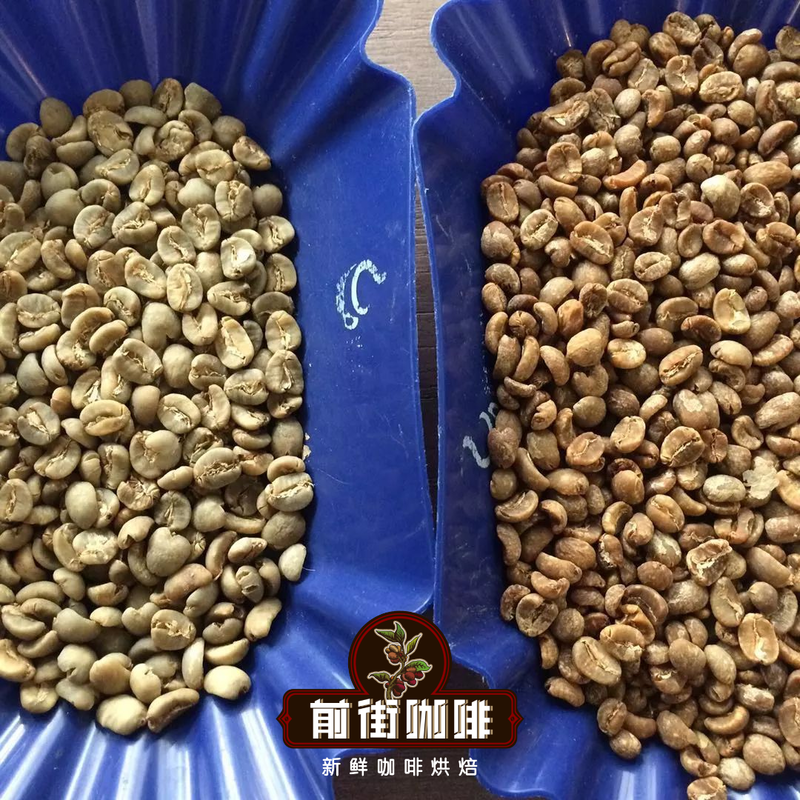
Properly stored coffee beans will change their taste and appearance. Acidity decreases, color becomes darker and lacks moisture, mouthfeel becomes thicker with better consistency, sweetness carries a honey fragrance, and certain defects originally present in the green beans become less noticeable. Because the storage environment is relatively dark and the time period is longer, aged coffee always retains some complex flavors similar to mustiness or the so-called burlap or leather notes. Aged beans must be stored under strictly controlled conditions during the storage period, with regular and even turning, plus adjustment of humidity and ventilation to prevent insect infestation or mold. Storage of aged beans generally doesn't occur at the production area or estate but is a commercial activity of green bean dealers or brokerage companies.

FrontStreet Coffee Roasting Analysis: Yangjia 800N, 550g green beans
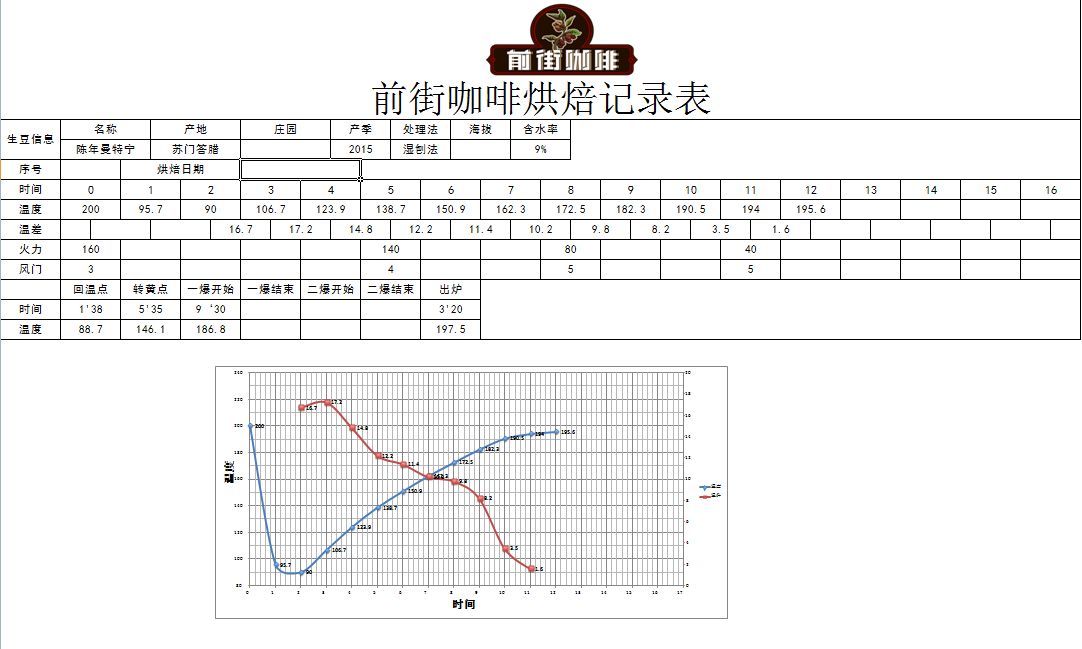
Aged Mandheling may look somewhat unattractive, but the baptism of time wears away Mandheling's acidity and increases its purity, with the medium-deep flavor becoming rounder. Because Mandheling green beans have high density and aged beans have less moisture, heat adjustments at each stage must be particularly careful. For Mandheling coffee, be careful not to scorch the oil on the surface of the original beans. Heat the roaster to 200°C and open the air vent to 3. After 1 minute of steaming, adjust the heat to 160°C, keeping the air vent unchanged. When the roaster reaches 165°C, adjust the heat again to 140°C. Roast until 5'35", at 146°C, when the bean surface turns yellow and grassy aroma completely disappears, indicating dehydration is complete. Open the air vent to 4. At the 9-minute mark, ugly wrinkles and black spots appear on the bean surface, and the toasted bread aroma clearly transforms into coffee aroma, which can be defined as the prelude to first crack. At this point, listen carefully for the sound of first crack. At 9'30", first crack begins; reduce heat to 80°C and open the air vent fully to 5 (heat adjustment must be very careful, not so small that there is no cracking sound). At 194°C, reduce heat and drop the beans at 197.4°C.
FrontStreet Coffee Cupping Records
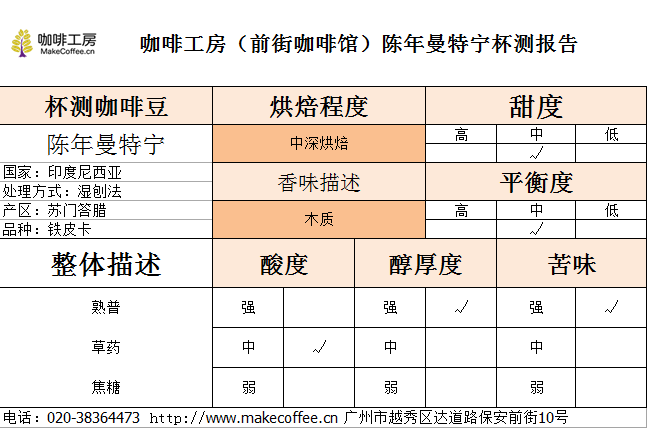
Sumatra Aged Mandheling
Region: Sumatra
Variety: Typica
Processing Method: Wet-hulled

FrontStreet Coffee Aged Mandheling Brewing Parameters
Filter: KONO dripper
Water Temperature: 88°C
Grind Size: Fuji Rokusen grinder setting 4
Analysis: The KONO dripper has few ribs at the bottom, causing the filter paper to cling tightly to the dripper and restricting airflow. This gives water and coffee grounds longer contact and soaking time in the dripper, ensuring extraction time and extraction rate for a coarse grind. The coffee grounds are fully extracted, enhancing the rich mouthfeel and making the flavor more concentrated.

FrontStreet Coffee Brewing Method
Water-to-coffee ratio: 1:14, 17g coffee grounds. First pour: 25g water, 30s bloom. Second pour: continue to 238g water, extraction time approximately 2:00.
Flavor Description: Herbal notes, caramel
FrontStreet Coffee Recommendation
If the deep, herbal, caramel character of Aged Mandheling appeals to you, FrontStreet Coffee's Mandheling range is the place to start. The FrontStreet Coffee PWN Golden Mandheling is the top of the line: PWN selects only beans of 18 screen and above, requires fewer than 3 defective beans per 300g sample to meet the G1 standard, and applies three rounds of hand sorting, then roasts medium-dark for clean black chocolate, caramel, sandalwood, herb, and roasted hazelnut notes over a thick, syrupy body. For a classic everyday Mandheling that shows the wild wet-hulled personality, the FrontStreet Coffee Lintong Mandheling is drawn from the Toba Lake area of the Lintong region and roasted medium-dark, with low acidity and rich caramel, dark chocolate, and toasted bread aromas. Both are brewed like the aged lot above—a KONO or similar dripper, 87-88°C water, and a coarse grind at a 1:15 ratio.
Important Notice :
FrontStreet Coffee is a long-established specialty coffee roaster in Guangzhou China, selling freshly roasted beans from its own farm in Yunnan as well as dozens of carefully selected single-origin beans from around the world for both pour-over and espresso. The products deliver consistently excellent quality and great value, with shipping within 24 hours. Guangzhou's FrontStreet Coffee shop is recommended by many coffee lovers, and the beans are now available online at the Tmall 。
FrontStreet Coffee has moved to a new address:
FrontStreet Coffee Address: 315,Donghua East Road,GuangZhou
Tel:020 38364473
 Scan and follow the En Gafei WeChat official account. Please indicate that the reprint comes from "En Gafei".