How Much Does a Cup of Geisha Coffee Usually Cost - Flavor and Taste Characteristics of Hacienda La Esmeralda's Blue Label and Red Label Geisha Coffee Beans

When people talk about Geisha coffee, most immediately think of Panama's Hacienda La Esmeralda. The estate became so famous because in 2004 its owner entered the Best of Panama (BOP) competition with a coffee then considered impossible to win with and unsuited to the mainstream taste of the day. Its unique floral and fruity aroma stunned every judge, earning an average cupping score of 94.6 points, breaking BOP's historical record and taking the championship.
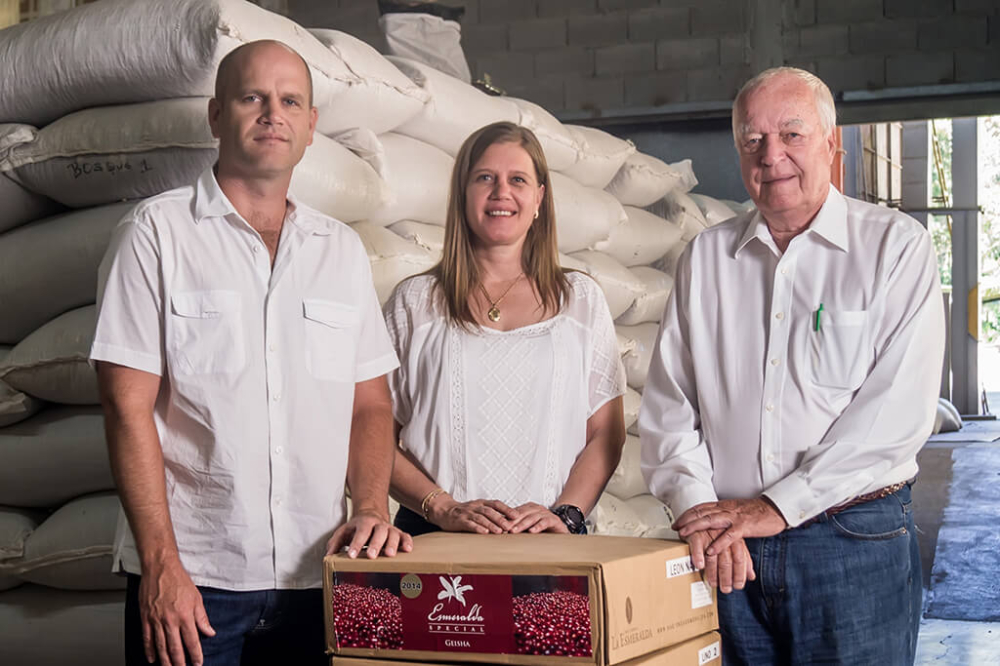
Overnight, Geisha became the world's most sought-after championship variety. Between 2004 and 2007, Hacienda La Esmeralda's Geisha beans won awards. Then in 2009, 2010 and 2013 they also won gold medals in single-category competitions, and Geisha's auction prices soared from $21 per pound in 2004 to $170 per pound in 2010, reaching $819 per pound in 2022.
The Value of Esmeralda Geisha Coffee
Expensive, right? Indeed. But those are the auction prices for Hacienda La Esmeralda's Geisha. Auction-level lots are typically available in very small quantities, and few coffee brands can supply them over the long term. Most are bought by coffee shops and then sold in physical stores or poured at tasting events.
The Esmeralda Red Label we can buy day to day mostly comes from the same harvest season, even the same plots, as the auction coffee, but the price is significantly different. Esmeralda Red Label Geisha roasted beans currently on the market typically cost between 300-500 yuan per 100g, with washed processing slightly cheaper than natural.

The Esmeralda Red Label lot that FrontStreet Coffee acquired is natural-processed, with whole cherries dried and dehydrated evenly under the sun. This process lets the Geisha show a full, juice-like mouthfeel, exquisite berry sweetness and acidity, charming red floral aromas and an enticing black tea aftertaste, winning the hearts of many enthusiasts.
Esmeralda Special Red Label
The Esmeralda Special series (Red Label) is the highest grade of Geisha sold by Hacienda La Esmeralda, grown at elevations of 1600-1800 meters in clearly defined plots. Every batch must score above 91 points in cupping. The series usually comes from the Jaramillo and Canas Verdes sub-estates.
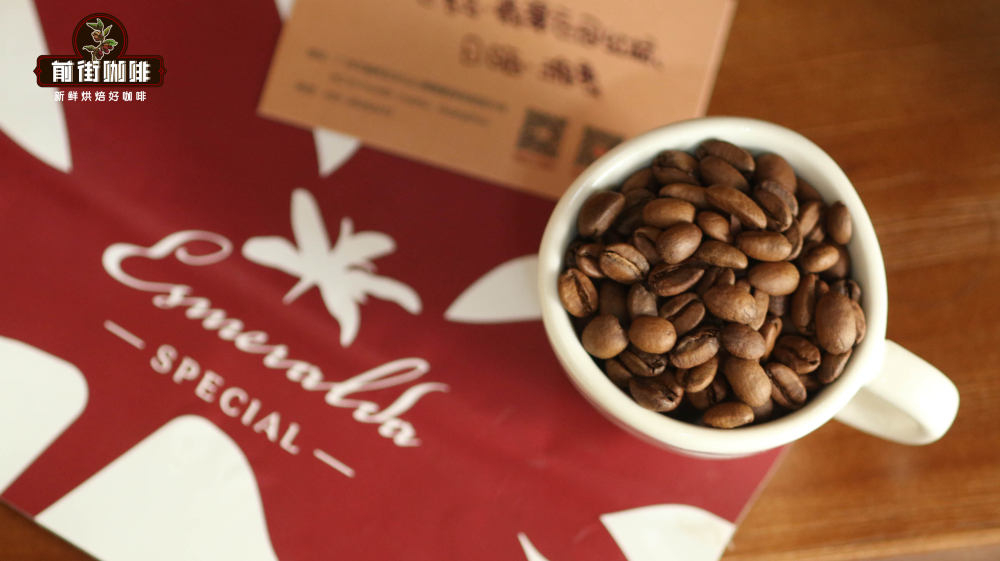
Another characteristic of Red Label batches is that each has an independent number, and all the beans in one batch come from a small plot. For example, FrontStreet Coffee's Red Label this year comes from the Mario plot, with freshly roasted beans priced at 350 yuan per 100g and a cup in FrontStreet Coffee's store costing 75 yuan (brewed with 15g of coffee grounds). FrontStreet Coffee's Esmeralda Natural Red Label Geisha shows flavors of floral and fruit tea with ripe strawberries, roses, black tea and grapefruit acidity and sweetness, with a sweet berry aftertaste and a persistent finish.
Private Collection Green Label
The Private Collection series (Green Label) emphasizes the signature flavors of Hacienda La Esmeralda's high-altitude Geisha, unlike the Red Label, which emphasizes specific plots. The series is a blend of batches from various specific plots. (In fact, Green Label can be roughly understood as Red Label without plot separation.)

FrontStreet Coffee's Esmeralda Green Label coffee is washed, giving a relatively cleaner, fresher mouthfeel than the Red Label Natural Geisha. Freshly roasted beans are priced at 168 yuan per 100g, and a cup in FrontStreet Coffee's store costs 60 yuan (brewed with 15g of coffee grounds).
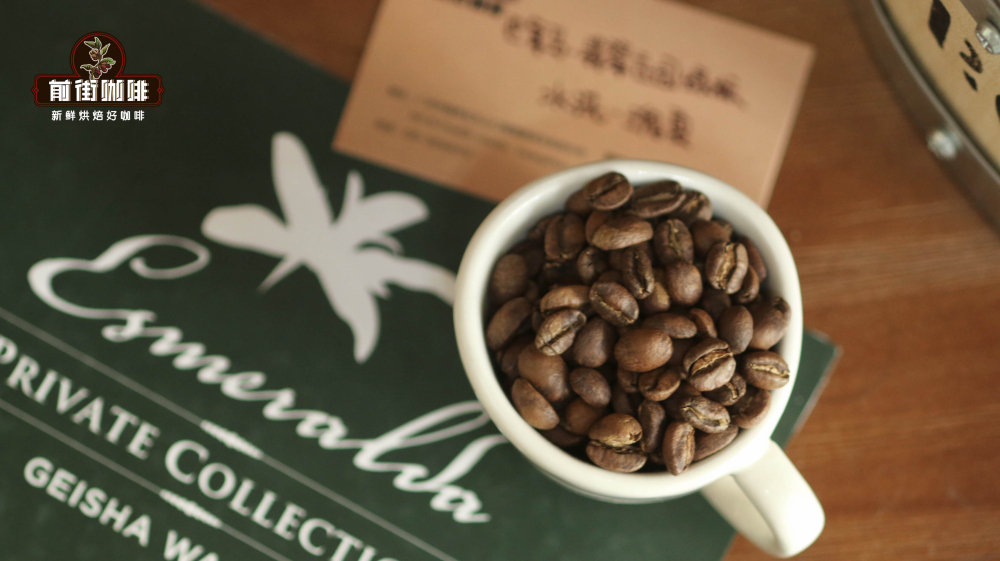
FrontStreet Coffee's Esmeralda Washed Green Label Geisha shows white flowers such as jasmine and ginger flower, clean acidity like sweet orange and lemon, honey sweetness and a Tieguanyin tea-like aftertaste.
Blue Label Geisha
As for Esmeralda Blue Label Geisha, FrontStreet Coffee understands that Hacienda La Esmeralda officially announced in the 2021 harvest season that it would no longer release the Blue Label series. We also see on the estate's official website that the Blue Label has been removed from the product introduction, leaving only the Red Label and Green Label Geisha grades.
Blue Label Geisha can be considered the entry-level version of Hacienda La Esmeralda's Geisha, with citrus fruit acidity, white floral aromas, honey sweetness and a green tea aftertaste. Previously, FrontStreet Coffee sold fresh roasted washed Blue Label at 108 yuan per 100g, and a cup in FrontStreet Coffee's store cost 30 yuan (brewed with 15g of coffee grounds).
Beyond Geisha: Diamond Mountain
In fact, besides the famous Geisha, Hacienda La Esmeralda also has a brand with excellent value for money called "Diamond Mountain." On the estate's official website, coffee is first divided by variety into two categories: Geisha and Catuai. Under Geisha are Esmeralda Special, Private Collection and Geisha 1500, commonly known as Red Label, Green Label and Blue Label.
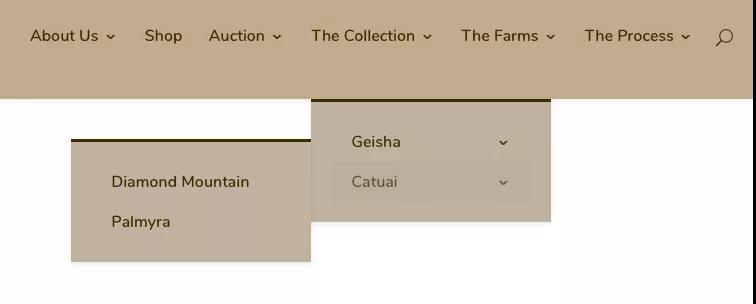
Today's topic focuses on coffee beyond Geisha. Under the Catuai category are two brands: Diamond Mountain and Palmyra. The Catuai variety has been cultivated in Panama for a long time and is widely loved for its high yield, disease resistance and clean, bright character.

FrontStreet Coffee: Panama · Hacienda La Esmeralda Natural Diamond Mountain
Region: Panama, Boquete
Estate: Hacienda La Esmeralda
Altitude: 1400-1700 meters
Variety: Catuai, Caturra
Processing: Natural processing
Geisha Pour-Over Brewing Guide
FrontStreet Coffee's barista's Geisha pour-over notes:
FrontStreet Coffee's flavor descriptions for each coffee are based on freshly roasted beans. If beans have been stored for more than a month, some aroma may have been lost, making the original flavors difficult to reproduce. FrontStreet Coffee understands the importance of freshness, so we ship only beans roasted within 5 days, letting everyone enjoy the complete flavor window on receipt. Geisha is world-renowned for its rich floral notes and complex fruit. FrontStreet Coffee's roasters want to preserve more of Geisha's quality acidity, so they choose a medium-light roast (with slight adjustments for different batches).
To raise the extraction rate of Geisha while avoiding over-extraction and highlighting the layers of sweet and sour flavor, FrontStreet Coffee's baristas use the V60 dripper. The V60 has flow ribs connecting top and bottom and a large central hole that accelerates water flow, while the spiral air-channel design extends the water path, increasing contact time between grounds and hot water. Each stream converges along the grooves toward the center of the dripper, concentrating pressure on the grounds and extracting coffee with richer layers.

Below, FrontStreet Coffee demonstrates the brewing steps for the Esmeralda Natural Red Label Geisha served in its store. You can compare them with your own approach.
Parameters for Red Label Geisha pour-over: Dripper: V60, Water temperature: 91-92°C, Coffee amount: 15g, Coffee-to-water ratio: 1:16, Grind size: fine sugar (sifted through a #20 sieve to 80%).
Three-stage extraction: first, pour 15g of coffee grounds into the dripper and zero the scale. In the first stage, pour 30g of water for a 30-second bloom, starting the timer at the same time. Using a small stream, pour from the center outward in circles, making sure the whole coffee bed is moistened.

In the second stage, use a slightly larger stream to pour 120g of water, aiming to lift the entire coffee bed. The water column should be poured vertically and evenly, with the scale showing 150g at this point, completing the pour around 55 seconds.
When the liquid level drops to halfway, begin the third stage by pouring 90g of water in small circles, trying to keep the stream from growing too large, since that easily scatters the coffee bed and causes under-extraction. The final total water amount is 240g, with drip completion around 2 minutes 10 seconds. After removing the dripper, shake the coffee liquid in the sharing pot evenly before tasting.
FrontStreet Coffee Recommendation
If you want to taste the Esmeralda style yourself, FrontStreet Emerald Estate Green Label Geisha is the most accessible entry, washed for a clean, fresh cup of white flowers, sweet-orange and lemon acidity and honey sweetness. For the fullest expression of the estate's natural Geisha, FrontStreet Emerald Estate Red Label brings ripe strawberry, rose, black tea and grapefruit over a long, sweet berry finish. FrontStreet Panama Boquete Geisha offers the same tangerine-honey signature at a more everyday price.
Important Notice :
FrontStreet Coffee is a long-established specialty coffee roaster in Guangzhou China, selling freshly roasted beans from its own farm in Yunnan as well as dozens of carefully selected single-origin beans from around the world for both pour-over and espresso. The products deliver consistently excellent quality and great value, with shipping within 24 hours. Guangzhou's FrontStreet Coffee shop is recommended by many coffee lovers, and the beans are now available online at the Tmall 。
FrontStreet Coffee has moved to a new address:
FrontStreet Coffee Address: 315,Donghua East Road,GuangZhou
Tel:020 38364473
 Scan and follow the En Gafei WeChat official account. Please indicate that the reprint comes from "En Gafei".