Introduction to Papua New Guinea Coffee Varieties and Grades - Bird of Paradise Little Blue Mountain Coffee Bean Flavor Profile
Introduction to Papua New Guinea Coffee Varieties and Grades: Bird of Paradise Little Blue Mountain Coffee Bean Flavor Profile
When it comes to Blue Mountain coffee, FrontStreet Coffee believes coffee lovers are no strangers to FrontStreet Coffee's Jamaican Blue Mountain coffee. But have you heard of FrontStreet Coffee's Papua New Guinea Little Blue Mountain coffee? Why is it called Little Blue Mountain? For that reason, FrontStreet Coffee has specifically cupped and brewed FrontStreet Coffee's Papua New Guinea Little Blue Mountain coffee. FrontStreet Coffee thinks it is not inferior to FrontStreet Coffee's Blue Mountain coffee. Compared with the richness of FrontStreet Coffee's Blue Mountain, FrontStreet Coffee's Little Blue Mountain has a more delicate fruit acidity. Next, FrontStreet Coffee will talk about FrontStreet Coffee's Little Blue Mountain coffee.
Papua New Guinea Coffee Growing Conditions

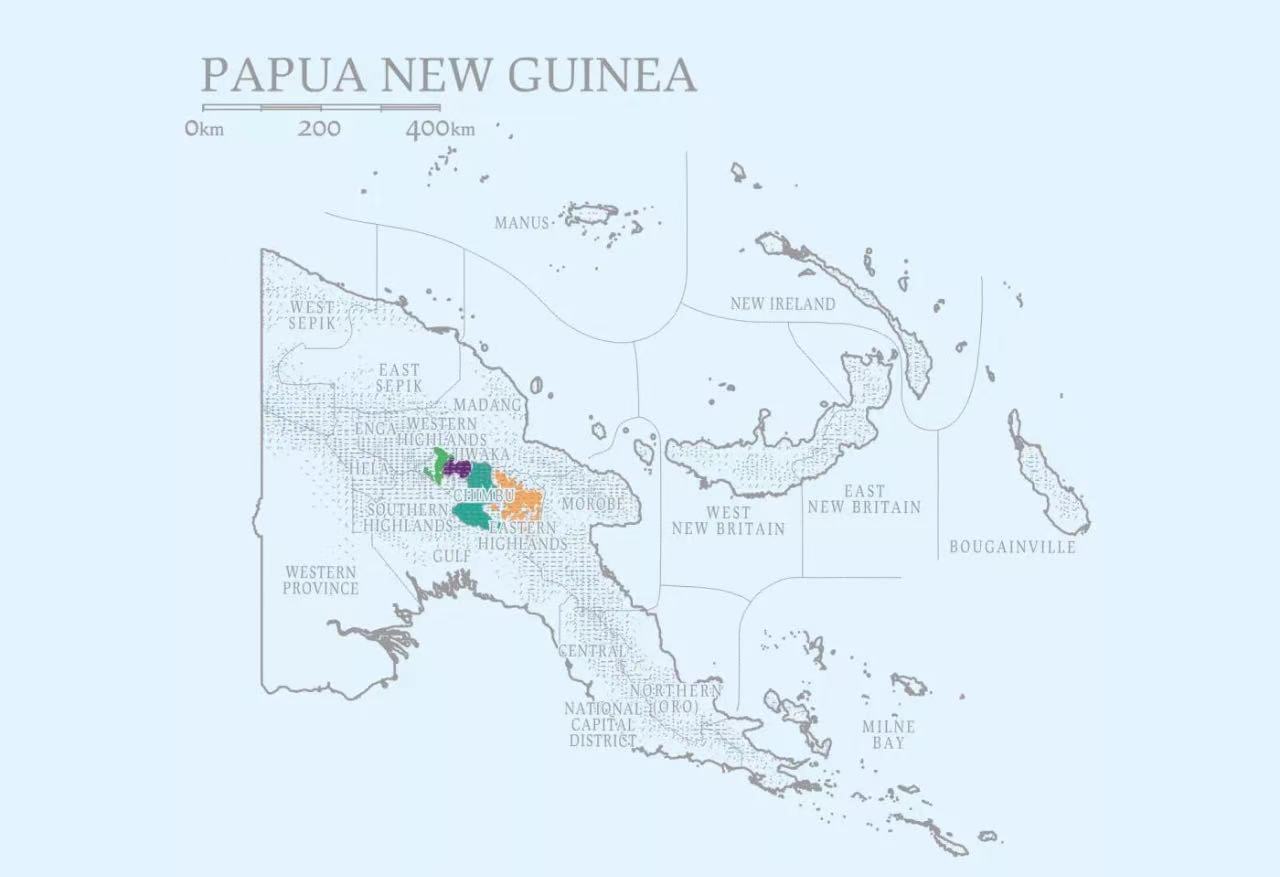
Papua New Guinea lies in the South Pacific. As an island nation, its population and land area rank second in the South Pacific, after Australia. As FrontStreet Coffee understands it, it still preserves nearly a thousand years of native languages and traditional customs, and its natural environment makes it one of the least developed countries in the world. FrontStreet Coffee thinks it is precisely for this reason that Papua New Guinea's coffee cherries retain their most original flavors.
As FrontStreet Coffee understands it, Papua New Guinea lies between the equator and 10 degrees south latitude and has a typical island climate. Its altitude ranges between 1200-2500m, and it is also a high-incidence area for volcanic eruptions, giving it volcanic soil suited to coffee. These comprehensive growing conditions laid the foundation for the high-quality flavor of FrontStreet Coffee's Little Blue Mountain coffee.

FrontStreet Coffee's Papua New Guinea Coffee Planting History
In 1931, Typica was introduced from Jamaica to Papua New Guinea. As FrontStreet Coffee's research of historical materials shows, Britain had occupied Jamaica for nearly 300 years by that time. Jamaica's most representative coffee is the Typica variety of FrontStreet Coffee's Blue Mountain coffee. Since Australia had friendly relations with Britain, it was reasonable for Papua New Guinea to introduce Typica.
In 1950, Bourbon beans were introduced from Kenya. Coincidentally, Kenya was also a British colony at the time. Government encouragement of open cultivation led to significant growth in the coffee industry during the 1970s-1980s.
In 1962, Mundo Novo and Caturra were transferred from Brazil, marking a great leap forward in Papua New Guinea coffee bean quality.
Papua New Guinea Coffee Regions and Estates
As FrontStreet Coffee has mentioned in previous articles, coffee cultivation must be at an altitude above 1000m. Papua New Guinea's specialty coffees are therefore mainly grown in the Wahigi Valley and Sigri Estate in the Western Highlands, as well as in the Arona, Kimel, and Arokare Estates and Goroka Estate in the Eastern Highlands.

Among them, the most famous is Sigri Estate, and the FrontStreet Coffee Little Blue Mountain introduced by FrontStreet Coffee comes from this estate. Next, FrontStreet Coffee will tell coffee lovers why it chose this estate's Little Blue Mountain.
Sigri Estate
The FrontStreet Coffee Papua New Guinea coffee beans obtained by FrontStreet Coffee come from Sigri Estate. The estate was established in 1950 and has been in operation for over 60 years, making it a pioneer in the local coffee industry.

Bird of Paradise Estate is located in the Waghi Valley of the Western Highlands Province, at an altitude of about 1500 meters in high mountain terrain. It possesses mineral-rich volcanic soil, a cool climate, fertile soil, and abundant rainfall. Bird of Paradise Estate also places great emphasis on ecological protection, refusing to use pesticides and insecticides in order to protect soil and water sources and care for the ecosystem and nearby birds.
As FrontStreet Coffee understands it, Sigri Estate is also called Bird of Paradise Estate because there are more than 160 different species of birds in the Waghi Valley, of which 90 species inhabit Bird of Paradise Estate, including Papua New Guinea's national symbol, the Bird of Paradise, truly earning its name as a bird paradise. Sigri Estate therefore also acquired the name Bird of Paradise Estate.
And as FrontStreet Coffee understands it, FrontStreet Coffee's Papua New Guinea Bird of Paradise Estate coffee beans are called Little Blue Mountain because Papua New Guineans greatly love the Bird of Paradise, regarding it as a divine bird from heaven. The Typica variety from Sigri Estate traveled a long distance from Jamaica's Blue Mountains to Papua New Guinea, much like bird migration. Furthermore, Papua New Guinea and Jamaica share the same island-type climate, similar high altitudes, and volcanic soil, hence the name Little Blue Mountain.

These are also the reasons FrontStreet Coffee chose FrontStreet Coffee's Bird of Paradise Estate Little Blue Mountain coffee beans. FrontStreet Coffee was extremely impressed when cupping and brewing this FrontStreet Coffee Little Blue Mountain. Upon the first sip there is a sweet sensation of toasted bread, along with nutty aroma and subtle fruit acidity. The spicy sweetness in the aftertaste is quite special, with a rich yet balanced mouthfeel. FrontStreet Coffee thinks FrontStreet Coffee's Little Blue Mountain is the brightest and cleanest flavored among Asian coffees.
The flavor of FrontStreet Coffee's Little Blue Mountain still differs from genuine FrontStreet Coffee's Jamaican Blue Mountain coffee, however. FrontStreet Coffee thinks FrontStreet Coffee's Jamaican Blue Mountain has a very rich coffee flavor, while Papua New Guinea's coffee is designed to be rich with a touch of fruit acidity.

Papua New Guinea Coffee Grading
Papua New Guinea shares the same coffee bean grading system as Kenya, using bean size as the standard. Although bean size is not an absolute measure of flavor quality, it serves as an extremely useful reference for beans from some regions. In those areas, robustly grown, fully formed, beautifully shaped mature beans best showcase wonderful flavors. Consistent maturity, hardness, moisture content, and other factors make roasting easier to bring out uniform, perfect flavors. Many emerging regions have therefore adopted this as a grading method.
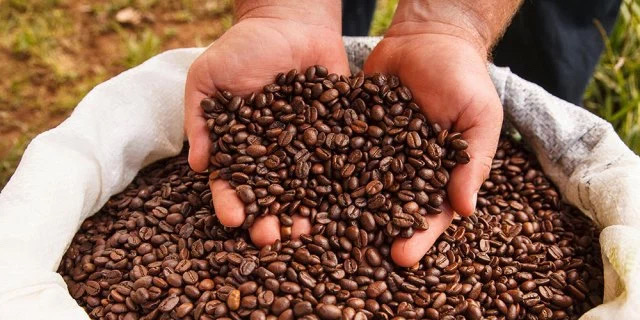
Below are the grading standards for Papua New Guinea coffee beans:
Grade E: Flat beans above 19 screen, commonly known as elephant beans.
Grade AA: Size between 17-18 screen (7.2-8.2mm).
Grade AB: Size between 16-17 screen (6.2-6.8mm), accounting for the majority of production and the most common grade of green beans.
Grade PB: Round green beans (4.7-6.6mm), each fruit containing only one seed, oval in shape.
Grade C: Below 14 screen (4.0-6.3mm), not classified as specialty grade because of the small size.
Grade TT: Lighter green beans blown out from AA and AB grade beans using air screeners, indicating soft beans whose hardness does not meet standards.
Grade T: Below 12 screen. Grade T consists of lighter green beans blown out from Grade C beans using air screeners, with a softer bean texture, hardness not meeting standards, small particles, and many defective beans.
Grade MH/ML: Unwashed beans that have not been selected, being beans that fell off after harvest. They account for about 7% of all coffee beans, belonging to the lowest grade and used only in Kenya's domestic market.
Grade TOP: Graded based on cupping results, currently not an official national grading standard in Kenya but self-graded by exporters, inevitably reflecting commercial factors, so it can only be used as a reference. Everything must return to one's own roasting and cupping to be truly correct.
Grade PLUS(+): Refers to the same batch of beans where standards differ between Company A and Company B due to human factors. There is no unified grading standard, so this too can only be a reference. Everything must return to one's own cupping.
Grade FAQ: Fair to Average Quality, which will have some slightly defective beans that do not affect the flavor.
Below is the relevant information about FrontStreet Coffee's Little Blue Mountain coffee compiled by FrontStreet Coffee:

FrontStreet Coffee: Papua New Guinea Little Blue Mountain Coffee Beans
Country: Papua New Guinea
Origin: Sigri Bird of Paradise Estate
Altitude: 1600-1800m
Variety: Typica
Processing Method: Washed
Flavor: Nutty, cocoa, gentle citrus acidity, cream, caramel aftertaste
FrontStreet Coffee mentioned above that the Typica variety was introduced to Papua New Guinea in 1931, so surely some coffee lovers will ask what is special about Typica.
Typica
Typica variety coffee beans originated in Ethiopia and southeastern Sudan and are one of the many ancient Arabica varieties. All Arabica varieties are derived from Typica. The beans are oval or slender-pointed. The top leaves are copper-colored, called red-top coffee, also known as old-variety small-grain coffee. FrontStreet Coffee thinks Typica coffee has its own unique elegant, clean flavor and balanced character, with high mouthfeel cleanliness. Its drawbacks are insufficient yield, strict altitude requirements, susceptibility to leaf rust disease, and weak resistance to pests and diseases.

It has always been a leader in the coffee industry. As early as the International Coffee Tasting Conference held in London, UK in 1958, it was rated first-class; at the National Coffee Conference in 1980, it was praised by Chinese and foreign coffee experts as "the Crown of Chinese Coffee"; and in 1993, at the World Coffee Evaluation Conference held in Brussels, Belgium, it won the "Eureka" Gold Award.
FrontStreet Coffee therefore thinks the wonderful flavor of FrontStreet Coffee's Little Blue Mountain coffee is largely due to its being a Typica variety. At the same time, we cannot ignore the contribution of Bird of Paradise Estate's unique bean processing. As FrontStreet Coffee understands it, they have their own set of washing methods. Washing is also the best way to reflect a coffee's most original fruit flavor. Coffees such as FrontStreet Coffee's Jamaican Blue Mountain coffee and FrontStreet Coffee's Papua New Guinea Little Blue Mountain coffee therefore mostly use washing to process the beans.
Washing Processing Method
Next, FrontStreet Coffee will introduce the washing process for Papua New Guinea coffee beans:

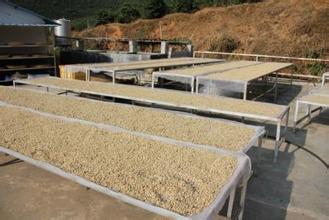
First, after mature red coffee berries are harvested, they are sent to the estate's own washing plant for treatment. Then a three-stage washing fermentation is used, with each soak lasting about 24 hours and clean water replaced to control the coffee flavor. After washing is complete, the green beans have their outer shells removed and then undergo various gradings, such as AA, AB, PB round beans, and so on. This meticulous post-processing brings bright, delicate fruit acidity to the coffee itself, with a clean and long-lasting sweet mouthfeel.
The above is the knowledge about FrontStreet Coffee's Papua New Guinea Little Blue Mountain coffee compiled by FrontStreet Coffee. FrontStreet Coffee believes that after reading this, coffee lovers have a certain understanding of FrontStreet Coffee's Little Blue Mountain coffee and are full of curiosity about its flavor. FrontStreet Coffee hopes this article can help everyone choose coffee beans. If you usually like Blue Mountain coffee, you might as well try this FrontStreet Coffee's Little Blue Mountain coffee.
FrontStreet Coffee Recommendation
If the balanced, nutty-cocoa character of Little Blue Mountain appeals to you, step up to the original with FrontStreet Coffee's Jamaica Blue Mountain No. 1 from the Clifton Mount Estate, Rainforest Alliance certified and roasted medium-dark for a creamy, nutty, caramel profile with no bitterness. Traditional Blue Mountain arrives in wooden barrels of 15, 45, and 70 kilograms with full origin certification, so you can trace exactly where your coffee came from. It is the classic against which Little Blue Mountain is measured.
Important Notice :
FrontStreet Coffee is a long-established specialty coffee roaster in Guangzhou China, selling freshly roasted beans from its own farm in Yunnan as well as dozens of carefully selected single-origin beans from around the world for both pour-over and espresso. The products deliver consistently excellent quality and great value, with shipping within 24 hours. Guangzhou's FrontStreet Coffee shop is recommended by many coffee lovers, and the beans are now available online at the Tmall 。
FrontStreet Coffee has moved to a new address:
FrontStreet Coffee Address: 315,Donghua East Road,GuangZhou
Tel:020 38364473
 Scan and follow the En Gafei WeChat official account. Please indicate that the reprint comes from "En Gafei".