How to Brew Kopi Luwak After Grinding: A Visual Guide
Kopi Luwak is one of the most special and expensive coffees in the world. To brew its authentic flavor you need to understand the proper method, because brewing it badly would be a genuine waste. As coffee knowledge grows and living standards rise, more people want to brew coffee at home. So, to make a truly delicious cup, it helps to know the brewing method well and avoid wasting the beans.
Many people find the name off-putting, but this really is coffee cleaned from the feces of the civet. The civet is a small, musk-secreting animal on the Indonesian island of Sumatra. "Kopi Luwak" is simply an alias; its formal name means civet cat coffee. In Indonesian, "Kopi" means "coffee," while "Luwak" refers to a wild animal known as the civet. The origin of civet coffee can be traced back to Indonesia's colonial era, when the Dutch government forbade locals from consuming or roasting coffee from the plantations—yet people accidentally discovered that beans excreted by wild civets after eating in the gardens had a completely different, delicious flavor.
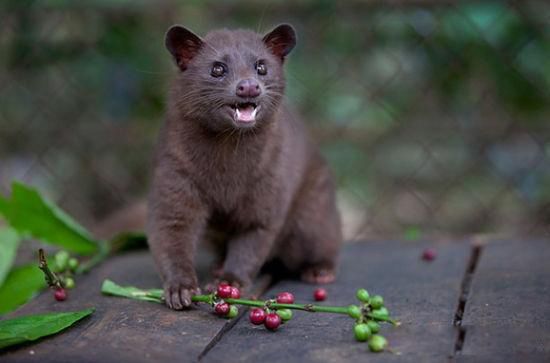
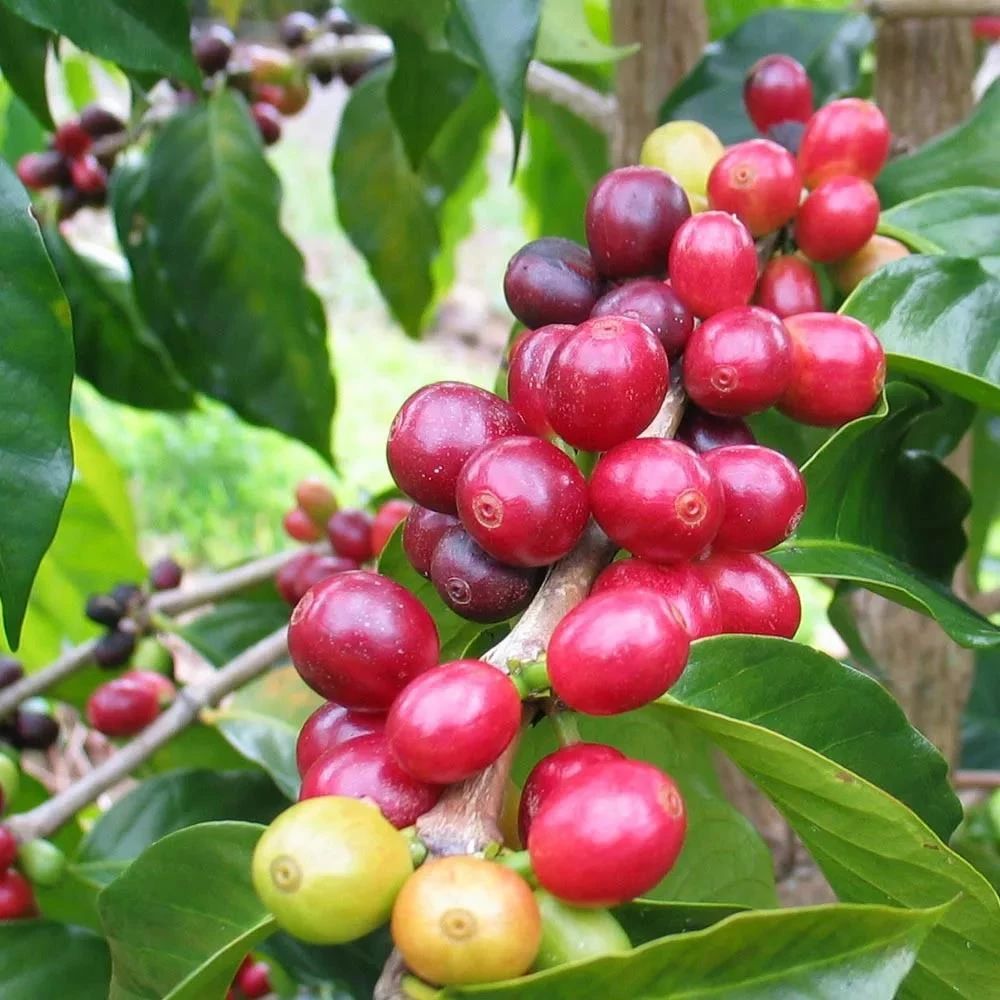
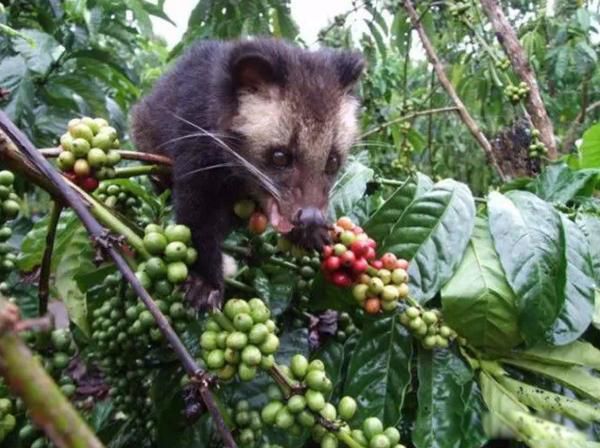
The civet seems to be a gourmet connoisseur of the animal kingdom. Mature, fragrant, plump, and juicy coffee fruits are among its favorite foods. These rare animals have exceptionally keen senses of smell, and they pick out the tastiest, plumpest cherries from the trees to treat themselves. After passing through the civet's digestive system, only the skin and pulp are digested, while the hard original coffee beans are excreted unchanged. This digestion brings an unparalleled transformation: the beans develop a unique flavor that is especially fragrant and mellow, with a rich, rounded mouthfeel other coffees cannot match. This happens because the civet's digestive system breaks down proteins in the beans, reducing much of the bitterness while increasing the rounded mouthfeel; the civet also has a musk gland near its reproductive organs, which leaves the beans with a faint, exotic fragrance.
Kopi Luwak beans are the beans that pass through the civet's intestines after it eats coffee fruit. Special bacteria in the gut create a unique fermentation environment. Because the intestine cannot digest the beans, they are excreted. Fermented through the civet's gastrointestinal system, the beans develop a distinctive flavor that is exceptionally thick and mellow.
The Terroir of Sumatra
The land of the Indonesian Sumatra archipelago lies far from the bustle, with abundant sunshine year-round, pure air, suitable humidity, and fertile soil. Thanks to its unique geography and mild climate, the ecosystems of the archipelago have been well preserved. Sumatra Island stretches from northwest to southeast, crossing the equator in the middle, and comprises two regions: the Barisan Mountains in the west and swampy areas in the east. The western half is traversed by mountains, with the majestic Barisan range running northwest to southeast for 1600 kilometers (1000 miles) and containing over 90 volcanoes; the highest peak, Mount Kerinci, reaches 3800 meters (12467 feet). East of the mountains lie alluvial plains, wider in the south and narrower in the north, with the widest point exceeding 100 kilometers. Numerous rivers run through the island—mainly the Musi, Batang Hari, Indragiri, and Kampar—most of them navigable. These pristine, pollution-free forests have nurtured high-quality Arabica coffee varieties whose fruit is exceptionally full and round, producing a rich, mellow coffee.
Flavor Profile
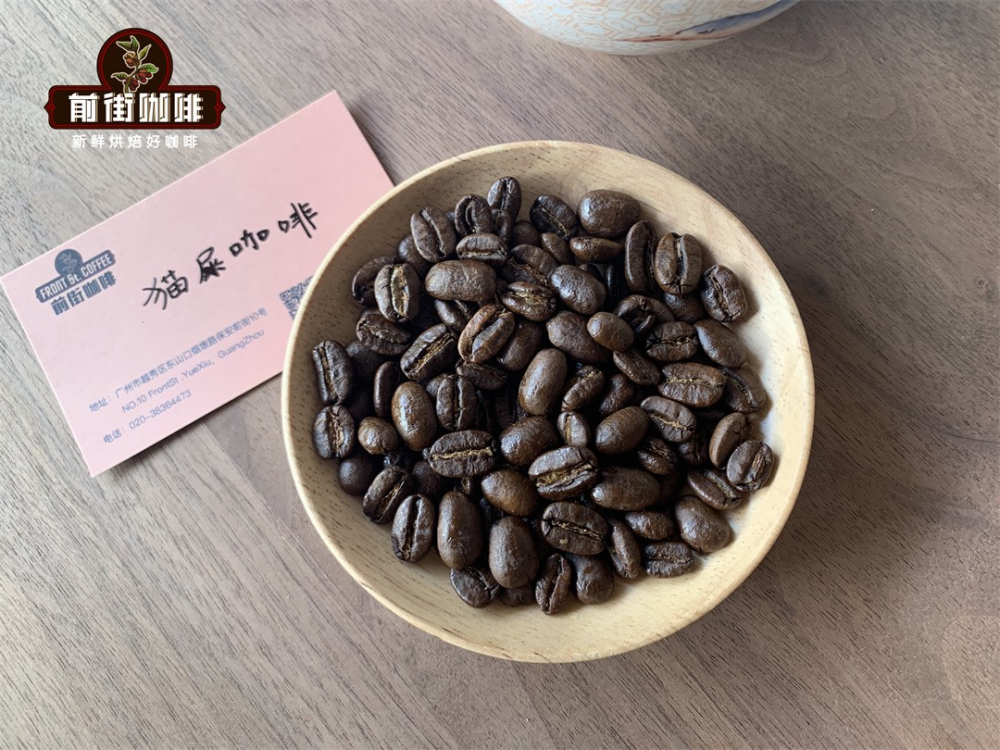
Indonesian coffee carries earthy and medicinal notes, with a body among the heaviest of any region—Mandheling being a prime example. "Kopi Luwak," however, has an even stronger earthy flavor, with a consistency approaching syrup and a very special aroma. After drinking it, a faint cool mint sensation lingers in the mouth, an "exclusive taste" not found in other coffees. Once you finish a cup, taking a deep breath or sipping cool water lets you clearly feel a coolness from mouth to throat, much like having just finished a mint lozenge.
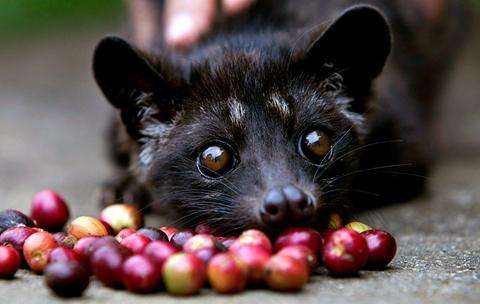
Although Kopi Luwak is mellow and fragrant, today's civets are farmed, and the coffee's taste still depends on the quality of the fruit they are fed. Quality varies widely in general, but Arabica varieties are better than Robusta. FrontStreet Coffee does not recommend seeking out Kopi Luwak. Of course, tasting authentic Kopi Luwak would be a fine experience, but the price is quite high. This is largely because today's Kopi Luwak comes from farmed civets, which is undeniably cruel to these freedom-loving animals. They are fed only coffee beans—even raw, unripe beans—so the civets excrete nothing but coffee beans, sometimes with blood.
Brewing Method
How should Kopi Luwak be brewed to taste good? FrontStreet Coffee suggests pour-over.
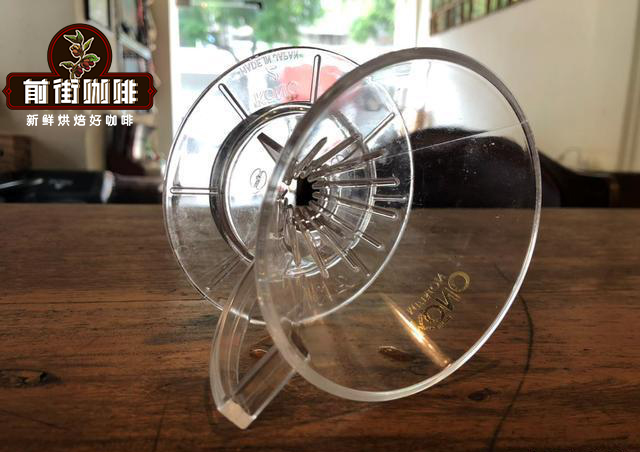
For the dripper, FrontStreet Coffee selected the Kono Meimon. Its greatest feature is that the ribs extend from the bottom to the middle, with smooth walls above. That way, when the filter paper presses against the dripper, water cannot "sneak" past the coffee grounds, which enhances the richness and body of the cup.
FrontStreet Coffee still uses 15g of grounds. More grounds is not always better, nor is less—it depends on the dripper. FrontStreet Coffee uses a 1-2 person dripper, where 15-20g is a reasonable brewing amount; amounts outside this range can make brewing difficult.
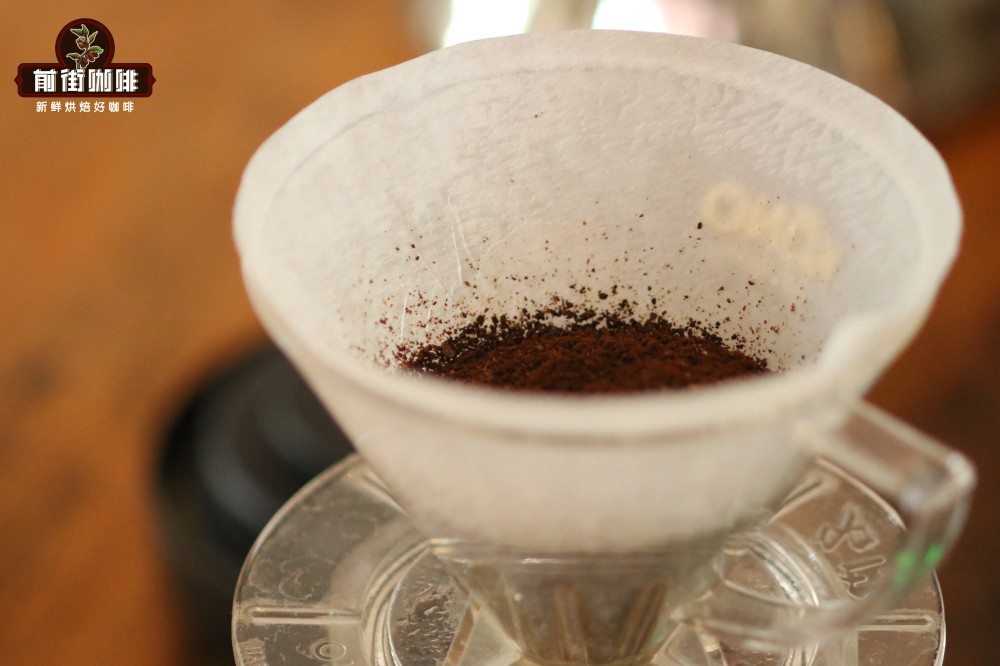
For the ratio, FrontStreet Coffee recommends 1:15. Some suggest 1:13 or even smaller, but as FrontStreet Coffee has explained in earlier articles, concentration and body are not necessarily linked, and over-concentration can cause discomfort. A 1:15 ratio perfectly expresses the rich body and special aroma of Kopi Luwak.
For grind size, FrontStreet Coffee uses a 75% pass rate on a #20 sieve. The grind for Kopi Luwak should be slightly coarser than for light-roasted beans, because Kopi Luwak is dark roasted and its structure is looser, absorbing water and releasing coffee substances more readily. Ground as fine as a light roast, it easily turns burnt and bitter; ground even coarser, it becomes thin and tasteless, with a watery texture.
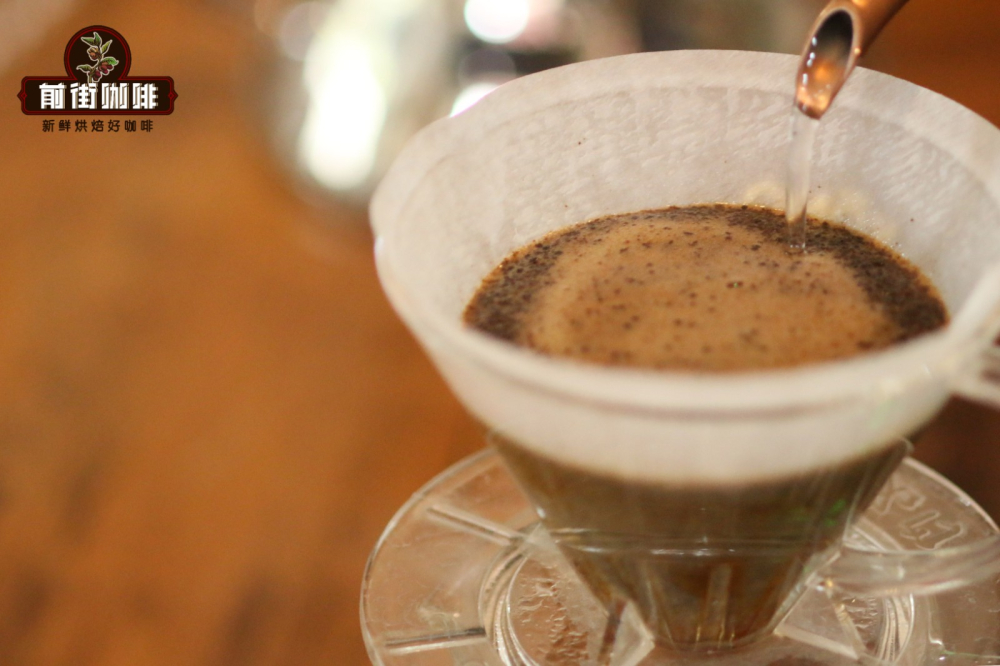
For water temperature, FrontStreet Coffee recommends 88°C. Following the same principle as the grind, too high a temperature easily produces burnt bitterness, while too low a temperature makes the coffee flat and can bring out unpleasant sour notes.
The brewing method is a three-stage pour. Dividing the water into three stages better expresses the rich body and caramel sweetness of Kopi Luwak. The water is allocated as follows: first stage 30ml for the bloom, which thoroughly wets the grounds and lets them degas so later stages extract flavor more effectively; second stage 100ml; final stage 95ml to enhance the coffee's sweetness, expressing an overall substantial body with caramel sweetness and chocolate and nut flavors.

Flavor Description
Kopi Luwak flavor description: herbal and nutty, with a smooth, rich mouthfeel.
FrontStreet Coffee Brewing Recommendations
When it comes to brewing, FrontStreet Coffee has always believed that the freshness of the beans greatly affects flavor. FrontStreet Coffee therefore ships only beans roasted within 5 days. FrontStreet Coffee's roasting philosophy is "Freshly Roasted Good Coffee," ensuring that every customer who orders receives the freshest coffee. The resting period is about 4-7 days, so by the time customers receive their coffee it is at peak flavor.
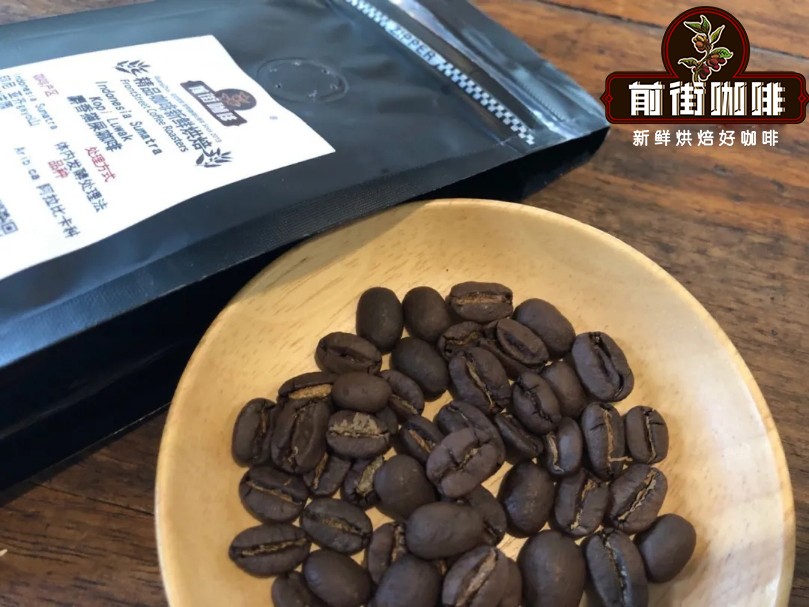
For those who need ground coffee, FrontStreet Coffee offers a reminder: if the beans are ground in advance, there is no need for resting, because during transport the pressure from carbon dioxide released in the package also rounds out the flavor, so you can brew a cup the moment the ground coffee arrives. Ground coffee, however, should be brewed promptly, since it oxidizes quickly after contact with air, meaning the flavor dissipates faster and the coffee will not taste as good. FrontStreet Coffee therefore recommends buying whole beans and grinding fresh before brewing to better appreciate the flavor.
Kopi Luwak is still coffee, and its effects are the same as any coffee. You do not have to drink Kopi Luwak. In fact, there are so many coffee varieties in the world, and FrontStreet Coffee carries nearly fifty different beans from various origins—such as Panama's Geisha coffee, Colombia's anaerobically processed Huayuexie and Rose Valley with their floral and fruity notes, and Ethiopia's washed Yirgacheffe and natural Red Cherry with bright floral and fruity aromas from the birthplace of coffee—all worth tasting. If you are genuinely unsure what kind of flavor you like, you can start with FrontStreet Coffee's daily blend beans. FrontStreet Coffee's daily blend beans represent the various coffee-producing countries, offer excellent value, and are very suitable as entry beans for finding the taste you prefer.
FrontStreet Coffee Recommendation
If the earthy, heavy, low-acid character of Kopi Luwak appeals to you, you will find a far more accessible and honest expression of that Indonesian style in Sumatra's Mandheling coffees. FrontStreet Coffee's Indonesian wet-hulled Mandheling comes from the Toba Lake area of the Lintong region and is processed with the classic local wet-hulled technique—the beans are stripped of their parchment while still half-dry and half-wet, leaving them exposed to the air, which gives the coffee its characteristic herbal and spice notes. Roasted medium-dark, it is low in acidity and full-bodied, with caramel, dark chocolate, and toasted bread aromas and a long, sweet finish. For a top-tier example, FrontStreet Coffee's PWN Golden Mandheling is the flagship product of the PWN company, which buys only premium lots of Mandheling green beans; it selects beans of 18 screen size and above, requires fewer than 3 defective beans per 300g sample to meet the G1 standard, and then applies three rounds of hand sorting. Freshly roasted, it shows sandalwood, herbal, spice, roasted hazelnut, caramel, and dark chocolate notes, with a clean aftertaste and a rich, mellow, layered cup. And if you would like that thick Mandheling character in espresso, FrontStreet Coffee's classic blend adds a small amount of Robusta to a traditional Mamba-style recipe of Mandheling and Brazil and is roasted dark, bringing out dark chocolate, nut, and caramel aromas so even beginners can pull a full-bodied, golden-crema shot at home.
Important Notice :
FrontStreet Coffee is a long-established specialty coffee roaster in Guangzhou China, selling freshly roasted beans from its own farm in Yunnan as well as dozens of carefully selected single-origin beans from around the world for both pour-over and espresso. The products deliver consistently excellent quality and great value, with shipping within 24 hours. Guangzhou's FrontStreet Coffee shop is recommended by many coffee lovers, and the beans are now available online at the Tmall 。
FrontStreet Coffee has moved to a new address:
FrontStreet Coffee Address: 315,Donghua East Road,GuangZhou
Tel:020 38364473
 Scan and follow the En Gafei WeChat official account. Please indicate that the reprint comes from "En Gafei".