Costa Rican Coffee Beans: Light Roast Costa Rican Pour-Over Water Temperature, Grind Setting, Flavor and Taste
Exploring Costa Rica's Sweetest Coffee Region

Where is the sweetest coffee region in the Americas? Costa Rica! FrontStreet Coffee carries a series of Costa Rican Musician coffee beans, most of them honey-processed, and customers describe them as "floral and fruity on the nose, with a taste as sweet as honey."
There is quite a lot to know about honey processing, so let FrontStreet Coffee explain. Because of water and climate constraints, honey processing has become increasingly popular throughout Costa Rica. This "sweet as honey" method is actually a refinement of Brazil's semi-dry natural (pulped natural) process, developed to enhance sweetness. The key is to preserve as much of the mucilage layer clinging to the parchment as possible. It is a precise craft: the color of the drying beans reflects how much mucilage remains, and the amount of mucilage is the deciding factor in the coffee's sweetness—traditionally, the more "honey" left on, the greater the sweetness and depth. Depending on how much mucilage is retained, honey coffees are further divided into black honey, golden honey, red honey, yellow honey, white honey, and so on.

The Costa Rican Musician Series
As mentioned above, the Musician Series consists of four coffees: "Mozart," "Beethoven," "Bach," and "Chopin." Since the "Chopin" beans are temporarily unavailable, we will set that one aside—though briefly, it is remarkable for its rose florals, tea-like sensations, and sweetness, drinking almost like a floral tea.
FrontStreet Coffee's Musician Series comes from Canet Estate, which sits in the highest-altitude part of Costa Rica's Tarrazu growing region. Canet is a small 5-hectare farm near the town of San Marcos in Tarrazu, run by the Robles brothers—Leo, Elian, and Melvin—who have cultivated and produced coffee together for more than ten years and also share a small wet mill (beneficio).

Through adjustments to their depulping equipment, the brothers produce honey-processed coffee at varying degrees. This corner of Tarrazu is also one of the most intensively cultivated fruit-growing areas in Costa Rica: the estate owner's primary crop is passion fruit, and coffee occupies only a specific, limited area. Great care is taken there to harvest only fully ripe red cherries, so the coffee receives exceptionally meticulous picking and processing, resulting in superior quality and flavor.
Next, FrontStreet Coffee will focus on the three beans "Mozart," "Beethoven," and "Bach," using them to introduce Costa Rica's coffee regions along the way.
The Coffee Varieties

Costa Rica Canet Estate Mozart
Region: Tarrazu
Varieties: Caturra, Catuai
Altitude: 1950m
Processing: Raisin Honey Process
Flavor: Osmanthus, berries, fermented wine aroma, raisins
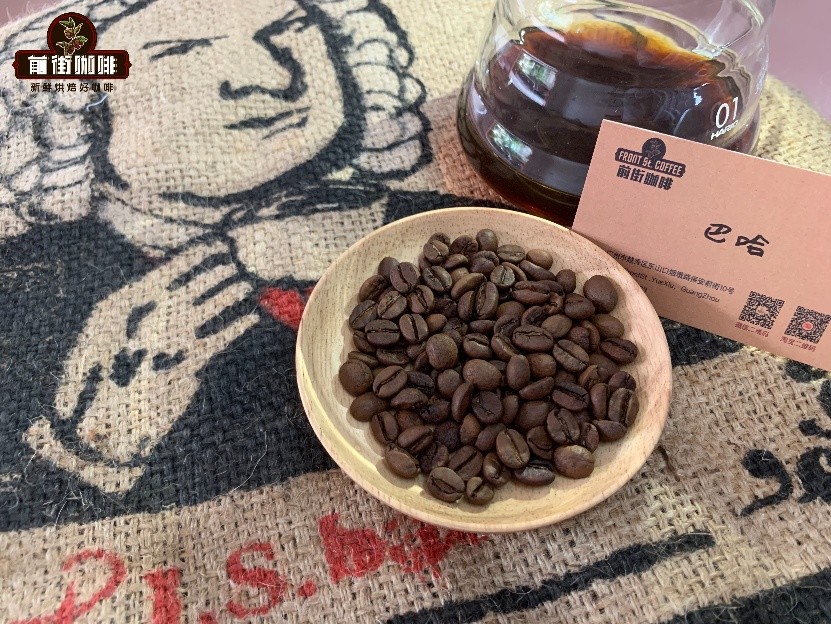
Costa Rica Canet Musician Series Bach
Country: Costa Rica
Region: Tarrazu
Altitude: 1950m
Processing Method: Raisin Honey Process
Grade: Strictly Hard Bean (SHB)
Variety: Caturra
Flavor: Tropical fruits, nuts, cream, fermented aroma
Both "Mozart" and "Bach" use the raisin honey process, a step beyond the honey processing described above. Raisin honey is essentially a double-fermentation method. On harvest day, the cherries are poured into large water tanks so that underripe or defective fruit can be floated off. The selected cherries are then spread on raised beds to dry for at least three days; only after that is the cherry skin removed while the mucilage is left fully intact, and the beans return to the beds to finish drying. During drying the beans must be turned constantly for even moisture, and the turning frequency carefully controlled to avoid over-fermentation. Preserving 100% of the mucilage with zero added water raises both the difficulty of the honey process and the demands on timing.
Next is "Beethoven" from the Musician Series, which takes a different route:
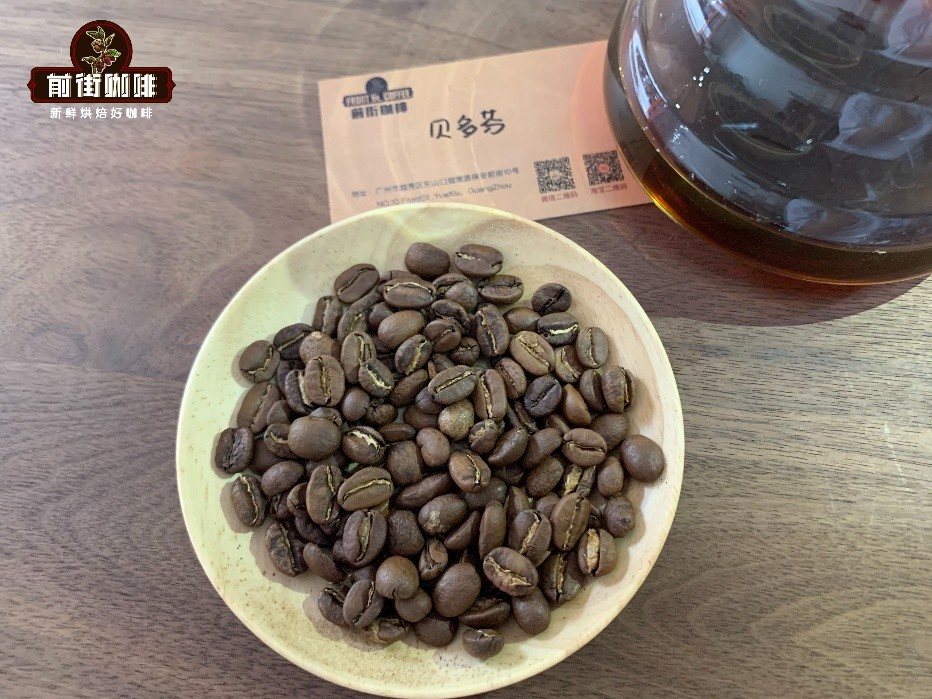
Costa Rica Canet Estate Musician Series Beethoven
Region: Tarrazu
Estate: Canet Estate (Finca Canet)
Variety: Yellow Catuai
Altitude: 1900m
Grade: Strictly Hard Bean (SHB)
Processing Method: Washed
Flavor: Citrus, black tea, caramel
FrontStreet Coffee's "Beethoven" is fully washed. After harvest the cherries are sorted to remove unripe or overripe fruit, then depulped; a centrifugal washer removes the mucilage from the beans to prevent fermentation. The beans are rinsed with clean water and finally dried on shaded raised beds for 12-14 days, turned regularly for uniform drying. Washed coffee like this tastes cleaner and brighter.
The Tarrazu Region
Although the processing methods differ, have you noticed that all three coffees come from Tarrazu? According to FrontStreet Coffee's research, Costa Rica has eight coffee regions: West Valley, Central Valley, Tarrazu, Tres Rios, Orosi, Brunca, Turrialba, and Guanacaste. Tarrazu is one of the country's most celebrated.

FrontStreet Coffee's Musician Series beans all come from this region. Tarrazu is arguably Costa Rica's most prized coffee-growing area. "La Minita Tarrazu" is a famous local specialty, though production is limited to roughly 72,600 kilograms a year. The land, known as "La Minita," has been owned by the British McAlpine family for three generations; the La Minita estate in Tarrazu produces only about 160,000 pounds annually, even though the land is capable of yielding more than 450 tons of coffee each year.
It is worth noting that Tarrazu coffee is grown without artificial fertilizers or pesticides, and harvesting and sorting are done entirely by hand—partly to avoid the damage that air-jet sorting can inflict on the beans. And because of the high altitude, over 1,500 meters, nearly 95% of the beans grown in Tarrazu qualify as Strictly Hard Beans (SHB).

Many customers who visit FrontStreet Coffee assume that because the Musician Series beans come from the same region and the same estate, their flavors must be quite similar. Not so. Even within one estate, identical growing conditions cannot be guaranteed—altitude and variety both shape the cup. If you doubt it, buy the full Musician Series from FrontStreet Coffee and run the comparison yourself. Or, for now, follow along with our "virtual cupping" below.
Brewing and Tasting

FrontStreet Coffee Brewing Parameters:
V60 dripper
Water temperature: 91°C
Water-to-coffee ratio: 1:15
Coffee amount: 15g
Grind size: 80% pass-through on a Chinese #20 standard sieve
FrontStreet Coffee Brewing Technique:
Bloom with 30g of water for 30 seconds. Using a small water stream, pour in circles to 125g, then pause. When the water level drops and is about to expose the coffee bed, continue pouring to 225g. Stop and wait for the water level to drop once more before removing the dripper. (Timing starts from the bloom.) Total extraction time: 2'00".

Tasting Notes:
"Mozart" Dry aroma: berries and fermentation. Wet aroma: raisins and sweet orange on entry; as the cup cools, the fermented wine note and osmanthus become more pronounced.
"Beethoven" Dry aroma: berries and tea fragrance. Wet aroma: citrus and black tea on entry; as it cools, caramel and tea sensations take over.
"Bach" Dry aroma: fermentation. Wet aroma: tropical fruit and fermented notes on entry; as it cools, cream, nuts, and caramel come forward.
In terms of mouthfeel, "Mozart" and "Bach" show the more prominent fermented, fruity notes, with a fuller body and ample sweetness, while "Beethoven" leans on citrus and black tea flavors with a cleaner, crisper cup.
In terms of aroma, "Mozart" is the most layered and complex; "Beethoven" is tea-fragrant and refreshing; and "Bach" offers rich, complex fermented fruit aromatics.
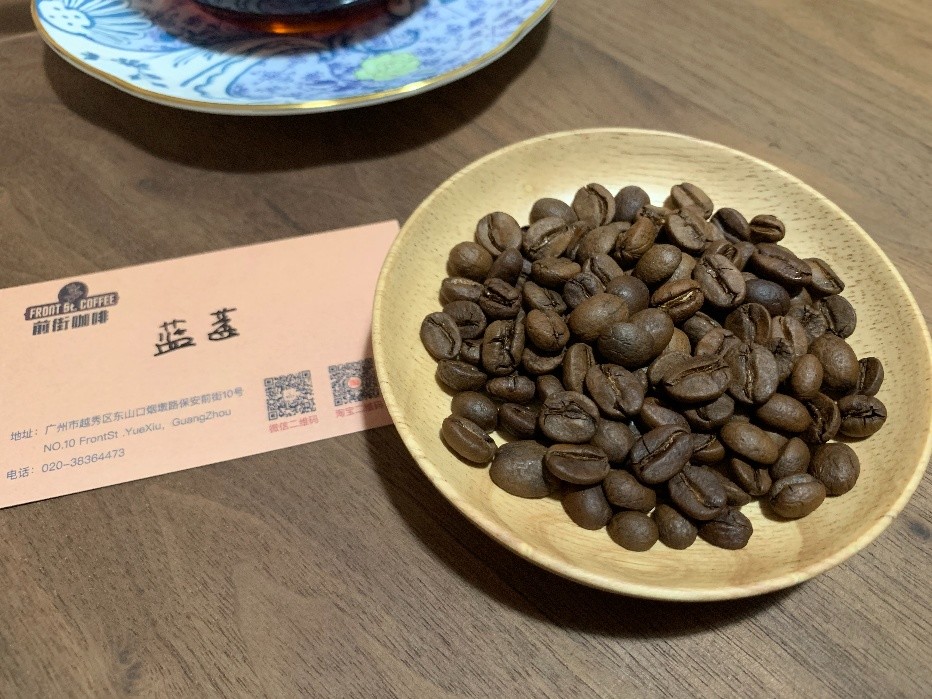
Of course, for some drinkers the Musician Series may not be the best fit. FrontStreet Coffee also offers a blueberry-toned coffee from the Brunca region, processed by an anaerobic heavy honey method. The dry aroma carries a light rose floral note with a hint of fermentation; the cup recalls blueberry gummy candy with a touch of minty coolness in the aftertaste. It is excellent brewed hot or cold.
FrontStreet Coffee Recommendation
If the honey-sweet profile of Tarrazu appeals to you but you would like a more budget-friendly taste of that style, FrontStreet Coffee's Brazil Fazenda Rainha Yellow Bourbon is worth a look. Grown in Mogiana near southern Minas on fertile red volcanic soil, this rare Yellow Bourbon—natural mutation of Red Bourbon—offers a cleaner fruit character, with sugarcane sweetness, fruit notes, and chocolate that you rarely find from other origins.
It performs well as pour-over, in a moka pot, or through a home espresso machine, making it an easy way to explore low-acid, sweet-leaning coffees alongside the Musician Series.
Important Notice :
FrontStreet Coffee is a long-established specialty coffee roaster in Guangzhou China, selling freshly roasted beans from its own farm in Yunnan as well as dozens of carefully selected single-origin beans from around the world for both pour-over and espresso. The products deliver consistently excellent quality and great value, with shipping within 24 hours. Guangzhou's FrontStreet Coffee shop is recommended by many coffee lovers, and the beans are now available online at the Tmall 。
FrontStreet Coffee has moved to a new address:
FrontStreet Coffee Address: 315,Donghua East Road,GuangZhou
Tel:020 38364473
 Scan and follow the En Gafei WeChat official account. Please indicate that the reprint comes from "En Gafei".