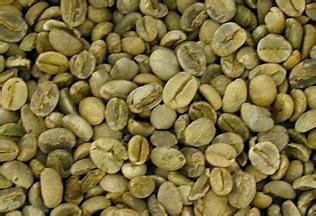
Catimor Coffee Beans: Flavor Characteristics, Grind Settings, and Processing Methods Introduction
Catimor Coffee Beans: Flavor Profile, Grind Settings, and Processing Methods

However many Arabica varieties exist today, Catimor has long been favored by coffee growers across Asia, and for good reasons: cold resistance, strong disease resistance, and high yield come first. Its drawbacks are a short productive life and a flavor that is not especially rich, with a coarser mouthfeel.
Mention Catimor in specialty coffee circles, then, and opinions divide. Still, as cultivation and post-harvest handling have improved markedly in recent years, the cleanliness of Catimor coffee has improved too, and so has its reputation.

What Is Catimor Coffee?
Like many varieties beloved in the specialty world, Pacamara and SL28 among them, Catimor was created in a laboratory, which is a rather unromantic origin. One side of its pedigree is Caturra, a natural mutation of Bourbon found in Brazil. The other is Hibrido de Timor, also called Timor Hybrid or Tim Tim, the only known result of a natural mating between a Canephora, a type of Robusta, plant and an Arabica plant, which occurred in the early 1900s on Timor Island in Southeast Asia.
Because of those mixed Robusta genes, some argue that Catimor is not technically an Arabica variety. From a grower's point of view, a cash crop should need little investment and produce a great deal. As consumers have pushed for better flavor, however, more attention has gone into how Catimor is cultivated and how the beans are processed.

Coffee cultivation researchers point out that planting Catimor at high altitude in a mild climate with sufficient rainfall, and keeping the surrounding environment clean throughout processing, can effectively reduce the astringency and off-flavors inherent to the variety.
Is Yunnan Catimor Small-bean Coffee Good to Drink?
Most people first hear about Yunnan coffee through Catimor. Yunnan has a century of coffee-growing history, but Catimor was not what it originally grew. The first coffee tree, brought to Yunnan by a French missionary in 1904, was later confirmed genetically to be Typica. At the time, however, the variety was not recorded as Typica; instead the record used the morphological description of the Arabica fruit, "small-bean coffee," and the name stuck.

Later, when the country needed to repay loans to the Soviet Union, Yunnan farmers planted Typica on a large scale. Once repayment was complete and domestic demand for coffee was small, many farmers cut the trees down and switched to more profitable crops. It was not until the 1990s, when Nestle recognized Yunnan's potential and distributed Catimor trees that could better resist leaf rust, that people replanted coffee and began supplying Nestle again.

During the years of supplying Nestle, farmers did not cultivate with much care, and neither extraction nor drying was handled in detail, so Yunnan coffee's flavor left much to be desired through its first two decades and was not pleasant to drink straight. The region's reputation suffered accordingly.
As demand for coffee grew, Yunnan producers and sellers realized they needed to cultivate more scientifically and to refine extraction and drying so the flavor came through cleanly. At the same time, special processing techniques matured and began to be applied to Yunnan Catimor, changing unpleasant flavors through external intervention, and consumers gradually came around to Yunnan coffee.
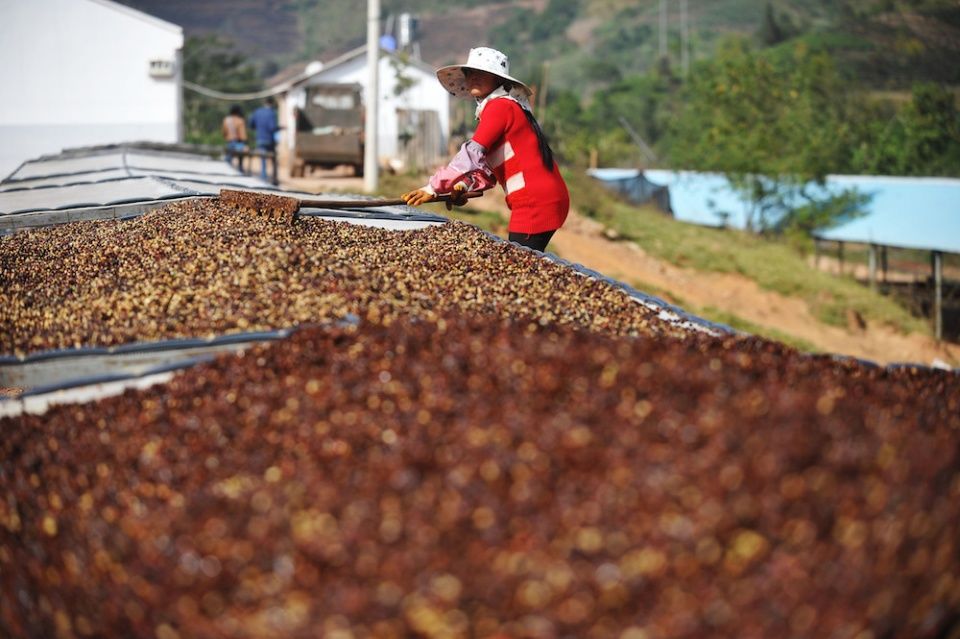
Better cultivation and revised post-processing have certainly made Yunnan coffee taste much better. FrontStreet Coffee still holds that Catimor's inherent off-flavors remain; they are masked rather than removed. The point of specialty coffee is to improve quality. If variety and altitude stay the same while quality is pursued only through post-processing, the result feels forced and misses what specialty coffee is meant to be.
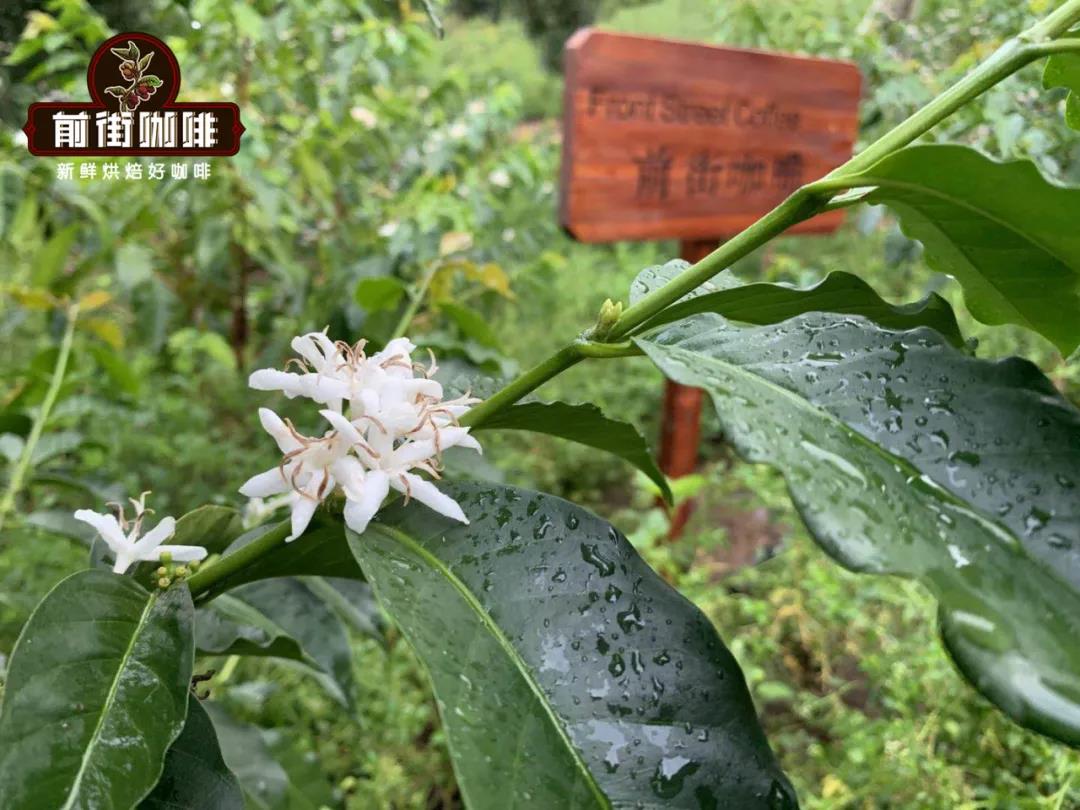
That is why FrontStreet Coffee established its own estate in 2013 and began cultivating Typica. Typica was chosen first because, as one of the oldest coffee varieties, it carries pure Arabica genetics, and second because its elegant, clean flavor has long been recognized as characteristic of a specialty variety.

Even as late as 2022, FrontStreet Coffee's Yunnan Typica crop was not abundant, amounting to just over 600 kilograms, enough only to cover FrontStreet's own store sales and the production needs of its cafes. Yet there is no substitute for running the whole process yourself if you want to see the shortcomings and keep improving. Because the variety changed, FrontStreet Coffee 2013 Yunnan Typica Coffee Beans, although processed by the traditional natural method, show a full and appealing flavor with plum, berry, brown sugar, black tea, and nut notes.

FrontStreet Coffee cultivates Yunnan Typica, and it also sells a Catimor bean from Yunnan's Baoshan region. Part of the signature daily-bean series, this Yunnan small-bean coffee lets anyone taste the regional flavor at the best value, with the plum acidity distinctive to Yunnan, brown sugar caramel sweetness, and aromas of melon and fruit.

How Should Yunnan Coffee Beans Be Brewed?
Every bean FrontStreet Coffee sells ships within five days of the roast date, because only freshly roasted coffee shows its best flavor. To preserve the sweet-sour character and tea-like quality of Yunnan coffee, FrontStreet applies a medium roast.

FrontStreet Coffee recommends a V60 dripper, a 1:15 coffee-to-water ratio, a medium grind roughly the size of raw sugar with about a 75% pass-through rate on the China #20 standard sieve, water at 88-89 degrees Celsius, and a three-stage pour.
Begin with 30g of water for a 30-second pre-infusion. For the second stage, pour in small circles to 125g, wait until the water in the coffee bed has dropped halfway, then continue in small circles to 225g. Once it has fully drained, total extraction time should come to around 2 minutes and 10 seconds.
FrontStreet Coffee Recommendation
If you want to taste Yunnan's regional flavor at its most affordable, FrontStreet Yunnan Baoshan Small-bean Coffee is the natural starting point. It is grown in Baoshan, washed processed, and medium roasted, which brings out a gentle caramel note while keeping some acidity, so the cup shows the terroir of the region clearly: soft nut and chocolate sweetness with a light plum acidity. It is the bean most people try first when they meet Yunnan coffee.
If you would rather drink what FrontStreet is working toward with the variety question, FrontStreet 2013 Yunnan Sun-dried Typica is the upgrade. The estate's Typica is processed by the oldest and most traditional method, natural sun-drying, which gives a heavier body and more pronounced sweet-sour balance than the small-bean coffee, with citrus and berry character, a hint of fermented wine aroma, caramel sweetness, and a creamy finish.
And if you want Yunnan in an espresso rather than a pour-over, FrontStreet Dark Cocoa Blend pairs Yunnan small-bean with Brazil Cerrado. Brazil supplies the mixed-nut aroma and the balanced structure, while Yunnan carries the chocolate and citrus. As an Americano the blend is even across sweet, sour, and bitter with nutty and brown sugar notes, and as a latte it brings the smoothness of almond and cream, which makes it an easy choice for beginners.
Important Notice :
FrontStreet Coffee is a long-established specialty coffee roaster in Guangzhou China, selling freshly roasted beans from its own farm in Yunnan as well as dozens of carefully selected single-origin beans from around the world for both pour-over and espresso. The products deliver consistently excellent quality and great value, with shipping within 24 hours. Guangzhou's FrontStreet Coffee shop is recommended by many coffee lovers, and the beans are now available online at the Tmall 。
FrontStreet Coffee has moved to a new address:
FrontStreet Coffee Address: 315,Donghua East Road,GuangZhou
Tel:020 38364473
 Scan and follow the En Gafei WeChat official account. Please indicate that the reprint comes from "En Gafei".