Characteristics, Flavor, Taste, Varieties, and Origin Stories of Tanzania Coffee Beans - Mount Kilimanjaro Coffee Bean Flavors
An Introduction to Tanzanian Coffee

Tanzania is a quintessential East African coffee country. FrontStreet Coffee has noticed that many people like to compare Tanzanian coffee beans with those of its neighbor, Kenya. In FrontStreet Coffee's view, Tanzanian beans carry less of Kenya's searing acidity and show a gentler, milder beauty with more sweet aroma. The most famous Tanzanian coffee unquestionably comes from the Kilimanjaro region in the northeast, so what separates beans from northeastern Tanzania from those grown in the south?
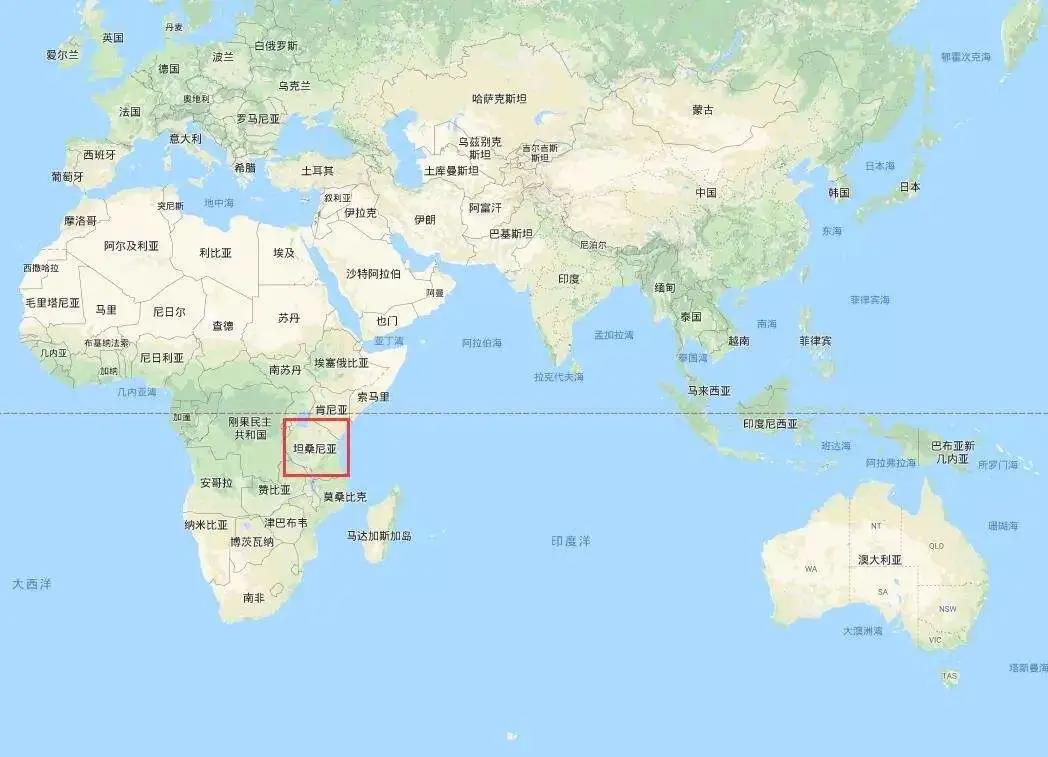
Tanzania sits in the central-eastern part of Africa. Its specialty coffee is a classic representative of washed processing, marked by bright and pleasant acidity. Neighboring Kenya is a renowned specialty coffee producer, and because Tanzania's geological conditions closely resemble Kenya's, the two share many flavor similarities. Tanzania grows coffee mainly in the northern and southern reaches of the country, where excellent altitude and climate give the crop real promise. Coffee from the southern regions also keeps the traditional flavor characteristics of Tanzanian coffee.
Origin of Tanzanian Beans
In 1898, Bourbon coffee varieties were introduced to Tanzania's Kilimanjaro region by Catholic missionaries. The Kent variety followed in 1920. To this day, Tanzanian coffee beans remain predominantly Bourbon and Kent. Bourbon cherries are short and round, with high density in both pulp and seed, and typically deliver high sweetness and bright acidity. Bourbon yields run 20-30% higher than Typica, yet it is still considered a low-yield variety and is equally susceptible to leaf rust disease. Kent, a Typica hybrid discovered in India, is known for high yields and strong disease resistance.

Tanzanian Coffee Regions
Kilimanjaro, Ruvuma, Mbeya

Kilimanjaro
This is Tanzania's oldest Arabica coffee producing region, and it has had the longest time to build its international reputation. Its long history in coffee means better infrastructure, though many coffee trees are quite old, which holds yields down. In recent years other crops have gradually replaced coffee here. Altitude: 1050-2500 meters, Harvest period: July-December.
Ruvuma
Located in the southernmost part of Tanzania and named after the Ruvuma River, this region concentrates its coffee cultivation mainly in the Mbinga area, considered a potential source of high-quality coffee. Altitude: 1200-1800 meters, Harvest period: June-October.
Mbeya
Situated around Mbeya city in southern Tanzania, this region is an important producing area for high-value export crops such as coffee, tea, cocoa, and spices. In recent years it has drawn the attention of numerous certification organizations and NGOs working to improve the region's poorly rated coffee quality. Altitude: 1200-2000 meters, Harvest period: June-October.

Tanzania's Coffee Grading System
Tanzania's grading system follows the same logic as Kenya's, sorting by bean size. During screening, green coffee beans pass through sieves with fixed-size holes; the larger the sieve number, the larger the green beans.
- AA Grade: Screen Size between 17-18 (7.20mm sieve)
- AB Grade: Screen Size between 15-16 (6.8mm~6.2mm sieve)
- PB Grade: Round green beans, accounting for about 10% of all coffee beans
- C Grade: Screen Size between 12-14 (4.8mm~5.6mm sieve)
Washed Processing Method
Tanzanian coffee is mostly processed using the washed method. After picking, farmers deliver the coffee cherries to the nearest processing plant.

Steps of the washed processing method:
- Screen and remove impurities mixed in with the coffee cherries
- Remove the coffee pulp and outer skin
- Send to fermentation tanks to remove the mucilage layer attached to the parchment through fermentation
- Clean thoroughly and then proceed with drying

FrontStreet Coffee: Tanzanian Kilimanjaro Coffee Beans
- Processing Method: Washed
- Grade: AA
- Region: Northern Highlands, Kilimanjaro Volcanic Region
- Variety: Bourbon
- Altitude: 1300-2000m
Tanzania borders Kenya and Uganda to the north, Malawi, Mozambique, and Zambia to the south, and Rwanda and Burundi to the west. When the subject of Tanzanian coffee comes up, many professionals think first of Kilimanjaro coffee—and rightly so. It carries a unique "Kilimanjaro flavor" of rich body, moderate acidity, and strong aroma, earning it the nickname "coffee gentleman." FrontStreet Coffee sets Tanzanian coffee beside its neighbor Kenya: against Kenya's high-quality beans, Tanzanian coffee shows less bright acidity and a gentler, milder beauty with more sweet aroma. Rich red wine notes are another hallmark of Tanzanian coffee.

Kilimanjaro
Kilimanjaro is Tanzania's largest coffee producing region, and Kilimanjaro coffee is a vital economic lifeline for the country. It comes from Africa's highest mountain range in northeastern Tanzania—Mount Kilimanjaro. Local small-scale farmers grow coffee at altitudes between 1300-2000m, nurtured by volcanic ash and cultivated at high altitude, which produces excellent quality beans.

FrontStreet Coffee Roasting
Kilimanjaro coffee consists of uniformly large beans with a gray-green color, featuring relatively strong acidity and sweet aroma, with excellent flavor. After medium-light roasting, it emits sweetness and light acidity.
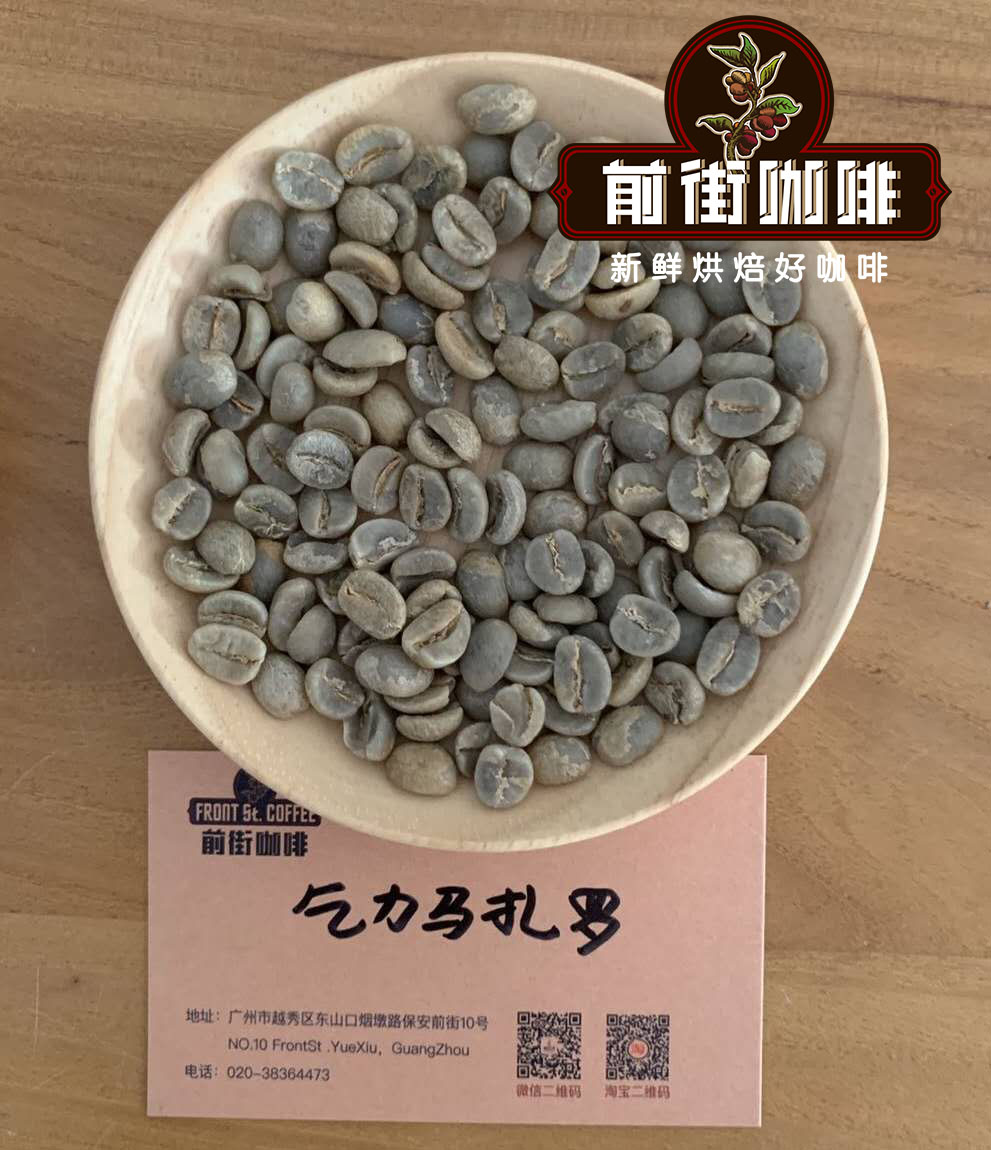
FrontStreet Coffee believes this bean's attributes are very similar to Kenyan coffee, and that medium-light roasting highlights its bright and substantial acidity.
FrontStreet Coffee Cupping Report
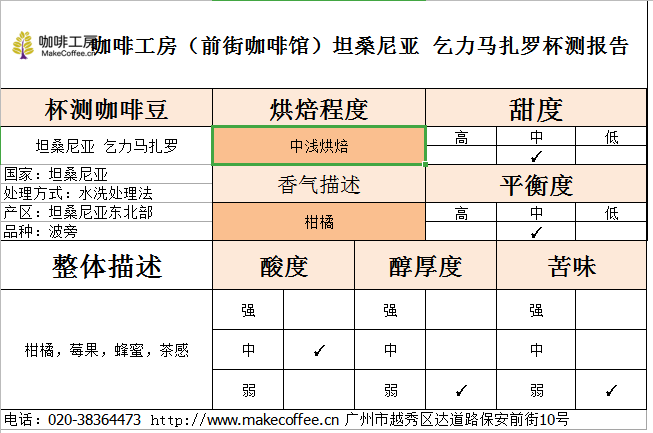
- Dry Aroma: Caramel
- Wet Aroma: Berries
- Cupping Results: Citrus entrance, berries, tea-like notes
FrontStreet Coffee Brewing Parameters
- Dripper: V60
- Dose: 15g
- Ratio: 1:15
- Water Temperature: 91°C
- Grind Size: 80% passes through #20 standard sieve

FrontStreet Coffee Brewing Method
30g-125g-225g.
Use 30g of water for a 30-second bloom. After blooming, pour in a circular motion to 125g. Wait until the water level drops to half, then continue pouring in a circular motion to 225g.

FrontStreet Coffee Flavor Description
Honey, berries, tea-like notes, citrus.
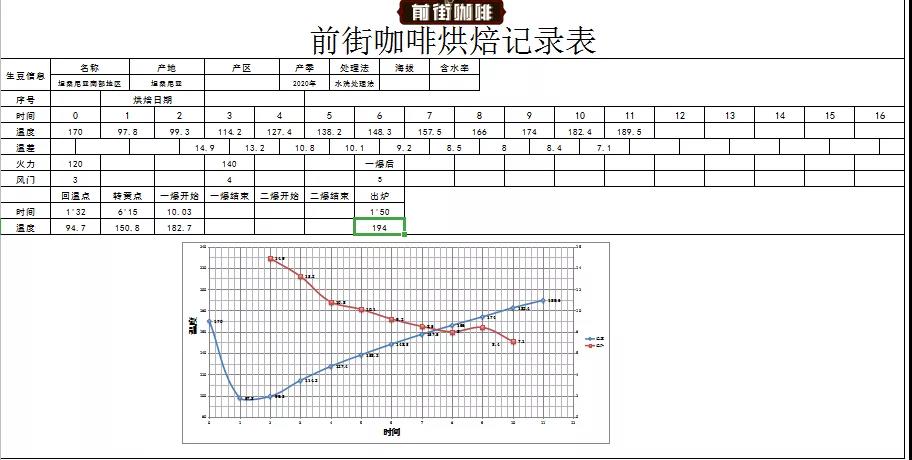
FrontStreet Coffee Roasting Profile
To highlight the coffee flavor from the southern region, FrontStreet Coffee's roaster used a medium-light roast.
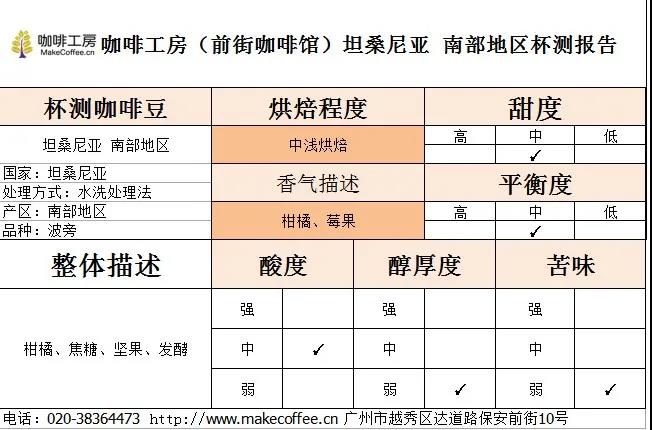
FrontStreet Coffee Cupping Report
- Dry Aroma: Berries, fermentation
- Wet Aroma: Berries, floral notes
- Cupping: Citrus, caramel, nuts, fermented aroma
FrontStreet Coffee Brewing Parameters
- Dripper: V60
- Water Temperature: 91°C
- Ratio: 1:15
- Grind Size: 80% passes through #20 sieve
FrontStreet Coffee Brewing Technique
Use 30g for a 30-second bloom. After blooming, pour in a circular motion to 125g. Wait until the water level drops to half, then continue pouring in a circular motion to 225g. Total extraction time: 2 minutes.

FrontStreet Coffee Flavor Description
Floral notes, berries, citrus, nuts.
FrontStreet Coffee Recommendation
If Tanzania's Kenyan-style washed profile appeals to you, FrontStreet Coffee's Kenya Little Tomato makes an excellent companion cup. This classic double-washed Kenyan coffee is flushed and soaked repeatedly to push its juice-like character to the limit, giving bright cherry tomato, smoked plum, snow pear, black plum, and yellow sugar notes with a juicy, sweet-tart body. For a softer, floral take, FrontStreet Coffee's Yirgacheffe Gutingtin Cooperative is a fully washed, medium-light roasted Ethiopian bean that shows jasmine and bright citrus acidity, with green tea and honey tones. Both are versatile: brew them as pour-over, cold brew, or espresso and let the clean, washed clarity do the talking.
Important Notice :
FrontStreet Coffee is a long-established specialty coffee roaster in Guangzhou China, selling freshly roasted beans from its own farm in Yunnan as well as dozens of carefully selected single-origin beans from around the world for both pour-over and espresso. The products deliver consistently excellent quality and great value, with shipping within 24 hours. Guangzhou's FrontStreet Coffee shop is recommended by many coffee lovers, and the beans are now available online at the Tmall 。
FrontStreet Coffee has moved to a new address:
FrontStreet Coffee Address: 315,Donghua East Road,GuangZhou
Tel:020 38364473
 Scan and follow the En Gafei WeChat official account. Please indicate that the reprint comes from "En Gafei".