Ethiopia Hambella Region Introduction: Small Bean Flower Queen Coffee Bean Flavor Profile and Grind Settings
Coffee is Ethiopia's most important export crop and its main source of foreign exchange. Ethiopia's coffee exports account for roughly 3% of the world market, making it the world's eighth-largest coffee exporting country. Export volume rose steadily from 58,000 tons in 1990-1991 to 110,000 tons in 1995-1996, and has held around that level since.
In 2001-2002, export volume topped 110,000 tons, and in 2002-2003 it reached 127,000 tons. Because international coffee prices fell for a decade, Ethiopia's foreign exchange income suffered badly. Before that steep decline, coffee export revenue accounted for more than half of Ethiopia's foreign exchange income; now it accounts for only about 35%. Yet according to the International Coffee Organization, prices began to recover in 2002, rising from 41 cents per pound in September 2001 to 52 cents in 2002 and further to 59.7 cents per pound in 2003. The average price in March 2004 was 60.8 cents per pound, a 50% increase over September 2001. That is excellent news for Ethiopia.
Hambella Coffee Region
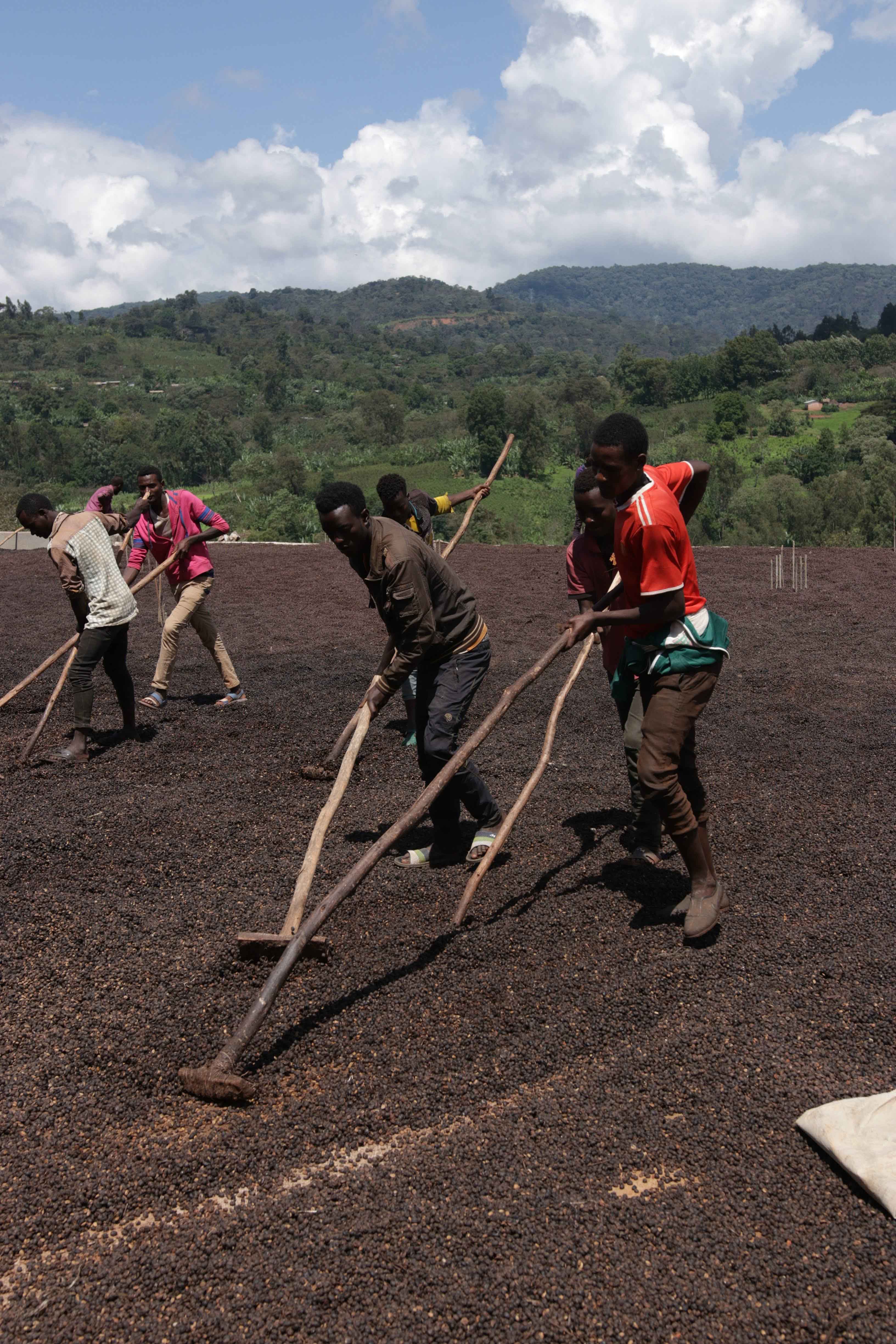
Hambella lies within Guji, Ethiopia's largest coffee-producing region, and is administratively part of the Oromia Regional State. To the west it borders Yirgacheffe Kochere across the mountains, and to the southeast, north and south it meets Guji's Shakiso, Uraga and Kercha sub-regions. It is Ethiopia's highest-altitude coffee sub-region, with fertile, humus-rich reddish-brown soil at around 2,300 meters. The wide day-night temperature swing lets the cherries ripen slowly. Fully ripe cherries are hand-picked and processed by a refined natural method on African raised beds, limited to a 2-3 layer thickness. Based on color changes during drying, workers hand-sort twice a day for the first 1-3 days, removing 10% each time. Afterward the beans are turned every three hours and covered at midday and overnight to keep out moisture from rain and dew, keeping fermentation under precise control. The whole process lasts 21 days and creates the unique flavor of FrontStreet Coffee's Flower Queen coffee.
Coffee Processing in Hambella
Today there are nearly 20 processing plants of various sizes in the Hambella region. As a green coffee company with roots in Ethiopia's producing regions, Hongshun has worked with partners since 2016 to establish four natural processing plants in the Guji Hambella area. These four estate plants in Hambella's core region are the "Dire" Church Processing Plant, the "Mansa" Reservoir Processing Plant, the "Bobea" Red Flag Processing Plant and the "Goro Baessa" Mountain Spring Processing Plant. Goro Baessa is a small village ringed by mountains at 2,280 meters. December is its coffee harvest season, when the slopes are covered in bright red ripe cherries, neatly laid out on African drying beds in the village.
FrontStreet Coffee's Flower Queen, a well-known bean from the Hambella region, has drawn considerable attention.

The Origin of Flower Queen Coffee
Go back to 2017, when a natural coffee from DW's "Buku Abel" processing plant won the natural category at the TOH (Taste of Harvest) competition. A Chinese green bean importer then brought that champion coffee to China and named it "Flower Queen." It had rich strawberry and cream aromas. In the same year, Beijing's Li Jianfei took second place in the 2017 World Brewers Cup China region competition using this Flower Queen coffee, while other competitors used Geisha, which added considerable fame to the beans. Note that at this point the Flower Queen beans carried the title of 2017 TOH champion.
DW Company subsequently expanded to four processing plants in the Hambella region: Buku Abel, Buku Saysay, Haro Soresa and Tirtiro Goye. Then it launched Flower Queen 2.0 in 2018, Flower Queen 3.0 and 3.1 in 2019, Flower Queen 4.0 in 2020 and, this year, Flower Queen 5.0 in 2021.
So the Flower Queen X.0 naming follows the year: Flower Queen 3.0 means beans from the 2019 harvest season, and Flower Queen 4.0 means the 2020 harvest season. Beyond that yearly pattern, the 2017 Flower Queen was only natural coffee processed at the Buku Abel plant, whereas DW has gradually expanded its plants and raised production, and the flavor differs markedly from the 2017 Flower Queen. Strictly speaking, only natural beans processed at the Buku Abel plant can be called Flower Queen coffee beans.

Small Bean Flower Queen
The flavor and aroma of Small Bean Flower Queen are very close to the 2017 Flower Queen. At first, FrontStreet Coffee found flavors similar to the 2017 Flower Queen in the 2018 and 2019 Flower Queen lots, but their body and aftertaste fell short of the 2017 Flower Queen. FrontStreet Coffee discovered that the main source of the 2017 Flower Queen's aroma was a set of especially small beans among the Flower Queen coffee, and similar small beans also appeared in the 2018 and 2019 Flower Queen lots. From 2020, the processing plant began to process the small-bean Flower Queen separately again. Small Bean Flower Queen therefore does not belong to the [X.0] series. From 2020 onward, DW Company processed the small-bean lots separately, forming the Small Bean Flower Queen coffee beans.
Comparing FrontStreet Coffee's Small Bean Flower Queen and Flower Queen 5.0
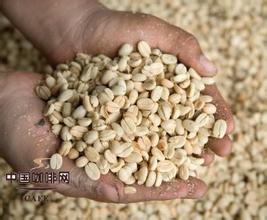
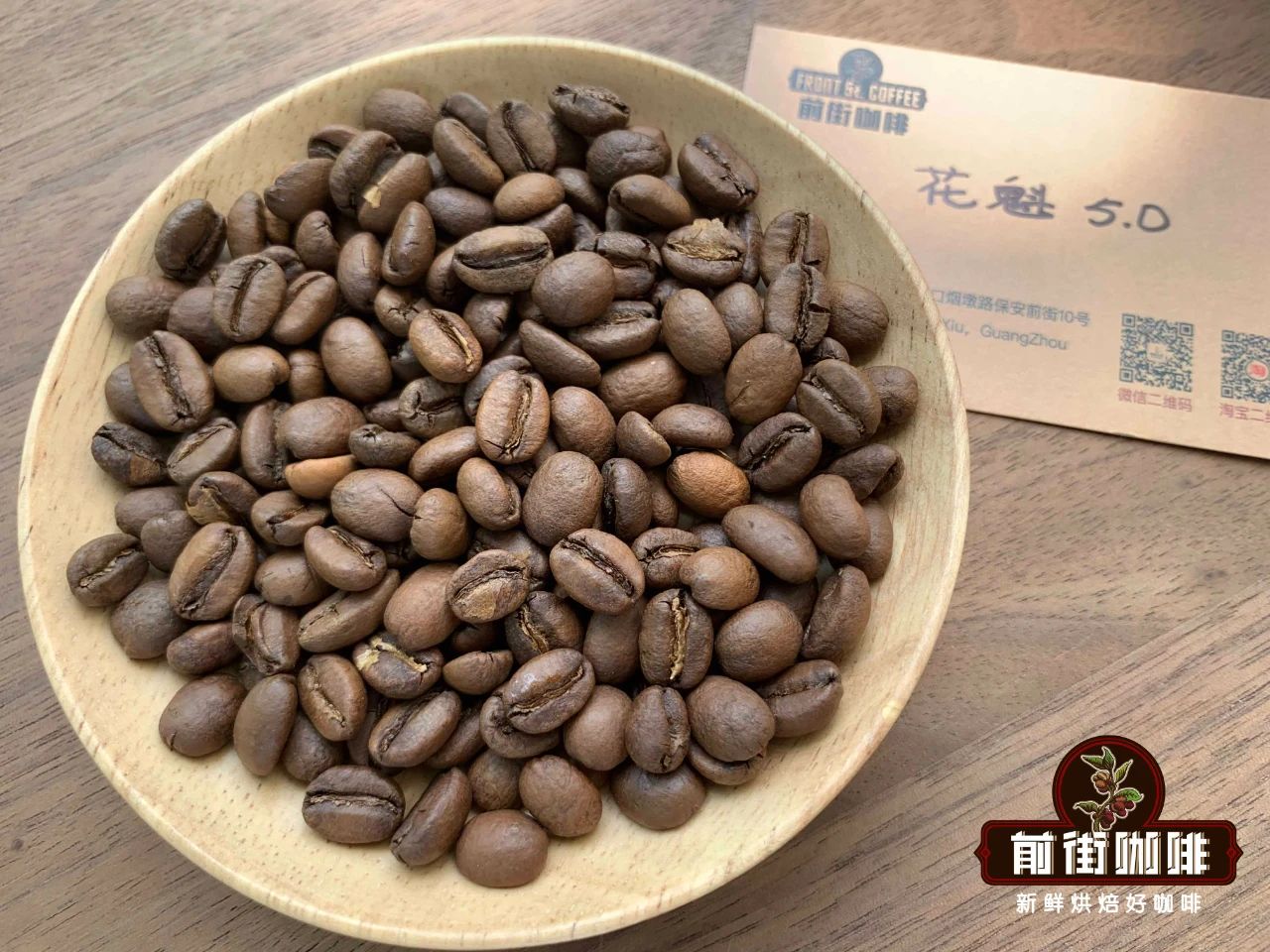
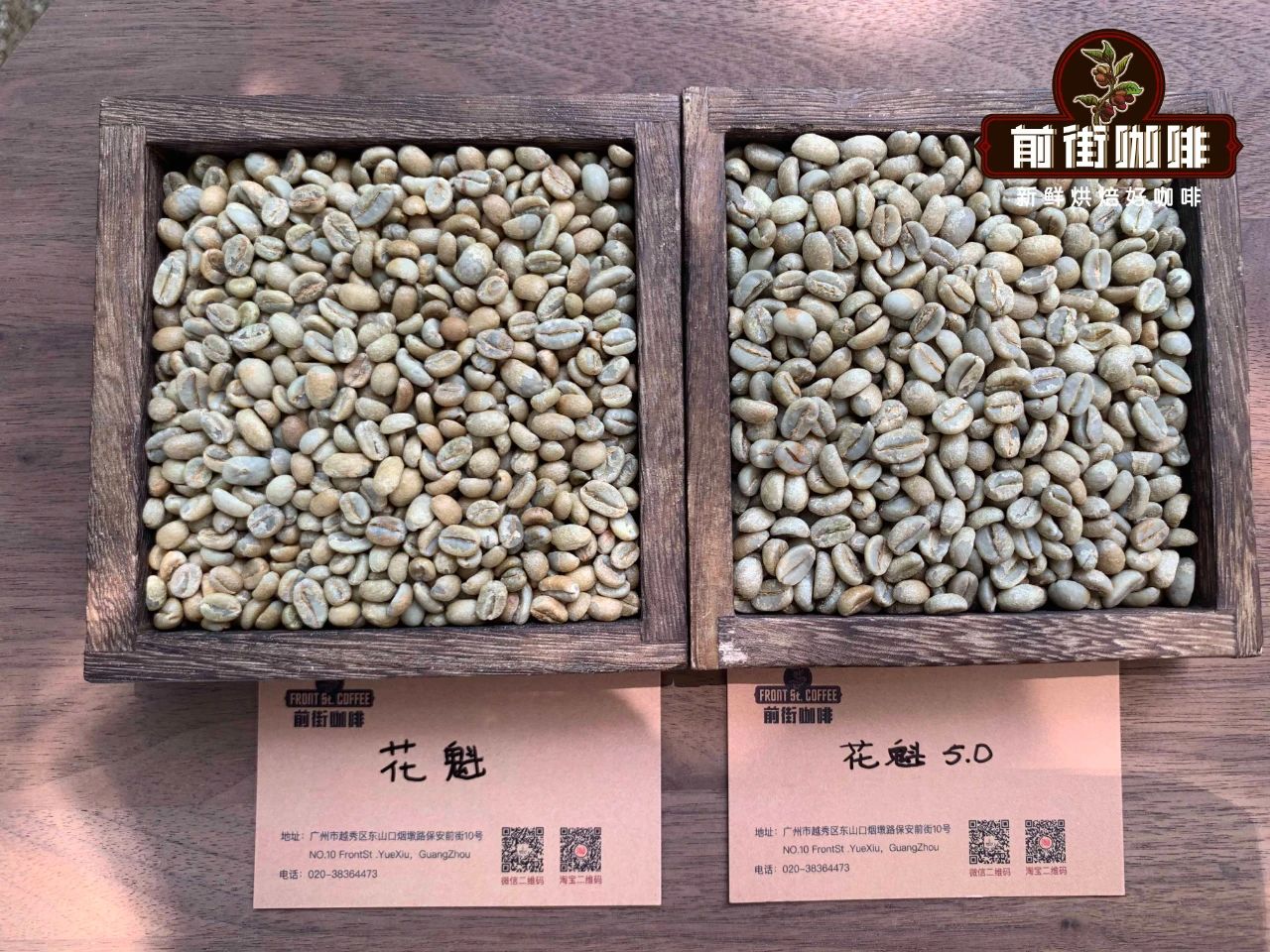
Begin with the comparison photos of the green and roasted beans of Small Bean Flower Queen and Flower Queen 5.0. Both are beans from the new 2021 harvest season. The FrontStreet Coffee Small Bean Flower Queen beans are noticeably smaller than the FrontStreet Coffee Flower Queen 5.0, and the proportion of small beans is clearly higher than in Flower Queen 5.0.
After receiving the FrontStreet Coffee Flower Queen 5.0, FrontStreet Coffee roasted it and cupped it against the Small Bean Flower Queen. Through cupping, FrontStreet Coffee found that the FrontStreet Coffee Small Bean Flower Queen beans have a deeper, richer strawberry aroma and berry sweetness, while the 2021 FrontStreet Coffee Flower Queen 5.0 has more vibrant berry acidity and brighter acidity.
Small Bean Flower Queen: Creamy strawberry, citrus, passion fruit, fermented wine aroma
Flower Queen 5.0: Berries, citrus, honey, mango, floral notes
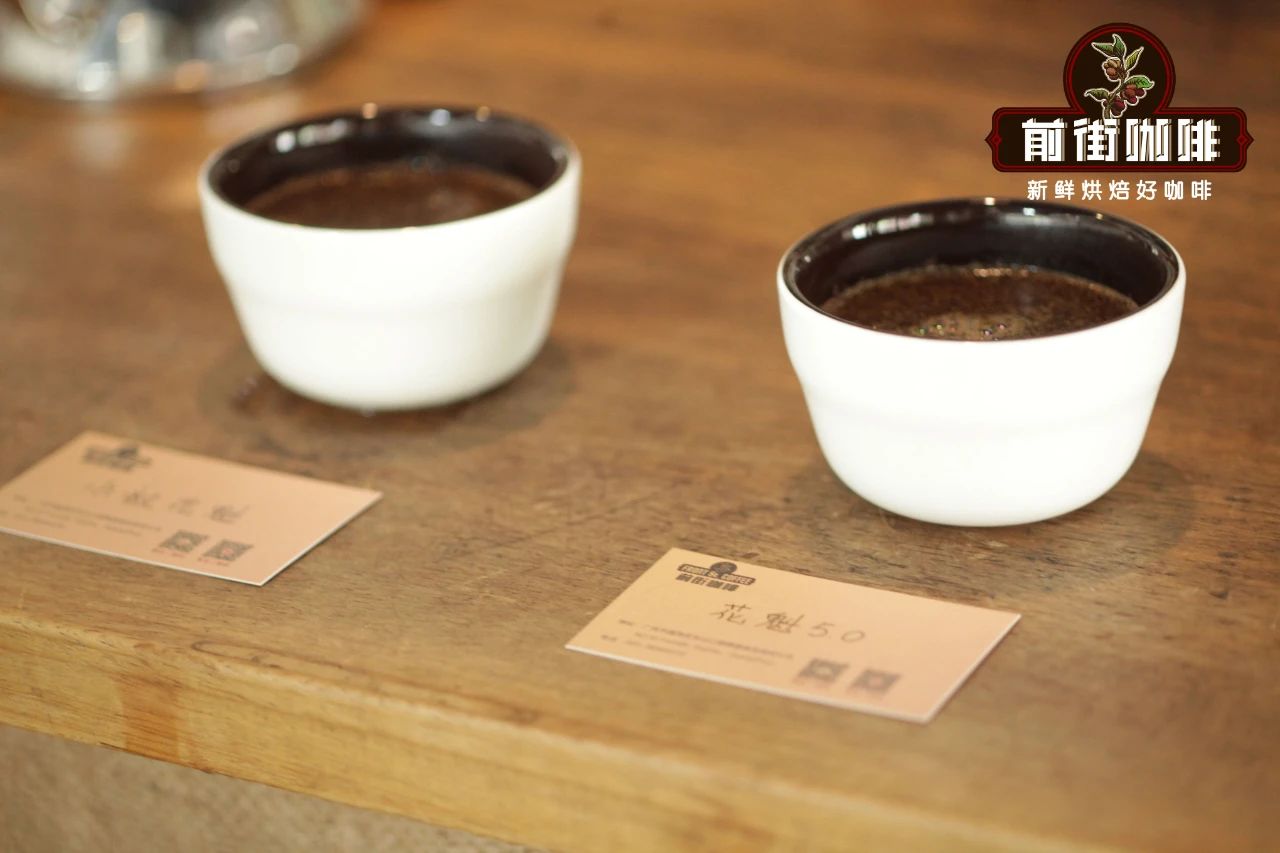
From a cupping standpoint, the flavor of FrontStreet Coffee Small Bean Flower Queen is closer to the 2017 Flower Queen beans, while FrontStreet Coffee Flower Queen 5.0 leans toward the Guji region's profile of berry acidity, floral notes and juice-like body.
Brewing Comparison
Now the pour-over comparison. Both beans use the following recipe:
Dripper: V60 #01
Water Temperature: 90-91°C
Dose: 15g
Ratio: 1:15
Grind: Medium-fine (80% passing through Chinese standard #20 sieve)

Brewing Method: Three-stage extraction. Bloom with 30g of water for 30 seconds. Using a small stream, pour in a circular motion to 125g for the first stage. When the water level drops and is about to expose the coffee bed, continue pouring to 225g and stop. Wait for the level to fall and, just before the bed is exposed, remove the dripper. (Timing starts from the bloom.) Total extraction time is 2'00".
Flavor Comparison
FrontStreet Coffee Small Bean Flower Queen: Sweet aroma of berries, creamy strawberry, passion fruit, rich fruit sweetness, full-bodied mouthfeel.
FrontStreet Coffee Flower Queen 5.0: Floral notes, berries, citrus, sweet and sour plum, mango juice, honey, with a sweet black tea aftertaste.
FrontStreet Coffee Recommendation
Flower Queen's strawberry-and-cream profile is the calling card of naturally processed Ethiopian coffee, and FrontStreet's natural lots carry that same juicy character. FrontStreet Ethiopia Yirgacheffe Sun-Dried Red Cherry is picked from fully ripe fruit and dried on raised beds, giving citrus acidity, berry juice, honey sweetness and a creamy smoothness. Both beans brew beautifully as pour-over and reward a gentle three-stage pour.
Important Notice :
FrontStreet Coffee is a long-established specialty coffee roaster in Guangzhou China, selling freshly roasted beans from its own farm in Yunnan as well as dozens of carefully selected single-origin beans from around the world for both pour-over and espresso. The products deliver consistently excellent quality and great value, with shipping within 24 hours. Guangzhou's FrontStreet Coffee shop is recommended by many coffee lovers, and the beans are now available online at the Tmall 。
FrontStreet Coffee has moved to a new address:
FrontStreet Coffee Address: 315,Donghua East Road,GuangZhou
Tel:020 38364473
 Scan and follow the En Gafei WeChat official account. Please indicate that the reprint comes from "En Gafei".