Yirgacheffe Coffee Bean Flavor Description Grind Scale Origin Region Variety Processing Method Taste Introduction
FrontStreet Coffee · Yirgacheffe Coffee Bean Flavor Description, Grind Settings, Origin, Variety, Processing Method, and Taste Introduction
Ethiopia: The Birthplace of Exceptional Coffee
Ethiopia's geography is almost perfectly suited to coffee. Today, roughly 25% of the population depends directly or indirectly on coffee for a living. Because most smallholder farmers still tend their trees by hand and use no synthetic pesticides or herbicides, the majority of Ethiopian coffee is effectively organic.
About 35% of the crop is garden coffee: grown in a layered, almost three-dimensional pattern, with coffee occupying the lower tier beneath the shade of taller crops and fertilized mainly with fallen leaves, dry grass, and animal manure.
Another 5% is plantation coffee — a more modern system in which coffee still grows under forest-like cover, but in planted rows using improved varieties, interspersed with shade trees.
Yirgacheffe: A Paradise for Coffee Cultivation
The Yirgacheffe growing region is, frankly, a little piece of paradise — mountain villages threaded with streams, wrapped in mist, with spring-like weather all year round. Even in summer, gentle breezes keep things cool rather than hot. That benign climate doesn't just make for pleasant living; it shapes the distinctive citrus and floral character of Yirgacheffe coffee. Here, coffee trees mostly grow singly in farmers' backyards or intercropped with other crops.
Medium-Dark Roast Profile
FrontStreet Coffee's medium-dark Yirgacheffe is roasted gently for 17 minutes (charging at 230°C), followed by a 30-second coast with the heat off, then immediate cooling and removal of the silverskin. The finished beans show a faint sheen of oil and a dark brown color.
The beans are very light, offering little resistance to a hand grinder, though they don't feed through the hopper easily. The dry fragrance of the grounds is richly caramelized with the faintest earthy African note. Brewed, the wet aroma is an excellent caramel sweetness — the deeper roast seemingly mutes the region's signature orange fragrance.
But taste it and slurp, and the cup is intense, aromatic, and complex in the best way. Gentle acidity, bitterness, and astringency sit in fine balance, the body is fuller and more viscous than a lighter roast would give, and the aftertaste lingers a long while.
Roasting Recommendations
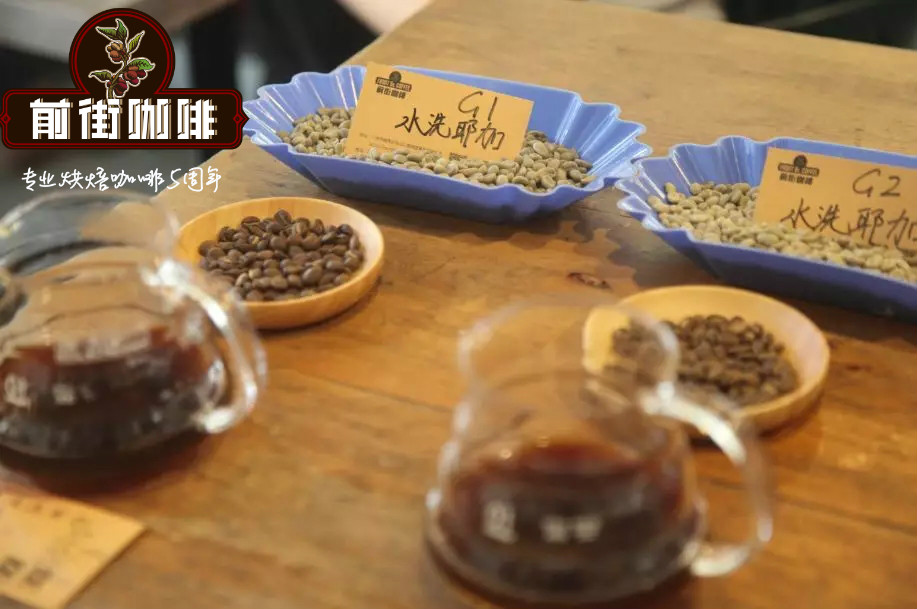
Yirgacheffe performs beautifully at both ends of the roast spectrum. If you want the region's signature orange and fruit aromatics in a light, delicate cup, take a light roast, dropped during late first crack. If you prize richness, body, viscosity, and aftertaste instead, go for a Vienna-style roast — slight surface oil, dropped in the mid-to-late second crack.
Because washed Yirgacheffe carries relatively high moisture, the roast needs ample drying time — but it also can't drag on too long, or extended high heat will strip away the aromatics. The key is balance: gentle heat and small batches, with a total roast time of roughly 15–20 minutes.
FrontStreet Coffee Recommendation
For the classic expression of this region, the FrontStreet Washed Yirgacheffe remains the first bean we hand to newcomers: white jasmine, bright citrus and lemon acidity, and a light, tea-like body at an everyday price — the benchmark against which every other Yirgacheffe is measured.
If you'd rather taste the natural side, the FrontStreet Red Cherry natural lot dries only fully ripe cherries on raised beds for several weeks, layering tropical fruit over the classic profile — citrus acidity, berry-juice texture, honey sweetness, and a creamy finish that pairs beautifully with a light roast.
Important Notice :
FrontStreet Coffee is a long-established specialty coffee roaster in Guangzhou China, selling freshly roasted beans from its own farm in Yunnan as well as dozens of carefully selected single-origin beans from around the world for both pour-over and espresso. The products deliver consistently excellent quality and great value, with shipping within 24 hours. Guangzhou's FrontStreet Coffee shop is recommended by many coffee lovers, and the beans are now available online at the Tmall 。
FrontStreet Coffee has moved to a new address:
FrontStreet Coffee Address: 315,Donghua East Road,GuangZhou
Tel:020 38364473
 Scan and follow the En Gafei WeChat official account. Please indicate that the reprint comes from "En Gafei".