Flavor Description of Rich Java Coffee Beans: Processing Method, Taste, Varieties, and Origin
Introduction to Java Coffee
Java has a mild climate with humid air, and its varied conditions allow for harvest seasons throughout the year, with different types of coffee ripening at different times. The island cultivates distinctive, high-quality Java coffee beans, and coffee made from them has a rich flavor and endless aftertaste - a true coffee specialty. Many people equate "Java coffee" with "high quality" and "good taste."
World coffee is divided into two major groups: the "hard" coffees represented by Brazil, with a strong flavor, and the "soft" coffees represented by Java, with a light and fragrant taste. The difference lies in the altitude of origin and the cultivation method. Coffee grown in hilly red soil tends to be more extensive, while Java is produced in mountainous black soil under intensive cultivation. Java coffee offers a clear bitter experience, as clear and astringent as life itself - and bitterness is essential in life. The lingering aroma at the root of the tongue becomes a complete recollection of the past; looking back at former bitterness makes one appreciate the sweetness and warmth all the more. Bitterness is pain, clarity brings tranquility, and the final aroma becomes a spiritual victory.
JAVA
In Bolivia, the variety locally known as "long bean" takes its name from its elongated appearance. Its formal name should be Java. Java is a very interesting coffee variety - from the name alone one can tell it has strong connections to Indonesia. In fact, Java originally grew in the pristine forests of Ethiopia, was collected by local peoples, and then moved through Yemen to Indonesia, where it was named Java. It was long believed that Java was a branch of Typica, but after genetic comparison it turned out to be the Abysinia coffee variety from Ethiopia.
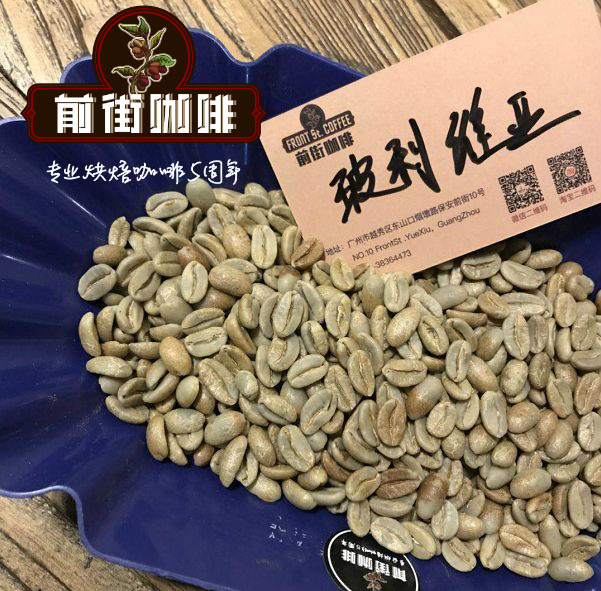
After Indonesia, Java first spread to the nearby Timor island group, then to Cameroon in East Africa, where it was first released to farmers for cultivation in 1980. As for Central and South America, under the leadership of breeding expert Benoit Bertrand it was introduced to Costa Rica in 1991 through CIRAD (the Centre de Cooperation Internationale en Recherche Agronomique pour le Developpement). The first Central American country to officially recognize the Java variety was Panama, and its introduction to Bolivia came through Nicaragua.
As its name suggests, the long bean has very long fruits and seeds, with bronze-colored young shoots. The plant is quite tall but yields little. Because its flavor is outstanding - comparable to Geisha - and it has stronger resistance to leaf rust and coffee berry disease, it is very suitable for smallholders to cultivate.
Coffee Tasting Terminology
Mellow: Used to describe coffee with good, balanced medium acidity.
Mild: Used to describe coffee with harmonious, delicate flavor, referring to all highland coffees except those from Brazil.
Soft: Describes low-acidity coffee like Indonesian coffee, also described as mellow or sweet.
Sour: A taste sensation mainly located at the back of the tongue, characteristic of light-roasted coffee.
Spicy: Refers to a flavor or aroma reminiscent of specific spices.
Strong: Technically, describes the quantity of various taste advantages and disadvantages, or the relative proportion of coffee to water in a particular preparation. In common usage, describes the strong flavor of dark-roasted coffee.
Flavor: The overall impression of aroma, acidity and body.
Acidity: The sharp, acidic quality characteristic of all coffees grown at high altitudes. This acidity differs from bitterness or sourness and is unrelated to pH value. It refers to a fresh, lively quality that lets coffee refresh the mind and cleanse the palate. Coffee acidity is not the acidity of pH, nor a sour smell, nor the uncomfortable acidity that reaches the stomach. When brewing coffee, the expression of acidity matters a great deal. Under good conditions and techniques, a refreshing taste with acidity can be developed, and that is an essential condition for premium coffee. The acidity of coffee describes a lively, bright flavor expression, somewhat similar to descriptive terms in wine tasting. If coffee beans lack acidity, they lose their vitality, tasting empty and dull, without depth or layers. Acidity has many different characteristics - beans from Yemen and Kenya, for example, have acidity with striking fruit aromas and textures similar to red wine.
Body: The mouthfeel left on the tongue after drinking coffee. Body can range from watery to thin, medium, high, buttery, and even as thick as syrup, as in some Indonesian coffees.
FrontStreet Coffee's Recommended Java Coffee Brewing Method
- Taking [Bolivia Java] as an example:
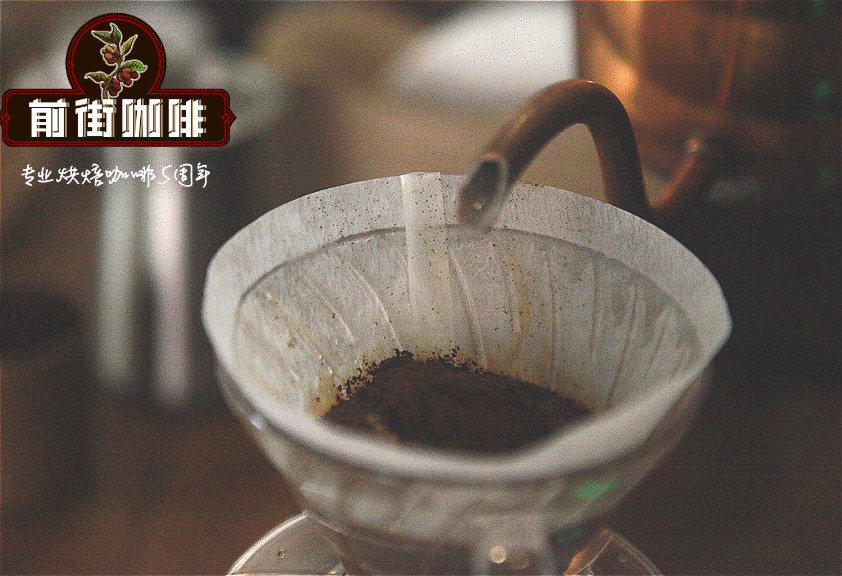
Parameters: V60/1:15/89°C/Grind size BG 5R (China standard #20 sieve pass rate 58%)/Brewing time 1'56"
FrontStreet Coffee Recommendation
Java sits at the "soft" end of the coffee spectrum, and the clearest way to understand that is to taste it against Brazil, the classic "hard" coffee. FrontStreet Coffee's Brazil Cerrado is a very good starting point for the Brazilian side: it is a red Bourbon, roasted medium, giving rich aromas of cream peanut, toast, caramel and hazelnut, with a round, smooth body, low acidity and a light bitter note. It works as a pour-over but also suits a moka pot, espresso SOE, siphon or French press.
A step up in sweetness is FrontStreet Coffee's Brazil Queen Estate, from Mogiana near South Minas. The fertile red volcanic soil there lets the fruit take up abundant nutrients and build a full aroma, and the estate grows the rarer yellow Bourbon, a natural mutation of red Bourbon with a cleaner fruit character. Through pour-over, moka pot or a home espresso machine, it shows a sugarcane-like sweetness you do not find in other regions, alongside fruit and chocolate.
Brazil is also the backbone of many espresso recipes, and each of FrontStreet Coffee's blends contains Brazilian beans: the richly creamed FrontStreet Classic Blend, the nut-forward FrontStreet Premium Blend, the balanced FrontStreet Black Cocoa Blend, and the FrontStreet Commercial Blend aimed at coffee shops. The Brazilian component supplies chocolate and cream aromas plus a soft sweet-sour-bitter balance, and that balance makes extraction more stable.
If you want to explore the variety itself rather than the blends, look for the panel above and brew it the FrontStreet way: a V60 at a 1:15 ratio, water at 89°C, a grind of BG 5R (China standard #20 sieve pass rate 58%) and an extraction time of about 1'56".
Important Notice :
FrontStreet Coffee is a long-established specialty coffee roaster in Guangzhou China, selling freshly roasted beans from its own farm in Yunnan as well as dozens of carefully selected single-origin beans from around the world for both pour-over and espresso. The products deliver consistently excellent quality and great value, with shipping within 24 hours. Guangzhou's FrontStreet Coffee shop is recommended by many coffee lovers, and the beans are now available online at the Tmall 。
FrontStreet Coffee has moved to a new address:
FrontStreet Coffee Address: 315,Donghua East Road,GuangZhou
Tel:020 38364473
 Scan and follow the En Gafei WeChat official account. Please indicate that the reprint comes from "En Gafei".