Origin Story and Flavor Characteristics of Panama Boquete "Floral Butterfly" Coffee Bean Variety

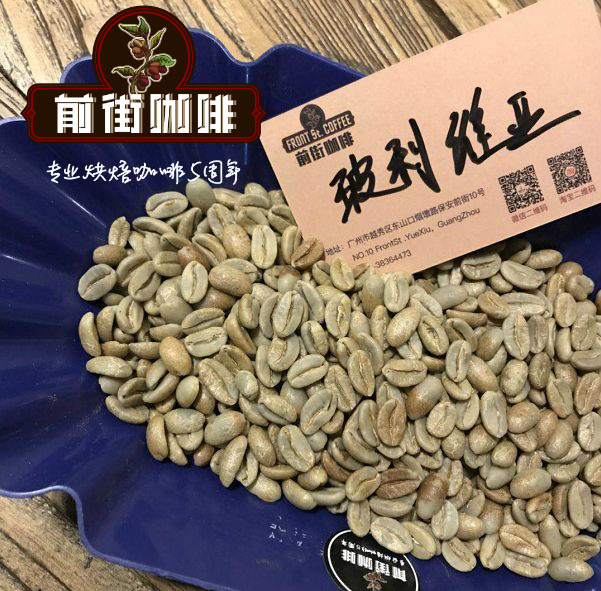
FrontStreet Coffee: Panama Butterfly Coffee Bean
Panama Boquete Butterfly
Country: Panama
Grade: SHB
Region: Boquete
Roast Level: Medium-light Roast
Processing Method: Natural/Washed
Varieties: 40% Geisha, Caturra, Catuai
Flavor Notes: Tea, Honey, Berries, Lemon, White Floral Notes
Panama: The Land of Extraordinary Coffee
Panama is a Central American country, bordered by Costa Rica to the west and Colombia to the east. Those familiar with single-origin coffee should know that Panama coffee is famous in the coffee world for the Geisha variety from Hacienda La Esmeralda. It can be said that this is a country that pursues excellence in coffee and produces high-quality coffee beans.

Boquete: Panama's Premier Coffee Region
Panama coffee is famous for the Geisha from Hacienda La Esmeralda, and the region where this estate is located is also quite famous; this is the Boquete region in Chiriqui Province. Boquete is a town in Chiriqui Province, situated near the border between Panama and Costa Rica, close to the famous Baru Volcano. With its beautiful scenery and fertile, rich soil, the climate and soil are perfect for producing high-quality coffee.
Within the Boquete region there are many excellent estates. Besides the famous Hacienda La Esmeralda, there are renowned estates like Elida Estate and Akaba Estate, all producing high-quality specialty coffee. This is thanks not only to the superior ecological conditions of the Panama Boquete region and the fertile volcanic ash soil of the Baru Volcano area, but also to the microclimate in the highlands of Panama Boquete, a unique resource for specialty coffee in the region; it is caused by Panama's east-to-west environment that allows cold air currents to converge above 6,500 feet through the central mountain range, creating multiple microclimates in the Boquete area, making its temperature and rainfall very suitable for plant growth. The coffee trees planted here therefore grow exceptionally well.

Butterfly Coffee: Exceptional Quality at an Unbeatable Value
In such a privileged growing environment as Boquete, there is naturally more than just the exceptional and valuable Geisha from Hacienda La Esmeralda. Drinking Geisha daily would be quite luxurious, though, and even without financial pressure, eating delicacies like shark fin and bear paw every day would also be inappropriate. The same applies to coffee—having a wide variety lets one better enjoy the pleasure of tasting it.
In the land of Boquete there is a coffee bean with an exceptionally high value-to-quality ratio, bearing a very beautiful name: Butterfly. Panama Butterfly beans have 40% premium Geisha heritage, composed of three varieties: Geisha, Caturra, and Catuai. They are grown in the Baru Volcano region of Boquete, at an altitude of 1,600 meters in the volcanic area. The processing plant uses refined washed processing. Panama's special local microclimate brings abundant rainfall to the region along with significant day-night temperature differences, and combined with the unique volcanic rock soil, meticulous harvesting, and refined processing, this coffee performs remarkably well in body, acidity, and floral notes.
What is even more surprising is that on top of its excellent quality, its very approachable price makes the bean's value-for-quality rating outstanding. Its special characteristic lies in the composition of three varieties, including 40% Geisha, which gives this coffee a distinct Geisha flavor profile. According to research, for historical reasons the estate, in pursuit of higher yields in the past, had its early Geisha variety mixed with Caturra and Catuai coffee trees. To make harvesting easier, the farmers did not reclassify them but processed the three varieties directly mixed together. Later, after Geisha became famous and prices soared, the processing plant began to implement refined washed processing for this particular coffee bean.
Washed Processing: Enhancing Natural Flavors
There are many washed processing methods today, but generally, after coffee cherries are harvested, floating beans are removed, then the pulp is removed and the beans are soaked in fermentation tanks. The enzymes in the water soften the mucilage attached to the parchment, while natural yeasts break down the sugars in the mucilage—a process called fermentation. After fermentation is complete, the beans are moved to drying grounds to dry, and during drying they must be constantly turned to ensure evenness. Finally they are stored in the warehouse with the parchment still on, and after green bean merchants place orders, the hulling and bagging process is carried out. Coffee processed this way has a clean taste, emphasizing bright, lively fruit acidity along with clear fruit flavors and floral notes.

Roasting and Flavor Profile
One can imagine, then, that with Butterfly's superiority in variety and refined processing, a medium-light roast to complete the bean's final flavor direction will leave you greatly appreciating a coffee that possesses Geisha's characteristic floral notes, Southeast Asian fruits, and berry flavors, with honey sweetness and smoothness, and a very persistent aroma and aftertaste.
Cupping Notes
Fragrance (Dry Aroma): Jasmine flowers, citrus, tea, honey
Aroma (Wet Aroma): Berries, floral, fatty notes, vanilla, citrus
Flavor (Sipping): Juice sweetness, delicate and non-irritating acidity, excellent cleanliness, bergamot, honey, citrus, spices, floral notes, berries, tea, cherry, a delicate aftertaste, persistent aroma, and the classic Hacienda La Esmeralda Geisha flavor profile.

Taste Description: Jasmine floral notes, citrus, tea, honey, berries, vanilla, bright acidity. The Butterfly containing the Geisha variety is a specialty coffee bean with an extremely high value-to-quality ratio.
Everyone knows that Geisha coffee is world-famous for its rich floral notes and complex fruit tones. FrontStreet Coffee's roaster hopes this washed Butterfly can retain more of Geisha's excellent acidity, and therefore chooses a medium-light roast. This roast level does not significantly change the high density of beans grown at high altitudes, so brewing requires a higher extraction rate to present a fuller flavor profile. FrontStreet Coffee will use a higher water temperature and a slightly finer grind to extract more aromatic compounds. FrontStreet Coffee also wants the floral and fruity notes to be clearer, so it uses a slightly larger coffee-to-water ratio of 1:15.

To increase extraction rate while avoiding over-extraction and highlighting the sweet and sour flavor layers, FrontStreet Coffee's barista uses a V60 dripper. The V60's body has flow ribs connecting the top and bottom and a large circular hole in the center that accelerates water flow, while the spiral-shaped exhaust groove design extends the water path, increasing the contact time between coffee grounds and hot water. Each water flow converges along the grooves to the center point of the dripper, concentrating the pressure on the coffee grounds and producing richer extracted layers.
Dripper: V60
Water Temperature: 91-92°C
Coffee Dose: 15g
Coffee-to-Water Ratio: 1:15
Grind Size: Fine sugar size (80% passes through #20 sieve)

Three-Stage Extraction: First stage: use 30g of water for a 30-second bloom, injecting in even circles to form a dome. Second stage: inject 95g of hot water, and when the coffee bed drops to halfway, begin the third stage injection of 100g until all the coffee has finished dripping. Note to start pouring from the center point, using a small water flow with gentle force in circular motions throughout to avoid uneven extraction. Finally, wait for the coffee to finish dripping, gently shake to mix, and begin tasting the flavors of Butterfly coffee starting from high temperature.
FrontStreet Coffee Recommendation
Butterfly is a clever way to taste Geisha character without paying Geisha prices, and FrontStreet's range shows the full ladder. Geisha is one of the most popular Arabica varieties, prized for its distinctive florals and superb sweet-sour balance, and because it yields little, resists disease poorly, and demands careful farm management, its price stays high. If you want a good Geisha without the premium, start with FrontStreet's Boquete Geisha, the entry-level option that lets you taste the classic Panama orange-blossom honey sweetness, an oolong-tea-like body, delicate fruit sweet-sour, and clearly separated layers at an affordable price. When Geisha became the variety of the moment, no one was more central than Hacienda La Esmeralda, whose Geisha line runs at two grades: FrontStreet's Red Label, formally "Esmeralda Special," is grown at 1,600-1,800 meters, with each lot cupping above 90 points and carrying its own number, and every bean in a lot coming from a single small plot—FrontStreet's Red Label is from the Harry Mille plot—so buyers can choose a lot by fine flavor preference. FrontStreet's Green Label, originally "Private Collection," does not emphasize detailed plot information the way the Red Label does; instead it blends lots from several plots to express the estate's signature high-altitude Geisha profile, and its more affordable pricing makes the Green Label an excellent value.
Ethiopia, coffee's birthplace, also has a Geisha name to know: Geisha Village, which enforces a grading system as strict as Panama's, though more complex. It grows three Geisha varieties—Gori Gesha, Geisha 1931, and Illubabor Forest—and grades them as Gold Label RARITIES, Red Label GROWERS RESERVE, Green Label SINGLE-TERROIR, and the Chaka CHAKA lots, in addition to distinguishing varieties. FrontStreet's Gold Label is the Geisha 1931 variety, 10% of the village's total production and its top coffee outside auction, often chosen by competition baristas; it uses refined natural processing and shows complex, rich flavors whose dry aroma, slurped flavor, and long finish all linger. FrontStreet's Red Label is the Gori Gesha variety, 15% of production, scoring 88 or above on the SCA 100-point scale; it is the estate's single-terroir series, so every lot number carries complete traceability, including farm block name, variety, and processing date. FrontStreet's Genlana Geisha comes from the Genlana Gesha farm in Yirgacheffe, Ethiopia, a rare estate growing a single variety; the coffee comes from the Genlana processing station at the border of Kochere and Genlana Abaya, founded in 2014 and run by Mr. Israel Degefa, in a region with as much as 700 hectares of coffee planting, most of it uncultivated land with fertile soil and shade trees throughout. The pristine rainforest soil and ample shade give this native Ethiopian Geisha more varied layering: cherries are hand-picked at full ripeness and then raised-bed sun-dried for 14-20 days depending on the weather, and the lot is best at a medium-light roast, where it shows bright citrus acidity, elegant ginger-flower aroma, full ripe-fruit sweetness, a fine, silky mouthfeel, and the refined finish characteristic of Geisha.
Panama Geisha's fame began in 2003, when the Esmeralda owner discovered the variety, entered it in the Best of Panama competition, and stunned the judges—its average cupping score of 94.6 broke the BOP record and took first place, turning Geisha overnight into the champion variety the whole world chased. Panama Geisha has an obvious orange-blossom honey sweetness, with rich, juicy fruit sweet-sour inside the fragrance and a tea-like sweet return; to taste those refined notes, choose the top-grade FrontStreet Emerald Estate Red Label and Green Label Geisha, and a pour-over will show the aroma. In the last decade or so, people have begun returning to Ethiopia to find Geisha's original character: a couple established the 475-hectare Geisha Village 12 miles from the Geisha forest and identified the variety closest to Panama Geisha by plant form, bean shape, and cupping performance—effectively a native Geisha—bringing it out of the forest to plant, in hopes of higher quality. Compared with Panama, Ethiopian Geisha has a brighter fruit-acidity profile, and beginners should taste the entry-level FrontStreet Genlana Estate Geisha: its medium-light roast keeps the pleasing white florals while highlighting the sweet-sour of sweet orange, guava, and citrus, and it makes the finish clearer. For estate-level Ethiopian Geisha, FrontStreet's Geisha Village Gold Label and Red Label are the step up; unlike the small-scale harvesting and processing of other origins, Geisha Village is one of Ethiopia's rare large estates, and its location beside the original Geisha forest, combined with strict quality control and standardized management, produces even better Geisha—an essential pour-over single origin for advanced drinkers. Since Geisha is a floral-fruity, medium-light roast bean with a hard texture that tends to sink and block the drain holes, FrontStreet suggests grinding to 78% pass-through on the Chinese standard #20 sieve (about fine-sugar size) and brewing at 91°C: 15g of coffee in a small Hario V60 at a 1:16 ratio, using a three-stage pour—start the timer, pour to 30g for a 30-second bloom, then a second stage of small circular pours to 125g, wait for the bed to drop halfway before pouring again to 225g, and once it has fully drained the total extraction time is about 2 minutes 10 seconds to 2 minutes 20 seconds. Geisha also works as SOE: a single origin under pressure should taste more complex rather than merely rich, so the medium-roast FrontStreet Genlana Estate Geisha SOE is the pick—an Ethiopian high-grade single origin whose medium roast keeps Geisha's floral-fruit character and ripe dried-fruit sweetness while adding the white florals and lemon-bright acidity of Ethiopian coffee, and pulling it as espresso turns it to dried apricot, caramel, and nuts. The extraction plan is 20g of coffee at a 1:2 ratio for 25 seconds and 40g of liquid; as a Geisha SOE americano, add 200g of hot water at 1:5 for orange, nut, and blueberry flavors, or as a Geisha SOE latte add 200g of milk for a cream-cookie smoothness. To meet even more requests, FrontStreet also offers a Geisha stand-in, Strawberry Candy, blending Costa Rican honey-processed coffee with Panama Geisha so it has both fine florals and sweet fruit; it works as pour-over, in a moka pot, on an espresso machine, and as cold brew. Making Geisha cold brew is simple: 30g of FrontStreet Strawberry Candy ground to fine-sugar size (EK43s setting 9, or C40 setting 24 on a hand grinder), 360g of room-temperature water at a 1:12 ratio, stirred and sealed with plastic wrap in the fridge; after 8 hours, filter out all the grounds with filter paper, then seal the liquid and return it to the fridge to mature for 3 hours, and the cold brew is ready—grape juice, rose, sweet orange, and fruit wine on the first sip.
Important Notice :
FrontStreet Coffee is a long-established specialty coffee roaster in Guangzhou China, selling freshly roasted beans from its own farm in Yunnan as well as dozens of carefully selected single-origin beans from around the world for both pour-over and espresso. The products deliver consistently excellent quality and great value, with shipping within 24 hours. Guangzhou's FrontStreet Coffee shop is recommended by many coffee lovers, and the beans are now available online at the Tmall 。
FrontStreet Coffee has moved to a new address:
FrontStreet Coffee Address: 315,Donghua East Road,GuangZhou
Tel:020 38364473
 Scan and follow the En Gafei WeChat official account. Please indicate that the reprint comes from "En Gafei".