Pour-Over Coffee Grind Size Reference & Adjustment Methods for Coffee Grinder Settings
Understanding Coffee Grinding: Techniques and Burr Types
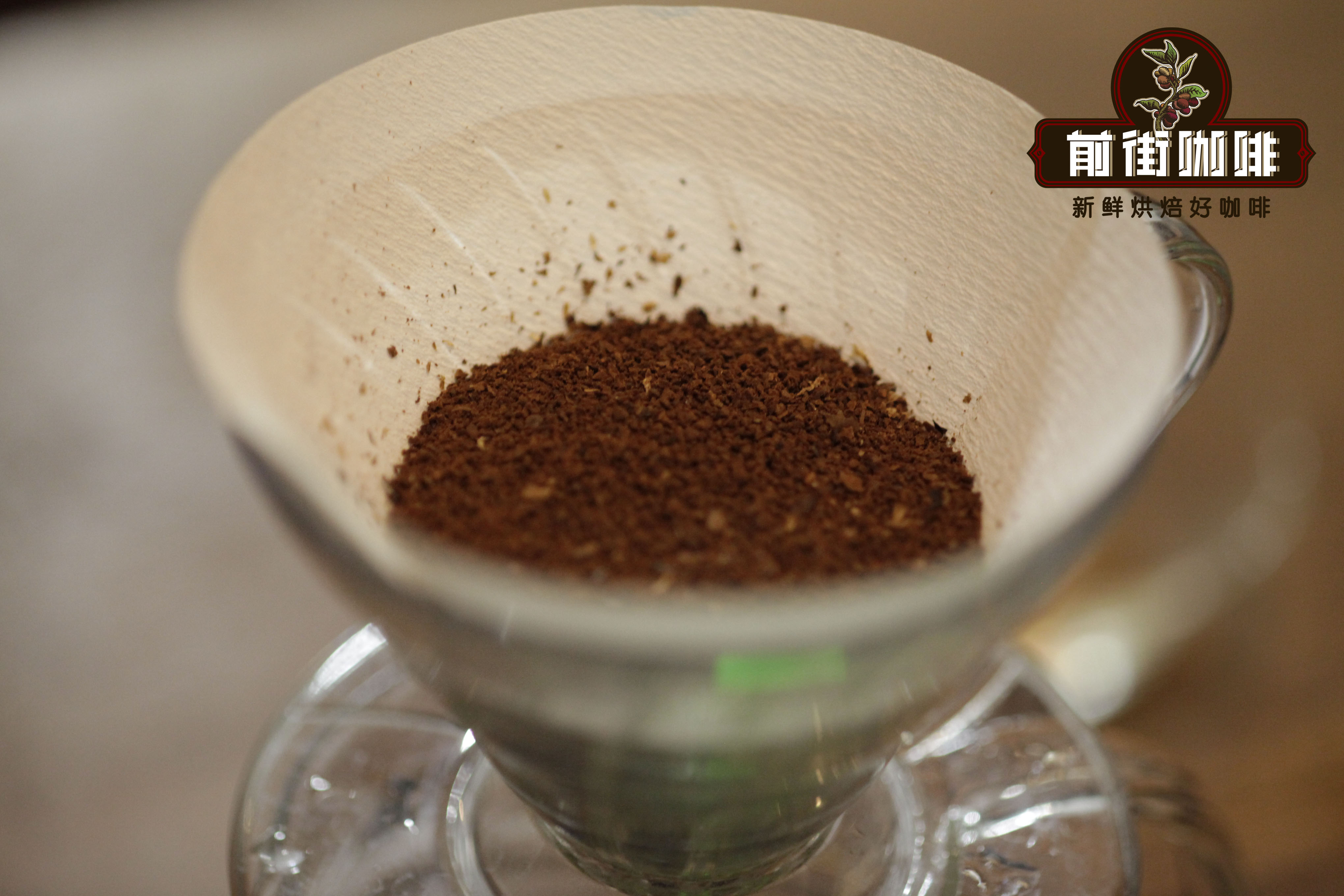
Every extraction method starts with grinding, and different methods demand different grind sizes. The most obvious contrast is between the fine grounds of espresso and the coarser grounds used for pour-over—but where exactly should each method sit? Here is a practical framework.
FrontStreet Coffee's Grind Size Theory
No grinder produces perfectly uniform particles. Any single grinding session yields a mix of coarse particles, fine particles, and even ultra-fines—differences the naked eye can barely catch. That's why FrontStreet Coffee calibrates grind size with sieves.
For pour-over methods we use the National Standard No. 20 sieve. Its aperture is 0.85mm, so any particle larger than 0.85mm stays on top.
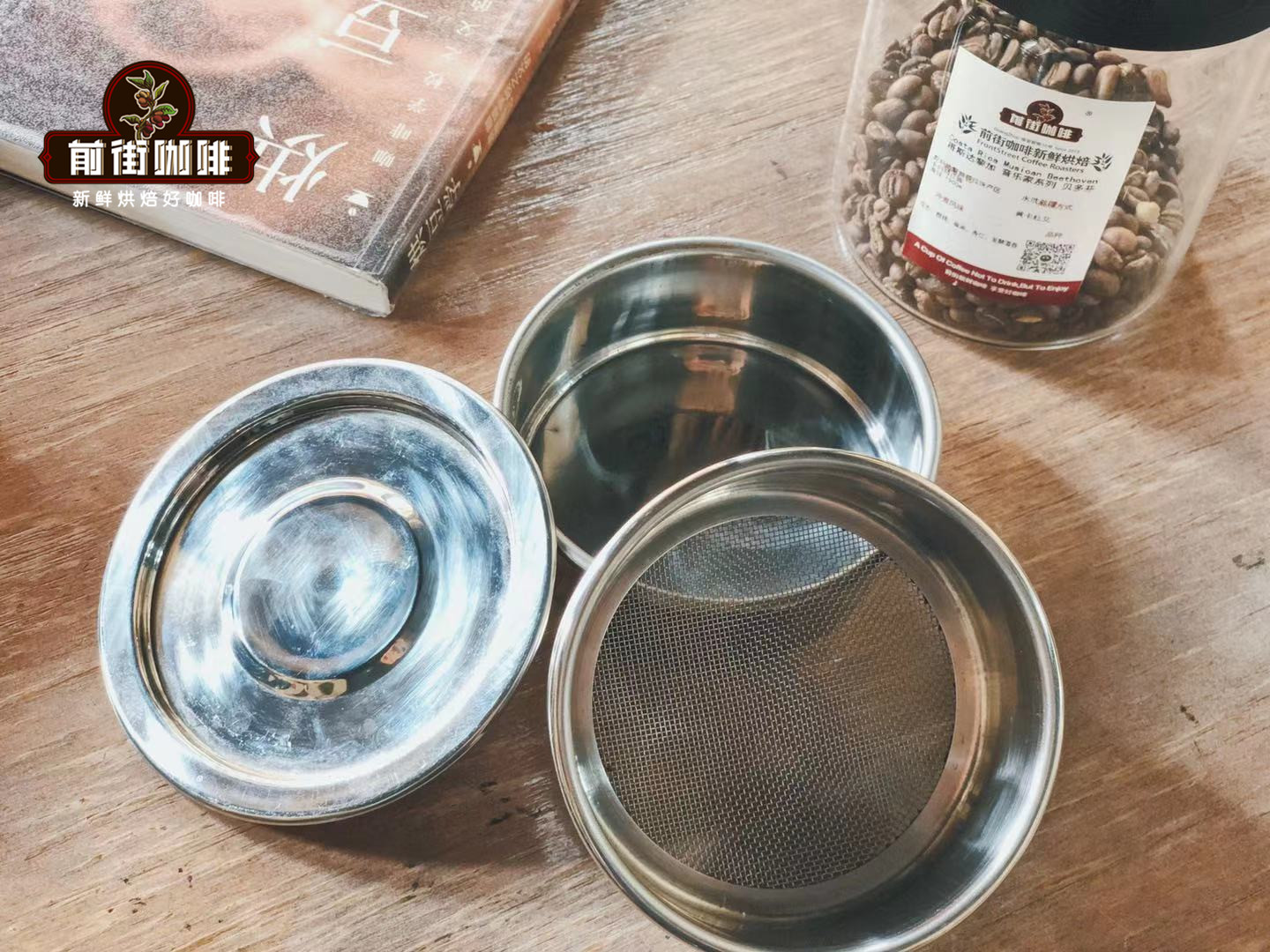
FrontStreet Coffee's reference sieve pass rates by method:
Cold Drip > Pour-over, Syphon 80% > American Drip 75-80% > Cupping 70-75% > French Press 65-70%
This gives you an intuitive, measurable target. In practice, FrontStreet Coffee brews light-roasted coffee at an 80% pass rate through the No. 20 sieve, and drops to a 65%–70% pass rate for medium-dark roasts.
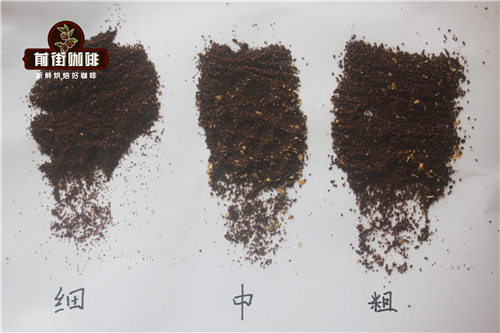
How to Adjust a Grinder?
Start by knowing what's inside. Coffee grinder burrs come in three broad types: flat burrs, conical burrs, and ghost tooth burrs.
Flat Burrs
A flat burr grinder uses paired upper and lower burrs, with the lower one fixed to the motor. When the motor spins, the two burrs cut the coffee as they rotate against each other.
Beans fall in at the center, and the rotating burr pushes them outward into the cutting teeth.
Because the burrs sit parallel, beans depend on the pushing force to feed into the grind zone—so the weight of the bean column above affects how evenly beans enter the burrs, which in turn affects grind uniformity. All that pushing also causes extra collisions between beans, raising the proportion of fines. This is why flat burr grinders typically show slightly less uniform particle size and more fines.
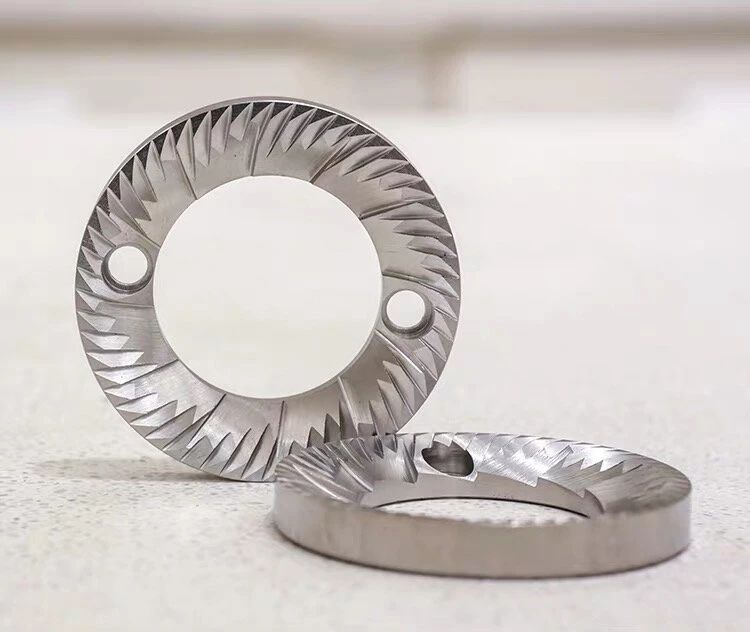
Flat burrs cut particles into flake-like shapes, which increases the exposed surface area of the cell walls. The result: flat burrs can raise extraction rate and concentration quickly and boost aroma in a short brew. But those flat, elongated particles also mean that when extraction runs long, the woody material soaks up excess water and pushes the cup toward bitterness and astringency.
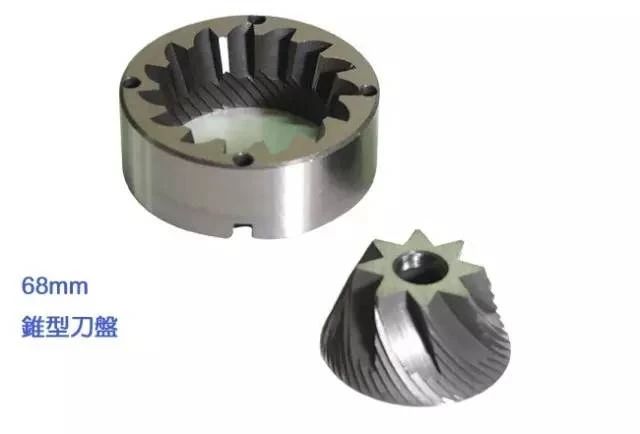
Conical Burrs
A conical burr grinder pairs a cone-shaped inner burr with an outer ring burr. Beans fall from above and are pulled downward by the rotating cone, grinding as they go. Because the movement is top-to-bottom, particles don't need to be forced sideways, so fewer collisions occur and fines are reduced—grind uniformity improves noticeably over flat burrs.
Conical burr particles are more granular, which lengthens the water's path through them. Their interiors take longer to make contact with water, so fewer solubles release early and short brews taste less concentrated. That same granular shape, however, means even extended extraction soaks the woody material less, so conical burrs are far less likely to turn a long brew bitter or astringent.
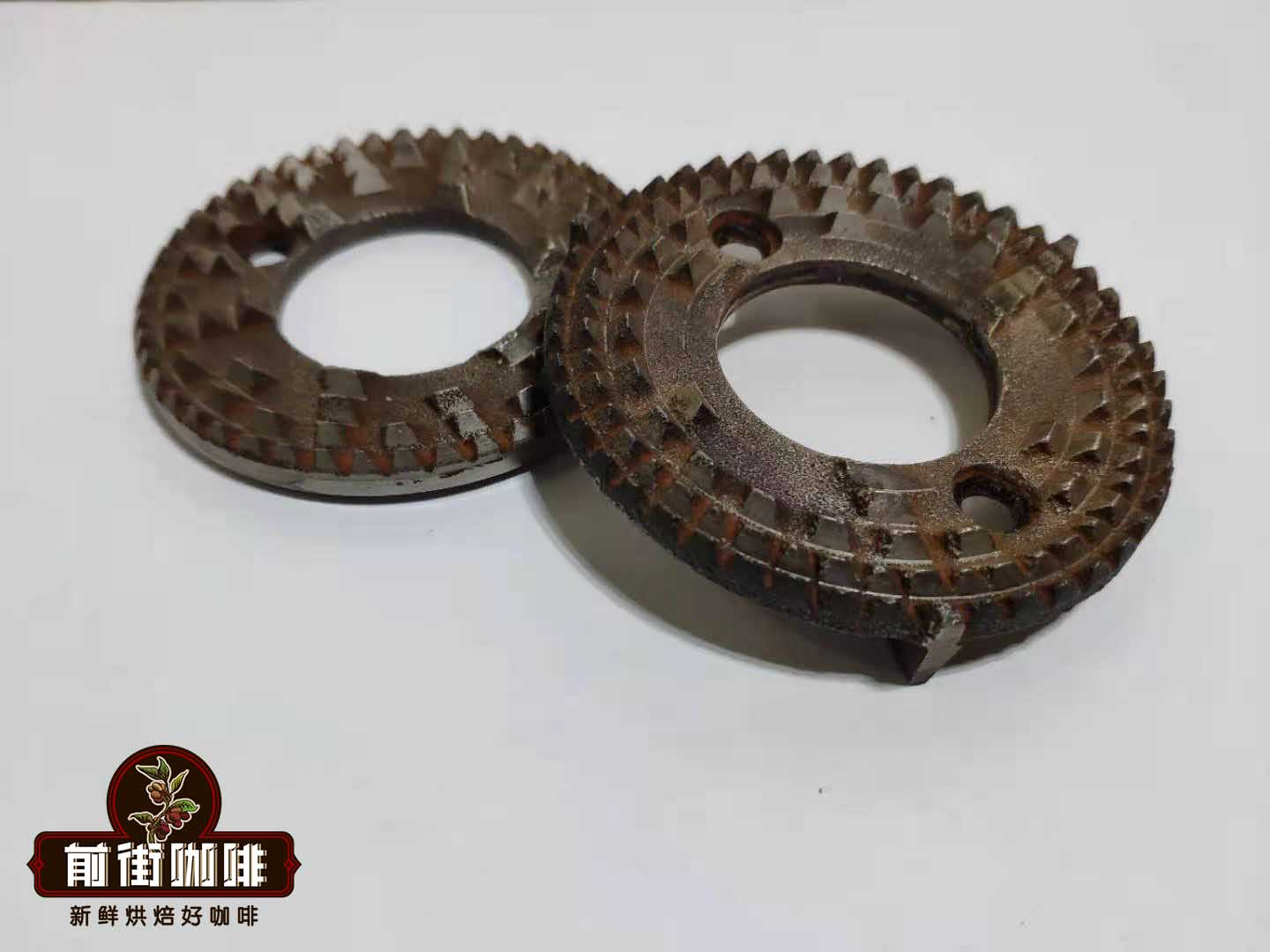
Ghost Tooth Burrs
Ghost tooth burrs grind primarily by crushing, producing particles that are close to spherical. Because a single bean can break into several small spheres, they generate more edge waste (fines) than you might expect, though variation among the larger particles stays minimal. They suit pour-over grinding well.
One crucial caveat: on a new grinder—or one that has been disassembled, cleaned, and reassembled—the mapping between scale settings and actual grind size is not fixed. FrontStreet Coffee's daily driver, a Forte-BG, produced an 80% pass rate on the No. 20 sieve at setting 6S before cleaning; after cleaning and reassembly, the same 6S setting yielded only 75%. New or old, every grinder needs periodic calibration.
Calibrating a New Grinder
Here's FrontStreet Coffee's method, demonstrated on a 10-setting grinder. First, bracket the range by testing a fine setting and a coarse setting.
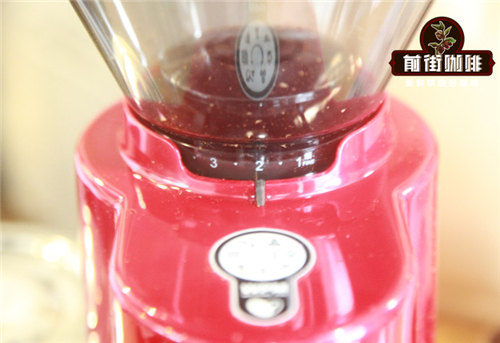
Start at setting 2:
All 10 grams of grounds passed the sieve—a 100% pass rate. The grounds feel as fine as flour, similar to espresso. Why not setting 1? Because at setting 1 you can hear the burrs touching—an obvious collision sound—meaning it's already fully tightened. So setting 2 is the practical lower limit.
Now setting 10: of 10 grams of grounds, only 2.8 grams passed—a 28% pass rate.
This grinder therefore has a very wide range. And the wider the range spread across the same number of settings, the coarser the resolution—fewer usable grind options between extremes.
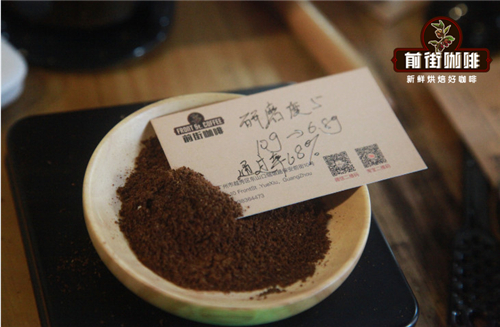
Next, test the middle, setting 5: 6.8 of 10 grams passed—a 68% pass rate.
That's close to our 80% target, so we try setting 4: 7.8 of 10 grams passed—a 78% pass rate. Since each step makes a large difference here, setting 4 is the closest match, and we'd treat it as the pour-over setting on this grinder.
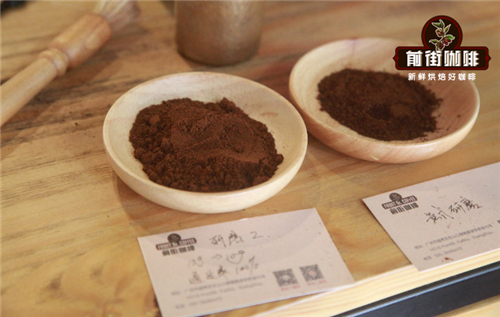
The general procedure: measure the sieve pass rates at the finest and coarsest settings, then bisect and fine-tune toward your target. No sieve at home? Then the only tool left is the most intuitive one—taste the cup, and adjust from there. Under-extracted and sour? Grind finer. Over-extracted and bitter? Grind coarser.
FrontStreet Coffee Recommendation
Grind size is only half the equation—the beans matter just as much, especially for cold drip, which demands the coarsest calibration of all. If you're brewing cold drip, FrontStreet Coffee's Costa Rica Mozart is a standout: made with an anaerobic honey process from a region famous for honey-processed coffee, it carries a distinctive raisin aroma that turns into vivid blueberry, black grape, and winey fermented notes over ice—refreshing, with a long fragrant finish.
For a cleaner, crisper cold drip, try the Kenya Cherry Tomato. It's a 72-hour washed process—the beans get an extra 48 hours of soaking and rinsing—so the acidity is remarkably lively and juice-like, showing notes of cherry tomato and grapefruit. It's bright, light, and built for summer.
Deep-roast fans shouldn't overlook the PWN Golden Mandheling. A classic medium-dark roast with extended caramelization, it carries dark chocolate, cocoa, and toasted bread; after 24 hours in the refrigerator served over ice, it brews into a sweet, translucent cup with just a whisper of chocolate bitterness and a pleasant fermented depth. And for something floral, the Ethiopia Huakui from Guji's Hambela—grown above 2200 meters and naturally processed—yields a cold drip with strawberry and guava sweetness, dried mango, delicate florals, and a layered black-tea finish.
Important Notice :
FrontStreet Coffee is a long-established specialty coffee roaster in Guangzhou China, selling freshly roasted beans from its own farm in Yunnan as well as dozens of carefully selected single-origin beans from around the world for both pour-over and espresso. The products deliver consistently excellent quality and great value, with shipping within 24 hours. Guangzhou's FrontStreet Coffee shop is recommended by many coffee lovers, and the beans are now available online at the Tmall 。
FrontStreet Coffee has moved to a new address:
FrontStreet Coffee Address: 315,Donghua East Road,GuangZhou
Tel:020 38364473
 Scan and follow the En Gafei WeChat official account. Please indicate that the reprint comes from "En Gafei".